
Why Your Bathroom Is the Perfect Home for Humidity-Loving Plants
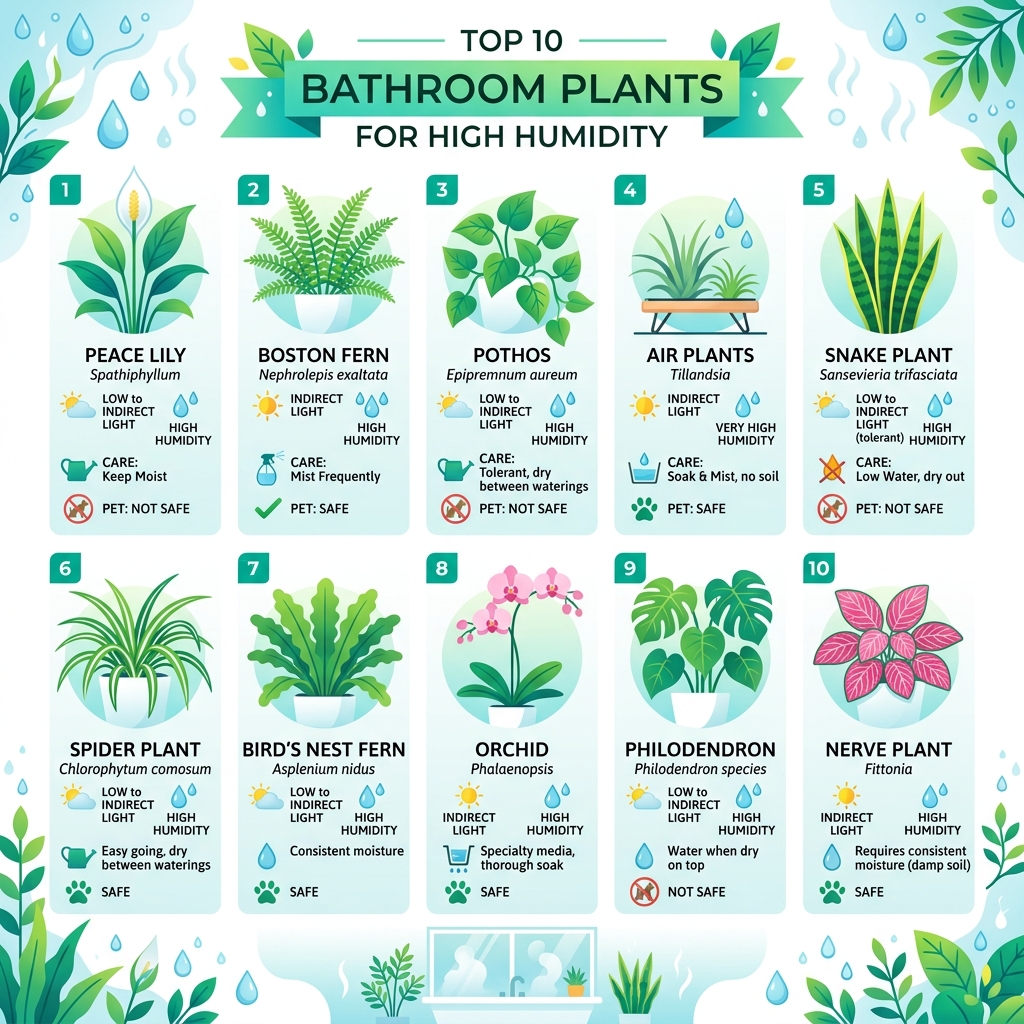
Bathroom plants high humidity lovers are easy to find — here are the top picks to get you started fast:
| Plant | Light Needs | Humidity Tolerance | Pet Safe? |
|---|---|---|---|
| Peace Lily | Low to indirect | Very high | No |
| Boston Fern | Indirect | Very high | Yes |
| Pothos | Low to indirect | High | No |
| Air Plants (Tillandsia) | Indirect | Very high | Yes |
| Snake Plant | Low to indirect | High | No |
| Spider Plant | Low to indirect | High | Yes |
| Bird’s Nest Fern | Low to indirect | Very high | Yes |
| Orchid | Indirect | High | Yes |
| Philodendron | Low to indirect | High | No |
| Nerve Plant (Fittonia) | Indirect | Very high | Yes |
Your bathroom is probably the most plant-friendly room in your home. You just don’t know it yet.
Every time you shower, the steam fills the air with moisture. Most rooms struggle to hit 40% relative humidity. Your bathroom regularly spikes past 70%. For tropical plants, that’s paradise.
The problem most people run into? They grab a random houseplant from a garden center, stick it in the bathroom, and watch it slowly die. The wrong plant in the wrong spot. It’s not you — it’s the mismatch.
The good news: dozens of plants are specifically built for steamy, low-light conditions. Many of them absorb moisture directly through their leaves, meaning your shower routine literally waters them for you.
This guide cuts through the noise. No complicated care routines. No guesswork. Just the 10 best humidity-loving plants that will actually thrive in your bathroom — even if you’re the type who forgets to water.
The Best Bathroom Plants High Humidity Varieties for Every Space
When we talk about bathroom plants high humidity needs, we aren’t just talking about aesthetics. We’re looking for survivalists. Most of these plants originate from tropical rainforest floors where the air is thick, the ground is damp, and the sun rarely hits them directly.
1. Peace Lily (Spathiphyllum)
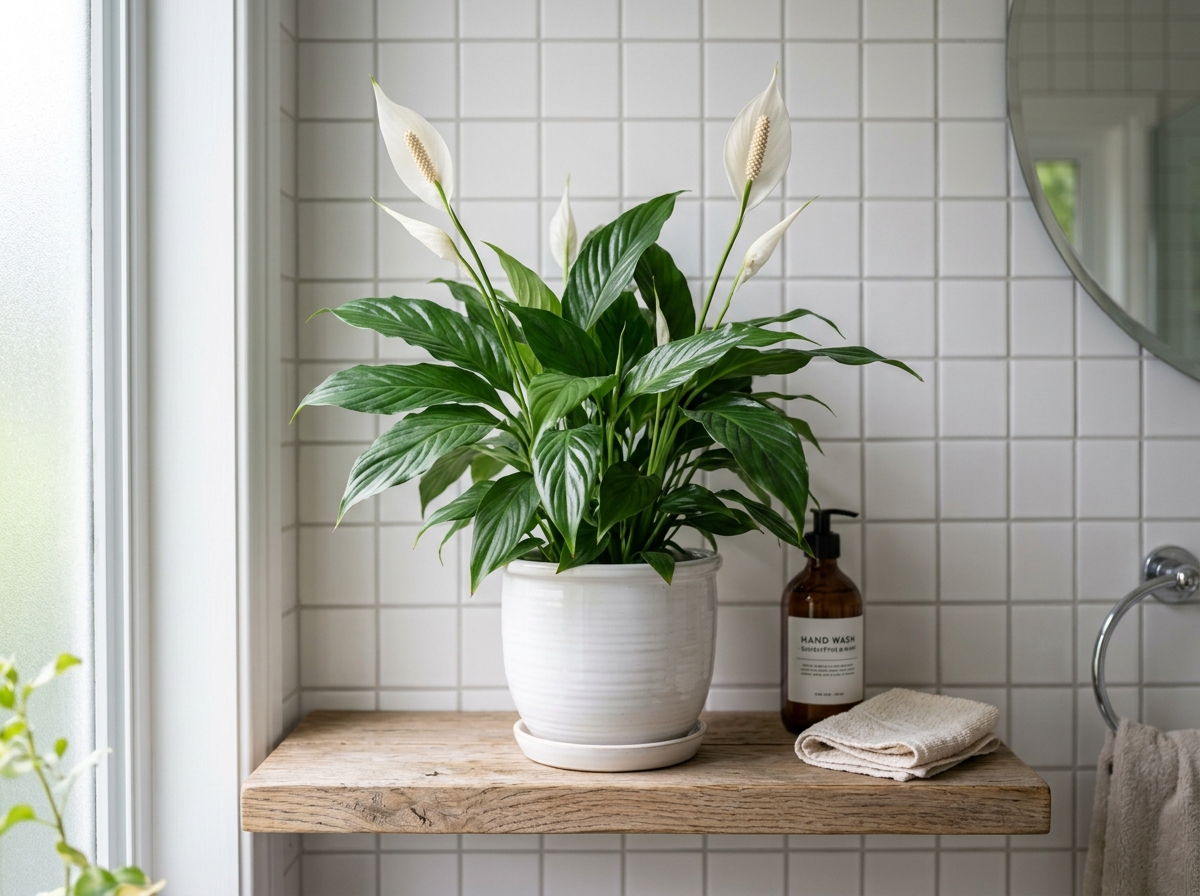
Peace lilies are the “Goldilocks” of the plant world. They love a humid environment but hate “wet feet.” In a bathroom, they act like a natural sponge, using their broad, glossy leaves to pull moisture from the air. If they get too thirsty, they’ll dramatically wilt to let you know, only to perk up within hours of a drink.
2. Boston Fern (Nephrolepis exaltata)
If there is one plant that belongs in a bathroom, it’s the Boston fern. In a dry living room, these plants turn yellow and drop leaves faster than you can vacuum them up. In a steamy bathroom, they flourish. They have essential aerial roots that absorb moisture from the air, making them one of the best natural dehumidifiers you can own. Check out our indoor-plant-care-for-apartments guide for more on fern maintenance.
3. Pothos (Epipremnum aureum)
Pothos is nearly impossible to kill. It’s a trailing vine that looks stunning draped over a shower rod or a high shelf. It handles low light like a pro and thrives in 50–70% humidity. It’s also a champion at filtering household toxins like formaldehyde, which can linger in bathroom cleaners.
4. Air Plants (Tillandsia)
These are the ultimate “no-soil” plants. Tillandsia use specialized cells called trichomes to drink water directly from the air. You can mount them on wood or hang them in glass globes. They are perfect for modern, minimalist bathrooms where counter space is at a premium.
5. Snake Plant (Sansevieria)
While often associated with dry bedrooms, the snake plant is a secret humidity lover. It filters toxins and absorbs excess moisture, helping to keep mold at bay. Plus, it can survive in near-total darkness, making it ideal for windowless powder rooms.
6. Spider Plant (Chlorophytum comosum)
Known for its “pups” that dangle like tiny spiders, this plant loves the occasional steam session. It’s incredibly resilient and excels at scrubbing the air of impurities.
7. Bird’s Nest Fern (Asplenium nidus)
Unlike its feathery cousins, the Bird’s Nest Fern has thick, wavy fronds that can grow up to 80cm long. It loves the constant moisture of a bathroom and adds a bold, architectural look to any shelf.
8. Philodendron
Similar to Pothos, Philodendrons are trailing plants that love warmth and humidity. They are fast growers and very forgiving if you miss a watering session now and then.
9. Nerve Plant (Fittonia)
The Nerve Plant is famous for its “fainting” spells—it wilts completely when dry but snaps back to life with a quick misting. Because it craves high humidity, the bathroom is often the only place it stays consistently happy.
10. Orchids
Many people think orchids are difficult, but in a bathroom, they are right at home. Epiphytic orchids (like Phalaenopsis) naturally grow on trees in humid jungles. The steam from your shower provides the moisture their roots crave.
Top Picks for Low Light and High Moisture
If your bathroom feels like a cave, don’t worry. Many bathroom plants high humidity varieties are naturally shade-tolerant. We recommend starting with the Snake Plant or ZZ Plant if you have zero windows.
For those with just a sliver of light, the Epipremnum aureum (Pothos) and Spathiphyllum (Peace Lily) are your best bets. They’ve evolved to photosynthesize efficiently even at low foot-candle levels. Learn more about these in our low-light-indoor-plants-for-apartments guide.
Soil-Free Options for Modern Bathrooms
Don’t want dirt on your white marble counters? Epiphytes are the answer. These plants, including Tillandsia (Air Plants) and Spanish Moss, don’t need soil to survive. They use their roots only for anchoring and get all their nutrients and water from the air.
The Science of Bathroom Plants High Humidity Absorption
How do these plants actually “dehumidify” a room? It comes down to their biology. Plants have tiny pores called stomata on their leaves. In high-humidity environments, tropical plants actually lose less water through transpiration, allowing them to stay hydrated longer.
Some plants, like the Boston Fern and Peace Lily, are exceptionally good at absorbing water vapor. While they won’t replace a mechanical dehumidifier in a flooded basement, they can significantly reduce the “muggy” feeling after a hot shower and help prevent mold spores from settling.
Beyond moisture, these plants are active air filters. Research from the NASA Clean Air Study suggests that plants like Pothos and Snake Plants remove volatile organic compounds (VOCs) such as formaldehyde and xylene, which are commonly found in bathroom products. This is what we call “microclimate engineering”—using nature to fix your indoor environment. For more technical details, see our humidity-tips-for-houseplants page.
Essential Care for Bathroom Plants High Humidity Environments
Even though the bathroom is a great environment, it isn’t “set it and forget it.” You still need to follow a few ground rules to keep your oasis green.
- Temperature: Most tropical plants need to stay above 65°F (18°C). If your bathroom gets freezing cold at night, your plants will suffer.
- Drainage: High humidity plus poor drainage equals root rot. We always recommend pots with drainage holes. If you love the look of a pot without holes, use it as a “cachepot” (put the plant in a plastic nursery pot inside the decorative one).
- Terracotta vs. Plastic: In a humid bathroom, terracotta is great because it’s porous and helps wick away excess moisture from the soil.
- Leaf Cleaning: Dust and steam can create a film on leaves, blocking light. Wipe your plants down with a damp microfiber cloth once a month.
- Pet Safety: Always check the ASPCA list of poisonous plants. If you have a curious cat, stick to non-toxic options like the Spider Plant or Boston Fern, or hang toxic plants like Pothos high out of reach.
For a deeper dive into specific apartment care, visit our low-light-indoor-plants-for-apartments-2 article.
Lighting Solutions for Windowless Bathrooms
If your bathroom has no windows, your plants will eventually die without help. No plant can survive on zero light forever.
The solution? LED grow lights. You don’t need a massive industrial setup. A simple 150-300W full-spectrum LED bulb (3000K–4000K) placed 12-18 inches above your plants for 8-12 hours a day will do the trick. This provides the necessary lumens and foot-candles to mimic the sun’s energy. Check out our best-indoor-plants-for-apartments for more lighting hacks.
Maintaining Bathroom Plants High Humidity Levels in Winter
In the winter, indoor air becomes incredibly dry due to heaters. Even your bathroom might drop below the 50% relative humidity sweet spot.
To help your plants through the “dry season”:
- Exhaust Fan Timing: Don’t run the fan immediately after your shower. Let the steam linger for 15 minutes to give the plants a “drink.”
- Pebble Trays: Place your pots on a tray filled with pebbles and water. As the water evaporates, it creates a localized humidity bubble.
- Radiator Safety: Keep plants at least 40cm away from towel radiators or heaters, which can scorch leaves.
For more winter tips, see best-indoor-plants-for-apartments-2.
Frequently Asked Questions About Bathroom Plants
Can bathroom plants survive on shower steam alone?
For most plants, no. While epiphytes like air plants and Spanish moss get a lot of their hydration from the air, they still need a deep soak or heavy misting occasionally. Soil-based plants like Peace Lilies still need their roots watered when the top inch of soil feels dry. Steam is a supplement, not a replacement for a watering can!
What are the best plants for a bathroom with no windows?
The Snake Plant and ZZ Plant are the toughest contenders. However, even they need some light. If you have a windowless bathroom, you must either install a grow light or “rotate” your plants—keep them in the bathroom for a week, then move them to a sunny room for a week to recharge. If that’s too much work, high-quality fake plants are a great aesthetic alternative.
Which high-humidity plants are safe for pets?
If you have furry friends, the Boston Fern, Spider Plant, Bird’s Nest Fern, and Orchids are all non-toxic and safe. We always recommend hanging your plants in macramé holders to keep them away from nibbling teeth, regardless of toxicity.
Conclusion
At Futuro Ciencia, we believe every room in your home should be a sanctuary. By choosing the right bathroom plants high humidity varieties, you aren’t just decorating; you’re creating a living, breathing ecosystem that cleans your air and calms your mind.
Whether you’re looking to turn your master bath into a tropical spa or just want to keep a single Pothos alive in your guest powder room, we’re here to help. Our personalized care schedules and guides ensure that your “black thumb” becomes a thing of the past.
Ready to start your indoor jungle? More info about indoor plant care is just a click away. Let’s grow together!
