
Finding the Easiest Indoor Fern for Your Home
Why Finding the Best Fern for Indoors Can Transform Your Home
The best fern for indoors depends on your light, humidity, and how much time you can realistically spend on plant care. Here’s a quick answer:
Top indoor ferns at a glance:
| Fern | Best For | Difficulty |
|---|---|---|
| Boston Fern | Classic look, hanging baskets | Moderate |
| Bird’s Nest Fern | Low light, beginners | Easy |
| Lemon Button Fern | Small spaces, terrariums | Easy |
| Rabbit’s Foot Fern | Unique look, pet owners | Easy |
| Button Fern | Dry air, low maintenance | Easy |
| Blue Star Fern | Shelves, tabletops | Easy |
| Staghorn Fern | Wall display, statement piece | Moderate |
| Maidenhair Fern | High humidity spaces | Challenging |
| Kimberly Queen Fern | Hanging baskets, outdoors | Moderate |
| Kangaroo Paw Fern | Trailing, hanging baskets | Easy |
| Mother Fern | Office desks, living rooms | Moderate |
| Australian Tree Fern | Large spaces, bold statement | Moderate |
Ferns are among the oldest plants on Earth. With roughly 12,000 species worldwide, many tropical varieties adapt surprisingly well to life inside your home.
The problem? Most people buy a fern, watch it turn brown within weeks, and give up.
It doesn’t have to go that way.
The truth is that most fern failures come down to two things: wrong humidity and inconsistent watering. Pick the right species for your space, and ferns are far more forgiving than their reputation suggests.
Whether you want something lush and dramatic for a bright living room, or a tough little plant that survives a north-facing office window, there’s an indoor fern that fits your life.
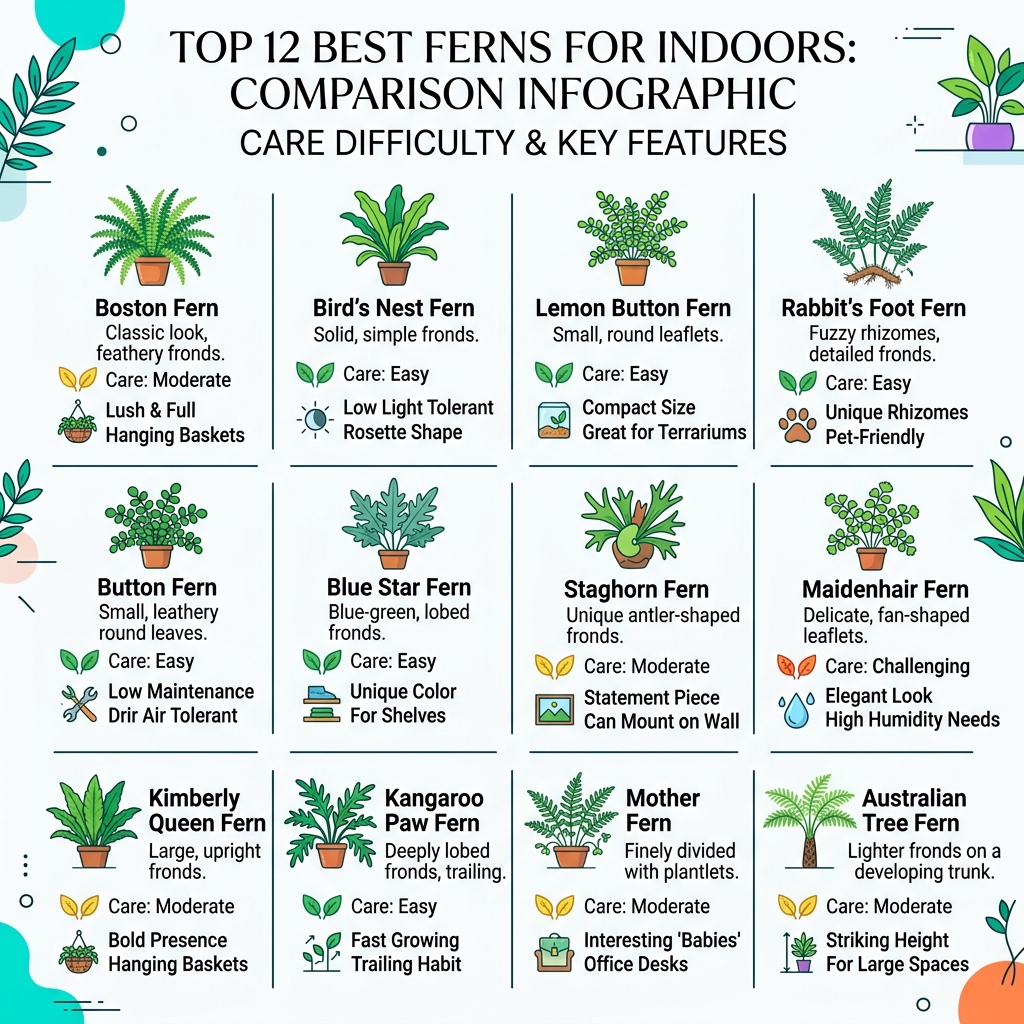
Top 12 Best Ferns for Indoors
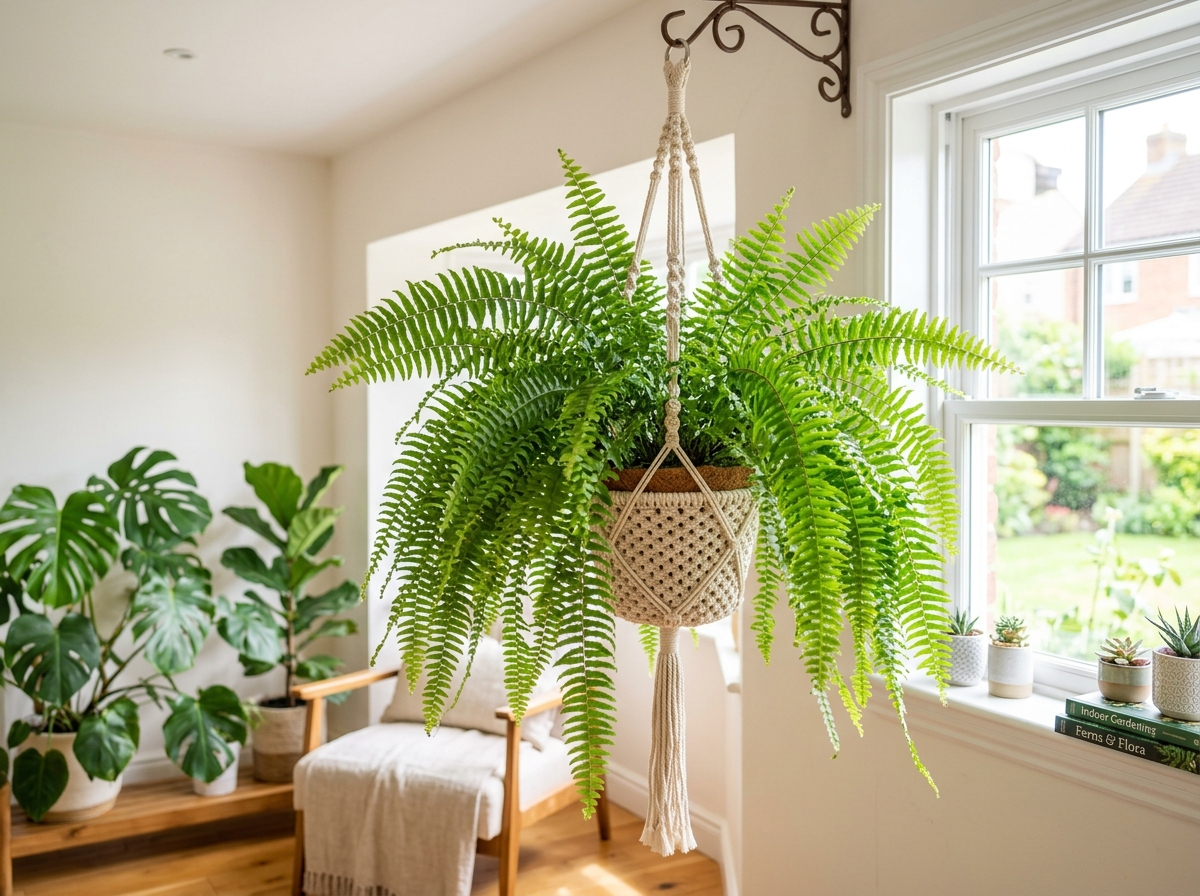
When we think of a “jungle vibe,” we usually picture the feathery fronds of a fern. While they all share a prehistoric charm, each variety has a unique personality. Here are the top contenders for the best fern for indoors:
- Boston Fern (Nephrolepis exaltata): The quintessential indoor fern. Popularized in the Victorian era, it’s famous for its arching, sword-shaped fronds. It can grow up to 3 feet wide indoors and looks spectacular in a hanging basket. For more technical details, check out this guide on FPS427/FP427: Nephrolepis exaltata Boston Fern, Sword Fern.
- Bird’s Nest Fern (Asplenium nidus): Unlike the “shredded” look of most ferns, this one has solid, wavy leaves that grow from a central rosette. It’s incredibly sturdy and can reach 3 to 5 feet tall with the right light.
- Staghorn Fern (Platycerium bifurcatum): An epiphyte that grows on trees in the wild. It has two types of fronds: shield-like basal fronds that protect the roots and antler-like fertile fronds. These are often mounted on wood plaques for a stunning wall display.
- Maidenhair Fern (Adiantum): The “diva” of the group. It has delicate, fan-shaped leaflets and wire-like black stems. It’s breathtakingly beautiful but requires constant moisture and high humidity.
- Rabbit’s Foot Fern (Davallia solida var. fejeensis): Known for its “furry” rhizomes that creep over the edge of the pot. It’s surprisingly resilient and a great conversation starter.
- Button Fern (Pellaea rotundifolia): A small, trailing fern with round, leathery leaves. It’s one of the few ferns that can handle slightly drier air.
- Blue Star Fern (Phlebodium aureum): Features elongated, wavy fronds with a distinct bluish-grey tint. It’s an epiphyte, meaning it’s less prone to root rot if you use a chunky soil mix.
- Kangaroo Paw Fern (Microsorum diversifolium): A tough, leathery fern with variably shaped leaves that resemble a kangaroo’s paw. It loves to trail out of hanging pots.
- Kimberly Queen Fern (Nephrolepis obliterata): Often confused with the Boston fern, but it grows more upright and is generally more tolerant of heat and lower humidity.
- Lemon Button Fern (Nephrolepis cordifolia ‘Duffii’): A compact variety that smells faintly of lemon when the leaves are crushed. It’s perfect for small tabletops or terrariums.
- Mother Fern (Asplenium bulbiferum): A fascinating plant that grows tiny “baby” ferns (bulbils) right on its fronds. These can eventually be detached to grow new plants.
- Australian Tree Fern (Cyathea cooperi): For those with plenty of space! It can reach 10 feet tall in a large container, creating a massive tropical canopy in a bright room.
Best Fern for Indoors: Low Light and Beginner Options
If you’re new to spores and fronds, don’t start with the Maidenhair! Instead, look for varieties that are more forgiving of human error.
The Bird’s Nest Fern and Lemon Button Fern are excellent starting points. They don’t mind the lower light levels found in many apartments. If you are struggling with a dark corner, our guide on Indoor Plants that Thrive in Low Light can help you pair your fern with other shade-loving friends.
The Rabbit’s Foot Fern is another winner for beginners because its thick rhizomes store a bit of water, making it less likely to die if you miss a watering by a day or two. For those living in smaller spaces, we recommend checking out Low Light Indoor Plants for Apartments to see how ferns fit into a compact urban jungle.
Unique and Rare Varieties of the Best Fern for Indoors
For the plant collector looking for something beyond the standard Boston, there are some incredible “Jurassic” varieties hitting the market. The Jurassic Stegosaurus Holly Fern is a standout, collected from high altitudes in China; it can handle cooler, drier air much better than its tropical cousins.
The Blue Star Fern offers a unique color palette with its silvery-blue foliage, while the Australian Tree Fern provides the architectural scale usually reserved for palms. If you love the look of large, structural plants but have lower light, you might also enjoy reading The Ultimate Guide to Parlor Palm Low Light Success.
Mastering Indoor Fern Care and Maintenance
To keep your fern from becoming a crispy memory, you need to mimic the forest floor. This means filtered light and consistent moisture.
| Feature | Requirement |
|---|---|
| Light | Medium to Bright Indirect (No direct sun!) |
| Water | Keep soil consistently moist (but not soggy) |
| Humidity | High (50% or higher is ideal) |
| Temperature | 60°F – 75°F (Avoid drafts) |
Most ferns thrive in indirect light. A north-facing window is often perfect, or an east-facing window where they get a little gentle morning sun. Avoid south-facing windows unless you have a sheer curtain to block the harsh rays, which can scald the delicate leaves. For a deeper dive into lighting, see our Indoor Plant Light Requirements guide.
Watering is the most frequent hurdle. Most ferns want their soil to stay damp, like a wrung-out sponge. If the top inch of soil feels dry, it’s usually time to water. For a consistent routine, we recommend checking out our Watering Schedule for Indoor Plants. You can also find specific regional advice on the Wisconsin Horticulture site.
Soil, Pots, and Fertilization
The best fern for indoors needs a home that breathes. We recommend a high-quality, peat-based potting mix that retains moisture but allows excess water to drain away. Always use a pot with drainage holes—ferns love water, but they hate sitting in a stagnant pool, which leads to root rot.
When it comes to feeding, “weekly, weakly” is the golden rule. During the growing season (spring through fall), use a balanced liquid fertilizer diluted to half-strength every 2–4 weeks. Skip the fertilizer in the winter when the plant goes semi-dormant. If you’re just starting your plant journey, our Indoor Plant Care Tips for Beginners covers these basics in more detail.
Humidity Hacks and Troubleshooting Common Issues
Humidity is the “secret sauce” for fern success. Our modern homes, especially with air conditioning or heating, are often as dry as a desert. Here are our favorite hacks to boost the moisture:
- Pebble Trays: Fill a shallow tray with pebbles and water, then set your pot on top. As the water evaporates, it creates a humid microclimate around the fronds.
- Misting: A quick spritz with tepid water a few times a week can help, though it’s not a permanent fix for very dry air.
- Humidifiers: If you have a large collection, a dedicated room humidifier is the best investment you can make.
- Bathroom Placement: The steam from your daily shower makes the bathroom the natural habitat for a fern.
For more creative ways to keep the air moist, read our Humidity Tips for Houseplants. Some ferns, like the Rabbit’s Foot Fern, are slightly more tolerant, but even they will show brown tips if the air is too dry.
Troubleshooting Brown Fronds:
- Brown, crispy edges: Usually a sign of low humidity or underwatering.
- Yellowing leaves: Often means the plant is getting too much water or the soil isn’t draining.
- Lanky, pale growth: The fern needs more indirect light.
Managing Pests and Care Mistakes
Even the best fern for indoors can attract unwanted guests. Keep an eye out for:
- Scale: Small, brown bumps on the stems or leaves.
- Mealybugs: White, cottony spots in the nooks of the plant.
- Spider Mites: Tiny webs and yellowed, speckled leaves.
You can treat most of these with a gentle spray of water or organic insecticidal soap. Avoid heavy oils, as fern fronds are very sensitive. To avoid these headaches in the first place, check out our list of Common Indoor Plant Care Mistakes.
Frequently Asked Questions about the Best Fern for Indoors
How often should I water my indoor fern? Generally, once or twice a week. However, you should always check the soil first. If the surface feels dry to the touch, it’s time for a drink.
Can I put a fern in a windowless bathroom? Not unless you have a grow light! While ferns love bathroom humidity, they still need light to photosynthesize. A bathroom with a small window is perfect.
Why are the tips of my fern turning brown? This is almost always a humidity issue. Try a pebble tray or move the plant away from heating vents.
Safety, Propagation, and Placement Tips
One of the best things about ferns is that many of them are non-toxic to pets and children. The Boston Fern, Bird’s Nest Fern, and Rabbit’s Foot Fern are all safe choices for households with curious cats or dogs. However, always double-check specific varieties—the “Asparagus Fern,” for example, isn’t a true fern and can be irritating to pets.
Propagation: Growing Your Collection
Want more plants for free? Most ferns are easy to propagate!
- Division: When your fern outgrows its pot, you can gently slice the root ball into two or three sections and repot them individually. This is best done in the spring.
- Runners (Stolons): Varieties like the Boston fern send out long, thin strings called runners. If these touch soil, they will grow roots and form a new “baby” plant.
- Spores: While possible, growing ferns from spores is a slow, scientific process that’s usually left to the pros.
For more easy-to-multiply greenery, see our guide on Easy to Grow Indoor Plants.
Ideal Placement: Hanging Baskets to Terrariums
Where you put your fern matters as much as how you water it.
- Hanging Baskets: Ideal for Boston, Kangaroo Paw, and Kimberly Queen ferns to let their fronds drape naturally.
- Tabletops: Bird’s Nest and Blue Star ferns make great statement pieces for coffee tables.
- Terrariums: Small varieties like the Lemon Button fern thrive in the enclosed, high-humidity environment of a glass jar or Wardian case.
If you are looking for placement ideas in dim rooms, our Indoor Plant Care for Low Light article offers great styling tips.
Conclusion
Finding the best fern for indoors doesn’t have to be a struggle. By choosing a variety that matches your home’s environment—whether it’s a sturdy Bird’s Nest or a classic Boston—you can enjoy the lush, air-purifying benefits of these ancient plants.
At Futuro Ciencia, we believe in transforming every space into a tranquil oasis. With the right care schedule and a little bit of humidity, your ferns will do more than just survive; they will brighten your home and purify your air for years to come. Ready to start your indoor garden? Explore more of our Indoor Plant Care resources today!
