
Why Parlor Palm Low Light Tolerance Makes It the Perfect Indoor Plant
Parlor palm low light tolerance is real — and it’s one of the main reasons this plant is so popular indoors.
Here’s the quick answer:
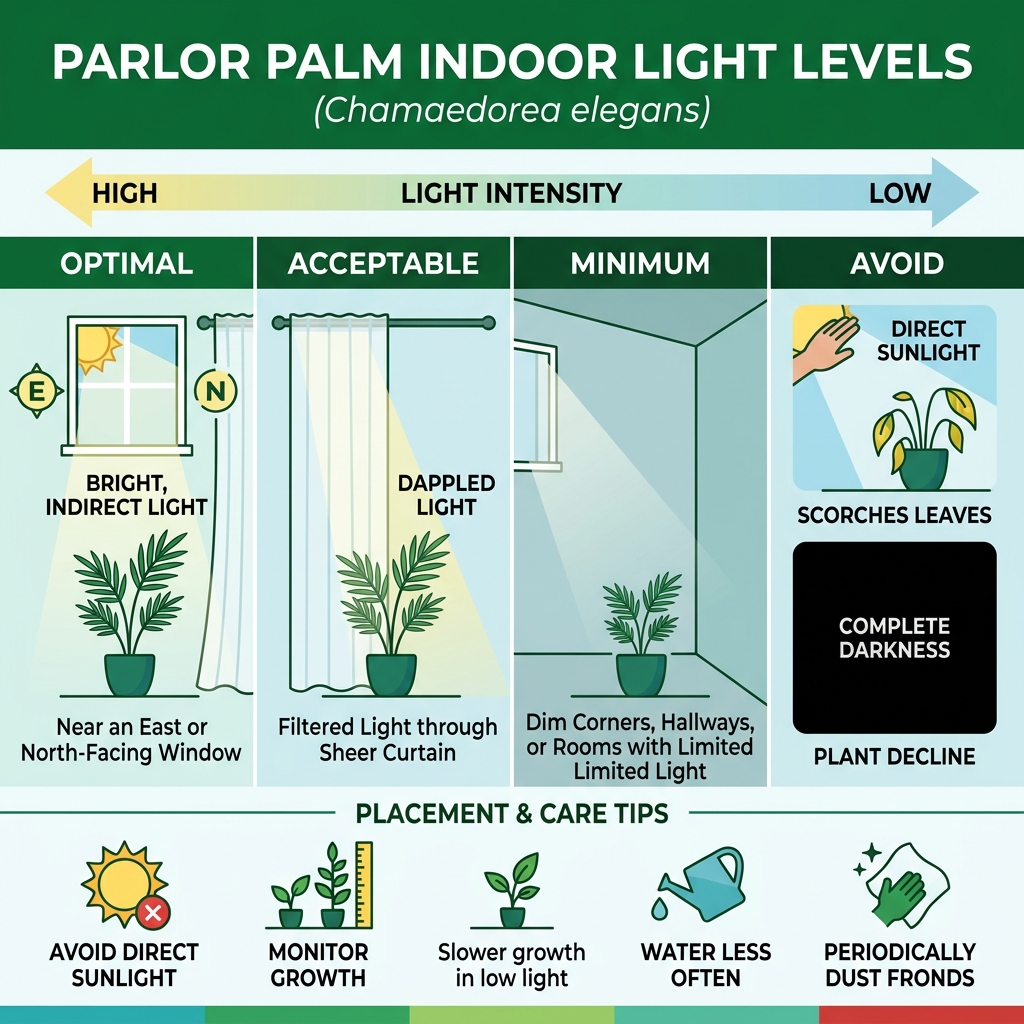
- Can it survive low light? Yes. Parlor palms handle dim rooms better than almost any other indoor palm.
- Ideal light: Bright, indirect light near a north- or east-facing window.
- Low light minimum: Dim corners, hallways, or rooms with filtered light through a sheer curtain.
- What to avoid: Direct sunlight (scorches leaves) and complete darkness (causes decline).
- Growth in low light: Slower and leggier, but the plant stays alive and healthy with basic care.
The parlor palm (Chamaedorea elegans) has been thriving in dark, stuffy rooms for over 150 years. The Victorians placed it in their dimly lit parlors — rooms with little ventilation and minimal sunlight — and it survived beautifully. That’s actually how it got its name.
This isn’t a coincidence. In the wild, parlor palms grow as understory plants in the rainforests of southern Mexico and Guatemala. They live beneath a dense forest canopy, competing for filtered, dappled light. Low light is their natural home.
That makes them one of the most forgiving houseplants you can own — especially if you’re busy, forgetful, or stuck with a dim apartment.
Understanding Parlor Palm Low Light Tolerance
To truly master parlor palm low light care, we have to look at where this plant comes from. As we mentioned, these palms are native to the rainforest understories of Southern Mexico and Guatemala. In these tropical jungles, the massive canopy of mahogany and cedar trees blocks out nearly all direct sun. The Chamaedorea elegans evolved to be highly efficient at capturing the tiny flecks of “dappled” light that hit the forest floor.
This evolutionary history makes them one of the best Indoor Plants That Thrive in Low Light. While many palms (like the Queen Palm or Mexican Fan Palm) crave 6–8 hours of direct, blazing sun, the parlor palm finds that kind of exposure physically painful. Its thin, delicate fronds lack the thick waxy coating needed to deflect intense UV rays.
Beyond their light tolerance, they are incredibly safe for our furry roommates. According to Scientific research on Parlor Palm pet safety, these plants are non-toxic to both cats and dogs. This combination of shade tolerance and safety is why they became the darlings of Victorian-era interior design. Back then, homes were lit by flickering gas lamps and coal fires, creating a dim, smoky environment that would kill most other tropical plants. The parlor palm didn’t just survive; it brought a sense of “exotic” vitality to those dark corners.
Identifying and Fixing Light Issues
Even though the parlor palm is a champion of the shadows, it isn’t immortal. There is a fine line between “low light” and “no light.” When we push these plants too far into the darkness, they start to send out distress signals.

One of the most common issues we see is leggy growth. This happens when the plant stretches its stems toward the nearest light source, resulting in long, weak stalks with very few leaves at the base. You might also notice the plant leaning dramatically to one side. If you’re wondering, Why Are My Indoor Plant Leaves Turning Yellow?, light might be the culprit—though it’s often a bit more complex than that.
Signs of Parlor Palm Low Light Stress
If your palm is struggling with insufficient light, look for these specific symptoms:
- Stunted Growth: While they are naturally slow growers, a complete lack of new fronds over an entire growing season (spring and summer) suggests the plant doesn’t have enough energy to produce new cells.
- Pale or Lime-Green Leaves: Deep forest green is the goal. If the fronds look washed out or pale, the chlorophyll isn’t working at peak capacity.
- Weak Stems: If the fronds are flopping over rather than arching gracefully, the internal structure is likely too weak from a lack of “food” (light).
- Sparse Foliage: The plant may shed older fronds faster than it grows new ones to conserve energy.
If you notice these signs, it’s important to learn How to Fix Yellow Leaves on Houseplants before the damage becomes permanent.
How to Revive a Stressed Palm
The good news? Parlor palms are resilient. If yours is looking a bit sad in its dark corner, we recommend a “light rehab” program:
- Light Rotation: Give the pot a quarter-turn every week. This ensures all sides of the plant get equal exposure and prevents that awkward “lean” toward the window.
- Pruning Dead Fronds: Use sharp, clean scissors to snip off any completely yellow or brown fronds at the soil line. This stops the plant from wasting nutrients on dying tissue.
- Gradual Exposure: Don’t move a “dark-room palm” directly into a bright window. The sudden change can shock the plant. Move it a few feet closer to the light source every few days.
- Cleaning: Dust acts like a window shade for leaves. Wipe the fronds with a damp cloth to ensure every bit of available light can reach the leaf surface.
For more detailed recovery steps, check out our guide on Indoor Plant Care for Low Light.
Best Placement Strategies for Your Home
Finding the “Goldilocks zone” for your parlor palm—not too bright, not too dark—is the secret to a plant that lives for decades.
The best placement for a parlor palm is often determined by the direction your windows face. In the Northern Hemisphere, North-facing windows are the holy grail for parlor palms. They provide consistent, weak light throughout the day without any harsh direct rays. East-facing windows are also excellent, as they offer gentle morning sun that isn’t intense enough to burn the leaves.
If you have a very bright South- or West-facing room, don’t worry! You can still keep a palm there, but you must use The Art of Indoor Plant Placement to keep it safe. Place the plant 5–8 feet away from the window, or use a sheer curtain to filter the light.
Ideal Spots for Parlor Palm Low Light Growth
If you live in a smaller space, you might find that Low Light Indoor Plants for Apartments are your only option. Parlor palms fit perfectly in:
- Dim Corners: Use them to soften the hard lines of furniture in a living room corner.
- Office Desks: They thrive under standard office fluorescent lights, making them great “cubicle companions.”
- Hallways: Their upright, compact growth (usually 2–6 feet indoors) makes them ideal for narrow transit areas that don’t get much direct sun.
- Foyers: A parlor palm in the entryway creates an immediate “tranquil oasis” vibe for guests.
Comparing Window Exposures for Palms
To help you decide where to put your new green friend, we’ve put together this quick reference table:
| Window Direction | Light Intensity | Parlor Palm Suitability | Action Needed |
|---|---|---|---|
| North | Low to Medium | Perfect | None; ideal “set and forget” spot. |
| East | Medium (Morning) | Excellent | Ensure it’s not touching the glass. |
| West | High (Afternoon) | Risky | Move 5+ feet back or use sheer curtains. |
| South | Very High | Dangerous | Must be filtered; avoid direct midday sun. |
Supplementing Natural Light with Artificial Solutions
What if you have a room with no windows at all, or you live in a climate where winter days are short and gray? This is where technology becomes our best friend.
You can absolutely use artificial light to support parlor palm low light growth. In fact, many professional offices use nothing but overhead lights to keep these palms green. However, for the best results at home, we recommend Full-spectrum LED grow lights.
- Duration: Aim for 10–14 hours of light a day to mimic a tropical day-night cycle.
- Distance: Place the LED bulb about 1–2 feet above the top of the plant. If the light is too close, it can actually cause “light burn,” which looks like bleached or crispy brown spots.
- Spectrum: Look for “daylight” or “full-spectrum” bulbs. These contain the blue and red wavelengths that plants need for photosynthesis and leaf development.
Understanding Indoor Plant Light Requirements allows you to turn even a windowless basement into a lush garden.
Essential Care for Shady Environments
When a plant lives in low light, its entire metabolism slows down. It drinks less water, grows more slowly, and needs fewer nutrients. This is the stage where most beginners make mistakes—they try to “force” growth with extra water or fertilizer.
According to Scientific research on Parlor Palm characteristics, these plants have relatively shallow root systems. In a low-light environment, the soil stays wet for much longer because the plant isn’t “breathing” out moisture as quickly (a process called transpiration).
- Watering Frequency: Only water when the top 1–2 inches of soil are dry. In a dim room, this might only be once every 2 or 3 weeks. Always check the soil with your finger first!
- Soil Drainage: Use a peat-based potting mix amended with perlite or sand. If the roots sit in stagnant water, they will rot, and in low light, root rot happens fast.
- Humidity Needs: While they tolerate average home humidity, they love a boost. Misting doesn’t actually do much for long-term humidity, so we recommend a pebble tray or a small humidifier nearby.
For more foundational tips, see our Indoor Plant Care Tips for Beginners.
Maintaining Health in Low Light
To keep your palm thriving in the shadows, follow these “pro” maintenance tips:
- Slow-Release Fertilizer: Only fertilize once or twice a year (in spring and summer). Use a balanced liquid fertilizer diluted to half-strength. Over-fertilizing in low light leads to “salt burn,” which causes brown leaf tips.
- Pest Monitoring: Spider mites love dry, stagnant air. Check the undersides of the fronds for tiny webs. If you see them, wipe the leaves with a mild soapy water solution.
- Avoid Major Pruning: Unlike some plants that bounce back after a heavy trim, parlor palms grow from a single terminal bud at the top of each stem. If you cut the top off, that stem will die. Only remove dead side fronds.
Avoiding these Common Indoor Plant Care Mistakes will ensure your palm lives for its full 20–40 year lifespan.
Frequently Asked Questions about Parlor Palms
Can a parlor palm survive in a room with no windows?
Technically, no plant can survive in total darkness forever. All plants need light for photosynthesis (the process of turning light into food). However, a parlor palm can “survive” in a windowless room for a few weeks, but it will eventually decline. If you have a windowless office, you must use a grow light or rotate the plant into a sunnier room every few days to “recharge.”
Is the parlor palm safe for cats and dogs?
Yes! We love this about the parlor palm. It is one of the few truly “pet-safe” palms. Unlike the Sago Palm (which is highly toxic), the parlor palm is cleared by the ASPCA. If your cat decides to bat at the feathery fronds or take a tiny nibble, they will be perfectly fine.
How fast do parlor palms grow in low light?
Prepare to be patient. Parlor palms are notoriously slow growers. In parlor palm low light conditions, you might only see one or two new fronds per year. It can take a decade for a small tabletop palm to reach its mature indoor height of 4–6 feet. We think this is a plus—it means you won’t have to repot it very often!
Conclusion
At Futuro Ciencia, we believe that everyone deserves a touch of nature, regardless of how many windows their home has. The parlor palm is the ultimate tool for transforming dim apartments and windowless offices into tranquil oases. By respecting its rainforest origins and providing the right balance of filtered light and careful watering, you can enjoy this Victorian classic for decades.
Ready to master the rest of your indoor jungle? Check out More info about indoor plant care schedules to keep your home green, bright, and purifying the air you breathe every single day. Happy planting!
