
Your Indoor Air May Be More Polluted Than You Think
The best indoor plants that purify air include snake plants, spider plants, peace lilies, Boston ferns, pothos, bamboo palm, English ivy, rubber plants, dracaena, and areca palm.
Here’s a quick reference:
| Plant | Key Pollutants Removed |
|---|---|
| Snake Plant | Benzene, formaldehyde, trichloroethylene, toluene |
| Spider Plant | Formaldehyde, carbon monoxide |
| Peace Lily | Benzene, acetone, trichloroethylene, formaldehyde |
| Boston Fern | Formaldehyde, xylene |
| Pothos | Benzene, formaldehyde |
| Bamboo Palm | Formaldehyde, benzene, carbon monoxide |
| English Ivy | Formaldehyde, benzene |
| Rubber Plant | Formaldehyde |
| Dracaena | Benzene, trichloroethylene, formaldehyde |
| Areca Palm | Formaldehyde, xylene, toluene |
Most people assume outdoor air is the bigger threat. But the air inside your home can actually be worse.
Everyday items like furniture, cleaning products, and building materials quietly release volatile organic compounds (VOCs) — invisible chemicals linked to headaches, fatigue, and respiratory problems. This is sometimes called Sick Building Syndrome, and it’s more common than most people realize.
The good news? NASA researchers found that common houseplants can absorb these harmful chemicals through their leaves and roots, naturally filtering the air around them.
You don’t need a complex air purification system. Sometimes, the right plant on a shelf is enough to start making a difference.

Simple best indoor plants that purify air word guide:
The Science Behind the Best Indoor Plants That Purify Air
When we talk about plants “cleaning” the air, we aren’t just using a marketing buzzword. There is real, hard science behind it. In 1989, NASA conducted the “Clean Air Study” to find ways to detoxify the air in space stations. They discovered that certain common houseplants are incredibly efficient at removing Volatile Organic Compounds (VOCs) like formaldehyde, benzene, and trichloroethylene.
These chemicals are more common than you’d think. Formaldehyde is found in carpets and upholstery; benzene is often in plastics and synthetic fibers; and xylene can be found in paints and adhesives. Through a process called phytoremediation, plants use their leaves and root systems to absorb these toxins, breaking them down into food for the plant or storing them safely in their tissue.
Recent scientific research on the air-purifying properties of Dracaena and other species has confirmed that these plants don’t just look pretty—they function as biological filters. Some studies even suggest that certain plants, like the Snake Plant, can reduce CO2 concentrations in an office setting by as much as 10% to 19%.
| Pollutant | Common Sources | Best Plants for Removal |
|---|---|---|
| Formaldehyde | Paper bags, facial tissues, plywood, synthetic fabrics | Boston Fern, Spider Plant, Bamboo Palm |
| Benzene | Glues, paints, furniture wax, detergents | Snake Plant, Peace Lily, English Ivy |
| Trichloroethylene | Printing inks, paints, lacquers, varnishes | Peace Lily, Dracaena, Snake Plant |
| Xylene | Rubber, leather, tobacco smoke, paint thiner | Areca Palm, Boston Fern |
Top 10 NASA-Recommended Air-Purifying Plants
If you are looking to start your own indoor jungle with a purpose, choosing from our favorite air filter plant collections is a great way to ensure you’re getting the heavy hitters of the botanical world. These plants excel at bio-filtration, removing everything from toluene to carbon monoxide.
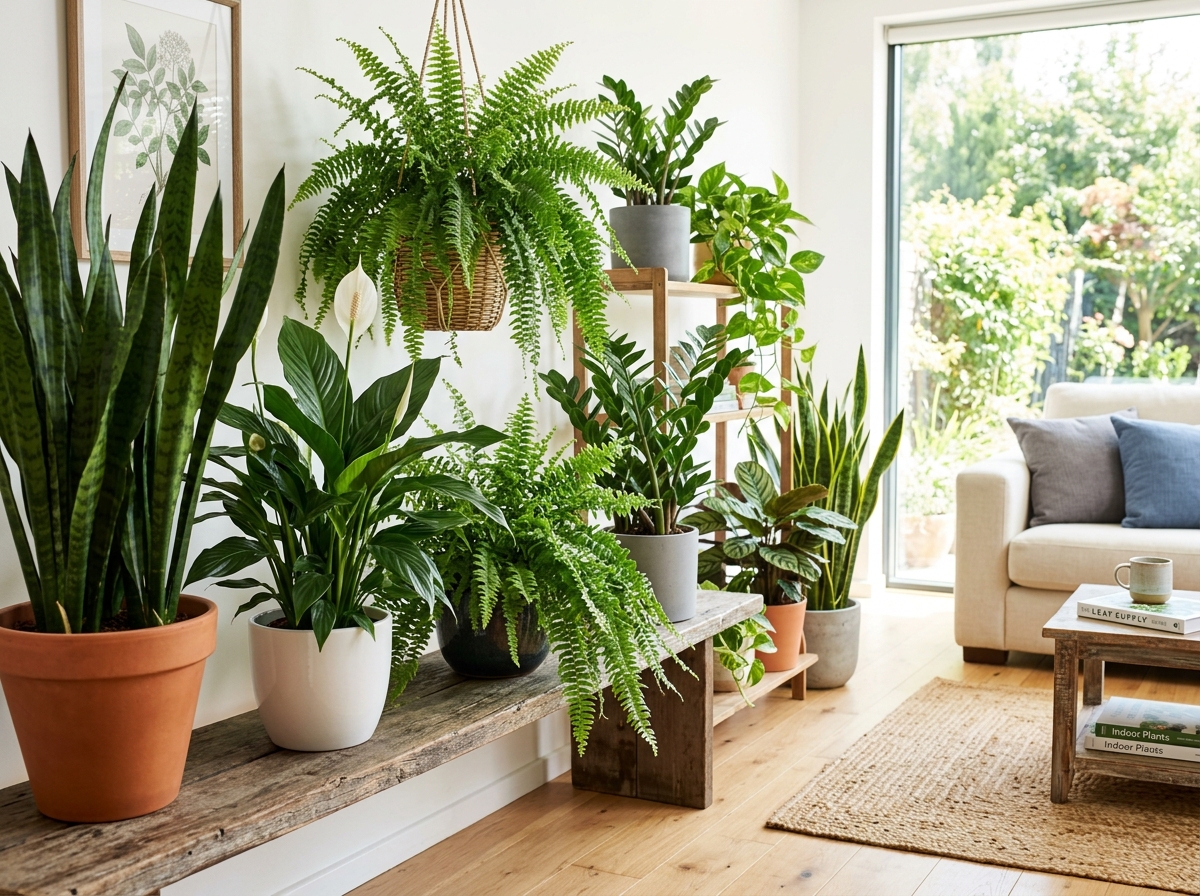
Snake Plant (Dracaena trifasciata)
The Snake Plant is the undisputed champion of the bedroom. Unlike most plants that take in oxygen at night, the Snake Plant uses Crassulacean Acid Metabolism (CAM) photosynthesis. This means it opens its stomata at night to absorb CO2 and release fresh oxygen while you sleep.
It’s featured prominently on NASA’s secret list for bedroom health because it is one of the few plants that can remove four out of the five main household toxins. Furthermore, research on Sansevieria health benefits highlights its incredible drought tolerance—it can literally go weeks without water and still keep your air clean.
Spider Plant (Chlorophytum comosum)
The Spider Plant is perhaps the most resilient plant on this list, making it safe for beginners. It is famous for its “plantlets” or “pups”—tiny baby plants that grow on long stems and can be easily snipped off to start new plants.
In terms of power, one spider plant is enough to effectively filter the air in a 200 square foot room. They are particularly skilled at removing formaldehyde and carbon monoxide, making them perfect for kitchens where gas stoves might be present.
Peace Lily (Spathiphyllum)
The Peace Lily is as functional as it is beautiful. It is one of the top performers for removing acetone (found in nail polish remover and certain cleaners) and alcohols. Because it has a high transpiration rate, it also helps increase humidity in a room, which can suppress airborne microbes and reduce mold spores.
Boston Fern (Nephrolepis exalta)
A favorite since the Victorian era, the Boston Fern acts as a natural humidifier. While it requires a bit more attention than a Snake Plant—preferring high humidity and consistent moisture—its ability to filter xylene and formaldehyde is top-tier. If you have dry air in your home, this fern will be your best friend.
How to Care for Your Natural Air Filters
Maintaining the best indoor plants that purify air doesn’t have to be a full-time job. Most of these species are quite hardy, but they do have a few basic needs to keep their “filters” running at 100% capacity.
One of the most important things we recommend at Futuro Ciencia is dusting the leaves. Dust can clog the pores (stomata) of the plant, making it harder for them to absorb toxins and sunlight. A quick wipe with a damp cloth every few weeks makes a world of difference.
Light and Water Needs for the Best Indoor Plants That Purify Air
Most air-purifying plants prefer indirect sunlight. Direct, harsh sun can scorch their leaves, while too little light might slow down their growth and purification rate.
- Low-light lovers: Snake Plants and Pothos can survive in dim corners.
- Bright, indirect light seekers: Peace Lilies and Spider Plants love a spot near a window with a sheer curtain.
When it comes to watering, the biggest killer is root rot. We always suggest using well-draining soil and pots with drainage holes. A good rule of thumb is to stick your finger two inches into the soil; if it feels dry, it’s time to water.
Maintenance Tips for Beginners
If you are worried about your “black thumb,” start with a Pothos or a Heartleaf Philodendron. These are nearly indestructible. They will even “tell” you when they are thirsty by drooping slightly, then bouncing right back after a drink. Establishing a consistent fertilizer schedule during the growing season (spring and summer) will also help keep them vibrant and active.
Safety First: Pet-Friendly vs. Toxic Purifying Plants
While we love the health benefits of these plants, we have to keep our furry friends in mind. Some plants contain saponins or calcium oxalate crystals, which can cause gastrointestinal upset, drooling, or swelling if ingested by cats or dogs.
Safe Options for Pets
If you have a curious cat or a nibbling dog, stick to these non-toxic powerhouses:
- Areca Palm: A great air purifier that is completely safe.
- Bamboo Palm: Excellent for removing formaldehyde and safe for pets.
- Spider Plant: Non-toxic and fun for cats to bat at (though try to keep them from eating the whole thing!).
Toxicity Warnings for Homeowners
Be careful with the following plants if you have pets:
- English Ivy: Can cause vomiting and diarrhea in pets.
- Peace Lily: Contains crystals that irritate the mouth and throat.
- Snake Plant: While great for air, it is mildly toxic if chewed on. We recommend keeping these on high shelves or in hanging planters out of reach of your pets.
Houseplants vs. Air Purifiers: Which is Better?
A common question we get is: “Can a plant really replace a HEPA filter?” The answer is that they work differently. Mechanical air purifiers are superior at catching particulate matter like dust, pollen, and smoke.
However, plants are better at removing gaseous chemicals (VOCs) and improving the overall “feel” of a room. Plants offer stress reduction and humidity balance that a machine simply can’t provide. For the ultimate healthy home, we recommend a combined approach: use a high-quality air purifier for dust and allergens, and fill your space with the best indoor plants that purify air to handle the chemicals and boost your mood.
Frequently Asked Questions about Air Purifying Plants
How many plants are needed to purify a room?
NASA’s original recommendation was one large plant (in a 6-inch pot or larger) for every 100 square feet of indoor space. For a standard living room, 2-3 well-placed plants can significantly impact air quality. Grouping plants together can also create a “microclimate” that increases humidity and improves filtration efficiency.
Which plants produce oxygen at night?
Most plants rest at night, but “CAM” plants like the Snake Plant, Aloe Vera, and certain Orchids keep working. They take in CO2 and release oxygen during the night, making them the perfect companions for a restful night’s sleep.
What are the easiest air-purifying plants to keep alive?
If you want low-maintenance, go for the “Big Three”: Snake Plant, Spider Plant, and Golden Pothos. These species are drought-resistant and incredibly tolerant of varied lighting conditions.
Conclusion
At Futuro Ciencia, we believe that your home should be a sanctuary. By introducing the best indoor plants that purify air, you aren’t just decorating; you are investing in your long-term health and well-being. Our mission is to help you maintain these green companions with ease through our indoor plant care schedules and expert guides.
Ready to breathe easier? Whether you’re a seasoned gardener or just starting out, there’s a perfect plant waiting to freshen your home. Start your indoor garden journey today and let us help you transform your space into a tranquil, purifying oasis.
