
Is the Areca Palm Toxic to Dogs? Here’s the Quick Answer
Areca palm toxic to dogs is a common worry — and the good news is, it shouldn’t be.
The Areca Palm is not toxic to dogs. The ASPCA officially lists it as non-toxic to dogs, cats, and horses. You can keep this plant in your home without fear of poisoning your pet.
| Feature | Details |
|---|---|
| Scientific name | Dypsis lutescens |
| Other names | Golden Butterfly Palm, Cane Palm, Yellow Palm, Golden Feather Palm |
| Toxic to dogs? | ❌ No |
| Toxic to cats? | ❌ No |
| Toxic to horses? | ❌ No |
| Source | ASPCA Animal Poison Control |
That said, non-toxic doesn’t mean zero risk. If your dog chews a large amount of palm fronds, mild stomach upset can happen — simply because of the fibrous plant material. Not because of any poison.
There’s also one critical warning: the Sago Palm looks similar to the Areca Palm but is extremely dangerous to dogs. Knowing the difference could save your dog’s life.
This guide covers everything you need — from identifying the right plant, to what happens if your dog nibbles on it, to keeping both your pet and your palm happy.
Areca Palm Toxic to Dogs: What the Experts Say
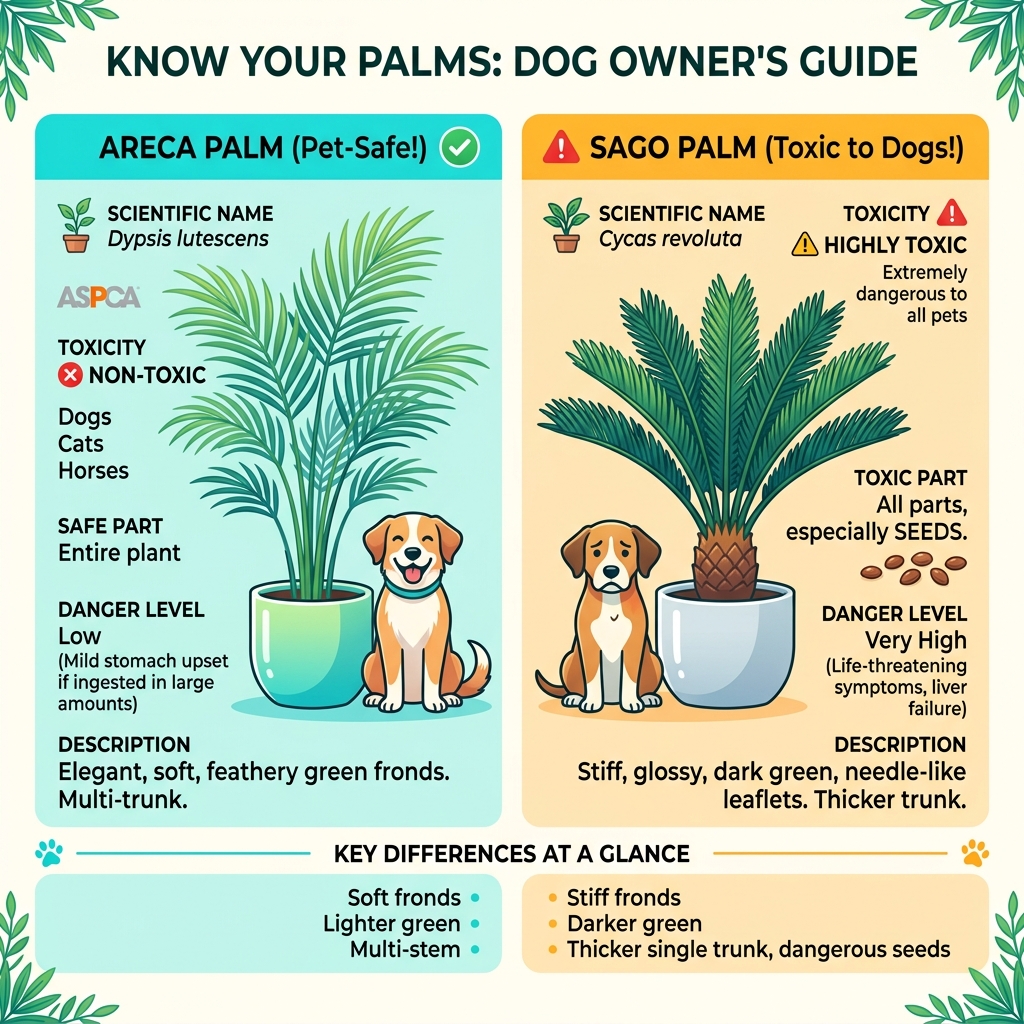
When we look for the gold standard in pet safety, we turn to the Toxic and Non-toxic Plants: Areca Palm | ASPCA database. The experts at the ASPCA have categorized the Areca Palm, scientifically known as Dypsis lutescens (from the Palmae family), as completely non-toxic.
This means that if you are searching “is areca palm toxic to dogs,” the definitive answer from veterinary toxicologists is a resounding no. Unlike many other popular houseplants that contain insoluble calcium oxalates or complex alkaloids, the Areca Palm lacks these harmful chemical compounds. This safety profile extends across the board; it is also confirmed safe for cats and horses.
In our experience at Futuro Ciencia, we often recommend this plant as a top choice in our guide on indoor-plants-for-beginners-with-pets. It allows you to achieve that lush, tropical aesthetic without the constant anxiety of a “what if” scenario. However, while the plant itself isn’t poisonous, the way we maintain it can introduce risks—such as the type of fertilizer we use or the pebbles we place in the soil—which we will dive into later.
Identifying the Areca Palm and Its Deadly Lookalikes
One of the biggest dangers in indoor gardening isn’t the plant you think you have, but the one you actually have. The Areca Palm is often confused with other palm-like species, most notably the Sago Palm. This confusion can be fatal.
The Sago Palm (Cycas revoluta) is not a true palm at all; it is a cycad. It contains a toxin called cycasin, which is incredibly potent. Ingesting just one or two seeds from a Sago Palm can lead to liver failure and death in dogs.
To keep your “furry best friend” safe, use this comparison table:
| Feature | Areca Palm (Dypsis lutescens) | Sago Palm (Cycas revoluta) |
|---|---|---|
| Toxicity | Non-toxic | Extremely Toxic |
| Leaf Structure | Soft, feathery, arching fronds | Stiff, plastic-like, sharp fronds |
| Stems/Trunk | Yellowish “cane” stems at the base | A thick, shaggy, dark brown trunk |
| Growth Habit | Grows in clumps from the soil | Grows from a central “bulb” or trunk |
| Danger Level | Safe for pets | Emergency – Can be fatal |
If you are a new plant parent, we suggest checking out our list of easy-indoor-plants-for-beginners to ensure you are starting your collection with verified safe species. Always check the nursery tag for the scientific name. If it says Dypsis lutescens, you are in the clear. If it says Cycas, keep it far away from your home.
Why Your Dog Might Chew on an Areca Palm
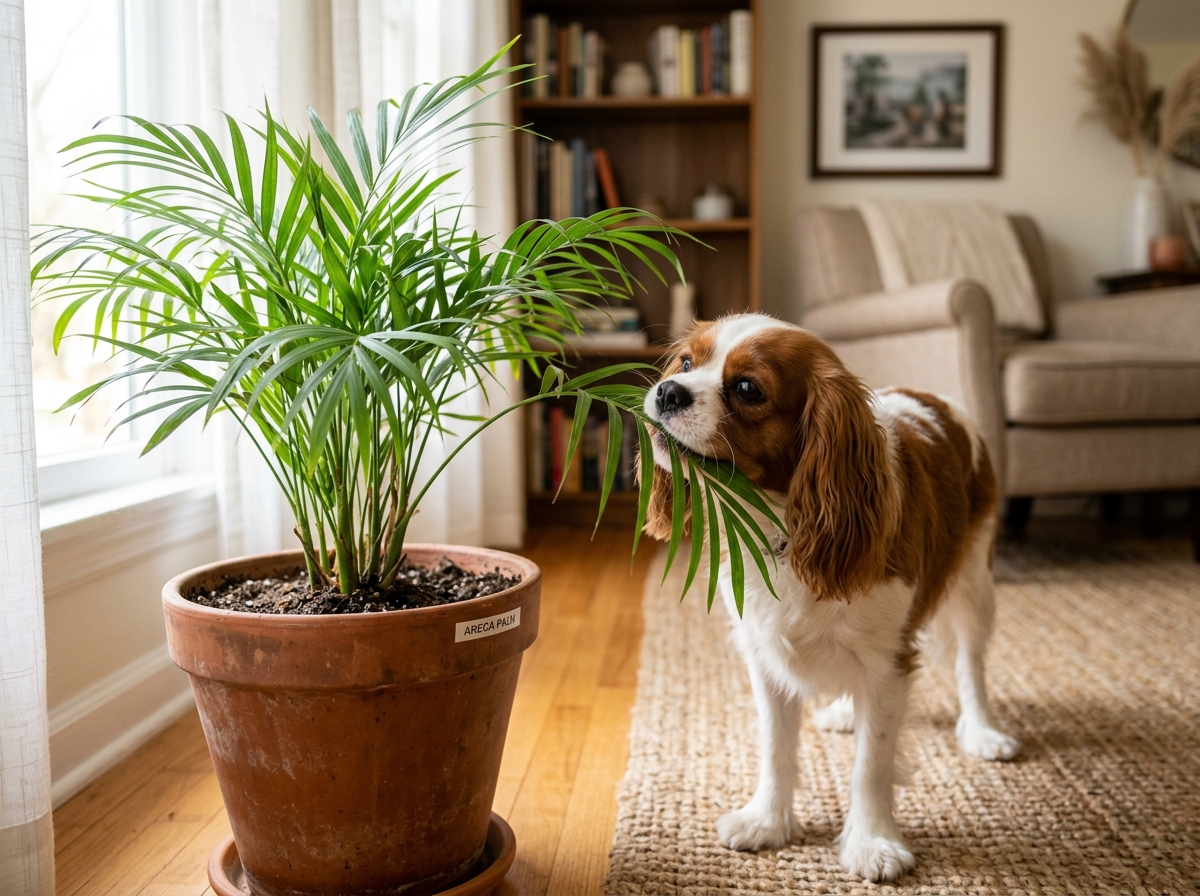
Even though we know the Areca Palm is safe, you might wonder why your dog is treating your living room decor like a salad bar. There are several reasons for this behavior:
- Natural Curiosity: Dogs, especially puppies, explore the world with their mouths. The long, dangling fronds of an Areca Palm are particularly inviting.
- Texture and Movement: The way the leaves flutter in a light breeze or from the HVAC system can trigger a dog’s prey drive or playfulness.
- Boredom: If a dog isn’t getting enough mental or physical stimulation, they might turn to “redecorating” your plants.
- Dietary Needs: Sometimes, dogs chew on grass or fibrous plants to help with digestion or because they feel they are missing certain nutrients.
- Anxiety: Chewing can be a self-soothing mechanism for stressed pets.
If you are looking for plants that don’t require constant hovering, see our recommendations for indoor-plants-that-need-little-care.
Is the Areca palm toxic to dogs if they swallow the fronds?
While we’ve established that the plant isn’t poisonous, swallowing the fronds can still lead to issues. The Areca Palm is very fibrous. When a dog eats a large amount of this roughage, their digestive system might struggle to break it down.
This can lead to:
- Indigestion: A general feeling of discomfort.
- Vomiting: The body’s way of getting rid of material it can’t process.
- Diarrhea: Often caused by the sudden influx of high fiber.
Think of it like a human eating a giant bowl of kale stems; it’s not “toxic,” but you probably won’t feel great afterward. For more on managing your plant’s health (and your dog’s), check out our indoor-plant-care-tips-for-beginners.
Precautions when keeping an areca palm toxic to dogs in theory but safe in practice
Even with a non-toxic plant, we need to be smart about “secondary toxicity.” This refers to things we add to the plant that are harmful.
- Fertilizers: Many liquid fertilizers contain salts and chemicals that can irritate a dog’s mouth or stomach. Always wait for the soil to dry or use pet-safe organic options.
- Pesticides: Avoid systemic pesticides that the plant absorbs into its tissues. If you have a pest problem, we recommend using neem oil or insecticidal soap, which are generally much safer for pets.
- Water Quality: Areca Palms are sensitive to fluoride in tap water, which causes brown tips. While using distilled water is great for the plant, it also ensures your dog isn’t lapping up fluoride-heavy runoff from the drainage tray.
- Choking Hazards: Small decorative stones or pebbles used to cover the soil can be swallowed by curious dogs, leading to intestinal blockages.
For those of you placing palms in professional spaces, our guide on low-maintenance-plants-for-offices offers great insights into keeping greenery healthy in high-traffic areas where pets might occasionally visit.
How to Keep Your Dog and Your Areca Palm Safe
We believe in a “co-existence” strategy. You shouldn’t have to choose between your plant and your pet. Here are our top tips for keeping the peace:
- Elevate Your Plants: The simplest solution is to put the Areca Palm on an elevated plant stand or a sturdy table. If the dog can’t reach the fronds, they can’t chew them.
- Training Commands: Teach your dog the “Leave it” and “Drop it” commands. Positive reinforcement with treats when they ignore the plant goes a long way.
- Physical Barriers: For larger palms that sit on the floor, consider using a decorative baby gate or a small indoor fence around the base.
- Deterrent Sprays: You can use pet-safe bitter sprays on the lower leaves. Most dogs find the taste of bitter apple or diluted lemon juice repulsive.
- Pruning: Regularly trim away dead or yellowing fronds. These are often drier and more “crunchy,” making them even more tempting for a dog to chew on.
If you have a particularly “energetic” dog, you might want to look into indoor-plants-that-survive-neglect, as they can usually handle a bit of roughhousing better than more delicate species.
Other Pet-Friendly Houseplants for Your Home
If you love the look of the Areca Palm and want to build a whole indoor jungle that is 100% safe, you’re in luck! There are plenty of options that have passed the NASA clean air study and the ASPCA safety test.
- Spider Plant (Chlorophytum comosum): Famous for its air-purifying qualities and totally safe for dogs and cats.
- Boston Fern (Nephrolepis exaltata): Adds a classic, lush look and loves humidity.
- African Violet (Saintpaulia): Perfect for those who want a splash of color without the risk.
- Parlor Palm (Chamaedorea elegans): A smaller, slower-growing palm that is also non-toxic.
- Bamboo Palm (Chamaedorea seifrizii): Another great air-purifier that won’t harm your pets.
We dive deeper into these varieties in our article on indoor-plants-for-beginners-with-pets. Creating a “tranquil oasis” shouldn’t come at the cost of your pet’s health.
Frequently Asked Questions about Areca Palms and Pets
What should I do if my dog eats part of an Areca Palm?
First, don’t panic! The areca palm toxic to dogs myth is just that—a myth. However, you should take these steps:
- Monitor for distress: Look for signs of gagging or choking.
- Check the mouth: Ensure no long fibers are stuck in their teeth or throat.
- Offer fresh water: This helps flush any small bits of plant material through the system.
- Watch for symptoms: If your dog experiences persistent vomiting or diarrhea (lasting more than 12-24 hours), contact your veterinarian.
- Identify the plant: Double-check that it was actually an Areca Palm and not a Sago Palm.
Is the Areca Palm safe for cats and horses?
Yes! The ASPCA confirms that the Areca Palm is non-toxic to felines and equines as well. This makes it an ideal choice for multi-pet households or even for those who keep plants in a stable or sunroom accessible to larger animals.
How can I tell the difference between an Areca Palm and a Sago Palm?
Look at the stems and leaves. The Areca Palm has smooth, yellowish stems that look like bamboo canes and soft, feathery leaves. The Sago Palm has a rough, woody trunk that looks like a pineapple and stiff, needle-like leaves that can actually prick your finger.
Conclusion
At Futuro Ciencia, our mission is to help you transform your living space into a vibrant, healthy environment. We know that your pets are family, and their safety is your top priority. By choosing the Areca Palm, you are choosing a plant that brightens your home and purifies your air without putting your dog at risk.
By following a consistent care schedule and using the right training techniques, you can enjoy the best of both worlds. For more tips on building your perfect, pet-safe indoor garden, explore our guide on indoor-plants-for-beginners-with-pets. Happy planting!
