
Can a Peace Lily Really Thrive in a Self Watering Pot?
Yes — a self watering pot for peace lily plants is genuinely one of the best combinations in indoor gardening. Peace lilies love consistent moisture, and self-watering pots deliver exactly that, without you having to remember a watering schedule.
Quick answer for busy plant owners:
- Peace lilies do thrive in self-watering pots
- The built-in reservoir delivers water from the bottom up via capillary action
- You only need to refill the reservoir roughly once a month
- This prevents both overwatering and underwatering — the two most common reasons peace lilies fail
- Peace lilies are mildly toxic to pets, so keep them out of reach
If you’ve ever come home to a drooping, sad-looking peace lily — a behavior plant owners sometimes call “pouting” — you already know how quickly these plants react to inconsistent watering. One experienced plant owner kept a peace lily alive for nearly 14 years simply by learning to read those drooping leaves as a reliable signal to water.
The good news? A self-watering pot takes most of that guesswork away entirely.

How a Self Watering Pot for Peace Lily Works
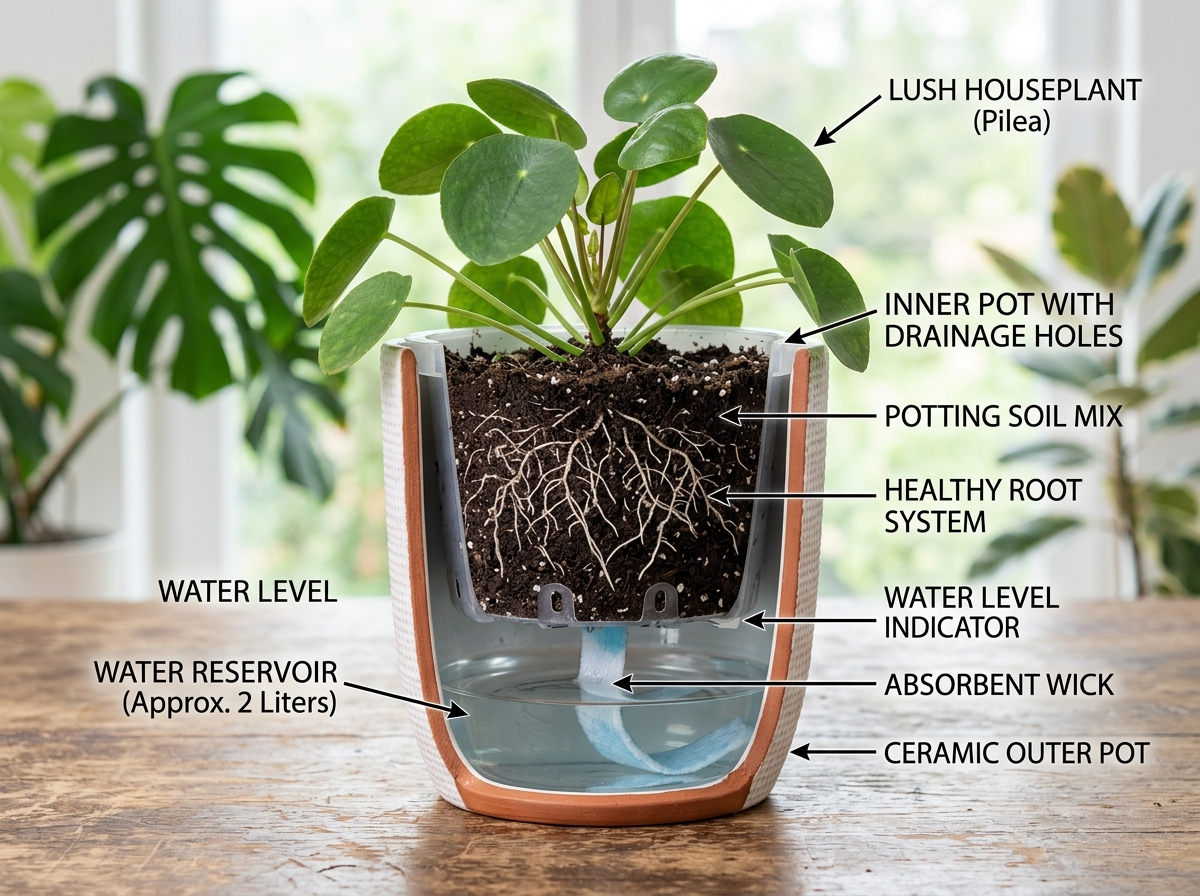
At first glance, a self watering pot for peace lily use might seem like magic, but it’s actually basic physics. Most of these systems consist of two main parts: an inner container where the plant and soil sit, and an outer reservoir that holds the water.
The “magic” happens through capillary action. Think of it like a sponge sitting in a shallow puddle; the water naturally climbs upward into the dry parts of the sponge. In a self-watering planter, a wick (usually a fabric cord or a specialized structural “leg” filled with soil or LECA) connects the water reservoir to the potting mix. As the plant drinks and the soil dries out, the wick draws up more water from below.
This creates a bottom-up hydration system. Unlike traditional top-watering, which can leave the top layer of soil soggy and the bottom dry, this method keeps the moisture level consistent right where the roots need it most. When selecting-indoor-plant-pots-and-planters, it’s important to choose a design that allows the roots to breathe while still accessing that moisture.
Why Peace Lilies Thrive with Consistent Moisture
Peace lilies are native to the tropical forest floors of Central and South America. In their natural habitat, they live in high-humidity environments where the soil stays damp but not swampy. They are essentially the “Goldilocks” of the plant world—they don’t want to be bone dry, and they don’t want to be swimming in a pool.
When we bring them indoors, our dry air and forgetful watering habits often cause them stress. A peace lily under drought stress will “pout”—its leaves will lose their turgor pressure and collapse dramatically. While they are famous for “resurrecting” once watered, repeated wilting can weaken the plant over time, leading to brown leaf tips and fewer blooms.
Because peace lilies are indoor-plants-that-thrive-in-low-light, they are often placed in corners of the home that we forget to visit with a watering can. A self-watering system bridges that gap. By maintaining steady moisture levels, we mimic the forest floor, which is essential for indoor-plant-care-for-low-light scenarios where the plant might grow more slowly but still needs hydration to maintain its lush, glossy foliage.
Setting Up Your Self Watering Pot for Peace Lily Success
Setting up your new pot correctly is the difference between a thriving plant and a soggy mess. We recommend a few specific steps to ensure your peace lily transitions well to its new home.
First, consider the medium. While traditional soil works, many modern gardeners are turning to LECA (Lightweight Expanded Clay Aggregate). These small clay balls provide excellent aeration for the roots while effectively “wicking” water from the reservoir. This reduces the “soil mess” and helps prevent the soil from becoming overly compacted or anaerobic.
When you are ready to move your plant, follow our guide on how-to-repot-indoor-plants. You’ll want to gently remove the old soil from the roots, especially if you are switching to a LECA-based system. Ensure there is a proper drainage layer or that the wick is positioned so it makes direct contact with the root zone.
Choosing the Right Soil for Your Self Watering Pot for Peace Lily
If you prefer to stick with soil, you can’t just use any old dirt from the backyard. You need a high-quality best-soil-for-indoor-plants that is specifically designed for moisture retention and aeration.
A good mix for a self watering pot for peace lily typically includes:
- Peat moss or Coco Coir: To hold onto moisture.
- Perlite or Pumice: To create air pockets so the roots don’t suffocate.
- Vermiculite: To assist with the wicking process.
Standard potting mixes can sometimes become too heavy and waterlogged in a self-watering system. We suggest adding extra perlite to your mix to ensure the “breathability” of the soil. This is a key factor when looking at the best-containers-for-indoor-plants, as the pot and the soil must work together to balance air and water.
Initial Saturation and Wicking Setup
One of the biggest mistakes people make with self-watering pots is filling the reservoir and walking away immediately. When you first repot your peace lily, the soil is likely dry and the “capillary connection” hasn’t been established yet.
For the first week or two, you should top-water the plant. This ensures the soil is fully saturated and “settles” around the wick. Once the soil is moist, fill the reservoir to the recommended level. This creates a continuous “bridge” of moisture from the reservoir through the wick and into the soil.
If your peace lily continues to wilt after repotting, don’t panic! It can take a day or even overnight for the plant to adjust to its new environment and for the wicking system to start working effectively. For more details on this transition, see how-to-repot-indoor-plants-2.
Maintenance and Refilling Your Reservoir
The beauty of the self watering pot for peace lily is the low-maintenance lifestyle it offers. Statistics show that plants using these systems can live up to 6x longer than those in regular pots because they avoid the “boom and bust” cycle of extreme drying and soaking.
Generally, you will only need to refill the reservoir once a month. However, this depends on the size of your plant, the humidity in your home, and the time of year. During the hot summer months, your peace lily might drink faster.
We always recommend using distilled water or filtered water if possible. Peace lilies are sensitive to the chlorine and fluoride found in many tap water supplies, which can lead to unsightly brown tips on the leaves. If you must use tap water, let it sit out overnight to allow some of the chemicals to dissipate. Check out our watering-schedule-for-indoor-plants for more tips on water quality.
Monitoring the Water Level in a Self Watering Pot for Peace Lily
Most high-quality self-watering pots come with a water level indicator or a float marker. This is usually a small tube with a buoyant stick that shows you exactly how much water is left in the tank.
Don’t feel pressured to keep the reservoir “topped off” at the maximum level at all times. In fact, it’s often better to let the reservoir run dry for a day or two before refilling. This allows the soil to aerate slightly and prevents the roots from being constantly submerged, which can lead to rot. Using an indoor-plant-care-schedule can help you track these monthly check-ins without it becoming a daily chore.
Troubleshooting Common Peace Lily Problems
Even with a self watering pot for peace lily, things can occasionally go wrong. The most common issue is root rot. If you notice the leaves are turning yellow and the soil smells “sour” or musty, the plant is likely getting too much water. This happens if the reservoir is never allowed to empty or if the soil mix is too heavy and lacks perlite.
If you see brown tips on the leaves, it could be a sign of:
- Chemical sensitivity: Switch to distilled water.
- Low humidity: Try misting the leaves or placing the pot near a humidifier.
- Mineral buildup: Occasionally “flush” the soil by watering from the top until water runs out the bottom (into a sink, not the reservoir) to wash away salt and fertilizer buildup.
Another critical point: Peace lilies are toxic to pets. They contain calcium oxalate crystals, which can cause intense oral irritation, drooling, and vomiting if chewed on. Always keep your lily on a high shelf or in a room where your furry friends can’t reach it.
For a complete list of what to watch for, refer to our indoor-plant-maintenance-checklist and indoor-plant-care-tips-for-beginners.
Frequently Asked Questions about Peace Lily Care
How often should I refill the reservoir?
For a medium-sized peace lily in a standard indoor environment, once a month is the gold standard. However, check the indicator every two weeks when you first start. Larger plants in bright light will drink much faster than smaller ones in dim corners. You can find more about managing different plant sizes in our guide for easy-indoor-plants-for-beginners.
Can I use fertilizer in a self-watering pot?
Yes! In fact, it’s very efficient. You can add a few drops of a balanced liquid fertilizer directly into the water reservoir. Because the plant is drinking consistently, it receives a steady, diluted stream of nutrients rather than one big “shock” dose. We recommend doing this during the growing season (spring and summer) and cutting back in the winter.
Are Peace Lilies toxic to cats and dogs?
Yes, they are mildly toxic. While they aren’t as dangerous as true lilies (which can cause kidney failure in cats), the calcium oxalate crystals in peace lilies cause painful swelling of the mouth and throat. If you have curious pets, you might want to look into other indoor-plants-that-survive-neglect that are specifically labeled as pet-safe.
Conclusion
At Futuro Ciencia, we believe that everyone deserves to live in a tranquil oasis, and a self watering pot for peace lily is the ultimate “cheat code” to achieving that. By providing consistent hydration, these pots take the stress out of plant ownership, allowing you to enjoy the air-purifying benefits and elegant white blooms without the constant worry of the “pouting” leaf drama.
Whether you are a busy professional or a self-proclaimed “lazy gardener,” investing in a self-watering system ensures your peace lily thrives for years to come. For more ways to simplify your greenery, check out our indoor-plant-care-routine or visit us at https://www.futurociencia.com/ to find the perfect schedule for your home garden. Happy growing!
