
The Busy Plant Owner’s Guide to Keeping Elephant Bush Alive and Thriving
Knowing how to care for elephant bush is simpler than you might think — and getting it right from day one means you’ll spend less time troubleshooting and more time enjoying your plant.
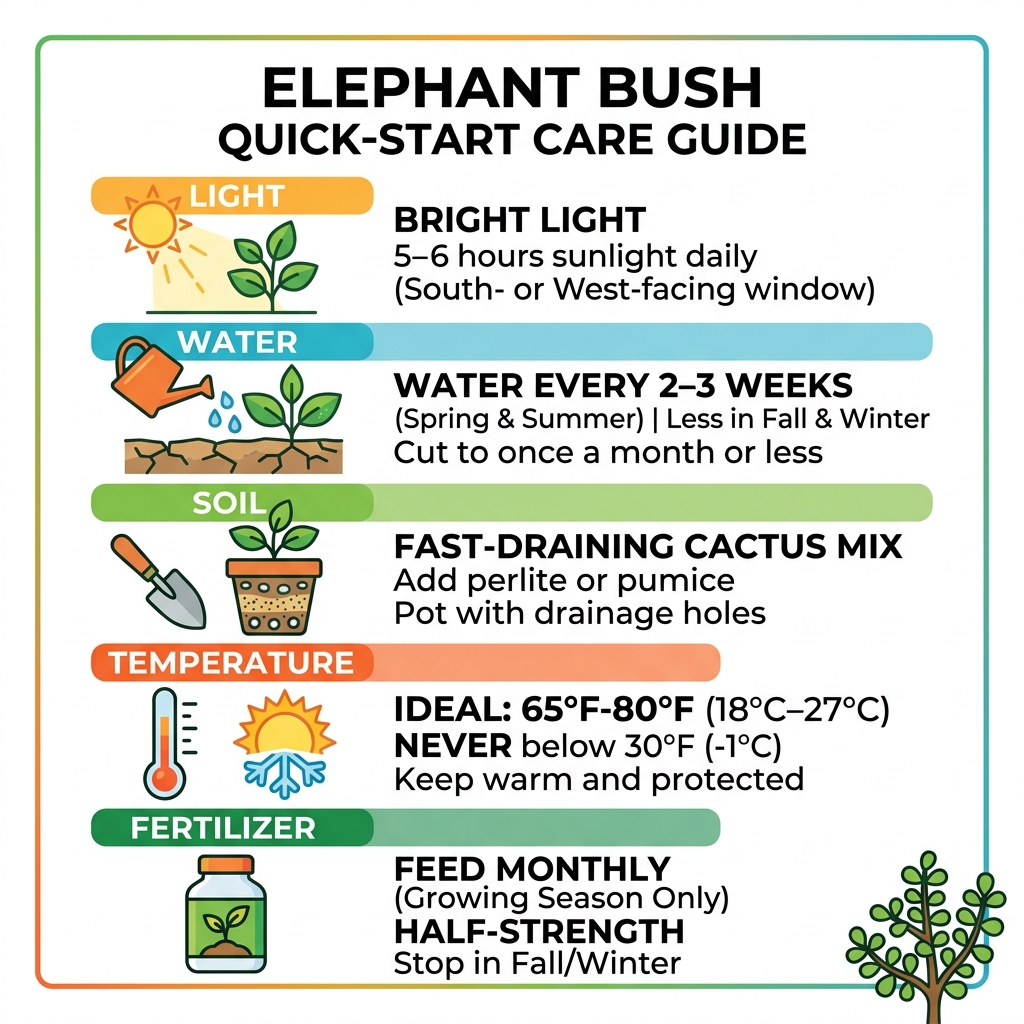
Quick-start care summary:
- Light — Place in a bright spot with 5–6 hours of sunlight daily (south- or west-facing window is ideal)
- Water — Water every 2–3 weeks in spring and summer; cut back to once a month or less in fall and winter
- Soil — Use a fast-draining cactus mix with perlite or pumice; always use a pot with drainage holes
- Temperature — Keep between 65°F–80°F (18°C–27°C); never let it drop below 30°F (-1°C)
- Fertilizer — Feed monthly at half-strength during the growing season only
- Pruning — Trim in spring or summer to keep it compact and bushy
- Toxicity — Generally considered non-toxic to pets and humans
Elephant Bush (Portulacaria afra) is a tough, forgiving succulent native to the dry scrublands of South Africa. Its small, glossy green leaves and reddish-brown stems give it a look that’s somewhere between a miniature tree and a bonsai — which is exactly why so many people fall in love with it.
Indoors, it stays compact — typically 2 to 4 feet tall — making it a great fit for shelves, windowsills, or tabletops. It stores water in its thick leaves, so it handles a missed watering far better than most houseplants. That makes it a near-perfect match for busy homeowners who don’t have time to fuss over daily plant care.
The rest of this guide covers everything from the right soil mix to fixing common problems like yellowing leaves or unexpected leaf drop.
Understanding Portulacaria afra: Characteristics and Varieties
Before we dive into the nitty-gritty of maintenance, we should get to know this plant’s fascinating background. While many people mistake it for the common Jade plant (Crassula ovata), the Elephant Bush is actually quite different. It belongs to the family Didiereaceae and is a keystone species in its native South African habitat.
In the wild, this plant is a powerhouse. It is famously known as a “carbon sponge.” Scientific research on carbon sequestration has shown that Portulacaria afra can sequester more carbon from the atmosphere than many types of deciduous forests, especially in arid conditions. It’s also a favorite snack for elephants (hence the name!) and tortoises. In fact, the leaves are edible for humans too, featuring a pleasant, tart, sweet-and-sour flavor often used in South African salads and soups.
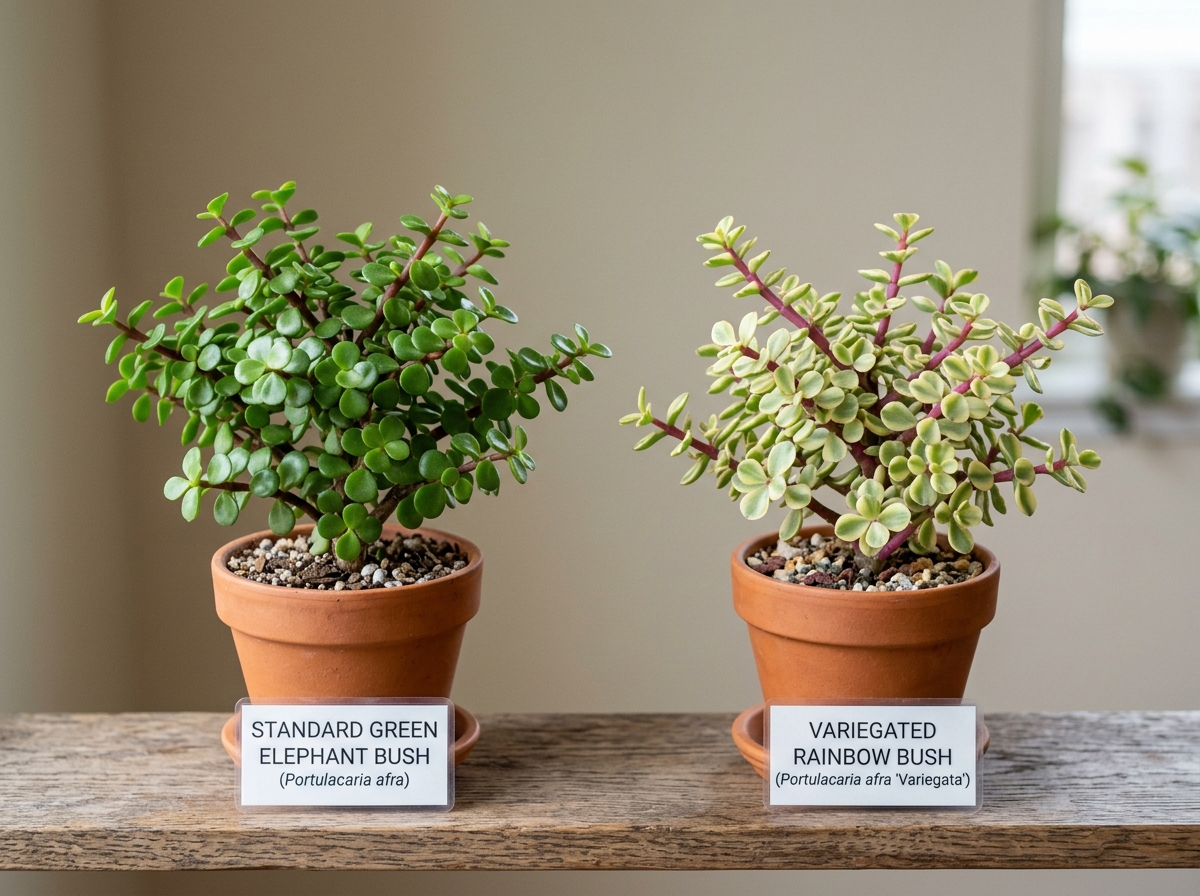
If you are looking for indoor succulents that are easy to care for, you’ll find several beautiful varieties of Elephant Bush to choose from:
| Variety | Key Characteristics | Best Use |
|---|---|---|
| Variegata (Rainbow Bush) | Creamy white leaf margins with green centers and pinkish stems. | Hanging baskets or bright tabletops. |
| Prostrata | Low-growing, trailing habit that spreads horizontally. | Ground cover (outdoors) or cascading over pot edges. |
| Aurea | Features bright yellow foliage, especially when given plenty of sun. | Adding a pop of color to succulent arrangements. |
| Cork Bark | Develops a “corky,” fissured bark texture even on young plants. | Highly prized by bonsai enthusiasts. |
How to Care for Elephant Bush: Light, Water, and Soil Requirements
The secret to a happy Elephant Bush is mimicking its native desert-like environment. We want to provide plenty of light, a “feast or famine” watering schedule, and soil that never stays soggy. This plant is a champion of low-water indoor plants, making it ideal for those of us who occasionally forget our watering cans.
Essential Light Requirements: How to Care for Elephant Bush Indoors
Light is perhaps the most critical factor when learning how to care for elephant bush. These plants crave the sun. To keep them healthy, we recommend providing at least 5 to 6 hours of bright light daily.
- Best Placement: A south-facing or west-facing window is usually the “sweet spot” indoors.
- The “Leggy” Warning: If your plant isn’t getting enough light, the stems will start to stretch out, and the leaves will become sparse. This is called “etiolation.” If you notice your plant looking thin and reaching for the window, it’s time to move it to a brighter location.
- Acclimation: If you decide to move your indoor plant outside for the summer, do it gradually. Jumping from a dim corner to direct midday sun can cause the leaves to sunburn, appearing as brown or white crispy spots.
For more detailed tips on lighting, check out our guide on indoor plant light requirements.
Seasonal Watering: How to Care for Elephant Bush in Winter
Watering is where most plant parents go wrong. The Elephant Bush is highly drought-tolerant because it stores water in its fleshy leaves and stems. We use the “soak and dry” method: water the soil thoroughly until it runs out of the drainage holes, then wait until the soil is completely dry before watering again.
- Spring and Summer: During the active growing season, you will likely water every 2 to 3 weeks.
- Winter Dormancy: In the cooler months, the plant’s metabolism slows down. You should reduce watering significantly—sometimes only once a month or even less.
- The “Shrivel” Test: If the leaves look wrinkled or slightly shriveled, the plant is thirsty. If the leaves are soft, yellow, and falling off, it likely has too much water.
Mastering this balance is the secret to keeping low-light plants alive and healthy throughout the year.
Best Soil and Potting Setup
You cannot use standard potting soil for an Elephant Bush; it holds too much moisture and will lead to root rot. Instead, we need a gritty, fast-draining mix.
- The Recipe: A high-quality cactus and succulent mix is perfect. You can further improve drainage by mixing in 1 part perlite or pumice to 1 part soil.
- The Pot: We always recommend unglazed terracotta pots. The porous nature of terracotta allows the soil to “breathe” and helps moisture evaporate more quickly, which is a great safety net against overwatering.
- Drainage Holes: This is non-negotiable! Without a hole in the bottom of the pot, water will pool at the roots and cause the plant to die.
Choosing the best soil for indoor plants is the foundation of a thriving indoor garden.
Advanced Maintenance: Pruning, Fertilizing, and Repotting
Once you’ve mastered the basics of how to care for elephant bush, you can start shaping your plant into a true showpiece. Because it grows relatively quickly and has flexible stems, it is a favorite for those interested in the botanical characteristics of Didiereaceae and the art of bonsai.
Pruning for Shape and Bonsai
Pruning isn’t just about aesthetics; it actually helps the plant grow stronger. By pinching off the growing tips, you encourage the plant to branch out, resulting in a fuller, bushier appearance rather than long, spindly stems.
- When to Prune: The best time is in late spring or early summer when the plant is actively growing.
- How to Prune: Use sharp, sterilized shears. You can remove up to one-third of the plant’s growth if it has become unruly.
- Bonsai Potential: Because the stems turn woody and reddish-brown as they age, you can easily train an Elephant Bush to look like a miniature ancient tree.
For more general techniques, see our pruning tips for indoor plants.
When and How to Repot
Elephant Bushes don’t mind being a little cramped, but eventually, they will need more space. We usually repot every 2 to 3 years.
- Signs it’s time: Roots growing out of the drainage holes or water sitting on top of the soil because the roots are too dense.
- The Process: Choose a pot that is only one size larger (about 1–2 inches wider) than the current one. Gently loosen the root ball and replace the old soil with a fresh succulent mix.
- Aftercare: Wait about a week after repotting before you water. This allows any roots that were damaged during the move to callus over and heal, preventing rot.
If you are nervous about the process, our guide on how to repot indoor plants will walk you through it step-by-step.
Troubleshooting and Propagation Techniques
Even with the best intentions, issues can arise. The good news is that Elephant Bushes are incredibly resilient. If you catch a problem early, you can almost always save the plant.
Common Pests and Diseases
The most common enemies of the Elephant Bush are sap-sucking insects.
- Mealybugs: These look like tiny bits of white cotton hidden in the leaf axils. You can remove them with a cotton swab dipped in rubbing alcohol.
- Spider Mites: If you see tiny webs between the stems, you likely have mites. These thrive in dry air, so increasing humidity slightly or wiping the leaves can help.
- Whiteflies: These small, winged insects often hang out on the undersides of leaves.
For persistent infestations, neem oil or an insecticidal soap is usually effective. Always check our list of indoor plant pests and how to remove them for more natural solutions. The biggest disease threat is root rot, which is almost always caused by overwatering. If your stems turn black and mushy at the base, read our indoor plant root rot solutions immediately.
Propagating from Cuttings
One of the most rewarding parts of knowing how to care for elephant bush is how easy it is to make more plants! You can grow a whole new “Spekboom” from a single stem cutting.
- Step 1: Cut a healthy stem about 3 to 4 inches long.
- Step 2: Remove the leaves from the bottom inch of the stem.
- Step 3: Let the cutting sit in a dry, shaded spot for 1 to 2 days until the cut end “calluses” (dries out and hardens).
- Step 4: Stick the callused end into a pot of dry succulent soil.
- Step 5: Wait about two weeks before watering lightly. Roots usually form within 4 to 6 weeks.
This is one of the many indoor succulents that are easy to care for and propagate, making them great gifts for friends.
Frequently Asked Questions about Elephant Bush
Is Elephant Bush toxic to pets and humans?
No! This is one of the best features of the plant. Unlike the Jade plant, which can be toxic to cats and dogs, the Elephant Bush is considered non-toxic. In fact, it’s edible! While we don’t suggest letting your cat treat it like a salad bar, it won’t cause them harm if they take a nibble.
How fast does Elephant Bush grow?
Indoors, growth is moderate. You can expect it to reach 2 to 4 feet tall over several years. However, in its native habitat or when planted in the ground in frost-free climates (Zones 9–11), it can grow into a massive shrub or small tree reaching up to 15 feet tall!
Why is my Elephant Bush dropping leaves?
This is the most common question we get. Leaf drop is usually a sign of stress. The most frequent culprits are:
- Overwatering: The most common cause. If the leaves are yellow or mushy before falling, stop watering immediately and check the roots.
- Temperature Shock: If the plant is near a cold draft or a heater vent, it may drop leaves in protest.
- Light Changes: Moving the plant from a bright spot to a dark one will cause it to shed leaves it can no longer support.
Conclusion
At Futuro Ciencia, we believe that bringing a bit of nature into your home shouldn’t be a source of stress. The Elephant Bush is a remarkable plant that offers beauty, air purification, and a touch of South African resilience to any room. By following these simple steps on how to care for elephant bush, you are well on your way to creating a tranquil oasis in your own space.
If you want to take the guesswork out of gardening, we provide customized plant care schedules and guides to help you keep every leaf green and every stem strong.
Ready to expand your indoor jungle? Find more info about our indoor plant care services and let us help you grow with confidence!
