
Why the Best House Plants for Apartments Are Easier to Grow Than You Think
The best house plants for apartments are ones that thrive in limited light, forgive missed watering days, and fit into small spaces without taking over your home.
Here’s a quick look at the top picks:
| Plant | Light Needed | Watering | Pet Safe? |
|---|---|---|---|
| Snake Plant | Low to indirect | Every 2-3 weeks | No |
| ZZ Plant | Low to indirect | Every 2-3 weeks | No |
| Pothos | Low to bright indirect | When top inch is dry | No |
| Spider Plant | Indirect | When top inch is dry | Yes |
| Peace Lily | Low to indirect | When leaves droop | No |
| Parlor Palm | Low to indirect | When top inch is dry | Yes |
| Bird’s Nest Fern | Low to indirect | Keep lightly moist | Yes |
Apartment living can feel like it works against you when it comes to plants. Limited sunlight, dry air from heating systems, and a packed schedule make it easy to kill even the most forgiving greenery.
But here’s the thing: the right plant in the right spot almost takes care of itself.
Studies show that adding indoor plants to your living space can reduce stress, boost your mood, and even help purify the air. Some plants, like snake plants and pothos, actively remove toxins like formaldehyde and benzene from the air around you.
You don’t need a balcony, a green thumb, or hours of free time. You just need to match the plant to your space.
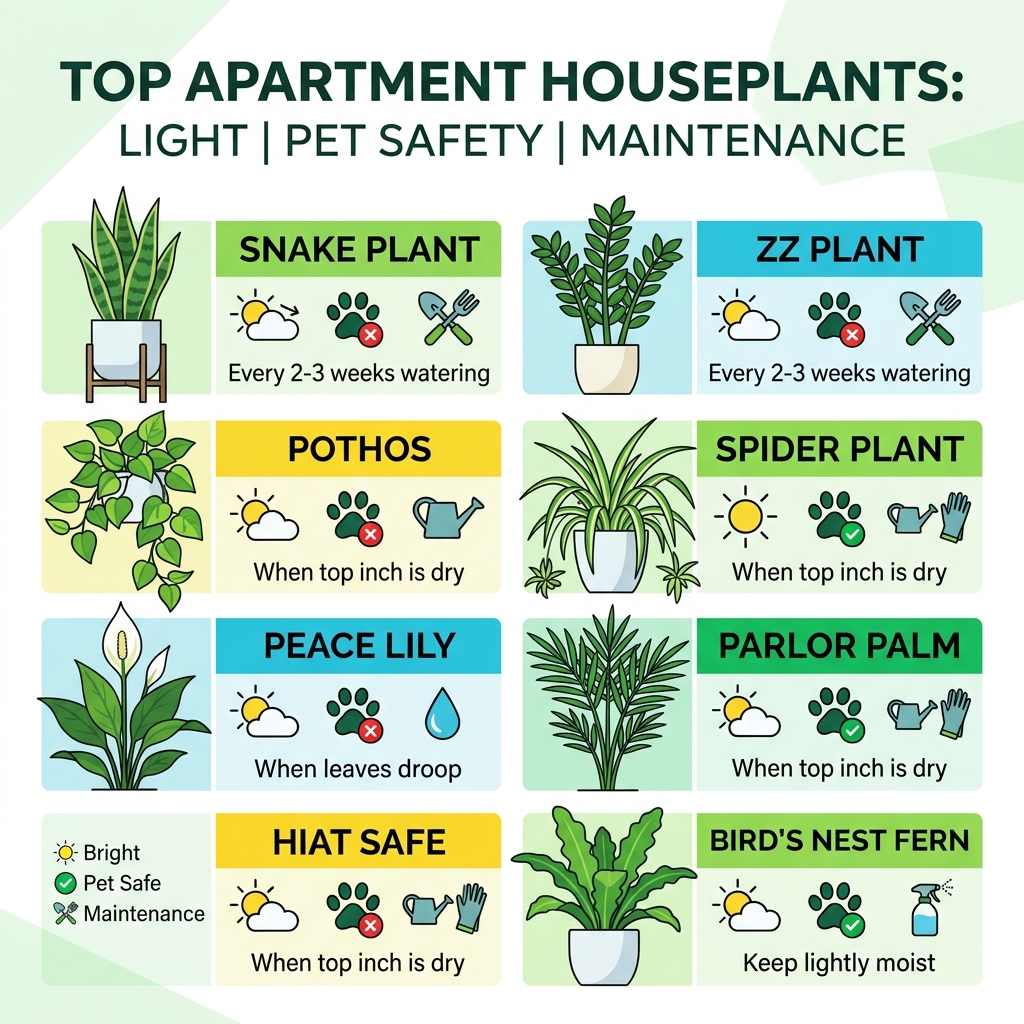
Top Low-Light and Low-Maintenance Best House Plants for Apartments
Living in a city often means dealing with “garden-level” windows or north-facing views that don’t exactly scream “tropical rainforest.” However, many of the best house plants for apartments actually prefer these shaded conditions. In fact, some plants grow slower in low light, which is actually a blessing when you have limited floor space!
When we look for low-light indoor plants for apartments, we prioritize drought tolerance and a “neglect-friendly” nature. These plants have evolved to survive under the canopy of larger trees, meaning they can handle the dim corner of your studio just fine.

The Indestructible ZZ Plant for Busy Dwellers
The Zamioculcas zamiifolia, or ZZ Plant, is arguably the king of indoor plants that survive neglect. If you travel for work or simply forget that plants need water, this is the one for you. Its thick, waxy green leaves aren’t just for show—they are designed to seal in moisture.
The ZZ plant stores water in large, potato-like succulent bulbs called rhizomes under the soil. This means it only needs a drink about three times a month. It thrives in indoor plant care for low light environments and can even handle windowless offices if there is enough overhead fluorescent lighting.
Snake Plants: The Best House Plants for Apartments with No Sun
Commonly known as “Mother-in-Law’s Tongue,” the Snake Plant is a vertical masterpiece. Because it grows straight up rather than out, it is perfect for squeezing into tight gaps between a bookshelf and a wall.
Beyond its looks, it is a powerhouse of air purification. According to NASA research on air-purifying plants, Sansevieria species are excellent at removing toxins like formaldehyde and benzene from the air. These are often found in common apartment items like synthetic rugs and pressed-wood furniture. It’s one of those indoor plants that need little care because it actually prefers to be left alone until the soil is bone-dry.
Maximizing Small Spaces with Trailing and Vertical Greenery
When floor space is at a premium, we have to look up. Using vertical space is the secret weapon of urban gardeners. By utilizing macramé hangers, wall-mounted shelves, and the tops of kitchen cabinets, you can create a lush “jungle vibe” without tripping over pots.
Choosing indoor plants for small spaces usually means looking for “trailers”—plants with long, cascading vines that can drape elegantly over the side of a high surface.
Pothos: The Versatile Best House Plants for Apartments
The Pothos (Epipremnum aureum) is the ultimate “starter” plant. It is incredibly easy to grow and even easier to share. If your Pothos gets too long, you can simply snip off a vine and place it in a jar of water to grow a whole new plant! This makes it one of the most popular easy indoor plants for beginners.
Whether you choose a Golden Pothos with yellow variegation or a Silver Pothos with matte leaves, these plants are highly adaptable. They are excellent indoor plant care tips for busy people favorites because they “talk” to you—when they are thirsty, their leaves will droop slightly, giving you a clear signal that it’s time for a drink.
Spider Plants for High Shelves and Hangers
The Spider Plant (Chlorophytum comosum) is a retro classic that is making a huge comeback. Why? Because it is one of the few indoor plants for beginners with pets that is completely non-toxic to cats and dogs.
Spider plants produce “pups” or baby plantlets that hang down from the mother plant like little spiders on a web. They love humidity, making them a great choice for a shelf in a bathroom or kitchen. Plus, they are champions at filtering indoor air, making your small space feel fresher and more vibrant.
Room-Specific Recommendations and Pet Safety
Not every room in your apartment has the same “microclimate.” Your bathroom is likely humid and dim, while your living room might get a blast of afternoon sun. Matching the plant to the room is the key to indoor plant care for apartments success.
It is also vital to know which plants are safe for your furry roommates. While many of the best house plants for apartments are easy to care for, some can cause stomach upset if nibbled by a curious cat.
| Room | Recommended Plant | Pet Safe? | Benefit |
|---|---|---|---|
| Bathroom | Bird’s Nest Fern | Yes | Loves steam/humidity |
| Bedroom | Snake Plant | No | Releases oxygen at night |
| Kitchen | Spider Plant | Yes | Great for hanging baskets |
| Living Room | Monstera Deliciosa | No | Dramatic statement piece |
| Home Office | African Violet | Yes | Compact and colorful |
High-Humidity Heroes for Apartment Bathrooms
Bathrooms are often the trickiest places to decorate, but they are paradise for certain tropical species. The Bird’s Nest Fern and Boston Fern thrive on the steam from your morning shower. These are excellent low-light indoor plants for apartments-2 because they don’t need direct sun to maintain their vibrant green fronds.
If you want something a bit more modern, try the Pilea Peperomioides (Chinese Money Plant). Its unique, coin-shaped leaves add a pop of personality to a vanity or windowsill.
Statement Plants for Bright Living Areas
If you are lucky enough to have a large window with bright, indirect light, you can go big. The Monstera Deliciosa, also known as the “Swiss Cheese Plant,” is one of the best-indoor-plants-for-apartments-2 for creating a focal point. Its huge, heart-shaped leaves with natural holes (fenestrations) give any room an instant designer feel.
Other great choices for bright spots include the Rubber Tree (Ficus elastica) with its moody, dark burgundy leaves, or the famous Fiddle Leaf Fig. Just be warned: Fiddle Leaf Figs can be a bit finicky—they don’t like drafts and they really don’t like being moved once they’ve settled into a spot!
Essential Care Tips to Prevent Common Apartment Failures
The number one killer of apartment plants isn’t neglect—it’s “over-loving” them with too much water. In an apartment, air circulation is often lower than in a house, which means soil stays wet for longer.
Following basic indoor plant care tips for beginners can save you a lot of heartbreak (and money).
- Check the Drainage: Never let your plant sit in a pot without a hole in the bottom. If you love a decorative ceramic pot that doesn’t have a hole, keep the plant in its plastic “nursery pot” and just set it inside the decorative one.
- The Finger Test: Before watering, stick your finger an inch into the soil. If it feels damp, wait a few more days. This is the gold standard for hardy indoor plants for busy people.
- Light Assessment: “Bright indirect light” means the plant can see the sky but cannot see the sun. If the sun’s rays are hitting the leaves directly, they might scorch.
- Dust the Leaves: Apartment dust can clog the “pores” of your plant. Every few weeks, wipe the leaves with a damp cloth so they can breathe and photosynthesize efficiently.
Troubleshooting Low Light and Pests
If you notice yellow leaves, it’s usually a sign of overwatering or poor drainage. On the flip side, brown, crispy edges often mean the air is too dry or the plant is thirsty.
For those in truly dark apartments, don’t give up! You can use LED grow lights that clip onto bookshelves to give your plants the “sunshine” they crave. Also, keep an eye out for pests like mealybugs (they look like tiny bits of cotton). Most indoor plants that survive neglect-2 are hardy, but a quick spray with neem oil or insecticidal soap will keep them healthy if bugs do move in.
Frequently Asked Questions about Apartment Plants
Which plants are best for a windowless room?
Technically, no plant can live in total darkness forever. However, Snake Plants and ZZ Plants are the most tolerant. If your room has zero windows, we recommend using two plants and “rotating” them—keep one in a room with a window for two weeks, then swap it with the one in the windowless room. Alternatively, a simple LED grow light on a timer works wonders.
How often should I water my apartment plants?
There is no “one size fits all” schedule. In the summer, plants grow faster and need more water. In the winter, they go dormant and need much less. Always use the “top inch” rule: if the top inch of soil is dry, it’s usually time for a drink.
Are snake plants toxic to cats and dogs?
Yes, they contain saponins which can cause nausea and vomiting if ingested. If you have a nibbler, it’s best to keep your Snake Plant on a high stand or shelf where your pet can’t reach it. For a 100% pet-safe vertical plant, go with a Spider Plant or a Parlor Palm.
Conclusion
Creating a green sanctuary in your apartment doesn’t have to be a chore. By choosing the best house plants for apartments—those that match your light levels and your lifestyle—you can enjoy all the benefits of nature without the stress of high-maintenance care.
At Futuro Ciencia, our mission is to help you transform your space into a tranquil oasis. Whether you are looking for best-indoor-plants-for-apartments to brighten a dark corner or need a customized care schedule to keep your collection thriving, we are here to guide you every step of the way.
Ready to start your indoor garden? Pick up a Pothos or a Snake Plant today and watch how a little greenery can completely change the energy of your home!
