
That White Dust on Your Plants Is Trying to Tell You Something
Powdery mildew on houseplants is one of the most common fungal diseases you’ll encounter as an indoor plant owner — and one of the easiest to misread as simple dust or dirt.
Here’s the quick version if you need it now:
- What it is: A fungal disease that coats leaves in a white or gray powder-like film
- What causes it: Stagnant air, high humidity, low light, and overcrowded plants
- Which plants are most at risk: African violets, begonias, jade, kalanchoe, and rosemary
- How to treat it: Isolate the plant, remove infected leaves, improve airflow, and apply neem oil, sulfur, or potassium bicarbonate
- Can it kill your plant? Rarely, if caught early — but left untreated, it weakens plants significantly
If you’ve spotted a pale, flour-like coating spreading across your plant’s leaves, you’re not alone. It’s one of the most widespread fungal problems indoor gardeners face, and it can show up any time of year — not just in summer or during a particular season.
The good news? Most plants recover fully when you act quickly.
The tricky part is that powdery mildew doesn’t need wet leaves to take hold. Unlike most fungal diseases, it actually presents dry leaf surfaces paired with humid, still air — exactly the conditions found in many homes. That’s what makes it such a sneaky problem for busy plant owners.
This guide will walk you through everything: how to spot it, what’s causing it, and how to stop it from spreading through your indoor jungle.
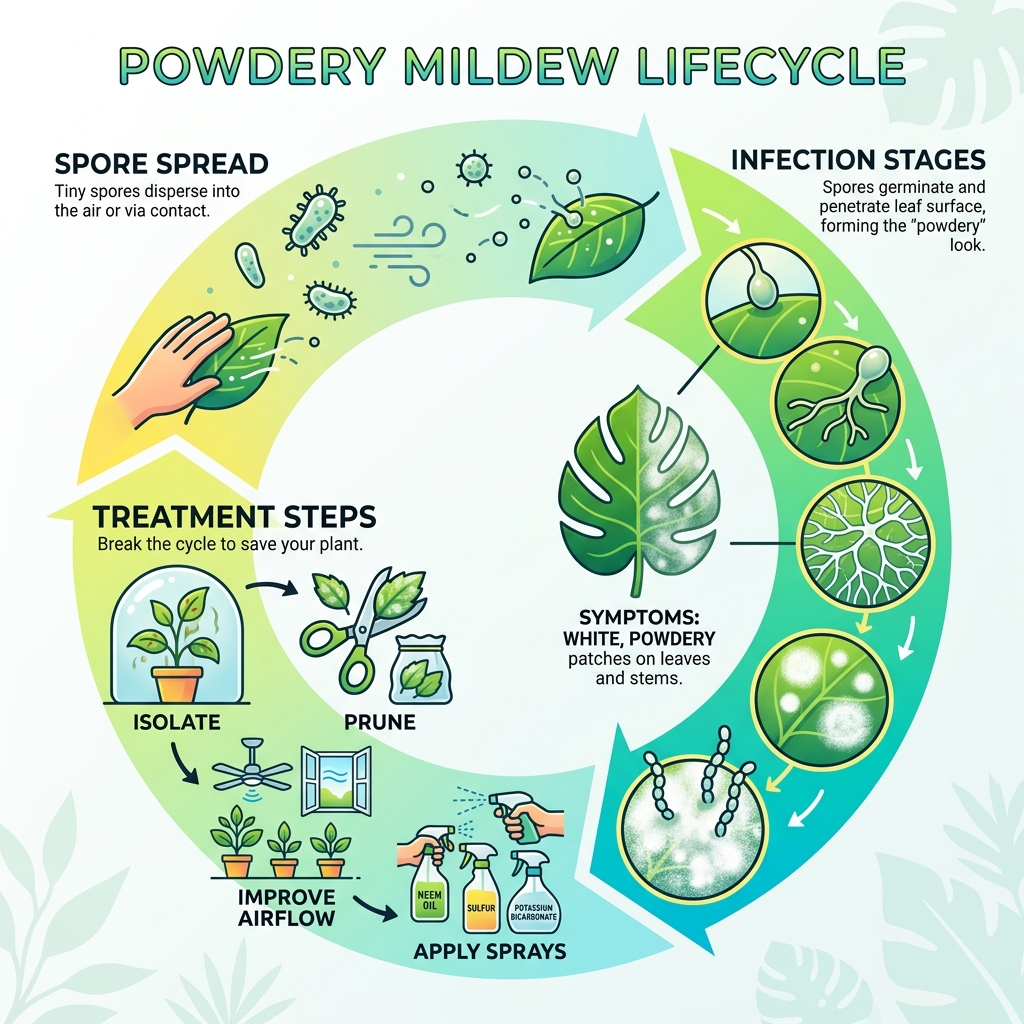
What is Powdery Mildew on Houseplants?
To defeat your enemy, you must first understand it. Powdery mildew on houseplants isn’t just one single “bug.” It is actually a group of related fungi that all share a similar, dusty appearance. We often describe it as looking like someone accidentally tipped a bag of flour over your favorite Begonia.
Unlike many other fungi that require a film of water on the leaf to germinate, powdery mildew is a bit of a rebel. It thrives in high humidity but actually prefers the leaf surface itself to be dry. This is why misting your plants in a room with poor airflow can be a recipe for disaster—you’re creating the humid atmosphere the fungus loves without providing the “wash-off” effect of heavy rain.
The Science of the “Dust”
What you are seeing on the leaf surface is a complex network of fungal threads called mycelium. Think of it as a microscopic web. From this web, the fungus sends out “feeding tubes” (called haustoria) into the plant’s surface cells. It doesn’t just sit on top; it’s actively stealing the nutrients your plant worked so hard to make through photosynthesis.
According to the experts at the Powdery mildew – Indoors guide, these fungi are remarkably host-specific. This means the specific species of mildew attacking your African Violet is unlikely to jump over to your Rosemary. However, if you have a shelf full of different Begonia varieties, the spores will happily travel from one to the next.
Identifying Symptoms and Susceptible Species
Early detection is our best weapon. If we catch powdery mildew on houseplants when it’s just a few tiny white dots, we can usually stop it in its tracks. If we wait until the plant looks like a powdered donut, the recovery road is much longer.
Common Symptoms to Watch For:
- Circular White Spots: It usually starts as small, discrete white or gray spots that look like mold.
- The “Mat” Effect: As the infection progresses, these spots grow together (coalesce) to form a solid, felt-like coating.
- Distorted Growth: New leaves might come out twisted, curled, or stunted.
- Yellowing and Browning: As the fungus steals nutrients, the leaves lose their green luster, turn yellow, and eventually brown and die.
- The Wipe Test: If you rub the leaf and the white stuff comes off on your finger but leaves a dull, matte residue behind, it’s likely mildew, not just dust.
Who is Most at Risk?
While almost any plant can be affected under the right (or wrong!) conditions, some are definitely more “delicious” to these fungi than others. We see the most frequent cases in:
- African Violets: Their fuzzy leaves trap spores easily.
- Begonias: Particularly the Rex and Tuberous varieties.
- Jade and Kalanchoe: These succulents are surprisingly susceptible.
- Rosemary and Ivy: Often struggle with mildew when kept indoors in low-light corners.
- Poinsettias: A common victim during the winter months.
Differentiating the “White Stuff”
One of the biggest hurdles for our community is telling the difference between mildew and other common issues. Use this table to help you diagnose:
| Feature | Powdery Mildew | Mealybugs | Soil Mold |
|---|---|---|---|
| Appearance | Flat, dusty, flour-like coating | 3D, cottony, fluffy clumps | Fuzzy, white growth on soil |
| Location | Upper/lower leaf surfaces & stems | Leaf axils, undersides, crevices | Surface of the potting mix |
| Movement | Stationary | Slow-moving (if you look closely) | Stationary |
| Effect | Yellowing, stunted leaves | Sticky “honeydew,” distorted growth | Usually harmless to the plant |
Environmental Triggers and Plant Health Impact
Why does powdery mildew on houseplants suddenly appear? It’s rarely a case of “dirty” gardening. Instead, it’s usually an environmental imbalance. Spores are virtually everywhere—they float in through open windows or hitch a ride on our clothes. They only become a problem when we give them the perfect “hotel” to stay in.
The “Perfect Storm” Conditions:
- Stagnant Air: This is the #1 cause. Without air movement, spores settle on leaves and stay there.
- Humidity Swings: High humidity (above 70%) at night followed by dry days creates a cycle that many mildew species adore.
- Low Light: Plants in dark corners are weaker and have thinner cell walls, making them easier targets for fungal “roots.”
- Overcrowding: When we pack our plants too tightly, we create “micro-climates” of trapped moisture and still air.
- Seasonal Transitions: We often see outbreaks in late autumn or early spring when the heater goes on or off, and indoor air circulation changes.
If you want to dive deeper into how these factors affect your plants, check out our guide on understanding-and-treating-houseplant-diseases/.
How It Hurts Your Jungle
It might look like a cosmetic issue at first, but powdery mildew is a parasite. By covering the leaf surface, it blocks the sun. This inhibits photosynthesis, meaning the plant can’t produce energy. Over time, this leads to “nutrient theft,” where the fungus siphons off the plant’s sugars. The result? A weakened plant that is more susceptible to other pests and may eventually drop all its leaves.
Step-by-Step Treatment and Recovery
If you’ve confirmed the presence of powdery mildew on houseplants, don’t panic! We have a proven protocol to get your jungle back to its tranquil, healthy state.
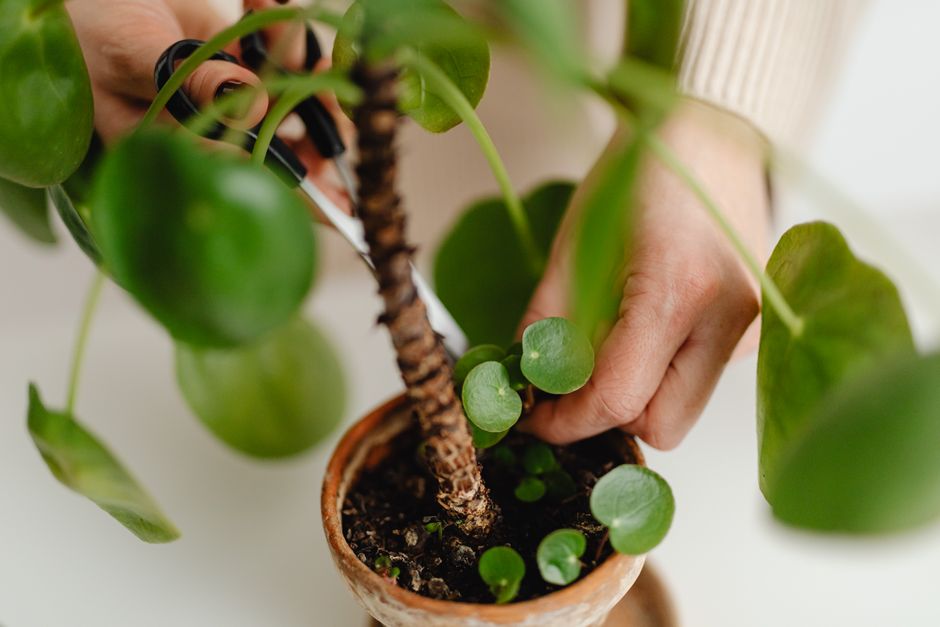
For a comprehensive look at various treatments, you can also visit our detailed resource on indoor-plant-fungus-treatment/.
Immediate Steps for Powdery Mildew on Houseplants
- Isolation (The Quarantine): Move the infected plant away from its neighbors immediately. Spores are airborne and travel on the slightest breeze.
- Pruning: Use a pair of clean, sharp shears to snip off the most heavily infected leaves. If a leaf is more than 50% covered, it’s better to remove it so the plant can focus its energy on new, healthy growth.
- Sanitation: This is crucial. Do NOT compost these leaves indoors. Bag them and put them in the outside trash.
- Tool Sterilization: Wipe your shears with rubbing alcohol between every single cut. If you don’t, you are just “vaccinating” the rest of the plant with more fungus.
- Clean the Area: Wipe down the shelf or pot where the plant was sitting to remove any settled spores.
Organic and Commercial Solutions
Once you’ve cleaned up the physical mess, it’s time for treatment. You have several effective options:
- Neem Oil: This is our favorite “all-rounder.” It acts as a fungicide and a repellent. Mix according to the bottle’s instructions and spray the plant thoroughly, including the undersides of leaves. Note: Keep plants out of direct sun after spraying to avoid leaf burn.
- Sulfur: This is a classic remedy. Sulfur changes the environment on the leaf to make it inhospitable for fungi. It’s highly effective but can have a slight “boiled egg” smell that fades quickly.
- Potassium Bicarbonate: Unlike baking soda (which is sodium-based), potassium bicarbonate is a contact fungicide that can actually kill existing mildew spores. It’s often found in organic-certified commercial sprays.
- Biofungicides: These contain beneficial bacteria or microbes that “eat” or outcompete the harmful fungi. It’s like giving your plant a probiotic!
- Systemic Treatments: For very valuable plants or severe cases, you might use a systemic fungicide labeled for indoor use. These are absorbed by the plant and protect it from the inside out.
For more technical details on labeled fungicides, the Powdery Mildew on Indoor Plants | University of Maryland Extension is an excellent resource.
Evaluating Home Remedies: Baking Soda, Milk, and Vinegar
We know the internet is full of “kitchen cupboard” cures. But do they actually work for powdery mildew on houseplants? The answer is a bit of a “yes, but…”
The Baking Soda Spray
Baking soda (sodium bicarbonate) increases the pH on the leaf surface, making it too alkaline for the fungus to grow.
- The Recipe: 1 tablespoon baking soda, 1/2 teaspoon liquid soap (not detergent), and 1 gallon of water.
- The Catch: It is better at preventing than curing. Also, the sodium can build up and burn sensitive leaves. Always test on one leaf first!
The Milk Method
Believe it or not, some studies suggest a mix of 40% milk and 60% water can be as effective as some chemical fungicides. It’s believed that a protein in the milk, when exposed to sunlight, produces a brief antiseptic effect.
- The Catch: It can smell like sour milk if your room isn’t well-ventilated. We usually recommend sticking to neem oil for indoor use.
The Vinegar Solution
Vinegar (acetic acid) can kill mildew, but it is also a potent herbicide.
- The Recipe: 2-3 tablespoons of apple cider vinegar (5% acidity) per gallon of water.
- The Catch: Use too much, and you’ll kill the plant along with the fungus. We suggest being very cautious with this one.
The Mouthwash Trick
Some enthusiasts use ethanol-based mouthwash (1 part mouthwash to 3 parts water). The alcohol kills the spores on contact.
- The Catch: It can be very harsh on new, tender foliage.
Proactive Prevention for a Healthy Jungle
At Futuro Ciencia, we believe the best way to manage powdery mildew on houseplants is to make sure it never wants to move in. Transforming your space into a tranquil oasis means creating an environment where plants thrive and fungi fail.
For more tips on keeping your jungle pristine, check out our article on dealing-with-indoor-plant-fungus/.
Preventing Recurring Powdery Mildew on Houseplants
- Boost Air Circulation: This is the golden rule. We often suggest using a small oscillating fan on a low setting for a few hours a day. It prevents “dead air” pockets where spores settle.
- Mind the Spacing: Give your plants some breathing room! If their leaves are touching, they are sharing more than just space—they are sharing potential diseases.
- Watering Habits: Always water at the soil level, not over the leaves. Water in the morning so any accidental splashes have all day to evaporate.
- Light is Life: Ensure your plants are getting the appropriate amount of light for their species. Stronger plants have better natural defenses.
- Nitrogen Balance: Avoid over-fertilizing with high-nitrogen food in the winter. Nitrogen promotes soft, succulent new growth that is like “candy” for powdery mildew.
- The Weekly Check: Make a habit of looking at your plants once a week. Check the centers and the undersides of leaves. Catching one spot is a 5-minute fix; catching a whole plant is a 5-week battle.
Frequently Asked Questions about Indoor Fungi
Can powdery mildew spread to my outdoor garden?
Because these fungi are host-specific, it’s unlikely your indoor African Violet mildew will infect your outdoor Zucchini. However, the conditions in your home might be similar to your porch. While the species might vary, the spores can certainly travel on your clothes. It’s always best to wash your hands and change your shirt after treating an infected indoor plant before heading out to the garden.
Is powdery mildew fatal to houseplants?
It is rarely an “overnight killer.” Instead, it is a slow drain on the plant’s vigor. Think of it like a chronic cold. It weakens the plant, makes it look unsightly, and if left for months, can lead to total photosynthetic failure. The real danger is “secondary infections”—a weakened plant is an open invitation for spider mites or root rot.
Should I just wipe the white powder off the leaves?
Wiping is a great first step to reduce the “spore load,” but it’s not a cure. The mycelium has microscopic “roots” that stay inside the leaf cells. If you just wipe it off and don’t change the environment or apply a treatment, the white powder will likely return within 3 to 7 days. Also, be careful: wiping can actually puff spores into the air, helping them spread to nearby plants. Always use a damp cloth and discard it immediately.
Conclusion
Managing powdery mildew on houseplants doesn’t have to be a stressful ordeal. By staying vigilant and maintaining a healthy environment, you can protect your indoor jungle and keep it the brightening, purifying sanctuary it was meant to be.
At Futuro Ciencia, we are dedicated to helping you master the art of plant care. Whether you are looking for a more consistent watering schedule or need expert advice on specific species, we are here to support your journey in creating a tranquil home oasis.
Ready to take your plant parenthood to the next level? More info about indoor plant care services is just a click away. Let’s keep those leaves green, clean, and fungal-free!
