
Why Peace Lily Light and Water Requirements Make or Break Your Plant
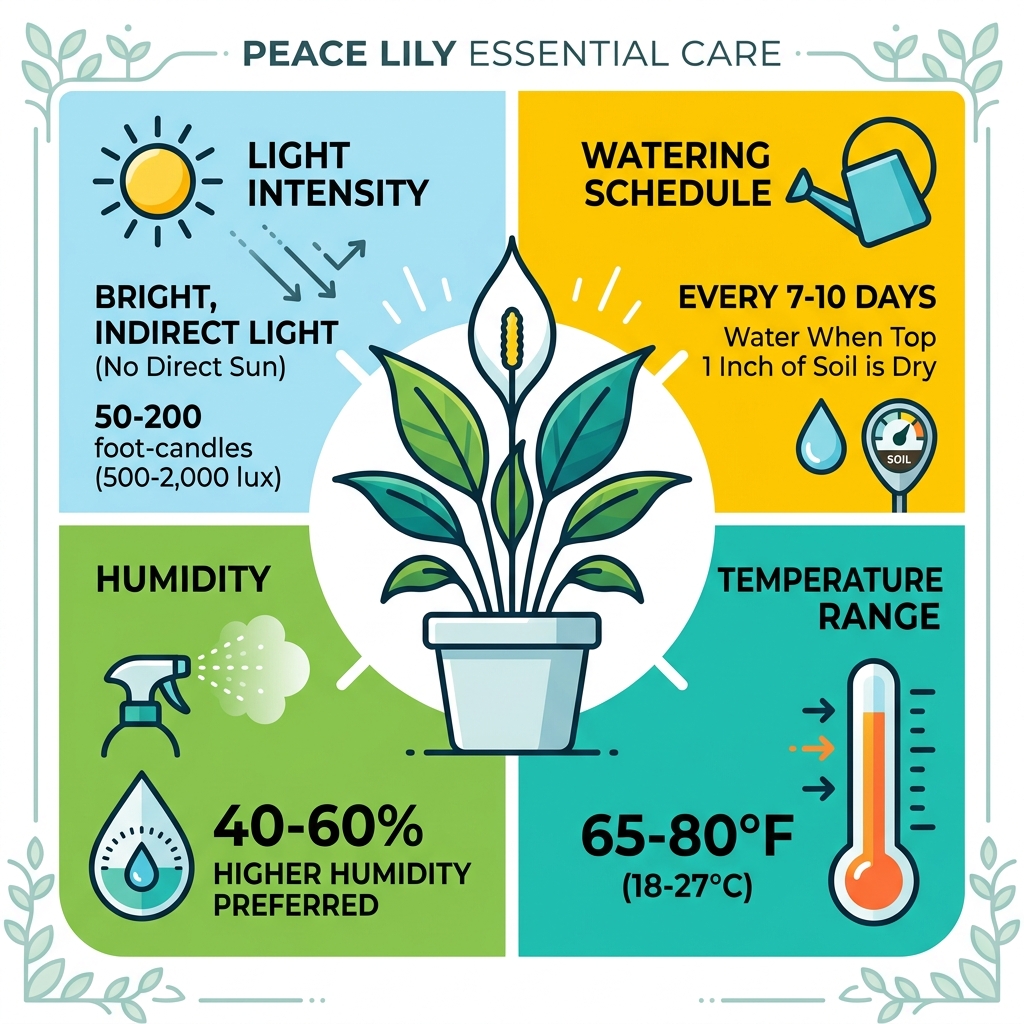
Peace lily light and water requirements are simple once you know the basics:
| Care Factor | What Your Peace Lily Needs |
|---|---|
| Light | 6-8 hours of bright, indirect light daily (no direct sun) |
| Light intensity | 50-200 foot-candles (500-2,000 lux) |
| Best window | North or east-facing |
| Watering frequency | Every 7-10 days; water when top 1 inch of soil is dry |
| Water type | Filtered, distilled, or rainwater preferred |
| Humidity | 40-60% |
| Temperature | 65-80°F (18-27°C) |
The peace lily (Spathiphyllum) is one of the most popular houseplants in the world — and for good reason. It thrives in the kind of shaded, humid conditions you can actually recreate in a living room or office. It even cleans your air.
But here’s the thing: most drooping, yellowing, and bloom-free peace lilies are suffering from one of two problems — too much or too little light, or an off-balance watering routine.
These plants originally grew on the floor of tropical rainforests in Central and South America, hidden under a thick canopy. They never saw harsh direct sun. They lived in consistently moist — but never waterlogged — soil.
That backstory tells you almost everything you need to know about caring for one at home.
Understanding Peace Lily Light and Water Requirements for Growth
To truly master peace lily light and water requirements, we have to think like a plant. For a peace lily, light is food (via photosynthesis) and water is the delivery system that keeps its cells plump and upright. When these two are in balance, you get those iconic white spathes—which, fun fact, aren’t actually flowers but specialized leaves that protect the tiny true flowers on the central spike (spadix).
In their native tropical rainforest understories, peace lilies receive “dappled” light. This means the sun’s energy is filtered through layers of mahogany and palm trees before reaching the forest floor. In our homes, we mimic this by providing indirect sunlight. If the light is too dim, the plant can’t “eat” enough to produce flowers. If the light is too intense, the plant “burns,” and its water evaporates so fast the roots can’t keep up.
According to the Peace Lily | Home & Garden Information Center, maintaining this balance is the secret to a plant that lives for decades rather than months. We always recommend starting with a solid understanding of indoor-plant-light-requirements to ensure your green friends are positioned for success.
Ideal Peace Lily Light and Water Requirements: The Indirect Light Sweet Spot
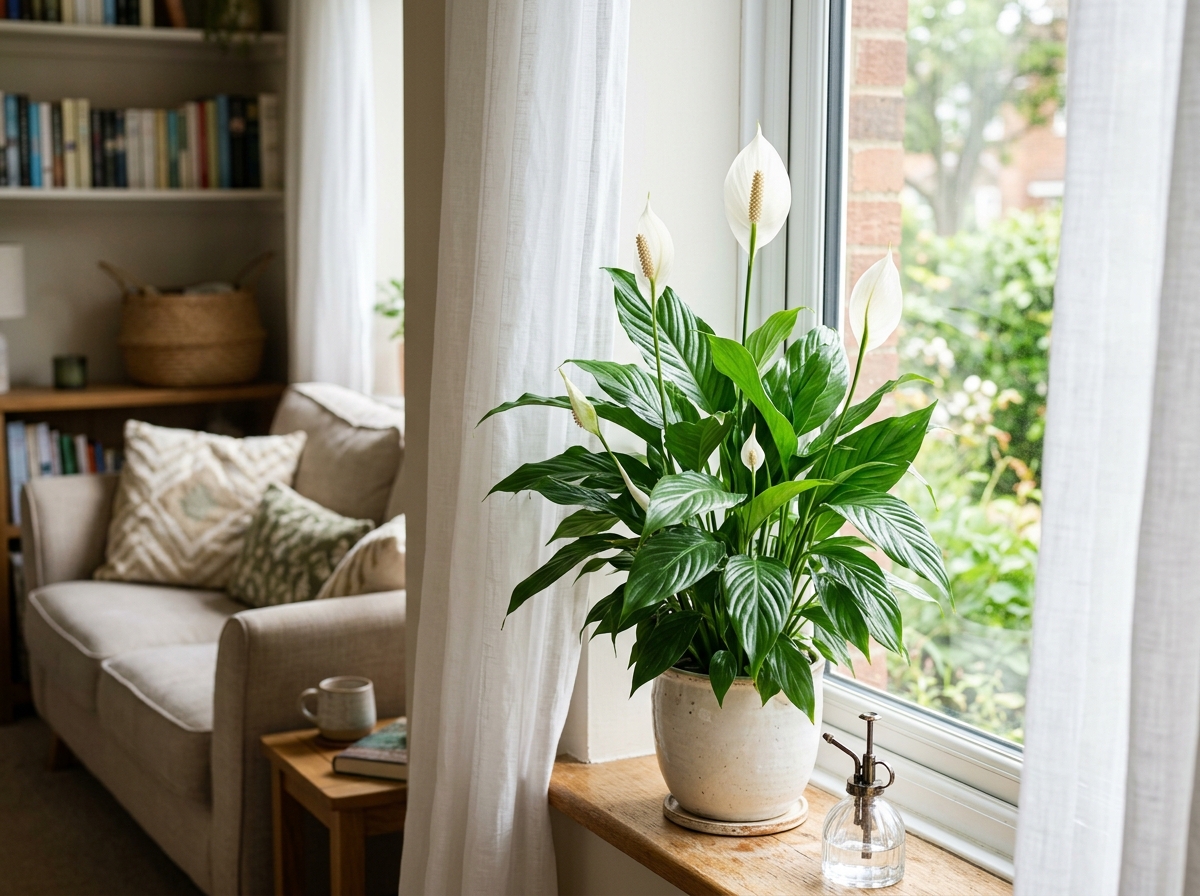
So, what does “bright indirect light” actually look like in numbers? If you’re a data lover, you’ll want to aim for 50 to 200 foot-candles (roughly 500 to 2,000 lux).
- 50 foot-candles: This is the bare minimum. Your plant will survive and look green, but it likely won’t bloom.
- 200 foot-candles: This is the “Goldilocks” zone. At this level, your peace lily has enough energy to push out those beautiful white “sails” regularly.
The best way to achieve this is through window placement. North-facing windows are fantastic because they provide steady, weak light all day. East-facing windows are also excellent, offering gentle morning sun that isn’t intense enough to scorch the leaves. We suggest providing 6-8 hours of this filtered light daily. If you’re dealing with limited window space, check out our guide on indoor-plants-that-thrive-in-low-light to see how the peace lily compares to other shade-tolerant species.
Managing Peace Lily Light and Water Requirements: Signs of Light Stress
Plants can’t speak, but they are great at “acting out” when they’re unhappy. If you miss the mark on peace lily light and water requirements, your plant will show very specific symptoms.
Too Much Light (The “Sunburn” Phase): If a peace lily is placed in a south or west-facing window without a sheer curtain, it receives direct UV rays. This leads to leaf scorch—ugly brown spots or yellowing patches that look “crispy.” If you see this, move the plant back a few feet immediately.
Too Little Light (The “Hibernation” Phase): In dark corners, a peace lily becomes “leggy” (stretched out) as it tries to reach for a light source. The leaves may turn a very dark, dull green, and the plant will stop blooming entirely. If your “white sails” are turning green, it’s often a sign the plant is trying to increase its chlorophyll to catch more light. For apartment dwellers with few windows, managing low-light-indoor-plants-for-apartments requires a bit more strategy, such as rotating the plant every two weeks to ensure all sides get some exposure.
Mastering the Peace Lily Watering Schedule
If light is the engine, water is the fuel. Peace lilies have earned a reputation as “drama queens” because they wilt spectacularly—collapsing over the side of the pot like an exhausted teenager—the moment they feel thirsty. The good news? They usually bounce back within hours of a good soak.
However, we want to avoid that “fainting” spell whenever possible. A consistent peace lily light and water requirements routine involves checking the soil every few days. The general rule is to water when the top 1 inch (about 2.5 cm) of soil feels dry to the touch. For most homes, this happens every 7 to 10 days, though this changes based on the season.
We often recommend “bottom watering” for peace lilies. Simply place the pot in a sink or tray with a few inches of water and let it soak for 15-20 minutes. This ensures the roots at the bottom get hydrated without compacting the topsoil. Just make sure your pot has drainage holes! Standing water at the bottom of a hole-less pot is a one-way ticket to root rot.
To help you stay on track, we’ve developed a comprehensive watering-schedule-for-indoor-plants that covers various species. During the colder months, you’ll need to adjust your approach; see our tips on indoor-plant-care-during-winter for more details.
| Symptom | The Likely Culprit | How to Fix It |
|---|---|---|
| Yellow leaves + mushy stems | Overwatering | Let soil dry out; check for root rot; improve drainage. |
| Drooping + crispy brown edges | Underwatering | Give a deep soak; increase watering frequency. |
| Leaves wilting while soil is wet | Root Rot | Repot in fresh soil; trim away black/slimy roots. |
| Sudden total collapse | Thirst/Shock | Water immediately; check for nearby drafts. |
Environmental Factors: Water Quality, Humidity, and Temperature
While peace lily light and water requirements are the big hitters, the quality of that environment matters just as much. These plants are surprisingly sensitive to what’s in their water.
If you notice the tips of your peace lily leaves turning brown despite proper watering, you might be dealing with fluoride or chlorine sensitivity. Tap water often contains these chemicals, which build up in the leaf tips. To solve this, try using:
- Distilled water
- Rainwater (you can leave a bottle outside to catch some!)
- Filtered water
Temperature and humidity also play a massive role in how much water your plant consumes. Peace lilies are happiest between 65-80°F (18-27°C). If it gets colder than 60°F, the plant’s metabolism slows down, and it will need significantly less water.
Humidity is the “secret sauce.” Since they are tropical, they love 40-60% humidity. If your home is dry (especially in winter), use a pebble tray—a tray filled with water and stones that the pot sits on—or mist the leaves every few days. This mimics the steamy rainforest and keeps the foliage lush. For more “insider” tricks, check out our watering-guides-the-secret-to-keeping-low-light-plants-alive.
Soil, Potting, and Artificial Light Solutions
To support your peace lily light and water requirements, you need the right “infrastructure.”
The Soil: Use a well-draining, rich potting mix. A blend of 2 parts potting soil, 1 part perlite (for aeration), and 1 part compost or coco coir is ideal. Avoid heavy garden soils that trap too much moisture.
The Pot: Peace lilies actually enjoy being slightly root-bound. You only need to repot every 2-3 years, or when you see roots crawling out of the drainage holes. When you do repot, only go up 1-2 inches in diameter. Terracotta pots are great for those who tend to overwater because the material is breathable, while plastic or glazed ceramic holds moisture longer.
The Light Hack: If your home is a literal cave, don’t despair. Peace lilies grow beautifully under artificial LED grow lights.
- Duration: Keep the lights on for 12-16 hours a day.
- Distance: Position the light 2-3 feet away from the foliage to avoid heat damage. This is a perfect solution for windowless offices or basement apartments. You can find more advice on this in our guide to indoor-plant-care-for-low-light.
Frequently Asked Questions about Peace Lily Care
Can peace lilies tolerate low light conditions?
Yes, they are famous for it! Peace lilies can survive at just 50 foot-candles of light, making them the kings of office cubicles and dim hallways. However, “survival” isn’t “thriving.” In low light, the plant will grow slowly and will almost never produce its white flowers. If you want blooms, you’ll need to move it to a brighter spot.
How do you determine when a peace lily needs water?
The most reliable way is the “Finger Test.” Stick your finger into the soil up to the first knuckle. If it feels dry, it’s time to water. You can also use a wooden skewer or chopstick; if it comes out clean and dry, the plant is thirsty. Another trick is to lift the pot—dry soil is much lighter than wet soil. And of course, if the plant starts to droop slightly, it’s giving you a clear signal!
Does watering frequency change with seasons or light exposure?
Absolutely. During the spring and summer (the growing season), your peace lily is active and thirsty. As light intensity increases, so does evaporation. In the winter, the plant enters a semi-dormant state. We recommend reducing watering significantly during the colder months to prevent root rot. For a deeper dive into this seasonal shift, read our article on indoor-plant-care-during-winter.
Conclusion
At Futuro Ciencia, we believe that everyone can transform their home into a tranquil oasis. Mastering peace lily light and water requirements is the first step toward a greener, cleaner, and more peaceful living space. These plants don’t just sit there looking pretty; they work hard to purify your air and reduce stress levels.
By providing that bright, indirect light and keeping the soil “moist but not soggy,” you’ll ensure your peace lily remains a centerpiece of your home for years to come. If you’re just starting your journey, don’t forget to check out our indoor-plant-care-tips-for-beginners for more easy-to-follow advice.
Ready to grow your indoor jungle? Grow your Roots: Get the latest on new plants, discounts & more! Subscribe and join our community of plant lovers today!
