
Your Bathroom Is Already the Perfect Plant Habitat
Bathroom loving houseplants are the easiest indoor plants to keep alive — because your bathroom does most of the work for you.
Here are the top picks that thrive in bathroom conditions:
| Plant | Light Needed | Humidity Tolerance | Beginner Friendly? |
|---|---|---|---|
| Snake Plant | Low to bright indirect | High | Yes |
| Pothos | Low to medium | High | Yes |
| Boston Fern | Medium indirect | Very high | Moderate |
| ZZ Plant | Low | High | Yes |
| Peace Lily | Low to medium | High | Yes |
| Bird’s Nest Fern | Low to medium | Very high | Yes |
| Air Plant | Bright indirect | Very high | Moderate |
| Monstera | Medium to bright indirect | High | Yes |
| Lucky Bamboo | Low to medium | High | Yes |
| Spider Plant | Low to bright indirect | High | Yes |
Most houseplants struggle indoors because the air is too dry. Your bathroom flips that problem completely.
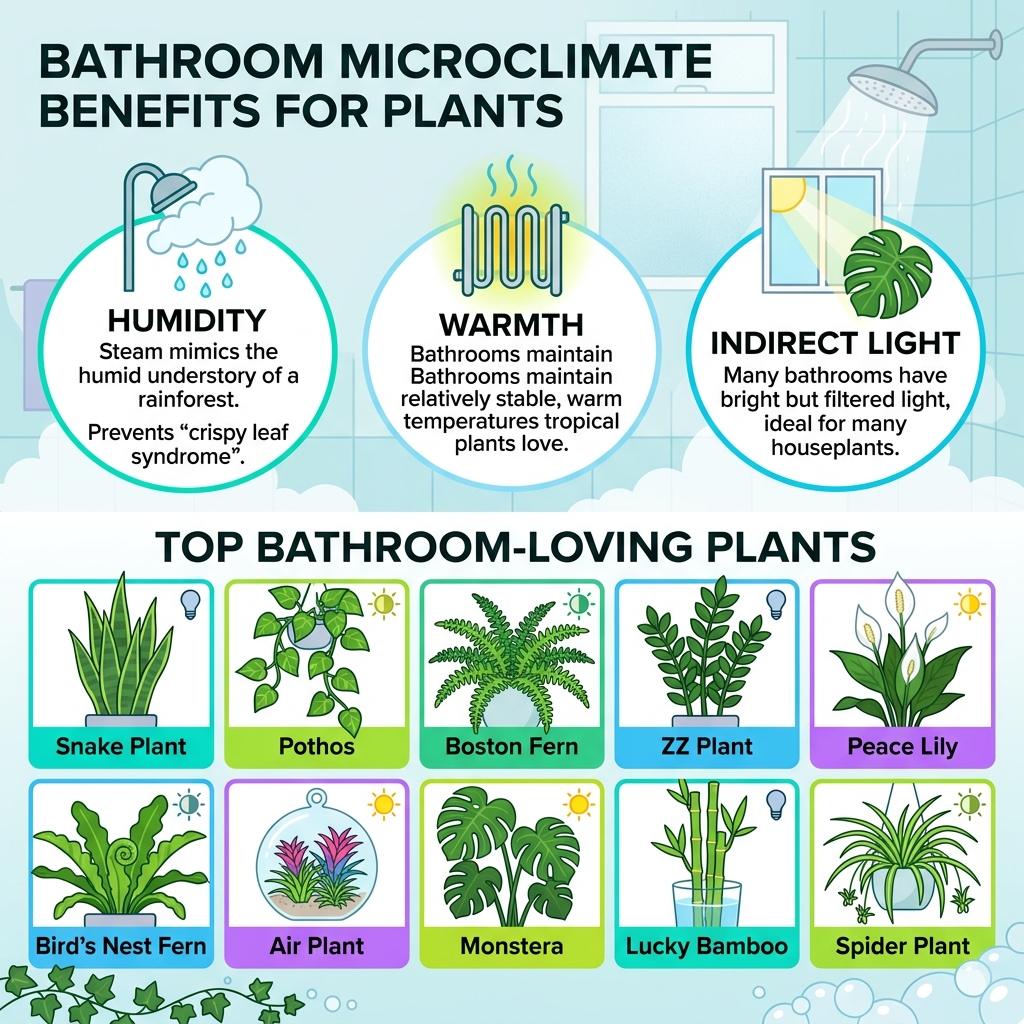
Every shower you take fills the air with warm steam. That steam mimics the tropical rainforest conditions that many popular houseplants evolved in. The result? Plants that would crisp up in your living room can absolutely thrive next to your tub or shower.
It’s not just humidity either. Bathrooms tend to stay warm and have relatively stable temperatures — two more things tropical plants love.
The catch is light. Many bathrooms don’t get much of it. But as you’ll see below, plenty of beautiful plants are perfectly happy in low light or even near-dark conditions.
Why Bathrooms are the Ultimate Oasis for Houseplants
We often think of bathrooms as sterile, tiled boxes, but for many of our green friends, they are the equivalent of a five-star resort. The primary reason is the “microclimate” created by our daily hygiene routines. Most tropical houseplants are native to the understory of rainforests, where the air is thick enough to drink and the sun is filtered through a dense canopy.
When we take a hot shower, we create a temporary cloud of high humidity. While the rest of your home might have a humidity level of 30% (especially in winter when the heater is blasting), a bathroom can easily spike to 60% or 80%. This prevents the dreaded “crispy leaf syndrome” that plagues indoor gardeners. If you want to dive deeper into why moisture matters, check out our Humidity tips for houseplants.
Beyond the steam, bathrooms provide consistent warmth. Most tropical species start to pout if temperatures drop below 50°F. Since bathrooms are usually kept cozy, your plants stay happy year-round. Furthermore, certain plants act as natural air purifiers, filtering out toxins found in cleaning products or even the formaldehyde in some toilet papers. As noted in this guide on the best plants for the bathroom: From monsteras to sword ferns, adding greenery isn’t just about aesthetics; it’s about creating a healthier, more breathable space.
15 Best Bathroom Loving Houseplants for Every Light Level
Selecting the right bathroom loving houseplants depends entirely on your “light real estate.” Do you have a massive frosted window that lets in a soft glow all day, or a tiny basement porthole? Understanding your light is the first step to success. For those dealing with smaller spaces, we have a great resource on Low light indoor plants for apartments.
Low Light Bathroom Loving Houseplants
If your bathroom is more “cave-like” than “sunroom,” don’t despair. Some of the hardiest plants on earth actually prefer the shadows.
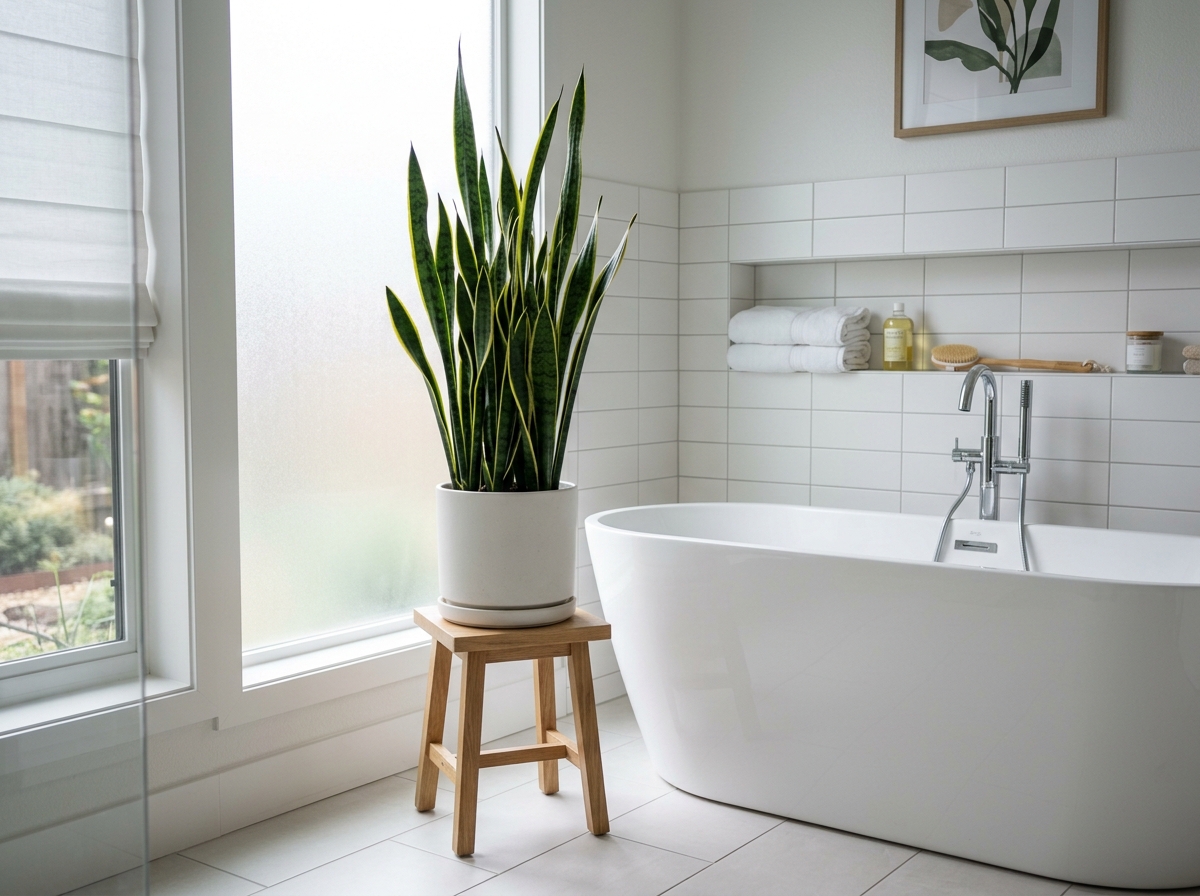
- Snake Plant (Sansevieria): Often called “Mother-in-law’s tongue” (we’ll let you decide if that’s a compliment!), this plant is the ultimate survivor. It can handle low light and only needs watering every two to three weeks. In a humid bathroom, you might even find yourself watering it less frequently.
- ZZ Plant (Zamioculcas zamiifolia): This plant looks like it’s made of wax. It is incredibly tolerant of low light and neglect. It can grow up to three feet tall, making it a great floor plant for a corner next to the vanity.
- Pothos (Epipremnum aureum): Known as the “cubicle plant” for its ability to survive under fluorescent lights, Pothos is a champion in the bathroom. It can grow a foot or more monthly, creating dramatic trailing vines that can wrap around your mirror or hang from the ceiling. For more options like this, see our list of Indoor plants that thrive in low light.
- Cast-Iron Plant (Aspidistra elatior): It earned its name because it’s nearly as tough as metal. It handles low light, temperature swings, and low humidity (though it loves the bathroom steam).
- Chinese Evergreen (Aglaonema): With leaves that are 4-8 inches long, this plant brings a lush, variegated look to darker corners. It’s a slow grower but very dependable. If you’re looking for more apartment-friendly options, explore Low light indoor plants for apartments 2.
High Humidity Stars for Bright Bathrooms
If you are lucky enough to have a window that provides bright, indirect light, you can host some of the more “dramatic” tropical species.
- Boston Fern (Nephrolepis exaltata): These were the stars of Victorian-era parlors for a reason. They love consistent moisture and high humidity. In a dry room, they shed needles like a dying Christmas tree, but in a steamy bathroom, they stay lush and green.
- Bird’s Nest Fern (Asplenium nidus): Unlike the feathery Boston fern, this one has leathery, ripple-edged leaves. It’s an epiphyte, meaning in the wild, it grows on other plants. It loves the extra moisture of a bathroom, which rewards it with big growth and fewer brown tips.
- Peace Lily (Spathiphyllum): We like to call this the “Goldilocks” of plants. It doesn’t like to be too dry or too wet, but it loves humidity. It’s a fantastic air purifier, though be warned: it will “faint” dramatically if you forget to water it.
- Monstera Deliciosa: The “Swiss Cheese Plant” is a showstopper. While it can grow up to 70 feet in the wild, it usually tops out at about 8 feet indoors. It loves the dappled light and warmth of a bright bathroom. Check out our Indoor plant care for low light if your bright bathroom is actually a bit dimmer than you thought.
- Orchids (Phalaenopsis): Many people think orchids are impossible, but they are actually perfect bathroom loving houseplants. Since they are epiphytes that absorb moisture from the air, the steam from your shower provides exactly what they need to keep their blooms for up to three months.
Unique and Small Space Greenery
Don’t have floor space? No problem. These plants can fit on a windowsill or even hang in the shower itself.
- Air Plants (Tillandsia): These are the ultimate “no-soil” plants. They absorb water through their leaves. You can hang them in glass globes or even mount them directly to the wall. Just give them a good soak in the sink once a week.
- Lucky Bamboo (Dracaena sanderiana): Not actually bamboo, but a member of the asparagus family! It can grow in just water and pebbles. It’s sensitive to chlorine, so we recommend using filtered water or letting tap water sit out for 24 hours before using it.
- Staghorn Fern (Platycerium): These look like living antlers. They are often mounted on wood boards, making them a piece of living art for your bathroom wall.
- Spider Plant (Chlorophytum comosum): These are famous for producing “spiderettes”—tiny baby plants that hang down from the mother plant. They are incredibly easy to propagate and love the humid air.
- Parlor Palm (Chamaedorea elegans): A slow-growing palm that brings a tropical vibe to small spaces. For a deep dive into keeping this one happy, see The ultimate guide to parlor palm low light success.
Essential Care and Maintenance for Your Bathroom Loving Houseplants
While the bathroom does provide a leg up on humidity, you can’t just set them and forget them. Proper care ensures your “spa” doesn’t turn into a “plant cemetery.”
First, let’s talk about soil. Most bathroom plants need well-draining potting mix. Because the air is humid, the soil won’t dry out as fast as it does in your living room. If the soil stays soggy for too long, you’ll end up with root rot. Always use a pot with drainage holes!
Watering is where most people trip up. We recommend the “finger test.” Stick your finger an inch into the soil; if it feels dry, it’s time to water. If it’s still damp, wait a few days. For more detailed help, our Watering guides the secret to keeping low light plants alive is an essential read.
Temperature and Ventilation are also key. While plants love the steam, they don’t love stagnant air. If your bathroom stays too wet for too long, you might see mold on the soil or mildew on the leaves. Run your exhaust fan for about 15-20 minutes after a shower to keep the air moving. Also, keep your plants away from direct drafts or heaters, which can cause temperature shocks.
Troubleshooting Your Bathroom Loving Houseplants
Even the best plant parents run into trouble. Here is how to handle common bathroom plant issues:
- Yellowing Leaves: This is usually a sign of overwatering. Because of the high humidity, your plants may need less frequent watering than the “standard” schedule suggests.
- Browning Tips: This often happens to ferns or spider plants. It can be caused by dry air (if you haven’t showered in a while!) or chemicals like chlorine and fluoride in your tap water. Try using filtered water or rainwater.
- Spider Mites and Pests: Humidity generally discourages spider mites, but they can still appear. Check the undersides of leaves regularly. If you see tiny webs, wipe the leaves down with a damp cloth and a bit of neem oil.
- Dust Accumulation: Bathroom surfaces get dusty and covered in hairspray residue. This clogs the plant’s “pores” (stomata). Wipe large leaves, like those on a Monstera or Rubber Tree, with a damp cloth once a week to help them photosynthesize.
Creative Ways to Display Your Bathroom Greenery
The bathroom offers some of the most creative display opportunities in the house. Because many bathroom loving houseplants are trailers or epiphytes, you don’t have to stick to the floor or the counter.
- Hanging Baskets: Pothos, Heartleaf Philodendron, and English Ivy look stunning when hung from the ceiling. They draw the eye upward and make a small bathroom feel much larger.
- Shower Curtain Rods: If your rod is sturdy, you can hang S-hooks and small pots of air plants or lightweight vines. It creates a “jungle shower” experience that is incredibly relaxing.
- Floating Shelves: Install a few shelves above the toilet or next to the mirror. This keeps the counters clear while still surrounding you with greenery.
Mounted Epiphytes: As mentioned, Staghorn ferns and Air plants don’t need soil. Mounting them on cedar boards creates a beautiful, rustic wall display.
Windowsill Arrangements: If you have a ledge, use it! It’s the perfect spot for a row of small succulents (if it’s sunny) or a collection of Lucky Bamboo in decorative glass jars.
Frequently Asked Questions about Bathroom Loving Houseplants
Can plants survive in a windowless bathroom?
This is the most common question we get at Futuro Ciencia. The short answer is: No plant can survive in total darkness forever. All plants need light for photosynthesis. However, you have options!
First, you can use low-light tolerant plants like the ZZ plant or Snake plant and rotate them. Keep one in the bathroom for two weeks, then swap it with a twin that’s been sitting in a sunny room. Second, you can install a waterproof LED grow light. A 100W equivalent grow light left on for 8-10 hours a day can provide enough energy for Pothos or Philodendrons to thrive even in a basement bathroom.
Which bathroom plants are safe for cats and dogs?
If you have furry roommates, safety is a priority. Unfortunately, popular plants like Pothos, Peace Lilies, and Snake Plants are toxic if ingested.
Safe options include:
- Spider Plants: Completely non-toxic and fun for cats to bat at (though try to keep them out of reach so the plant stays pretty!).
- Boston Ferns: Safe for both cats and dogs.
- Calathea (Prayer Plants): These are safe and have stunning leaf patterns.
- Air Plants: Generally safe, though they can be a choking hazard for curious pups.
Do bathroom plants actually reduce mold and humidity?
It sounds counterintuitive, but yes! Certain plants like English Ivy and Peace Lilies are known to absorb moisture from the air through their leaves. While they won’t replace a high-powered dehumidifier in a basement, they can help reduce the “damp” feeling in a room. English Ivy has even been shown in studies to reduce airborne mold spores. Just remember that the plant needs good air circulation to do its job effectively.
Conclusion
Transforming your bathroom into a lush, spa-like sanctuary is one of the most rewarding weekend projects you can undertake. By choosing the right bathroom loving houseplants, you aren’t just decorating; you’re creating a living ecosystem that cleans your air and calms your mind.
At Futuro Ciencia, we believe that everyone can have a green thumb with the right guidance. Whether you’re trying to keep a finicky orchid alive or just want a Pothos that grows to the floor, our personalized care schedules and guides are here to help. Ready to take the next step in your indoor gardening journey? Transform your home with expert indoor plant care and let us help you grow your own tranquil oasis.
