
Why Your Watering Schedule for Plants Is the Key to Keeping Them Alive
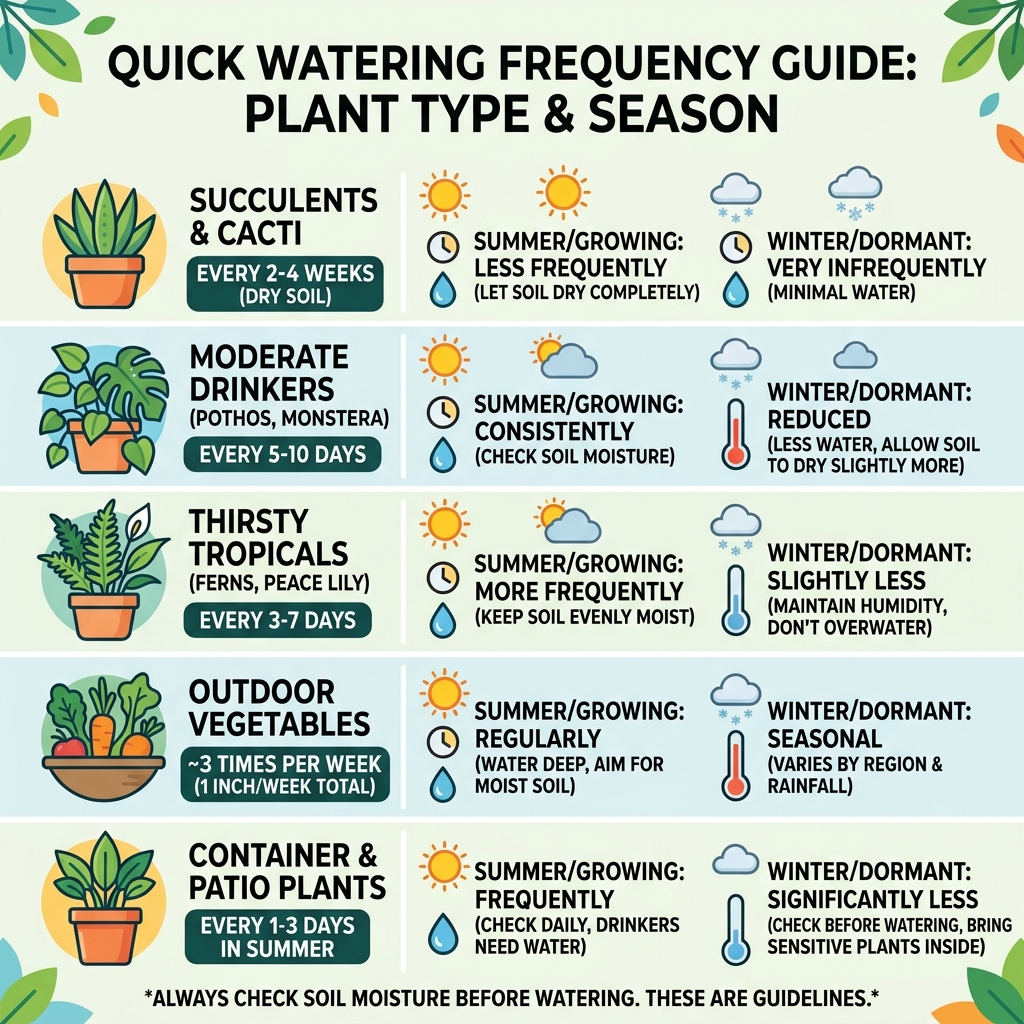
A good watering schedule for plants doesn’t have to be complicated. Here’s a quick reference to get you started:
| Plant Type | Watering Frequency |
|---|---|
| Succulents & cacti | Every 2-4 weeks (let soil dry completely) |
| Moderate drinkers (pothos, monstera) | Every 5-10 days |
| Thirsty tropicals (ferns, peace lily) | Every 3-7 days |
| Outdoor vegetables | ~3 times per week (1 inch/week total) |
| Container & patio plants | Every 1-3 days in summer |
Always check soil moisture before watering — these ranges are starting points, not rules.
Most houseplants don’t die from neglect. They die from too much water, applied too often, on a rigid schedule that ignores what the plant actually needs.
If you’ve ever watched a leaf turn yellow and wondered what went wrong, you’re not alone. Overwatering is one of the most common mistakes beginner gardeners make — and it’s almost always rooted in good intentions.
The problem is that there is no single universal watering schedule. How often you water depends on the plant type, pot size, light levels, humidity, season, and even the soil mix you’re using. A snake plant in a terracotta pot by a sunny window has completely different needs than a fern sitting on a shaded bathroom shelf.
The good news? Once you understand a few simple principles, you stop guessing — and your plants start thriving.
The Science of Thirst: Factors That Shape Your Watering Schedule for Plants
At Futuro Ciencia, we believe that understanding the “why” behind plant thirst is the first step toward a tranquil indoor oasis. Think of your plant as a living straw. It pulls water from the soil, moves it through its stems, and releases it into the air through tiny pores in its leaves. This process is called transpiration. Anything that speeds up this “straw” will change your watering schedule for plants.
Several key factors influence how quickly that soil dries out:
- Light Exposure: A Monstera sitting in bright, indirect light is working much harder than one tucked in a dim corner. More light equals more photosynthesis, which requires more water.
- Pot Size and Material: Larger pots hold more soil, which acts like a bigger reservoir. However, the material matters too! Terracotta and fabric pots are “breathable,” meaning they can dry out 30% to 50% faster than plastic or ceramic pots.
- Soil Composition: Not all dirt is created equal. The best soil for indoor plants usually contains a mix of organic matter for nutrients and drainage materials like perlite or pumice to prevent the roots from suffocating.
- Humidity and Temperature: In a dry, heated apartment during winter, humidity can drop to 20%, which is desert-level dry for a tropical fern. High temperatures also lead to faster evaporation from the soil surface.

Environmental Impact on Hydration
Our homes are dynamic environments. During a summer heatwave, your plants might need a drink every few days. In contrast, during the winter, many plants enter a “semi-dormant” state where their growth slows significantly. Overwatering in winter is perhaps the number one cause of houseplant death.
It is also vital to consider indoor plant light requirements. A plant near a south-facing window in the Northern Hemisphere receives intense rays that bake the soil, while a north-facing window offers a much cooler, slower-drying environment.
Creating a Personalized Watering Schedule for Plants
We often talk about “microclimates” in the garden, but they exist indoors too. A plant sitting directly over an AC vent or heater will dry out much faster than one sitting on a pebble tray.
When building your routine, the most important hardware isn’t a fancy watering can — it’s the drainage hole. Without a way for excess water to escape, salts build up and roots rot. If you’re following a solid indoor plant care routine, you’ll know that checking the drainage is step one before you ever pour a drop.
Mastering the Routine: Watering Schedules for Different Plant Types
To make things easier, we like to group plants into “thirst categories.” This prevents you from treating your desert-dwelling cactus like a moisture-loving Maidenhair fern.
| Category | Typical Plants | Strategy |
|---|---|---|
| Drought-Tolerant | Snake Plants, ZZ Plants, Cacti | Let soil dry 100% top to bottom. |
| Moderate Drinkers | Pothos, Philodendron, Monstera | Let top 1-2 inches dry out. |
| Moisture Lovers | Ferns, Calatheas, Peace Lilies | Keep soil consistently moist (like a wrung-out sponge). |
If you are looking for a specific watering schedule for indoor plants, “Moderate Drinkers” usually need attention every 7-10 days, while “Moisture Lovers” might need a check-up every 3-5 days.
Seasonal Adjustments to Your Watering Schedule for Plants
As the seasons shift, so should your watering habits.
- Spring/Summer: This is the growing season. Plants are pushing out new leaves and need more fuel (water and light).
- Autumn/Winter: As light levels drop, plants “rest.” You should generally reduce your watering frequency by about one-third or even half.
Always consult your indoor plant care schedule to remind yourself when to taper off. A ZZ plant that drank once a month in summer might only need water every two months in the dead of winter.
Garden vs. Container Needs
Outdoor gardening introduces the “1-inch rule.” Generally, a garden needs 1 inch of water per week, which equates to about 0.62 gallons per square foot. It is better to apply this deeply three times a week rather than a little bit every day. Deep watering encourages roots to grow down into the cool earth, making them more drought-resilient.
Hanging baskets and patio containers are the exceptions. Because they are exposed to wind and sun on all sides, they can dry out completely in a single afternoon. In Southern Arizona or during a heatwave, these might need watering 1-3 times per day. Use our indoor plant maintenance checklist to stay on top of these high-maintenance beauties.
Troubleshooting Common Mistakes: Overwatering vs. Underwatering
Is your plant drooping because it’s thirsty, or because its roots are drowning? This is the million-dollar question. Interestingly, the signs can look very similar because both issues prevent the plant from moving water to its leaves.
- Overwatering Signs: Soft, mushy stems; yellowing leaves that fall off easily (especially lower leaves); soil that stays wet for more than a week; a musty smell (root rot).
- Underwatering Signs: Crispy, brown leaf edges; soil pulling away from the sides of the pot; drooping that perks up quickly after watering; light-weight pot.
If you find yourself making common indoor plant care mistakes, the best thing you can do is stop and observe.
Identifying Signs of Distress
For those following indoor plant care tips for beginners, we recommend the “Finger Test.” Stick your finger 2 inches into the soil. If it feels damp and cool, walk away. If it’s dry and dusty, it’s time to fetch the watering can.
Stunted growth is another subtle sign. If your plant hasn’t put out a new leaf in months during the summer, its watering schedule might be too inconsistent.
How to Fix Hydration Issues
- Fixing Overwatered Plants: If the soil is a swamp, you must act fast. Slide the plant out of the pot. If the roots are black and mushy, trim them back to healthy, white tissue and repot in fresh, dry soil.
- Fixing Underwatered Plants: Use “bottom watering.” Place the pot in a sink or tray with a few inches of water and let it soak for 20-30 minutes. This ensures the dry peat moss in the soil actually rehydrates.
Even for indoor plant care tips for busy people, a moisture meter can be a helpful backup tool, but never trust it 100%—always double-check with your finger!
Advanced Techniques: Tools and Timing for a Thriving Garden
Once you’ve mastered the basics, you can optimize your watering schedule for plants with better timing and tools.
Measuring and Optimizing Water Delivery
- The Best Time of Day: Always water in the early morning (between 5 AM and 9 AM). This allows the plant to hydrate before the sun gets hot and gives any water on the leaves time to dry, which prevents fungal diseases.
- Top vs. Bottom Watering: Top watering is great for flushing out salt buildup. Bottom watering is excellent for plants like African Violets that hate getting their leaves wet.
- Mulching: For outdoor gardens, a thick layer of organic mulch is your best friend. It can reduce evaporation by up to 30%, keeping the roots cool and the moisture in the ground.
Tracking and Automation
Consistency is the secret sauce. Whether you use a printable chart, a digital spreadsheet (like Google Sheets), or a smart sensor that pings your phone, tracking helps you see patterns.
For larger gardens, drip irrigation is the gold standard. While spraying water can lose 30% of its volume to evaporation before it even hits the ground, drip systems deliver water directly to the roots.
Frequently Asked Questions about Watering Schedules
Is it better to water plants in the morning or evening?
Early morning is the winner. Watering in the heat of the day leads to high evaporation, and watering at night leaves foliage damp for too long, which is an open invitation for fungus and mold. Aim for that 5 AM to 9 AM window.
How do do I know if I am watering deeply enough?
For indoor pots, water until it begins to trickle out of the drainage holes at the bottom. For outdoor gardens, use a trowel to dig down about 6 inches an hour after watering. The soil should be moist all the way down. If only the top inch is wet, you need to water longer, not more often.
Should I use tap water or rainwater for my plants?
Most plants are fine with tap water, but sensitive species like Calatheas or Spider Plants can get “leaf tip burn” from the chlorine and fluoride. If you can, collect rainwater or use filtered water. At the very least, use room-temperature water; icy cold water can shock the roots of tropical plants.
Conclusion
At Futuro Ciencia, we believe that every home deserves to be a tranquil oasis. By mastering your watering schedule for plants, you aren’t just keeping them alive—you are allowing them to perform their magic: purifying your air, brightening your space, and lowering your stress.
Don’t let the fear of a yellow leaf stop you. Start observing your plants today, use the finger test, and adjust with the seasons. If you need a hand staying organized, check out our comprehensive indoor-plant-care-schedule and join our community of thriving plant parents. Happy growing!
