
Why Air Quality and Plants Matter More Than You Think
Air quality and plants are more connected than most people realize — and the truth is more nuanced than the popular “plants clean your air” headline suggests.
Here’s the quick answer:
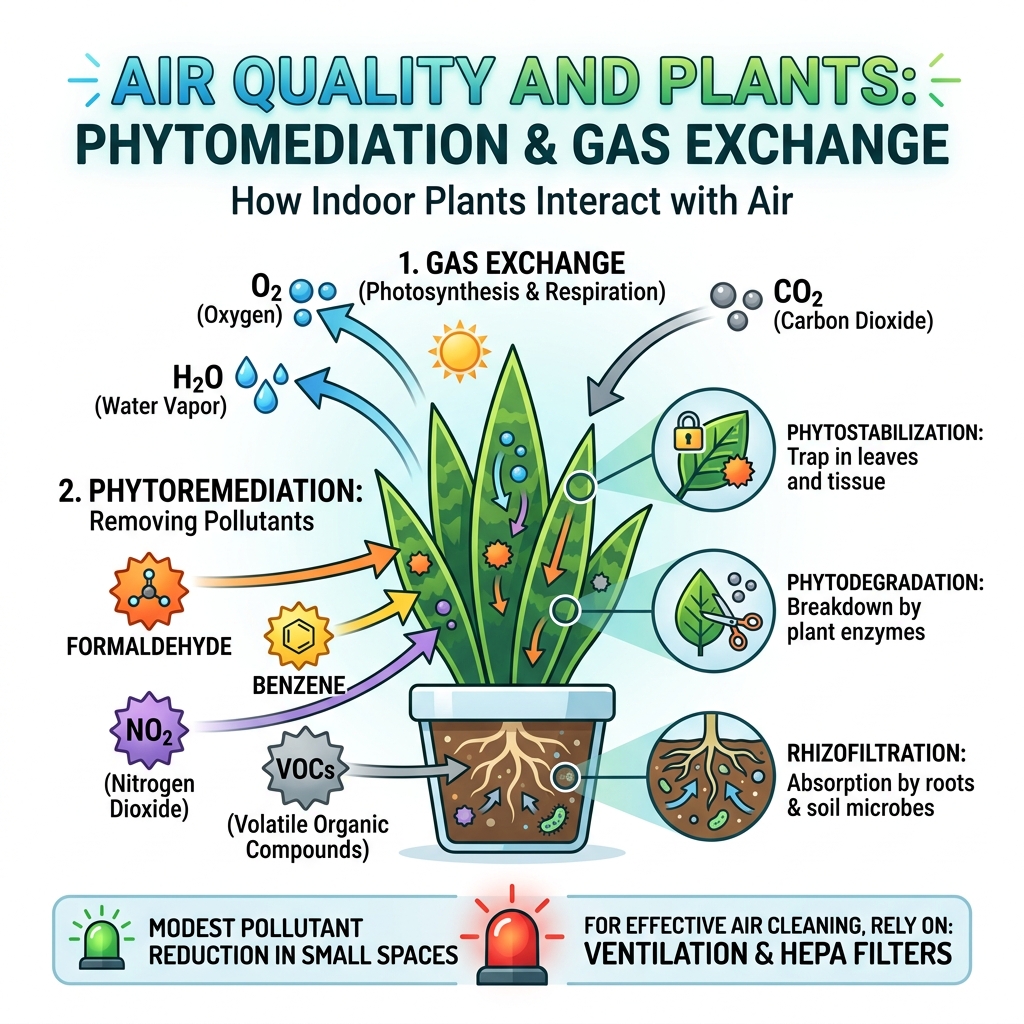
- Indoor plants can remove some pollutants like formaldehyde, benzene, and NO2
- But in a typical home, the effect is small — you’d need hundreds of plants for dramatic results
- Ventilation and HEPA filters are far more effective for air cleaning
- Plants still offer real benefits: humidity, wellbeing, and modest pollutant reduction in small spaces
The stakes are real. People spend roughly 80–90% of their time indoors, where pollutant levels can run 5 to 10 times higher than outside. In a freshly renovated building, that gap can stretch to nearly 100 times. The World Health Organization links indoor air pollution to 3.2 million early deaths per year.
So it’s no surprise that people want a simple, natural fix — and houseplants feel like the obvious answer.
But the science tells a messier story.
The popular belief that plants purify indoor air traces back to a 1989 NASA study conducted in sealed chambers. Those results were real — but the conditions had almost nothing in common with a normal living room with open windows and an HVAC system running.
More recent research has challenged the original findings significantly. As environmental engineer Dr. Michael Waring put it after reviewing 30 years of studies: “Plants are great, but they don’t actually clean indoor air quickly enough to have an effect on the air quality of your home or office environment.”
That doesn’t mean plants are useless. It means we need to be honest about what they can and can’t do.
The Science of Air Quality and Plants: NASA vs. Reality
We’ve all seen the infographics claiming a single Spider Plant can “scrub” the air of a whole room. This idea mostly comes from the famous 1989 NASA study titled Interior Landscape Plants for Indoor Air Pollution Abatement.
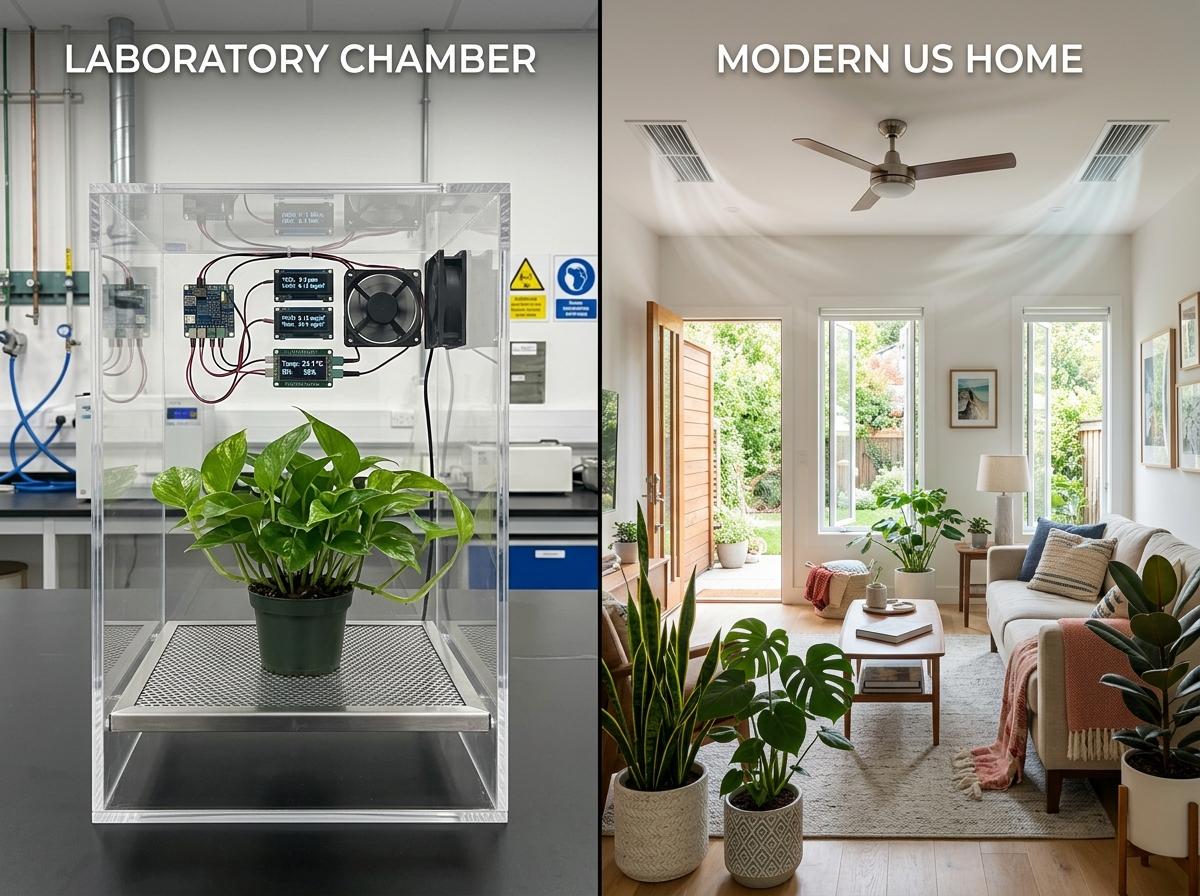
NASA was looking for ways to keep the air clean on future space stations. They put plants in tiny, airtight Plexiglass chambers and pumped in high concentrations of Volatile Organic Compounds (VOCs) like benzene and formaldehyde. In that specific, sealed environment, the plants were rockstars. They absorbed the chemicals through their leaves and the microorganisms in their soil.
However, a 2019 meta-analysis review looked at decades-worth of research on this topic and concluded something different. In their study, named Potted plants do not improve indoor air quality: a review and analysis of reported VOC removal efficiencies, researchers found that the natural air exchange in a modern building (ventilation) removes VOCs much faster than plants ever could.
The Limitations of Laboratory Studies
The biggest problem with the “NASA myth” is the difference between a sealed chamber and your house. In a lab, there is no fresh air coming in. In your home, air leaks in through doors, windows, and vents.
Environmental engineers use a metric called the Clean Air Delivery Rate (CADR). When researchers from Drexel University analyzed 30 years of data, they found that the rate at which plants dissipate VOCs is “orders of magnitude slower” than standard building ventilation. You can read more about this in their findings published in Nature’s Journal of Exposure Science and Environmental Epidemiology.
Essentially, opening a window for ten minutes does more for your air quality than a whole shelf of Pothos plants would do in a month.
When Do Plants Actually Help?
Does this mean we should give up on our indoor jungles? Absolutely not! While plants might not be “mechanical” air purifiers, they provide significant benefits in other ways.
For one, they are excellent at humidity control. Plants release moisture through a process called transpiration, which can make a room feel more comfortable, especially during dry winters. If you’re struggling with dry air, check out our humidity-tips-for-houseplants for more help.
Furthermore, the International Association of Certified Indoor Air Consultants notes that plants can improve productivity and reduce stress. In one famous study in India at the Paharpur Business Centre, a building with over 1,200 plants for 300 workers saw a 52% reduction in eye irritation and a 20% increase in productivity. While this required a massive number of plants, it shows that in specific, high-density scenarios, plants can make a tangible difference in how we feel.
Which Pollutants Can Indoor Air Purifying Plants Remove?
Even if they work slowly, plants do interact with pollutants. The process is called phytoremediation. Plants act as botanical biofilters, pulling gases out of the air and into their leaves or soil.
The most common “indoor villains” include:
- Formaldehyde: Found in carpets, particleboard, and some cleaning products.
- Benzene: Found in plastics, synthetic fibers, and tobacco smoke.
- Toluene: Often found in paints and nail polishes.
- Particulate Matter (PM2.5): Fine dust and smoke particles.
A recent study, Evaluating Particulate Matter Reduction by Indoor Plants, showed that species like the Boston Fern (Nephrolepis exaltata) are particularly good at trapping fine dust on their leaves.
Removing VOCs with Air Quality and Plants
VOCs are gases that “off-gas” from household items. When you buy a new sofa or paint a wall, that “new” smell is actually chemicals entering your air.
NASA’s research suggests that plants could be used to remove cancer-causing chemicals by absorbing them through stomata (tiny pores on the leaves). Interestingly, the soil microbes around the roots do a lot of the heavy lifting. These bacteria actually “eat” the pollutants, breaking them down into harmless food for the plant.
The Role of Nitrogen Dioxide (NO2) in Air Quality and Plants
Nitrogen dioxide is a major concern in homes with gas stoves or heaters. High levels of NO2 are linked to respiratory issues and asthma. The WHO sets a strict guideline of 21 ppb (parts per billion) for chronic exposure.
New research titled Potted plants can remove the pollutant nitrogen dioxide indoors found that common plants like the Peace Lily and Snake Plant can reduce NO2 levels even in low-light conditions. In a small, poorly ventilated office (about 15 cubic meters), five potted plants could remove about 3 ppb of NO2 in just one hour. It’s not a total fix, but for someone in a small urban apartment, it’s a helpful passive boost.
The Numbers Game: How Many Plants Do You Really Need?
This is where the math gets a little wild. If you want to achieve the same air-cleaning results seen in those famous lab studies, you can’t just have one lonely cactus on your desk.
To truly compete with your home’s ventilation system, you would need between 10 and 1,000 plants per square meter. For a typical 1,500-square-foot home, that equates to roughly 680 plants. Unless you want to live in a literal swamp, that’s just not realistic!
| Study Source | Recommendation / Finding | Real-World Application (1,500 sq ft home) |
|---|---|---|
| NASA (1989) | 1 plant per 100 sq ft | 15–18 plants |
| Drexel Meta-Analysis (2019) | 10–1,000 plants per sq meter | 680+ plants |
| India Office Study | 4 plants (shoulder high) per person | ~1,200 plants for 300 people |
Factors Affecting Purification Efficiency
The efficiency of air quality and plants depends on several environmental factors:
- Light Levels: Most plants need light to keep their stomata open. If the plant is in a dark corner, it isn’t “breathing” as much, so it isn’t filtering as much. If you have a dark room, see our guide on indoor-plants-that-thrive-in-low-light.
- Soil Moisture: Research shows that wet soil is actually better at absorbing NO2 than dry soil.
- Leaf Surface Area: The more leaves, the more “filters.” This is why big, leafy plants like the Monstera or Ficus are often cited as better choices.
- Growing Medium: Studies on the Interaction between plant species and substrate type suggest that the type of soil or “active” biofilters can change how many pollutants are trapped.
Potential Drawbacks and Better Alternatives for Clean Air
We love plants, but we have to mention that they aren’t always “clean.” In fact, the American Lung Association warns in their post Actually, Houseplants Don’t Clean the Air that houseplants can sometimes hurt air quality if not cared for properly.
Common issues include:
- Mold: Overwatering can lead to mold growth in the soil, releasing spores into the air.
- Allergies: Flowering plants release pollen, which can trigger asthma.
- Dust: Large leaves act as dust magnets. If you don’t wipe them down, you’re just storing dust in your living room.
- Pests: Gnats and mites can become an indoor nuisance.
To keep your air healthy, we recommend dusting your leaves with a damp cloth once a week and ensuring your pots have excellent drainage. For more winter-specific care, check out our indoor-plant-care-during-winter guide.
Effective Alternatives for Indoor Air Quality
If your goal is purely to remove pollutants and breathe easier, plants should be your secondary strategy. Here are the most effective ways to clean your air according to MedlinePlus Health Information on Indoor Air Pollution:
- Source Control: The best way to clean air is to not pollute it. Switch to low-VOC paints and natural cleaning products.
- Ventilation: Open your windows for 15 minutes a day. It’s the single most effective thing you can do.
- HEPA Filtration: A portable HEPA air cleaner can remove 99.97% of particulates from the air, including dust, smoke, and pollen. It would take a forest of plants to match one small HEPA machine.
- HVAC Maintenance: Change your furnace filters every 2–3 months. Upgrading to a MERV 13 filter can significantly catch more toxins.
Frequently Asked Questions about Air Quality and Plants
Do plants really clean the air in a normal home?
Not in a significant way. While they do absorb some toxins, the rate is so slow that the air being swapped out by your home’s natural ventilation happens much faster. Think of a plant like a tiny sponge in a room where the windows are always slightly open — the sponge is working, but the wind is doing the real cleaning.
Which plant is best for removing formaldehyde?
Spider Plants, Golden Pothos, and Philodendrons are frequently cited in studies for their ability to handle formaldehyde. If you have low light, low-light-indoor-plants-for-apartments like the Snake Plant are also great options.
Can too many plants cause mold problems?
Yes, if they are overwatered or kept in a room with poor air circulation. High humidity (above 60%) can encourage mold growth in soil and on walls. We recommend keeping a small hygrometer to monitor your home’s humidity levels.
Conclusion
At the end of the day, the relationship between air quality and plants is about more than just a chemistry equation. Even if they don’t replace a high-tech air purifier, plants transform our homes into tranquil oases. They brighten our spaces, boost our moods, and provide a vital connection to nature that we often lose while spending 90% of our time indoors.
If you want the benefits of a lush indoor garden without the stress of “will this survive?”, we can help. At Futuro Ciencia, we provide detailed indoor plant care schedules and guides tailored to your specific home environment. Whether you’re looking for indoor-plant-care-for-low-light or expert maintenance tips, our goal is to help your green friends thrive.
For those interested in the professional side of home health, you might even consider looking into the InterNACHI® School & College Certificate Program to learn more about indoor environmental inspections.
Ready to start your journey? Let us help you pick the perfect plants and keep them healthy for years to come. Your lungs — and your soul — will thank you!
