
The Essential Boston Fern Care Guide
Why Keeping a Boston Fern Indoors Is Worth the Effort
Boston fern indoors is one of the most rewarding houseplants you can grow — but only if you know what it needs.
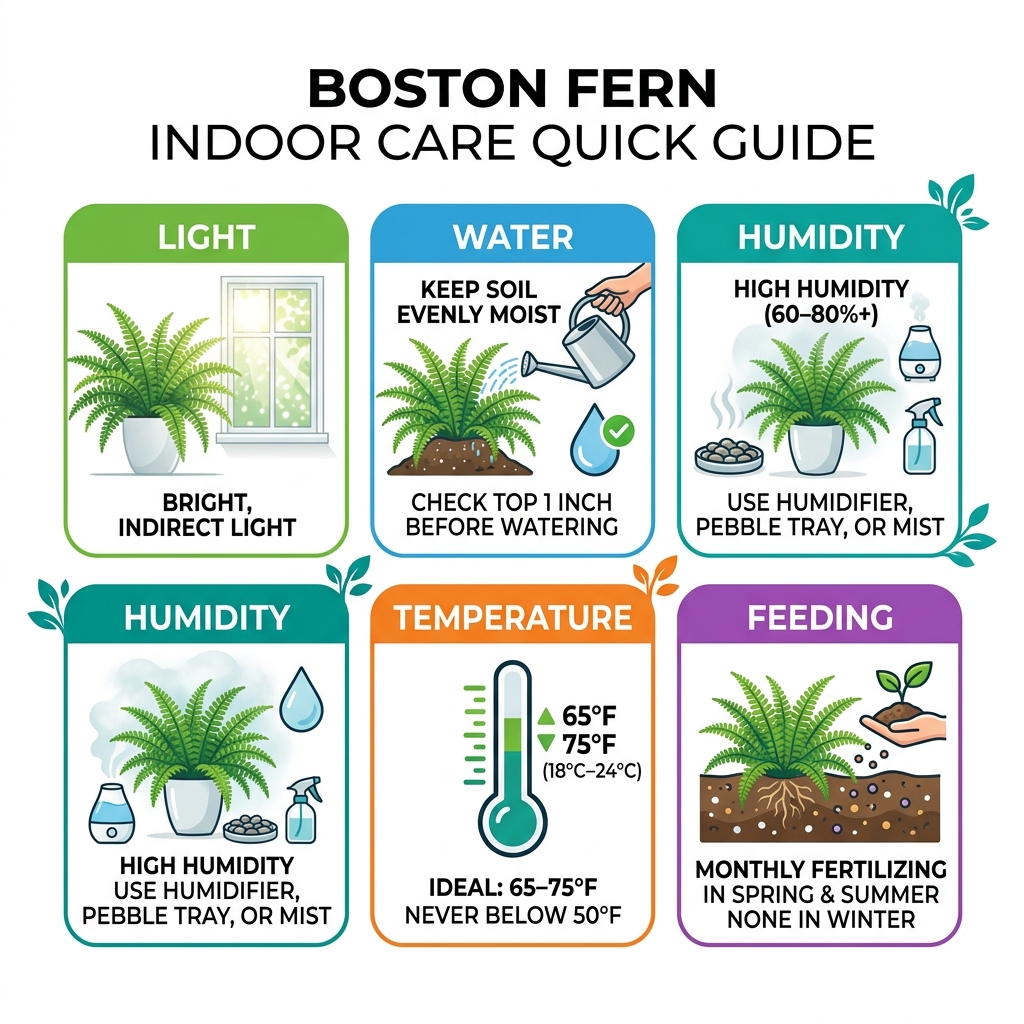
Here’s a quick summary of what it takes to keep one thriving:
| Care Factor | What to Do |
|---|---|
| Light | Bright, indirect light — north or east-facing window |
| Watering | Keep soil evenly moist; check top inch before watering |
| Humidity | Aim for 60–80%+ — use pebble trays, misting, or a humidifier |
| Temperature | 65–75°F; never below 50°F |
| Fertilizing | Monthly in spring and summer, none in winter |
| Repotting | Every 2 years or when roots fill the container |
Boston ferns (Nephrolepis exaltata ‘Bostoniensis’) have been popular houseplants since the Victorian era. And for good reason — they’re lush, graceful, and genuinely clean indoor air by removing pollutants like formaldehyde.
But here’s the honest truth: they can be finicky indoors.
The two biggest challenges are humidity and consistent watering. Get those right, and the rest is straightforward. Neglect them, and you’ll find yourself sweeping up a trail of dropped leaflets.
The good news? You don’t need a green thumb — you just need the right system.
Creating the Perfect Environment for a Boston Fern Indoors
When we bring a boston fern indoors, we are essentially trying to replicate a tropical forest floor. These plants naturally grow in humid, shaded environments where the light is dappled and the air is thick with moisture. To keep them looking like a lush oasis rather than a dried-out tumbleweed, we need to get the basics right.
Light Requirements: Bright but Shielded
One of the most common misconceptions is that ferns love deep shade. While they can survive in lower light, your fern will become leggy and sparse if it doesn’t get enough “food” from the sun. We recommend following these Indoor Plant Light Requirements for the best results.
The ideal spot is an unobstructed northern window or an eastern window that provides soft morning sun. If you only have south or west-facing windows, be careful! The harsh afternoon sun can scorch those delicate fronds. In these cases, we suggest hanging a sheer curtain to filter the light. According to Wisconsin Horticulture, these plants thrive in medium-bright light but must be protected from direct midday rays.
Maintaining High Humidity Levels
If there is one “secret sauce” to keeping a boston fern indoors happy, it is humidity. These plants thrive in humidity levels above 80%. While they can survive at 60%-70% indoors, the dry air of a typical home (especially during winter) often hovers around 30%, which leads to the dreaded brown leaf tips.
We have a few favorite Humidity Tips for Houseplants to help you boost the moisture:
- Pebble Trays: Fill a shallow tray with pebbles and water, then set the pot on top. Just make sure the bottom of the pot isn’t actually sitting in the water, or you’ll risk root rot.
- Humidifiers: If you have a collection of ferns, a small humidifier is the most effective way to keep the air saturated.
- Misting: Spritzing your fern with room-temperature water every morning can help, though it’s usually not enough on its own.
- Grouping: Place your fern near other plants. As plants transpire, they naturally create a small microclimate of shared moisture.
Many of our favorite Our Favorite Air Filter Plants: Indoor Collections for a Fresher Home also love high humidity, making them perfect roommates for your fern.
Optimal Temperature and Draft Protection
Boston ferns prefer a consistent climate. We aim for a daytime temperature range of 65-75°F and slightly cooler nights. They are quite sensitive to extreme shifts, so keep them away from drafty doors, air conditioning vents, and heating radiators.
If temperatures dip below 50°F, the plant will start to suffer. If you are moving a plant from a porch to the living room, check our Indoor Plant Placement Tips to ensure it stays in a stable “sweet spot” within your home. Maintaining an Indoor Plant Care Routine that includes checking for drafts is essential for long-term health.
Mastering Watering and Soil Requirements
Watering is where most indoor gardeners struggle. The goal is to keep the soil like a wrung-out sponge — consistently moist but never waterlogged.
| Sign of Stress | Possible Cause | Solution |
|---|---|---|
| Yellowing Fronds | Overwatering / Poor Drainage | Check for root rot; let soil dry slightly more. |
| Brown, Crispy Tips | Underwatering / Low Humidity | Increase watering frequency; add a pebble tray. |
| Drooping Fronds | Extreme Dryness or Shock | Soak the pot in warm water for 10 minutes. |
| Mushy Stems | Severe Overwatering | Repot in fresh, dry soil and trim rotten roots. |
We suggest using the “finger test.” Stick your finger an inch into the soil; if it feels dry, it’s time to water. Another expert trick is the “pickup test” — if the pot feels surprisingly light when you lift it, the soil is likely dry throughout. For a more structured approach, see our Watering Schedule for Indoor Plants.
The Best Soil and Potting Mix
The best soil for indoor plants like the Boston fern is one that is rich in organic matter and retains moisture while allowing excess water to drain away. A peat-based potting mix with added perlite or vermiculite is ideal. These ferns prefer a slightly acidic soil pH between 5.0 and 5.5.
When Selecting Indoor Plant Pots and Planters, we recommend plastic or glazed terra cotta. Why? Unlike unglazed clay, these materials don’t “breathe” as much, meaning they hold moisture in the soil longer, which is exactly what a thirsty fern wants. Always ensure your pot has adequate drainage holes to prevent “wet feet.”
Signs of Watering Stress
If you notice your plant looks a bit sad, it’s usually trying to tell you something about its water intake.
- Yellowing: Why Are My Indoor Plant Leaves Turning Yellow? Often, this is a sign of overwatering or poor drainage.
- Browning: Fixing Brown Leaf Tips on Indoor Plants is usually a matter of increasing humidity or more frequent watering.
- Drooping: When Indoor Plant Leaves Droop: Causes and Solutions can be a sign of environmental shock or severe dehydration.
Maintenance: Pruning, Fertilizing, and Repotting
A little bit of regular grooming goes a long way in keeping your boston fern indoors looking bushy and vibrant.
Pruning for Health and Shape

Don’t be afraid to give your fern a haircut! Over time, the older fronds at the base will naturally turn yellow or brown. We use sharp, clean shears to snip these off at the soil level. This doesn’t just make the plant look better; it improves air circulation and encourages the plant to put its energy into new, green growth. For more detailed techniques, check out our Pruning Tips for Indoor Plants.
Fertilizing Without Burn
Boston ferns are moderate feeders. During the active growing season (spring and summer), we recommend a balanced, water-soluble fertilizer applied at half-strength once a month. In the fall and winter, the plant goes into a semi-dormant state, so you should stop fertilizing entirely. If you prefer a more eco-friendly approach, read our guide on Fertilizing Houseplants Naturally.
When to Repot
Boston ferns will grow as large as their pot allows. Generally, you should plan on How to Repot Indoor Plants every two years. You’ll know it’s time when the roots start circling the bottom of the pot or poking out of the drainage holes. Spring is the best time for this. Choose a new pot that is only about 2 inches wider than the current one to avoid Solutions for Overcrowded Roots in Indoor Plants.
Best Varieties of Boston Fern Indoors
While the classic ‘Bostoniensis’ is the gold standard, several cultivars offer unique looks:
- ‘Dallas’: A smaller, more compact variety that is surprisingly tolerant of lower light and drier air.
- ‘Rita’s Gold’: Features stunning chartreuse or lime-green foliage that can brighten up a dark corner.
- ‘Fluffy Ruffles’: Smaller fronds with a more “frilly” texture; it’s very stiff and upright.
- ‘Tiger Fern’: A beautiful variegated variety with marbled green and gold leaflets.
- ‘Lemon Button’ (Duffii): A different species but often grouped with Boston ferns; it has tiny, round leaflets and a faint lemony scent when crushed.
How to Propagate a Boston Fern Indoors
The easiest way to get “free” plants from your boston fern indoors is through division. Since many cultivars are sterile and don’t produce viable spores, we rely on the plant’s natural habit of sending out “runners” or stolons.
- Spring Division: When repotting in the spring, gently take the plant out of its pot.
- Slice the Root Ball: Use a clean, sharp knife to cut the root mass into two or four sections. Ensure each section has several healthy fronds and a good amount of roots.
- Potting Up: Place each section into a fresh pot with sterile potting soil.
- Aftercare: Keep the new plantlets in a warm, high-humidity environment until you see new growth. Using a clear plastic bag as a temporary humidity tent can work wonders.
Troubleshooting Pests and Health Issues
Even with the best care, pests can occasionally find their way to your greenery.
- Spider Mites: These tiny pests love dry air. If you see fine webbing between fronds, give your plant a lukewarm shower twice a week to wash them off.
- Scale and Mealybugs: These look like small bumps or cottony spots on the stems. You can treat them by dabbing them with a cotton swab dipped in isopropyl alcohol. For a deeper dive, see How to Combat Houseplant Pests.
- Blight and Fungus: If you see dark spots or a musty smell, you might be Dealing with Indoor Plant Fungus. Ensure better air circulation and avoid getting water on the leaves when you water.
If your plant is struggling with more than just bugs, consult our guides on How to Fix Yellow Leaves on Houseplants and Understanding and Treating Houseplant Diseases. One of the most serious issues is Recognizing and Remedying Root Rot in Indoor Plants, which usually requires immediate repotting and a reduction in watering.
Acclimation for Winter
If you’ve been growing your fern outdoors for the summer, bringing it inside for the winter can be a shock. Indoor Plant Care During Winter requires a change in strategy.
When nighttime temperatures hit 50°F, it’s time to move. Expect some “leaf drop” — this is a normal reaction to the change in light and humidity. You can cut the plant back significantly to help it adjust. We recommend following a specific Indoor Plant Care Schedule to help it transition. If the plant looks like it’s failing, don’t give up! Check out How to Revive Dying Houseplants for recovery tips.
Frequently Asked Questions
Are Boston ferns toxic to pets or children?
No! One of the best things about the boston fern indoors is that it is completely non-toxic to cats, dogs, and humans. It is ASPCA-approved, making it one of the top Indoor Plants for Beginners with Pets.
Why is my fern shedding so many leaves?
Shedding is usually a sign of low humidity or environmental shock. If you just moved the plant or turned on the heater, it’s likely reacting to the dry air. This is one of the most Common Indoor Plant Care Mistakes. Increase misting and check the soil moisture.
Can Boston ferns survive in low light?
They can “survive,” but they won’t “thrive.” In low light, the fronds will become dull, and the growth will slow down significantly. For those just starting out, our Indoor Plant Care Tips for Beginners can help you find the right balance of light and care.
Conclusion
Growing a boston fern indoors is a journey in patience and moisture management, but the reward is a living, breathing piece of the tropics right in your living room. By providing bright indirect light, consistent moisture, and high humidity, you can transform your home into a tranquil oasis.
At Futuro Ciencia, we are dedicated to helping you maintain that lush greenery year-round. To stay on top of your plant’s needs, use our Indoor Plant Maintenance Checklist.
Transform your home with our expert indoor plant care guides and let us help you grow your indoor jungle with confidence!
