
Why the Peace Lily Light Requirement Is the Key to a Thriving Plant
The peace lily light requirement is simple to get right once you know what this plant actually needs. Here’s the quick answer:
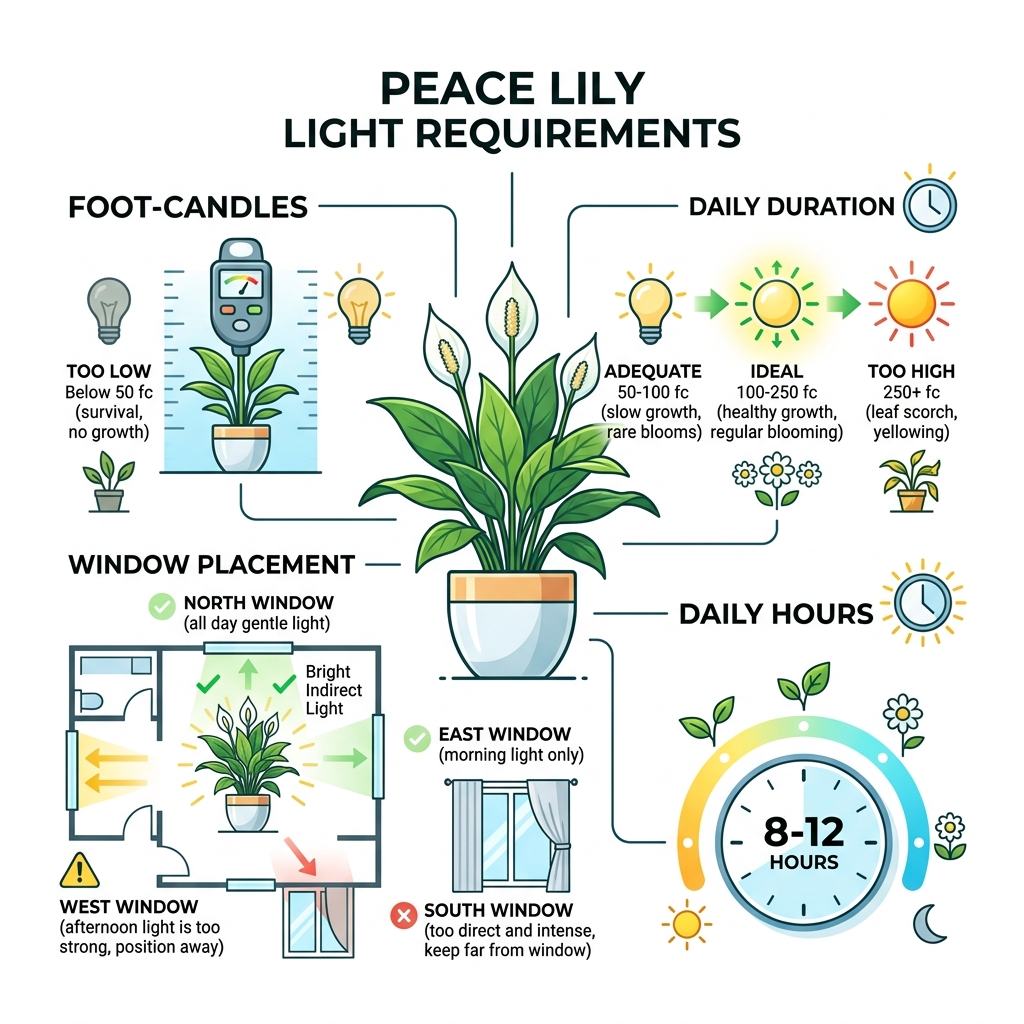
| Light Level | Foot-Candles | What Happens |
|---|---|---|
| Too low | Below 50 fc | Survival only, no growth |
| Adequate | 50-100 fc | Slow growth, rare blooms |
| Ideal | 100-250 fc | Healthy growth, regular blooming |
| Too high (direct sun) | 250+ fc | Leaf scorch, yellowing |
The sweet spot: bright, indirect light for 8-12 hours per day, away from direct sun rays.
Peace lilies come from the shaded floors of tropical rainforests in Central and South America. Under a dense forest canopy, they never get blasted by direct sunlight — they get filtered, dappled light all day long. That’s exactly what you need to recreate indoors.
The good news? This plant is forgiving. It can survive in low light. But if you want those beautiful white blooms and deep green leaves, light is the one thing you can’t ignore.
Even busy homeowners who forget to work occasionally can keep a peace lily happy — but put it in the wrong light, and no amount of watering will fix what’s going wrong.
Understanding the Peace Lily Light Requirement
When we talk about the peace lily light requirement, we are essentially trying to play “Mother Nature” inside our living rooms. In the wild, Spathiphyllum (the botanical name for the peace lily) lives on the forest floor. It sits beneath giant mahogany trees and thick vines that act as a natural umbrella. This means the plant has evolved to be incredibly efficient at capturing low levels of energy without being toasted by the sun.
To measure this energy, professionals use “foot-candles” (fc) or “lux.” A foot-candle is simply the amount of light cast by one candle on a square foot of surface. For a peace lily to do more than just “exist,” it needs a specific range of intensity.
| Light Category | Foot-Candles (fc) | Lux (approx.) | Plant Response |
|---|---|---|---|
| Survival Minimum | 50 fc | 500 lux | Very slow growth; no flowers. |
| Optimal Growth | 150 – 200 fc | 1,500 – 2,000 lux | Lush green leaves; steady growth. |
| Blooming Range | 200 – 250 fc | 2,000 – 2,500 lux | Regular production of white spathes. |
| Danger Zone | 400+ fc | 4,000+ lux | Risk of leaf burn and dehydration. |
We recommend checking out our guide on Indoor Plant Light Requirements to see how these numbers compare to other popular species.
It is also worth noting that peace lilies are famous for their air-purifying capabilities. According to NASA Clean Air Study research on Spathiphyllum, these plants are masters at removing toxins like benzene and formaldehyde from the air. However, their ability to clean your air is directly tied to photosynthesis; if the plant doesn’t have enough light to “breathe” and grow, its air-purifying engine slows down significantly.
The Ideal Peace Lily Light Requirement for Blooming
If you want those iconic white “flowers,” light is your best friend. Strictly speaking, the white part isn’t a flower—it’s a modified leaf called a “spathe” that protects the “spadix” (the bumpy spike where the tiny actual flowers live).
To trigger the production of these spathes, your peace lily needs at least 6 to 8 hours of bright, indirect light daily. Without this energy, the plant focuses all its resources on keeping its green leaves alive, leaving no “budget” for blooming. High-quality light allows the plant to convert nutrients into the sugars needed for those elegant white flags. If your plant looks healthy but refuses to bloom, it’s likely a light issue. For more tips on managing these conditions, see our Indoor Plant Care for Low Light guide.
Minimum Light Thresholds for Survival
Peace lilies are often marketed as “low light plants,” which can be a bit misleading. While they can survive in as little as 50 foot-candles, they won’t exactly be thriving. In very low light, the plant increases its chlorophyll density—making the leaves look a very dark, almost forest green—to catch every stray photon of light.
Growth will slow to a crawl, and you might notice the plant becoming “leggy” as it stretches toward the nearest light source. If you live in a dim apartment, you can still enjoy these beauties, but don’t expect them to grow into giants overnight. We’ve detailed several Low Light Indoor Plants for Apartments that share this resilient nature.
Signs of Incorrect Lighting and How to Fix Them
Your peace lily is a great communicator. It doesn’t just sit there; it shows you exactly how it feels about its current spot. If the peace lily light requirement isn’t being met, the leaves will be the first to tell the story.
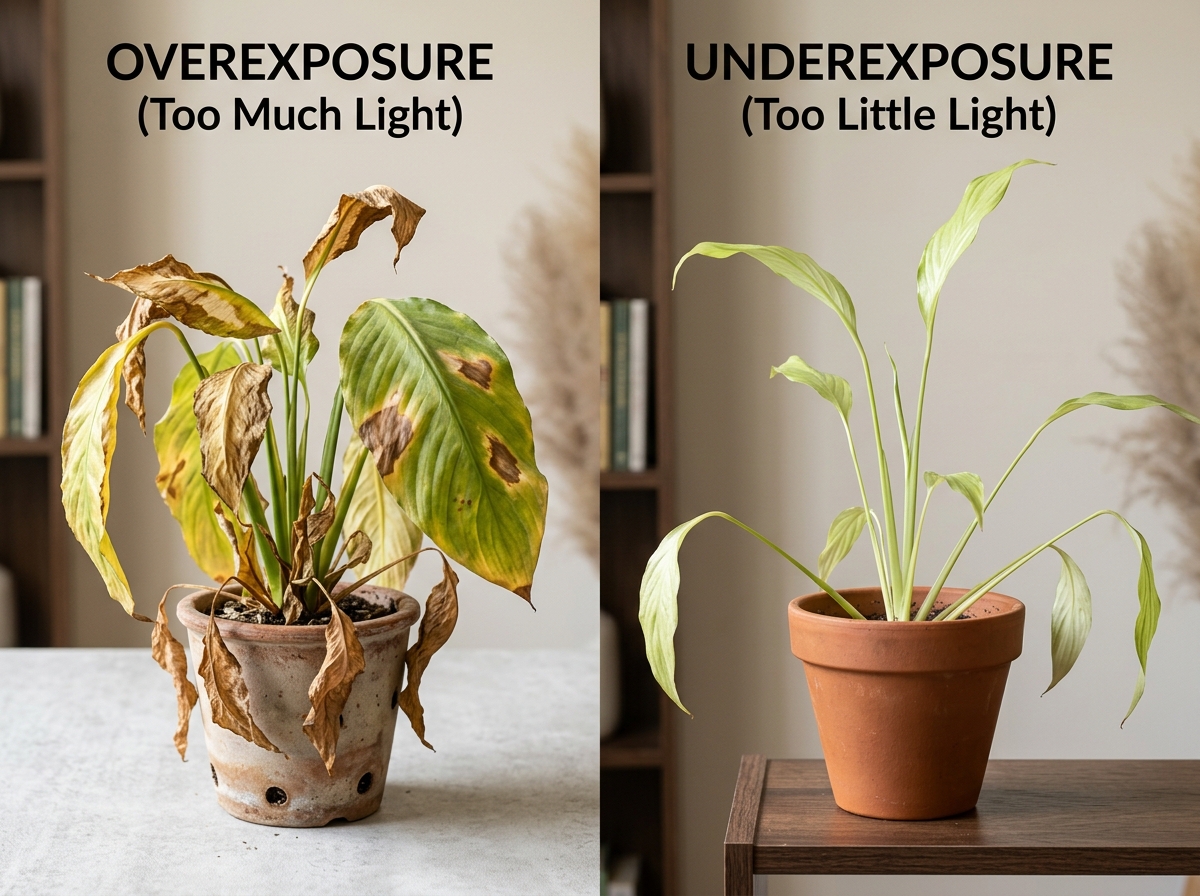
- Too Much Light: You will see yellowing leaves or brown, crispy “scorch” marks on the parts of the leaf most exposed to the window. This is essentially a plant sunburn.
- Too Little Light: The plant will look “sad” but not necessarily wilted. Leaves may turn a pale, sickly green, and new growth will be smaller than the old leaves.
If you are struggling to tell if the issue is light or water, our Watering Guides: The Secret to Keeping Low Light Plants Alive can help you distinguish between a thirsty plant and a sun-stressed one.
Troubleshooting Your Peace Lily Light Requirement
Is your plant growing long, weak stems that can’t support themselves? That’s called “etiolation.” The plant is literally panicking and trying to “walk” toward the light. If you see this, or if your plant has stopped producing flowers for over a year, it’s time to move it to a brighter location.
We’ve seen many owners mistake pale foliage for a lack of fertilizer. In reality, the plant is often just lacking the light needed to produce vibrant green pigment. Before you reach for the chemicals, try moving the pot 2 feet closer to a window. You can find more advice on this in our article on Indoor Plants that Thrive in Low Light.
Recovering from Direct Sunlight Damage
If you accidentally left your peace lily in a hot, south-facing window and it now looks like it’s been through a toaster, don’t give up!
- Relocate immediately: Move it to a spot with soft, filtered light.
- Prune the damage: Leaves that are more than 50% brown won’t recover. Snip them at the base with clean shears.
- Hydrate: Sun-scorched plants lose moisture fast. Ensure the soil is moist (but not soggy).
- Diffused light: Use a sheer curtain to “soften” the light if you must keep it near that window.
This recovery process is similar to what we recommend in The Ultimate Guide to Parlor Palm Low Light Success, as both plants share a hatred for direct afternoon rays.
Optimizing Indoor Placement by Window Direction
Where you put your plant matters. Not all windows are created equal!
- North-Facing Windows: These are the “safe zones.” They provide consistent, weak light all day long. A peace lily will be very happy here, though it might bloom less frequently.
- East-Facing Windows: This is the “Goldilocks” spot. The gentle morning sun provides enough energy to trigger blooming without the intense heat that causes burns.
- South-Facing Windows: These are the “danger zones.” In the northern hemisphere, south windows get the most intense light. If you place a peace lily here, keep it 6 to 8 feet back from the glass or use a heavy sheer curtain.
- West-Facing Windows: These windows get the “afternoon heat.” The light is often too intense and the temperature can spike, which peace lilies dislike.
For those living in smaller spaces, choosing the right corner is vital. Check out our second guide on Low Light Indoor Plants for Apartments 2 for more placement strategies.
Artificial Lighting and Seasonal Adjustments
What if your home is a “cave” with no natural light? Don’t worry, we’ve got you covered. Peace lilies actually thrive under artificial lights. In fact, many office peace lilies look better than home ones because they get 12 hours of consistent fluorescent light every day.
If you use LED grow lights, aim for a “full-spectrum” bulb with a color temperature of around 5000K (which mimics natural daylight).
- Duration: Keep the lights on for 12-16 hours a day.
- Distance: Position the light about 12-18 inches above the plant. If the leaves start turning yellow, move the light further away.
Seasonal Shifts: The peace lily light requirement changes with the seasons. In the winter, the sun is lower and weaker. You may need to move your plant right up against the window to keep it happy. In the summer, you might need to move it back to avoid the harsh “magnifying glass” effect of the glass.
Measuring Light Levels Like a Pro
You don’t need expensive equipment to be a plant scientist. We use two simple methods:
- The Shadow Test: Hold your hand about 12 inches above your plant at noon.
- Sharp, dark shadow? Too much light (Direct).
- Soft, blurry shadow? Perfect (Bright Indirect).
- No shadow at all? Too little light (Low Light).
- Light Meter Apps: There are many free apps for smartphones that use your camera to measure lux. Aim for 2,000 lux for a happy, blooming plant.
Pro Tip: Clean those leaves! Dust acts like a tiny blanket that blocks the sun. Wipe the leaves with a damp cloth every month so they can absorb light efficiently. Also, rotate your plant 90 degrees every week. This ensures all sides of the plant get their fair share of energy, preventing it from leaning to one side. This is backed by Scientific research on light intensity for Araceae, which shows that consistent light distribution leads to more uniform flowering.
Frequently Asked Questions about Peace Lily Light
Can peace lilies grow in rooms with no windows?
Yes, but they need help. A peace lily in a windowless basement will eventually die without a light source. However, if you keep the overhead fluorescent lights on for 12 hours a day, or provide a dedicated LED grow light, they can flourish. They are a top choice for interior designers working with windowless office cubicles for this very reason.
Why are my peace lily flowers turning green?
This is a common concern! There are two reasons:
- Age: As the “flower” gets old and prepares to die, it naturally turns green to start photosynthesizing before it falls off.
- Too much light: Sometimes, if the light is a bit too intense, the plant produces more chlorophyll in the spathe, causing it to look green from the start. If your new flowers are green, try moving the plant to a slightly shadier spot.
Can I move my peace lily outdoors for the summer?
You can, but be careful! Never put a peace lily in full sun; it will turn into a crisp in an hour. A fully shaded porch or a spot under a thick tree is best. Make sure to bring it back inside if temperatures drop below 60°F (15°C), as they are tropical plants and hate the cold. Also, watch out for wind, which can tear their delicate leaves.
Conclusion
At Futuro Ciencia, we believe that every home deserves the tranquil, purifying presence of a healthy plant. Mastering the peace lily light requirement is the first step in transforming your space into a lush oasis. By mimicking the dappled light of the rainforest and adjusting for the seasons, you can ensure your peace lily remains a vibrant, blooming centerpiece for years to come.
Ready to dive deeper into greenery? Master your indoor garden with our Indoor Plant Light Requirements guide and take the guesswork out of your plant care routine!
