
Why Knowing How to Take Care of Bamboo Plant in Office Makes All the Difference
Knowing how to take care of bamboo plant in office is simpler than most people think — and the payoff is real. A healthy Lucky Bamboo (Dracaena sanderiana) can sit on your desk for years with minimal fuss, even surviving weekends and vacations without attention.
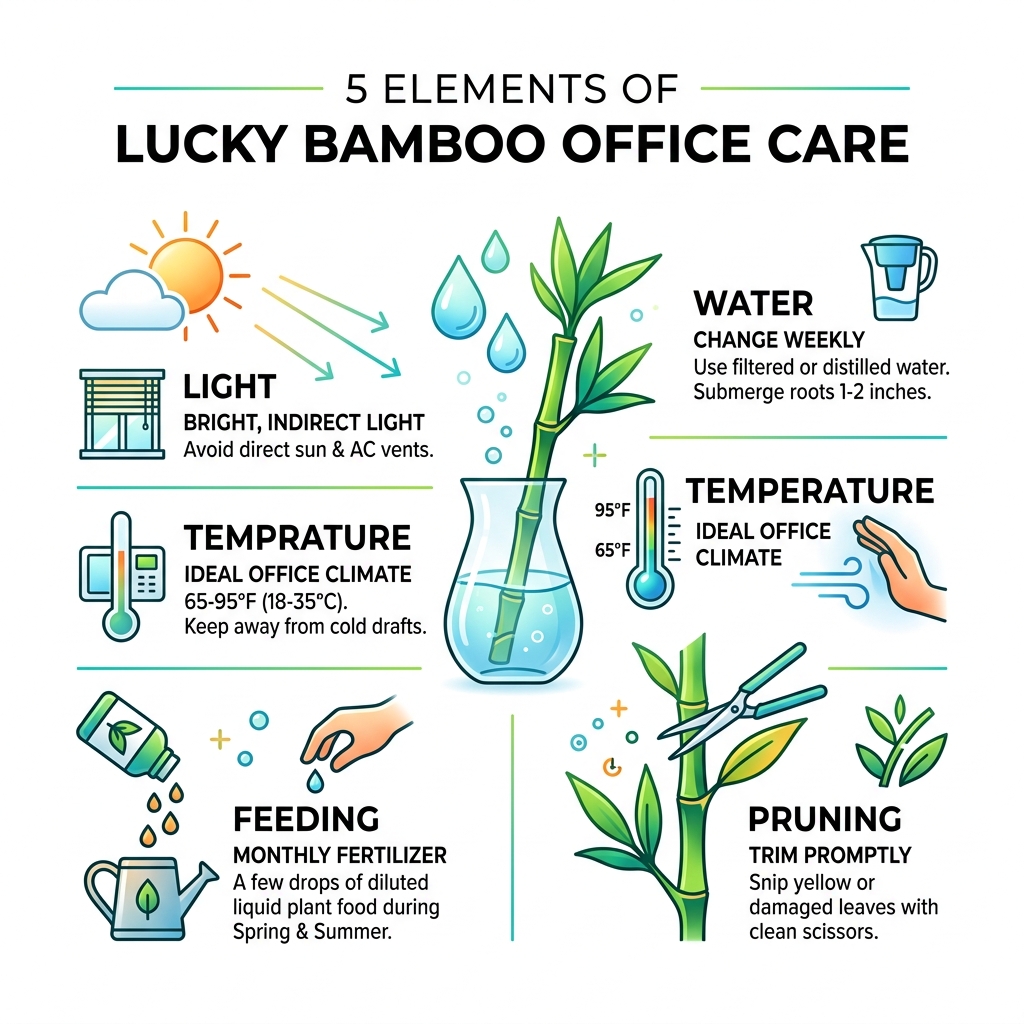
Here’s a quick-start summary:
- Light – Place in bright, indirect light; avoid direct sun and AC vents
- Water – Change water weekly using distilled or filtered water; keep roots submerged 1-2 inches
- Temperature – Keep between 65-95°F (18-35°C); away from cold drafts
- Feeding – Add a few drops of diluted liquid fertilizer once a month during spring and summer
- Pruning – Trim yellow or damaged leaves promptly with clean scissors
Lucky Bamboo is one of the few plants that genuinely thrives in a typical office. Stable indoor temperatures, low natural light, and consistent overhead lighting are exactly what it prefers.
The most common mistake? Poor water quality. Research suggests over 73% of Lucky Bamboo failures trace back to water chemistry — specifically chlorine and chloramine in tap water — not neglect.
The good news: once you understand the basics, this plant practically takes care of itself.
Choosing the Right Variety and Setup for Your Workspace
When we talk about how to take care of bamboo plant in office, we first need to clarify what “bamboo” actually is. Most office “bamboo” isn’t bamboo at all! The most popular choice is Lucky Bamboo (Dracaena sanderiana), a member of the asparagus family that looks like a miniature bamboo stalk. If you want something more substantial, you might look into Multiplex Bamboo (Bambusa multiplex), which is a true clumping bamboo that can handle indoor life if given enough light.
At Futuro Ciencia, we often recommend Lucky Bamboo for cubicles and desks because of its incredible versatility. It can grow in just water or in soil. Each method has its pros and cons, which we’ve broken down in the table below to help you decide which setup fits your office routine.
| Feature | Water-Grown (Hydroponic) | Soil-Grown |
|---|---|---|
| Maintenance Level | Very Low (Weekly water change) | Moderate (Check soil moisture) |
| Mess Factor | Clean (No dirt involved) | Potential for spills/dust |
| Growth Speed | Slower, more controlled | Faster, more robust |
| Longevity | 3–8 years on average | Can live 10+ years |
| Best For | Desks and windowless cubicles | Sunny office lobbies and windowsills |
Container Selection and Drainage
Choosing the right home for your plant is vital. For a desk-side Lucky Bamboo, we recommend a container that is about 2 inches larger than the plant’s root ball.
- For Water Growth: Use an opaque vase if possible. While clear glass looks modern, it allows light to reach the water, which encourages algae growth. If you use clear glass, be prepared to scrub it more often!
- For Soil Growth: Drainage is non-negotiable. Ensure your pot has drainage holes at the bottom to prevent water from sitting at the roots, which leads to rot.
If your office has very little natural light, you’ll want to check out our guide on indoor-plants-that-thrive-in-low-light/ to see how bamboo stacks up against other resilient species.
How to Take Care of Bamboo Plant in Office: Light and Temperature
The environment of a modern office is actually quite “tropical” if you think about it. It’s climate-controlled, usually warm, and has consistent light. However, the type of light matters immensely.
Lucky Bamboo originates from the shaded understory of African rainforests. This means it hates direct sunlight. If you place your bamboo in a south-facing window where the sun beats down on the leaves, they will scorch and turn yellow within hours. Instead, aim for bright, indirect light.
Interestingly, scientific research on plants reducing office stress shows that even just having a glimpse of greenery like bamboo can improve employee well-being and productivity. It’s not just a decoration; it’s a biological stress-reliever.
Ideal Lighting for Your Office Bamboo Plant
In most offices, the overhead fluorescent or LED lighting is actually sufficient for Lucky Bamboo to survive, though it may grow slowly. If you want your plant to truly flourish:
- North or East Windows: These provide the gentle morning sun that bamboo loves without the harsh afternoon heat.
- LED Desk Lamps: If you’re in a windowless cubicle, a standard LED desk lamp kept on during work hours can act as a supplementary grow light.
- The Rotation Trick: All plants grow toward their light source (a process called phototropism). To keep your stalks straight and prevent them from leaning like the Tower of Pisa, rotate the vase a quarter-turn every week.
Maintaining the Perfect Office Temperature
Lucky Bamboo is happiest when you are. It prefers a temperature range between 65-95°F (18-35°C). This makes it perfect for the standard 72°F office.
However, we need to watch out for “micro-climates” in the office:
- AC Vents: Never place your bamboo directly under or in front of an air conditioning vent. The constant blast of cold, dry air will wick moisture away from the leaves and cause brown tips.
- Drafty Windows: During winter, keep the plant a few feet away from window glass, which can get much colder than the rest of the room.
- Weekend Survival: One of the best parts of how to take care of bamboo plant in office is that this plant is a “weekend warrior.” It can easily handle 2-3 weeks without attention, so don’t worry about it during your vacation.
Mastering the Watering and Feeding Routine
Water is the lifeblood of your bamboo, but not all water is created equal. This is where most office gardeners go wrong. Tap water is often treated with chlorine and fluoride. While safe for us, these chemicals are toxic to Lucky Bamboo and are the leading cause of leaf discoloration.
We strongly suggest using distilled or filtered water. If you only have access to a tap, let the water sit in an open container overnight before using it. This allows the chlorine to evaporate, making it much safer for your plant. For more on general hydration for your green friends, see our watering-schedule-for-indoor-plants/.
How to Take Care of Bamboo Plant in Office Water
If you are growing your bamboo in a vase with pebbles and water, hygiene is your top priority.
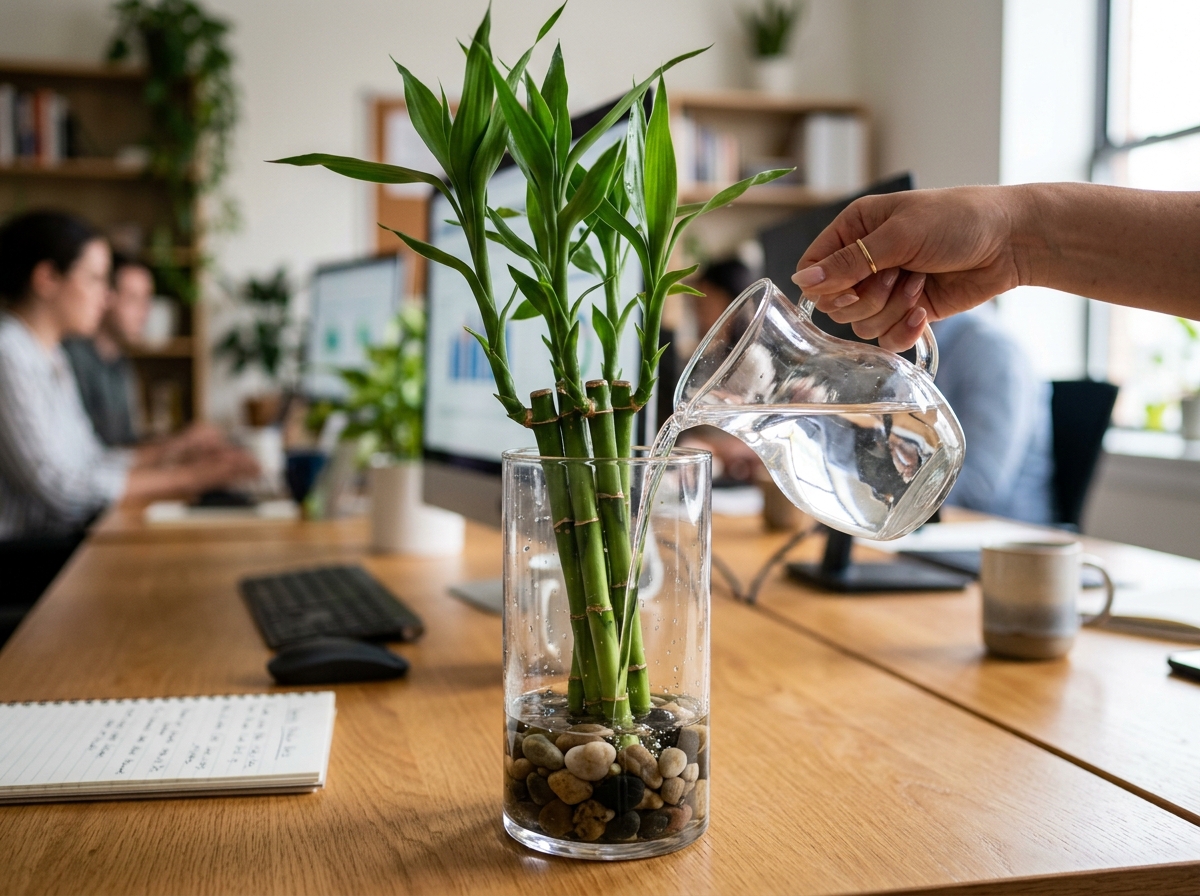
- Change the Water Weekly: Even if the water looks clear, it can become stagnant and depleted of oxygen. A weekly refresh prevents algae and bacterial buildup.
- Root Coverage: Only the roots and the bottom 1-2 inches of the stem should be submerged. If you fill the vase too high, the stem can become mushy and rot.
- Algae Control: If you see green film on the rocks or glass, remove the plant, scrub everything with warm water (no soap!), and rinse the roots before putting it back.
How to Take Care of Bamboo Plant in Office Soil
For those who prefer the traditional soil method, the rules change slightly. You want a well-draining potting mix—something with a bit of sand or perlite mixed in.
- The Top-Inch Rule: Stick your finger into the soil. If the top inch feels dry, it’s time to water. If it’s still damp, wait. Overwatering is the fastest way to kill a soil-grown bamboo via root rot.
- Drainage Check: Always empty the saucer under the pot after watering. We don’t want the plant “sitting in wet socks.”
- Soil Quality: For the best results, use a high-quality mix. Check our guide on the best-soil-for-indoor-plants/ for specific recommendations.
Maintenance, Styling, and Troubleshooting
Part of the fun of having a “desk mate” is keeping it looking sharp. Lucky Bamboo is famous for being trained into spirals, braids, or hearts. This is done by manipulating light sources or using wire, but for most of us, basic maintenance is enough.
Pruning: As your bamboo grows, it might become “leggy” or outgrow its space. Use sterilized pruning shears to trim the offshoots (the leafy parts), not the main stalk. If you cut the main stalk, it will stop growing taller from that point. Always cut just above a leaf node (the line on the stalk) to encourage new growth.
Styling: You can train younger, more flexible stalks to grow in specific directions by placing a box over the plant with a small hole on one side. The bamboo will grow toward the light hole. For more tips on keeping things manageable, see our indoor-plant-care-tips-for-busy-people/.
Troubleshooting Yellow Leaves: If you see yellowing, don’t panic, but do act quickly. Yellow leaves are usually a “check engine light” for one of three things:
- Chemical Burn: Switch to distilled water immediately.
- Too Much Sun: Move it further from the window.
- Over-fertilization: If you’ve been adding plant food every week, stop. Indoor bamboo only needs a tiny bit of diluted fertilizer every 2-3 months.
Frequently Asked Questions about Office Bamboo
Is lucky bamboo safe for pets in shared offices?
If your office is pet-friendly or you work in a shared space where “office dogs” roam, safety is a concern. Lucky Bamboo is technically a Dracaena, and according to the ASPCAs guide on Dracaena toxicity, it is toxic to both cats and dogs.
If ingested, it can cause dilated pupils, drooling, and mild vomiting. While rarely fatal, it’s definitely unpleasant. We recommend keeping your bamboo on a high shelf or a desk that is out of reach of any four-legged visitors.
How does lucky bamboo improve office Feng Shui?
In Chinese culture, Lucky Bamboo is a powerhouse of positive energy (Chi). It is believed to bring different types of luck based on the number of stalks:
- 3 Stalks: Happiness, long life, and wealth.
- 5 Stalks: Wealth and creativity.
- 6 Stalks: Good luck and harmony.
- Avoid 4 Stalks: In Chinese culture, the word for “four” sounds like the word for “death,” so four-stalk arrangements are considered very unlucky!
Beyond the spiritual, it also physically purifies the air by absorbing minor amounts of CO2 and releasing oxygen, helping you stay alert during that 3 PM slump.
What should I do if my bamboo stalks turn yellow?
If a leaf turns yellow, you can simply trim it off. However, if the stalk itself turns yellow, the situation is more serious. A yellow stalk is usually dying and cannot be turned green again. This is often caused by severe root rot or chemical buildup.
The best move is to remove the yellow stalk from the arrangement immediately. If left in the vase, it will rot and spread bacteria to the healthy green stalks. Check the roots of the remaining plants—healthy roots should be orange or reddish. If they are black or slimy, trim the bad parts away and thoroughly clean the container.
Conclusion
At Futuro Ciencia, we believe that a green workspace is a productive workspace. Mastering how to take care of bamboo plant in office is one of the most rewarding “low-effort, high-reward” projects you can take on. By simply being mindful of water quality and keeping the plant out of the sun’s direct path, you can enjoy a tranquil, living piece of art right next to your computer.
Whether you’re looking for a bit of Feng Shui luck or just want to brighten up a grey cubicle, bamboo is the ultimate office survivor. For more ideas on how to green up your professional life, explore our thoughts on low-maintenance-plants-for-offices/. Happy growing!
