
What You Need to Know About Bamboo Care Indoor (Quick Answer)
Bamboo care indoor is simpler than most people think — once you know what you’re actually growing.
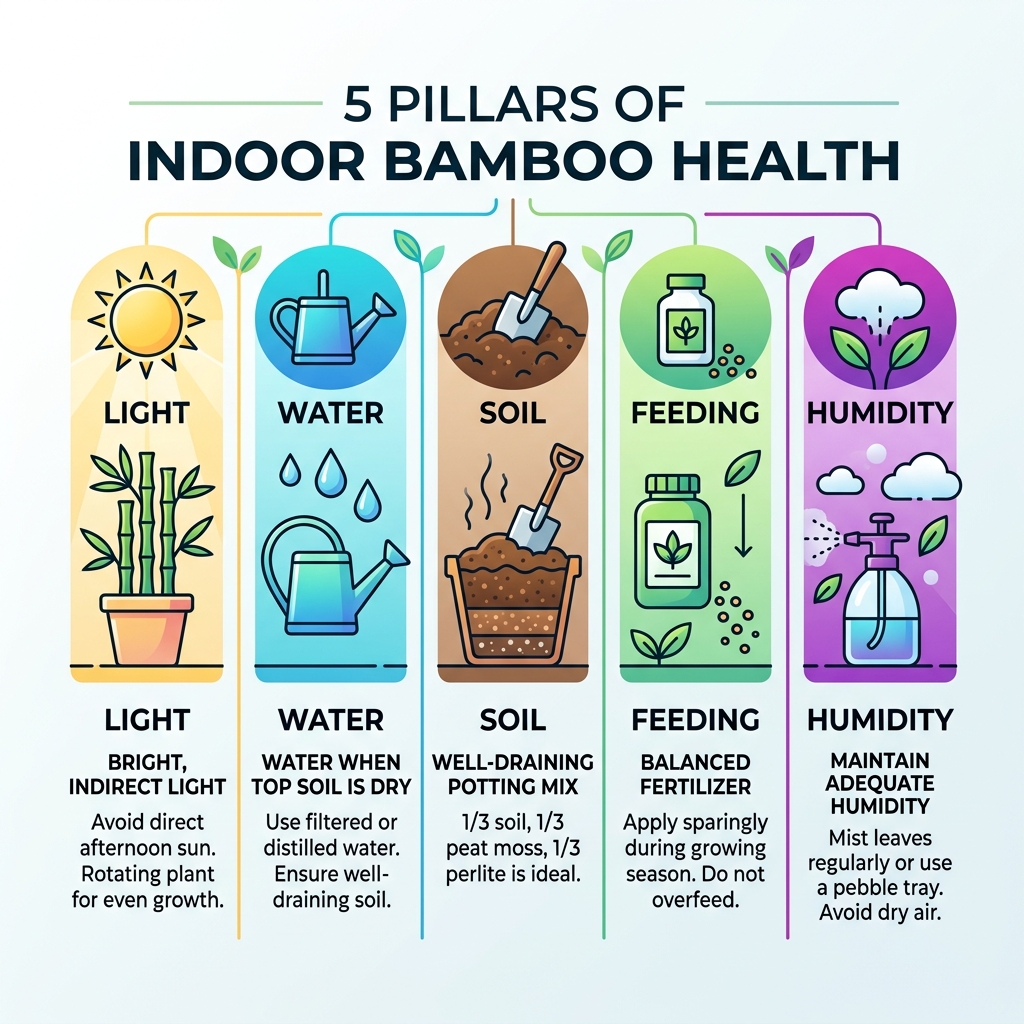
Here’s a fast-reference guide to keep your plant healthy:
| Care Factor | Lucky Bamboo (Dracaena sanderiana) | True Bamboo (e.g., Phyllostachys) |
|---|---|---|
| Light | Bright, indirect light | At least 6 hours bright indirect light |
| Water | Change water every 1-2 weeks (if in water); distilled or filtered only | Water when top 1-2 inches of soil are dry |
| Soil | Optional; well-draining mix if used | 1/3 soil, 1/3 peat moss, 1/3 perlite |
| Temperature | 65-90°F (18-32°C) | 60-80°F (15-27°C) |
| Fertilizer | 1 drop liquid fertilizer monthly | Slow-release balanced fertilizer |
| Toxicity | Toxic to cats and dogs | Most true bamboos are non-toxic |
Here’s something most people get wrong: what they call “indoor bamboo” usually isn’t bamboo at all.
Over 95% of people asking about indoor bamboo are actually thinking of Lucky Bamboo — a plant called Dracaena sanderiana that belongs to the asparagus family, not the grass family that true bamboo belongs to. It just looks like bamboo.
That mix-up matters. These two plants have different needs, different lifespans, and different rules. Following the wrong advice for the wrong plant is exactly how you end up with yellow stalks, mushy roots, and a dead plant on your windowsill.
The good news? Both are manageable — even for busy people who forget to water. You just need to know which one you have and follow the right routine.
This guide covers everything: identification, watering, light, soil, feeding, pruning, pests, and fixing common problems.
Lucky Bamboo vs. True Bamboo: Know Your Species
Before we dive into the nitty-gritty of bamboo care indoor, we have to solve the identity crisis. If you treat a true bamboo like a Dracaena, it will dry out and die. If you treat a Dracaena like a true bamboo, you might drown it.
Lucky Bamboo is actually a type of tropical water lily according to its Dracaena sanderiana botanical profile. It is famous for its resilience and ability to grow in just a vase of water and pebbles. True bamboo, on the other hand, belongs to the Poaceae (grass) family. These are the giants you see in films, though some smaller varieties are adapted for pots.
| Feature | Lucky Bamboo (Dracaena) | True Bamboo (Poaceae) |
|---|---|---|
| Botanical Family | Asparagaceae (Asparagus) | Poaceae (Grass) |
| Stems | Fleshy, solid, often curled | Hollow, woody, segmented |
| Growth Medium | Water or Soil | Soil only (hydroponics is rare) |
| Growth Habit | Slow, vertical | Rapid, spreading rhizomes |
| Lifespan Indoors | 1–10 years | Up to 10 years (with high care) |
When choosing a plant, it’s vital to check the growth habit. True bamboos are either “clumpers” or “runners.” For indoor enthusiasts, clumping varieties are much better because they stay in a tight group rather than trying to send “runners” through the bottom of your pot and across your floor! If you are just starting out, we recommend checking out our indoor-plant-care-tips-for-beginners to get the basics down before tackling the more temperamental true bamboo species.
Best Bamboo Varieties for Home Environments
If you want the real deal—true bamboo—you need to choose species that won’t outgrow your ceiling in six months.
- Golden Bamboo (Phyllostachys aurea): This is one of the few true bamboos that can survive indoors. It turns a beautiful golden color with enough light. Indoors, it usually reaches 5 to 8 feet, whereas outdoors it can hit 20 feet.
- Black Bamboo (Phyllostachys nigra): Known for its striking black culms (stems), it grows about 10-12 feet per year but can be managed with aggressive pruning.
- Dwarf Green Stripe (Pleioblastus viridistriatus): A tiny powerhouse that usually stays around 2.5 feet tall indoors.
- Bambusa multiplex (Multiplex Bamboo): Great for a tropical feel. The ‘Alphonso Karr’ variety is particularly popular for its striped stems.
- Fernleaf Bamboo: A fantastic clumping variety that stays relatively small (6-10 feet) and has a delicate, feathery appearance.
For those who prefer the low-maintenance route, the Ribbon Plant (another name for Lucky Bamboo) is the way to go. It’s one of the most easy-indoor-plants-for-beginners because it thrives in lower light and doesn’t require complex soil mixes.
Toxicity and Pet Safety Considerations
This is a big one for our furry friends. While we love the aesthetic of bamboo, your cat might love the taste—and that can be a problem.
According to the Pet Poison Helpline, Lucky Bamboo (Dracaena) is toxic to cats and dogs. It contains saponins, which can cause vomiting, drooling, dilated pupils (in cats), and lack of appetite. If you have curious pets, you must keep Lucky Bamboo on a high shelf or in a room they can’t access.
Conversely, most true bamboos (the grass family) are non-toxic. If you want a safe, green screen that your cat can occasionally nibble without a trip to the vet, a true clumping bamboo is a better choice. We’ve put together a list of indoor-plants-for-beginners-with-pets if you need more safe greenery options.
Essential Bamboo Care Indoor: Light, Water, and Soil
Once you’ve picked your plant, the real work begins. Bamboo care indoor is all about mimicking a tropical or temperate environment inside a four-walled room.
Light Requirements
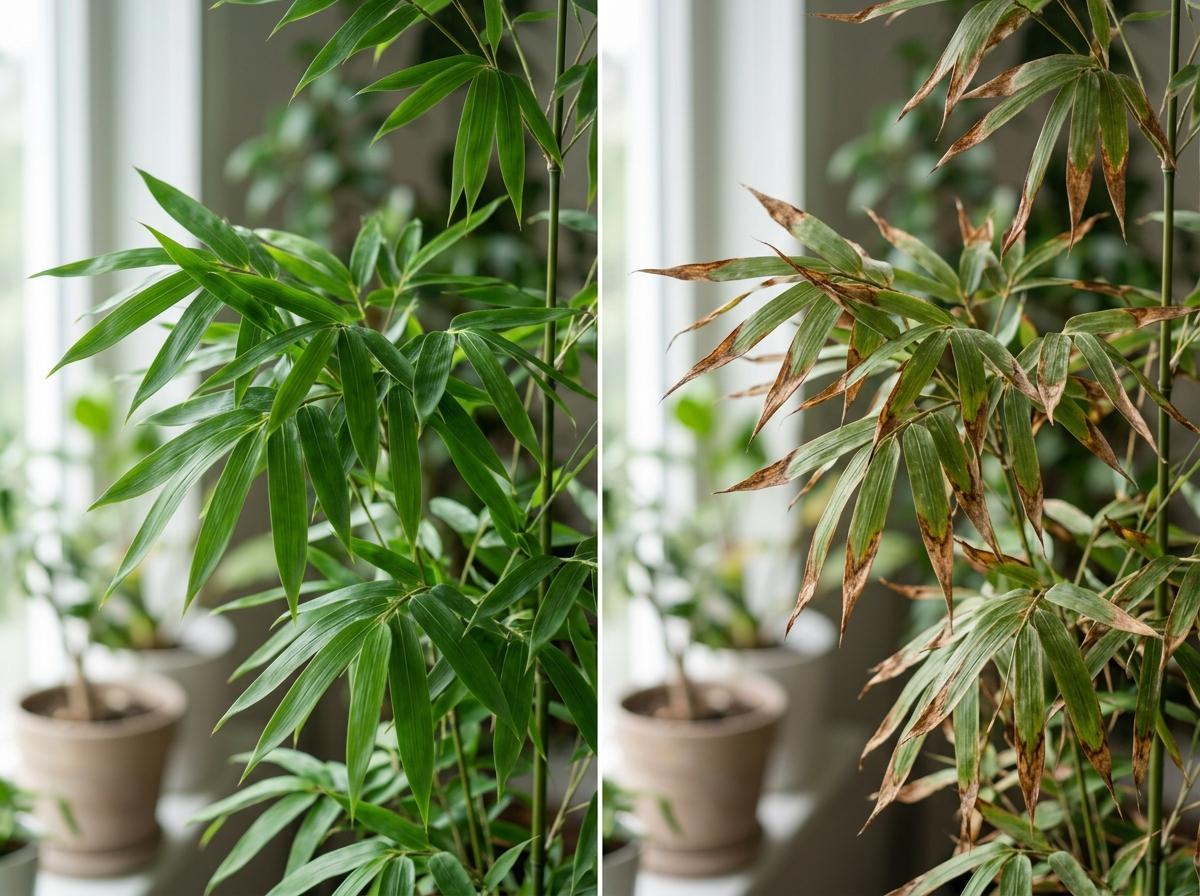
Both Lucky Bamboo and True Bamboo prefer bright, indirect sunlight.
- Lucky Bamboo: Can handle lower light, but it will grow slowly and may lose its vibrant green color. Avoid direct sun at all costs; it will scorch the leaves faster than a sunburn on a beach.
- True Bamboo: Needs more light—at least 6 hours of bright indirect light daily. A north-facing window is often perfect. If your bamboo starts looking “leggy” (long stems with few leaves), it’s screaming for more light.
Temperature and Humidity
Maintain a temperature range between 65-90°F (18-32°C). Bamboo hates cold drafts and heater vents. If you feel a chill, your bamboo does too. Humidity is the secret sauce for success. Most homes are too dry, especially in winter. We suggest using a humidifier or a pebble tray to keep the air moist. For more tricks, see our humidity-tips-for-houseplants.
Mastering Bamboo Care Indoor Watering Schedules
Watering is where most people fail. It’s not just about how much, but what kind of water you use.
- The Tap Water Trap: Lucky Bamboo is incredibly sensitive to chlorine and fluoride found in city tap water. These chemicals cause the leaf tips to turn brown and crispy. Always use distilled, filtered, or rainwater. If you must use tap water, let it sit out for 24 hours to allow the chlorine to evaporate.
- Water vs. Soil:
- In Water: Keep roots submerged. Change the water completely every 7-10 days to prevent algae and bacteria buildup. If the water smells “funky,” you’ve waited too long.
- In Soil: True bamboo needs consistent moisture. Water when the top inch of soil feels dry. Never let the soil become a swamp, but don’t let it turn into a desert either.
Following a consistent watering-schedule-for-indoor-plants will help you avoid the dreaded “mushy stalk” syndrome.
The Best Soil and Pots for Bamboo Care Indoor
If you’re growing in soil, don’t just grab a bag of “dirt” from the backyard. Bamboo needs a best-soil-for-indoor-plants mix that drains well but retains some moisture.
- The Recipe: We recommend a mix of 1/3 loam, 1/3 peat moss (or coco coir), and 1/3 perlite. This ensures air reaches the roots while keeping them hydrated.
- The Pot: Drainage is non-negotiable. Your pot must have holes. If you love a decorative pot that doesn’t have holes, use it as a “cachepot”—keep the bamboo in a plastic nursery liner inside the pretty pot.
- Size Matters: For true bamboo, start with a 10-gallon pot at minimum. These plants have powerful roots. If the pot is too small, the roots will eventually crack it.
When selecting-indoor-plant-pots-and-planters, think about weight. A tall bamboo plant can become top-heavy and tip over in a light plastic pot.
Advanced Maintenance: Pruning, Propagation, and Feeding
To keep your bamboo looking like a centerpiece and not a wild thicket, you’ll need to do some “grooming.”
Pruning and Shaping
Don’t be afraid to snip! Pruning encourages new growth and keeps the plant at a manageable height.
- Where to cut: Always use sterilized shears and cut just above a node (the ring on the stalk).
- Lucky Bamboo: You can’t “shape” the stalks into spirals yourself easily—growers do that by rotating the plant toward a light source over many months. However, you can prune the leafy offshoots to keep it tidy. Check our pruning-tips-for-indoor-plants for a step-by-step guide.
Feeding Your Bamboo
Less is more. Over-fertilizing is a leading cause of death for indoor bamboo.
- Lucky Bamboo: One drop of balanced liquid fertilizer once a month is plenty.
- True Bamboo: Use a slow-release fertilizer with a balanced NPK ratio (like 10-10-10) during the growing season (spring and summer).
- Natural Options: You can explore fertilizing-houseplants-naturally using compost tea, but be careful with dosages to prevent nutrient burn.
How to Propagate and Repot Your Bamboo
Want more plants for free? Propagation is surprisingly easy.
- Cuttings: For Lucky Bamboo, take a healthy offshoot with at least two leaf nodes. Trim it an inch from the main stalk and place it in distilled water. Roots should appear in about 30 days.
- Division: For true clumping bamboo, you can divide the root ball in spring. Use a sharp spade to separate a section of the plant and move it to a new pot.
Repotting Cycles: You should repot your bamboo every 1-2 years. If you see roots circling the bottom or poking out of the drainage holes, it’s time for a upgrade. We have a detailed guide on how-to-repot-indoor-plants to help you through the process without shocking the plant. If your plant is already massive, you might need solutions-for-overcrowded-roots-in-indoor-plants like root pruning.
Troubleshooting Common Problems and Pests
Even with the best bamboo care indoor, things can go sideways. Here is how to play plant doctor.
Common Issues
- Yellow Leaves: This is the #1 complaint. It’s usually caused by too much direct sun, too much fertilizer, or chemicals in tap water. If the stalk is yellow, the plant is likely dying. Remove yellow stalks immediately so they don’t rot and infect the others. See our guide on why-are-my-indoor-plant-leaves-turning-yellow for more.
- Brown Tips: Usually caused by dry air or fluoride. Increase humidity and switch to distilled water. Check out fixing-brown-leaf-tips-on-indoor-plants for specific fixes.
- Mushy Stalks: This is a sign of root rot. It happens when the plant sits in stagnant, bacteria-filled water or waterlogged soil. If you catch it early, you can trim the rot and repot. Learn more about recognizing-and-remending-root-rot-in-indoor-plants.
Identifying and Treating Bamboo Pests
Indoor plants are more vulnerable to pests because they lack natural predators.
- Spider Mites: Look for tiny webs on the undersides of leaves. They thrive in dry air.
- Mealybugs: These look like small bits of white cotton on the stems.
- Treatment: Wipe the leaves with a cotton swab dipped in rubbing alcohol, or use insecticidal soap. For a deeper dive, read indoor-plant-pests-and-how-to-remove-them and how-to-combat-houseplant-pests.
Frequently Asked Questions about Indoor Bamboo
Can true bamboo grow successfully indoors long-term?
Yes, but it’s a challenge. True bamboo needs much more light and humidity than the average living room provides. It also grows fast, meaning you’ll be repotting and pruning constantly. For most people, Lucky Bamboo is a more sustainable long-term indoor companion.
How long does indoor bamboo typically live?
- Lucky Bamboo in Water: 1–2 years is common, though with excellent care, they can last 8–15 years.
- Lucky Bamboo in Soil: Usually lives several years longer than those in water.
- True Bamboo: Indoors, they typically last less than 10 years because it’s hard to replicate their native environment perfectly.
Should I grow my bamboo in water or soil?
- Water: Best for beginners and Lucky Bamboo. It’s clean, easy to monitor, and looks great in glass vases.
- Soil: Best for long-term health and essential for all true bamboo species. Soil provides more nutrients and stability.
Conclusion
At Futuro Ciencia, we believe that bringing nature indoors shouldn’t be a source of stress. Whether you choose the indestructible Lucky Bamboo or the majestic Golden Bamboo, these plants can transform your home into a tranquil oasis. By mastering the basics of bamboo care indoor—light, water, and identification—you’re well on your way to a thriving indoor garden.
Ready to take your plant game to the next level? Download our indoor-plant-maintenance-checklist or set up a custom indoor-plant-care-routine to ensure your greenery stays vibrant all year long.
