
Don’t Let Your Rosemary Freeze
Don’t Let Winter Kill Your Rosemary — Here’s What to Do
Bringing rosemary indoors for winter is the best way to keep this frost-sensitive Mediterranean herb alive if you live in USDA Zones 7 or colder. Here’s the quick version:
- When: Move rosemary inside before the first frost — ideally by early September.
- How: Pot it in a well-draining terracotta pot, then let it spend a week or two in a cool garage to acclimate.
- Where indoors: Place it in a south- or west-facing window with 6-8 hours of direct light daily.
- Watering: Only water when the top inch of soil is dry — roughly every two weeks.
- Temperature: Keep it cool — between 60-70°F (15-21°C). Avoid heat vents and warm rooms.
Rosemary is a tough, beautiful herb. It smells incredible, looks great on a windowsill, and it’s almost pest-proof outdoors. But once temperatures drop below -10°C (14°F), it won’t survive outside — full stop.
If you’re in Zone 7 or colder, winter will kill an unprotected rosemary plant. Even Zone 6 gardeners can lose theirs, especially in snowless winters when there’s no insulating layer over the roots.
The good news? Bringing it indoors isn’t complicated. It just takes the right timing, a little patience during the transition, and a few simple care habits to keep it thriving until spring.
Why Bringing Rosemary Indoors for Winter is Essential
To understand why rosemary struggles in our northern winters, we have to look at its roots—literally and geographically. Rosemary (Salvia rosmarinus) is a Mediterranean native. It thrives on rocky, sun-drenched hillsides where the air is salty and the winters are mild. In its natural habitat, a “harsh” winter might involve a light jacket and a rare, dusting of frost.
According to the USDA Plant Hardiness Zone Map, rosemary is only reliably hardy in Zones 8 through 11. If you live in Zone 7, you might get lucky with a sheltered spot and a cold-hardy variety like ‘Arp’, but for those of us in Zones 5 or 6, leaving rosemary outside is a death sentence.
The critical threshold is -10°C (14°F). Once the thermometer dips below this point, the cellular structure of the plant begins to fail. Unlike many of our local perennials, rosemary doesn’t “die back” to the roots and wait for spring; it is an evergreen shrub. If the top dies, the whole plant is usually gone. Scientific research on rosemary cold hardiness shows that while it can handle a light frost, prolonged deep freezes are its undoing.
Comparing Survival Strategies
While some gardeners attempt to mulch their rosemary outdoors, bringing rosemary indoors for winter is the only foolproof method for colder climates.
| Feature | Indoor Overwintering | Outdoor Mulching (Zones 6-7) |
|---|---|---|
| Survival Rate | High (with proper light) | Hit-or-Miss |
| Effort | Moderate (potting & care) | High (heavy mulching/covers) |
| Culinary Access | Fresh sprigs all winter | Limited/None |
| Risk | Root rot/Spider mites | Death by freezing |
Timing and Acclimation for Bringing Rosemary Indoors for Winter
The biggest mistake we see gardeners make is waiting until the night of the first frost to scramble outside with a shovel. This sudden change is like jumping from a hot sauna into an ice bath—it shocks the plant.
Ideally, you should start the process in early September. Why so early? Because the gap between outdoor and indoor temperatures is smaller then. If you wait until it’s 30°F outside and move the plant into a 70°F house, the rosemary will likely drop its needles in protest within a week.
The “Garage Transition” Trick: We recommend a gradual acclimation. Move your potted rosemary into a cool, shaded spot like a porch or an unheated garage for 7 to 10 days before bringing it into your main living area. This allows the plant to adjust to lower light levels and calmer air. During this time, perform a thorough pest inspection. Look for “hitchhikers” like aphids or spiders. A quick spray with a hose (if it’s still warm) or a wipe-down with a damp cloth can save you a lot of trouble later.
Digging and Potting Garden-Grown Rosemary
If your rosemary has been living in the ground all summer, it has likely developed a substantial root system. To move it successfully, you need to be generous with your shovel.
- The Root Ball: Shovel about 6 inches away from the main stems to ensure you capture the majority of the root mass. Dig deep enough to keep the root ball intact.
- The Pot: Choose a pot that is slightly larger than the root ball. We highly recommend terracotta pots. Because terracotta is porous, it allows the soil to “breathe” and prevents the roots from sitting in stagnant water—a major cause of rosemary death. Ensure the pot has large drainage holes.
- The Soil: Use a high-quality, well-draining potting mix. You can even mix in a little sand or perlite to mimic that Mediterranean grit. Check out our guide on the best-soil-for-indoor-plants for more details.
- The Process: Place the plant in the pot and fill the gaps with fresh soil. Do not bury the stem deeper than it was in the ground. For a step-by-step on the physical move, see our guide on how-to-repot-indoor-plants.
Creating the Perfect Indoor Environment
Once your rosemary is inside, the challenge shifts from “don’t let it freeze” to “don’t let it dry out or rot.” Indoor air in the winter is notoriously dry due to forced air heating, which is the polar opposite of the humid, cool coastal air rosemary loves.
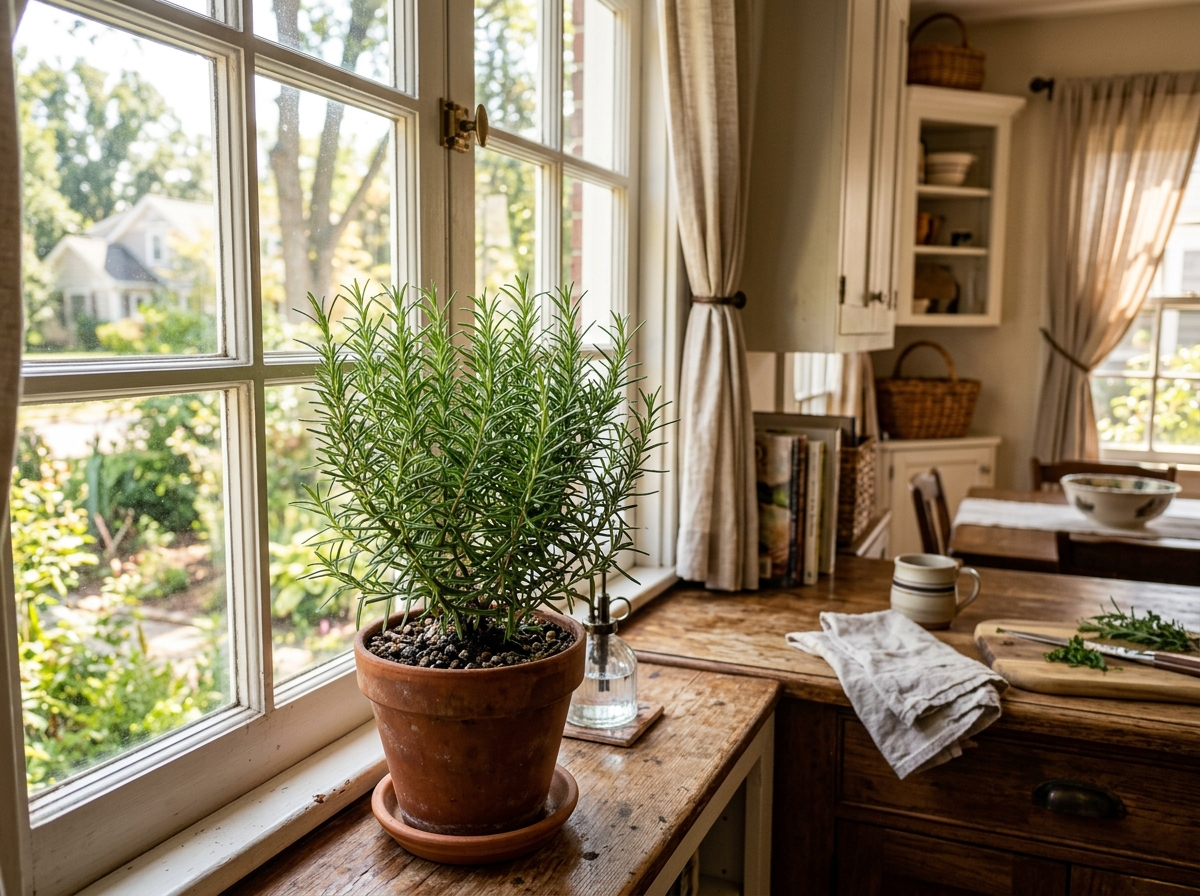
Light and Temperature Needs for Bringing Rosemary Indoors for Winter
Light is the most critical factor. Rosemary is a sun-worshipper. Indoors, it needs at least 6-8 hours of direct sunlight every single day. A south-facing window is usually your best bet, followed by a west-facing one. If your windows are blocked by trees or winter clouds, you must supplement with light.
We recommend using full-spectrum LED grow lights. Position the lights close to the plant (about 6-12 inches away) to ensure it gets the intensity it needs without the heat of old-fashioned bulbs. You can learn more about specific setups in our guide to indoor-plant-light-requirements.
As for temperature, rosemary prefers to be kept on the “cool” side of comfortable. Aim for 60-70°F (15-21°C) during the day and slightly cooler at night. Whatever you do, keep it away from heat vents, radiators, and fireplaces. That blast of hot, dry air will desiccate the needles faster than you can say “roasted potatoes.” If you have a cool sunroom or an attached greenhouse that stays above freezing, that is often the “Goldilocks” spot. For more on where to put your plants, see our indoor-plant-placement-tips.
Watering and Humidity Management
Watering rosemary is a balancing act. It hates “wet feet” (soggy roots), but it also cannot handle being bone-dry for long. The rule of thumb: water when the top inch of soil feels dry to the touch. When you water, do it thoroughly until water runs out of the drainage holes, then empty the saucer.
During winter, rosemary growth slows down, so you will likely only need to water every two weeks. Overwatering is the fastest way to cause root rot, which is almost impossible to recover from. Check out our watering-schedule-for-indoor-plants for a better routine.
The Humidity Factor: Since indoor air is so dry, we need to get creative.
- Pebble Trays: Fill a tray with pebbles and water, then set the pot on top (ensure the pot isn’t sitting in the water). As the water evaporates, it creates a micro-climate of humidity around the leaves.
- Misting: Some gardeners swear by misting the foliage every few days, as rosemary can absorb some moisture through its needles.
- Passive Humidification: Placing bowls of water near your plants or using a humidifier can also help. For more hacks, see our humidity-tips-for-houseplants.
Maintenance, Pests, and Spring Transition
Keeping your rosemary healthy through the winter isn’t just about survival; it’s about keeping it productive. With a little maintenance, you can harvest fresh herbs for your holiday cooking all season long.
Pruning and Harvesting
Don’t be afraid to use your rosemary! Regular harvesting actually helps the plant stay bushy and prevents it from becoming “leggy” (long, thin stems with few leaves).
- The Technique: Always snip from the stem tips. This encourages the plant to branch out.
- The Rule: Never prune more than 20% of the plant at one time.
- Avoid Wood: Try not to cut deep into the old, woody parts of the stem, as new growth has a harder time starting from old wood.
Maintaining a regular indoor-plant-care-routine will help you spot any issues before they become terminal. If you’re new to this, our indoor-plant-care-tips-for-beginners is a great place to start.
Troubleshooting Pests and Diseases
The two most common indoor rosemary enemies are Powdery Mildew and Spider Mites.
- Powdery Mildew: This looks like a dusting of white flour on the leaves. It usually happens when there is poor air circulation and high humidity. To fix it, improve airflow with a small fan and ensure the plant isn’t crowded. You can treat it with a diluted neem oil spray.
- Spider Mites: If you see tiny webs or mottled yellow spots on the needles, you might have mites. These pests thrive in dry air. A gentle “shower” in the sink can wash them away, followed by neem oil treatment.
- Needle Drop: If your rosemary is shedding needles like a dry Christmas tree, it’s usually a sign of stress—either the soil dried out completely, or the plant is in a dark, hot corner. Review your indoor-plant-care-during-winter checklist to find the culprit.
Hardening Off for Spring
When the birds start singing and the ground thaws, you’ll be tempted to toss your rosemary back into the garden. Wait! Just like the move indoors, the move back outdoors requires a transition period called hardening off.
Once nighttime temperatures are consistently above 50°F (10°C), start bringing your pot outside for a few hours of afternoon sun. Gradually increase the time it spends outdoors over the course of 10 to 14 days. This toughens up the “indoor” leaves so they don’t get sunburned or wind-whipped. Once the threat of frost has completely passed, you can repot it into a larger container or put it back in the ground with a bit of organic fertilizer to kickstart the growing season.
Frequently Asked Questions about Rosemary Winter Care
Can rosemary survive in an unheated garage?
Yes, but with caveats. If your garage stays between 35-45°F, rosemary can enter a state of semi-dormancy. It will need very little water and can survive with less light than it would in a warm house. However, if the garage temperatures drop below 20°F, you’ll need to insulate the pot or move it to a warmer spot.
Why is my indoor rosemary turning brown?
Browning is usually a sign of root stress. If the tips are brown and brittle, the plant likely dried out too much. If the browning starts at the base and the stems feel soft, it’s likely root rot from overwatering. Check the soil moisture and adjust your watering-schedule-for-indoor-plants immediately.
Should I fertilize rosemary during the winter?
Generally, no. Because the plant is in a “slow growth” or dormant phase, adding fertilizer can lead to nutrient burn or weak, spindly growth. Save the feeding for early spring when you see new, bright green tips appearing. At that point, a diluted organic liquid fertilizer is perfect.
Conclusion
Bringing rosemary indoors for winter doesn’t have to be a stressful ordeal. By mimicking its Mediterranean roots—cool air, bright sun, and well-drained soil—you can transform your kitchen into a fragrant oasis even while the snow is piling up outside.
At Futuro Ciencia, we believe that every home deserves the tranquility and freshness that indoor plants provide. Whether you’re a seasoned gardener or just starting your first herb collection, we’re here to help you succeed. For more expert advice on keeping your greenery happy all year long, explore our indoor plant care services. Happy gardening, and may your rosemary stay green until spring!
