
Why the Right Houseplant Soil Mix Recipe Changes Everything
A great houseplant soil mix recipe is the single biggest factor in whether your indoor plants thrive or slowly decline. Here’s a quick-start answer:
Basic All-Purpose Houseplant Soil Mix Recipe:
| Ingredient | Amount | Purpose |
|---|---|---|
| Coconut coir or peat moss | 2 parts | Moisture retention |
| Perlite or pumice | 1 part | Drainage and aeration |
| Compost or worm castings | 1 part | Nutrients |
Optional additions: a pinch of dolomite lime (if using peat moss), orchid bark for aroids, or extra sand for succulents.
Think about the last time you repotted a plant using bagged potting mix from a big-box store. Maybe it dried out too fast. Maybe it stayed soggy for days. Maybe fungus gnats showed up uninvited.
You’re not doing anything wrong. The soil is the problem.
Commercial mixes vary wildly in quality. Some are mostly ground-up bark. Others pack in cheap fillers that compact quickly, drain poorly, or hold too much water. Gardeners who’ve switched to DIY mixes report cutting their soil costs by up to two-thirds — while getting a better result.
The good news? Making your own mix is surprisingly simple. You don’t need a big garden or special skills. Just a few ingredients, a bucket, and about ten minutes.
Why You Should Skip Store-Bought Bags for a DIY Houseplant Soil Mix Recipe
When we first start our plant parenthood journey, we often take “pot luck” with whatever bag is on sale at the local nursery. However, as our collections grow, we realize that “one size fits all” rarely works in indoor gardening.
The primary reason to switch to a DIY houseplant soil mix recipe is quality control. Many commercial mixes rely heavily on cheap pine bark or low-grade peat. These materials can break down rapidly, leading to soil compaction. When soil compacts, it squeezes the life out of roots, preventing oxygen from reaching them and creating a “soppy” environment that invites disaster.
By mixing your own, you can choose the best-soil-for-indoor-plants based on their specific ancestral habitats. A Monstera from a tropical rainforest needs a very different foundation than a Sansevieria from an arid region.
Furthermore, DIY mixes are your first line of defense against pests and diseases. Store-bought bags that have been sitting outside in the rain at a garden center are notorious for harboring fungus gnat larvae. When we control the ingredients, we ensure a sterile, high-quality environment. This proactive approach is one of the most effective indoor-plant-root-rot-solutions because it creates “drainage pathways”—tiny air pockets that allow water to move through the pot and out the bottom, rather than sitting around the roots.
Essential Ingredients for Your Homemade Potting Media
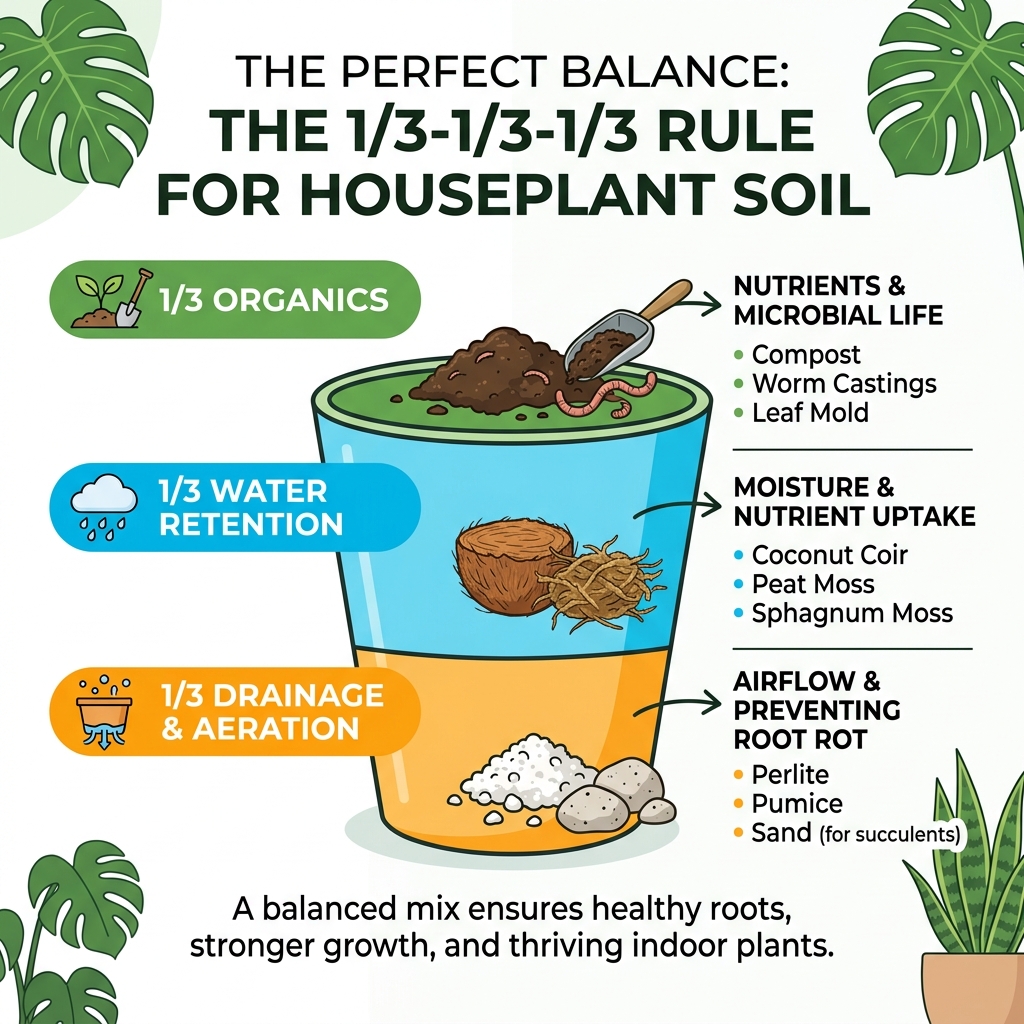
To build a professional-grade houseplant soil mix recipe, we need to understand the “Big Three” functions: moisture retention, aeration, and nutrition. Here are the components we keep in our “soil pantry.”
The Base: Coconut Coir or Sphagnum Peat Moss
These provide the structure and hold onto water.
- Coconut Coir: A sustainable byproduct of the coconut industry. It is neutral in pH and incredibly efficient—coir peat holds 80-90% of its weight in water. It is also easier to rewet if it accidentally dries out completely.
- Sphagnum Peat Moss: The traditional choice. It is excellent at holding moisture but is naturally acidic (pH 3.5-4.5) and is a non-renewable resource.
The Aerators: Perlite, Pumice, and Vermiculite
These ingredients create the “fluff” in your soil. Without them, your base would turn into a brick.
- Perlite: Those little white “Styrofoam” looking bits. They are actually volcanic glass. Perlite is lightweight and holds 3-4 times its weight in water on its surface while keeping the mix airy.
- Vermiculite: A silicate mineral that expands when heated. It holds more water than perlite and provides a moderate Cation Exchange Capacity (CEC), which helps the soil hold onto nutrients.
| Feature | Perlite | Vermiculite |
|---|---|---|
| Primary Role | Aeration & Drainage | Moisture Retention |
| Weight | Very Lightweight | Lightweight |
| Nutrient Holding | Low | Moderate |
| Best For | Succulents, Aroids | Ferns, Seedlings |
The Nutrients: Worm Castings and Compost
Since soilless mixes (like coir and perlite) have almost zero nutrients, we must add them.
- Worm Castings: Often called “black gold,” these are nutrient-rich and contain beneficial microbes. They are safe, odorless, and won’t “burn” your plants.
- Compost: If using compost indoors, ensure it is fully finished and sterilized to avoid bringing in hitchhiking bugs.
The Specialists: Orchid Bark, Charcoal, and Sand
- Orchid Bark: Essential for “chunky” mixes. It prevents compaction and allows roots to breathe.
- Horticultural Charcoal: Helps filter impurities and can prevent the soil from becoming “sour” or foul-smelling.
- Horticultural Sand: Adds weight and improves drainage for desert-dwellers. Avoid beach sand, which contains salts!
How to Prepare Your Custom Houseplant Soil Mix Recipe
Mixing soil is a bit like baking—you want a consistent “batter” before you start potting. We recommend mixing in large batches to save time. For example, a single 9-litre brick of compressed coir peat, once rehydrated, can yield about 36 litres of potting mix.
- Rehydrate your base: If using a coir brick, place it in a large bucket and add warm water (usually about 4.5L for a standard 9L brick). Let it sit until it’s fluffy and moist.
- Measure by “Parts”: You don’t need a kitchen scale. Use a scoop, a bucket, or a yogurt container. A “part” is simply a unit of volume.
- The Big Stir: Combine your ingredients in a large container (a wheelbarrow or a plastic storage tub works great). Mix until the color and texture are uniform.
- Check the Moisture: The mix should feel like a wrung-out sponge. If you squeeze a handful, it should hold its shape for a second before crumbling, and no water should drip out.
Knowing how-to-repot-indoor-plants correctly starts with this preparation. Always moisten your mix before you begin the actual repotting process to ensure the roots don’t experience “moisture shock.” For more detailed steps on the physical process of moving plants, check out our guide on how-to-repot-indoor-plants-2.
The Basic All-Purpose Houseplant Soil Mix Recipe
This is our “go-to” for most foliage plants like Spider Plants, Pilea, and Ivy. It balances moisture with enough air to prevent the roots from suffocating. This is particularly helpful when dealing with solutions-for-overcrowded-roots-in-indoor-plants, as a fresh, airy mix encourages new root branching.
- 2 Parts Coir or Peat
- 1 Part Perlite
- 1 Part Compost or Worm Castings
Safety Precautions and pH Balancing
Safety first! When working with dry amendments like perlite or peat, they can release fine dust. Always wear a particulate face mask and gloves. This prevents inhalation of dust which can lead to respiratory issues like silicosis or, in rare cases with aged compost, Legionnaires’ Disease. We find it helpful to mist the dry ingredients with a spray bottle before mixing to keep the dust down.
Then there is the science of pH. Most houseplants prefer a slightly acidic to neutral range (6.0 to 7.0). This is the “sweet spot” where nutrients are most available to the plant. According to research on soil pH, if the pH is too high or too low, the plant can’t “eat,” even if the soil is full of fertilizer.
If you are using peat moss, we recommend adding 1 tablespoon of dolomite lime per gallon of mix. This neutralizes the acidity of the peat. If you use coconut coir, you usually don’t need lime as coir is naturally closer to neutral.
Tailoring the Mix for Different Plant Families
Once you master the basic houseplant soil mix recipe, you can start “tweaking” it for specific plants. This is the secret to moving from a “plant survivor” to a “plant expert.” Choosing the right mix is just as important as selecting-indoor-plant-pots-and-planters; the pot and the soil must work together to manage moisture.
Chunky Aroid and Tropical Houseplant Soil Mix Recipe
Aroids (like Monstera, Philodendron, and Alocasia) are often epiphytic in nature, meaning they grow on trees rather than in the ground. They hate “wet feet.” We want a mix that looks like a chunky salad.
- 2 Parts Coir or Peat
- 2 Parts Orchid Bark (for massive air pockets)
- 1 Part Perlite or Pumice
- 1 Part Worm Castings
- 1/2 Part Horticultural Charcoal
This “chunky” texture is one of the best indoor-plant-root-rot-solutions-2 because it is virtually impossible to overwater. The water runs straight through, leaving the bark moist but the air gaps open.
Gritty Mixes for Succulents and Cacti
Desert plants need soil that dries out fast. If their soil stays damp for more than a few days, they are at high risk for rot. For these guys, we ditch the moisture-holding ingredients in favor of grit.
- 1 Part Coir or Peat
- 1 Part Horticultural Sand
- 1 Part Perlite or Pumice
- A tiny pinch of Worm Castings
Using the best-containers-for-indoor-plants—like terracotta—alongside this gritty mix will ensure your succulents stay happy. This combination is a powerful part of indoor-plant-root-rot-solutions-3.
Storage and Troubleshooting Common Soil Issues
One of the great things about a DIY houseplant soil mix recipe is that you can make it in bulk. However, you need to store it correctly to keep it “fresh.”
Storage Tips:
- Airtight Bins: Use a heavy-duty plastic bin with a sealing lid. This keeps moisture in (so the soil doesn’t become hydrophobic) and keeps pests out.
- Cool and Dark: Store your bins in a garage or closet. Heat can cause the organic matter (like compost) to break down faster or smell.
- Label Everything: Trust us, all soil looks the same after three months. Label your bins “Aroid Mix,” “Succulent Mix,” etc.
Troubleshooting:
- Fungus Gnats: If you see these tiny black flies, your soil is likely too wet. You can sterilize your homemade compost in the oven at 180°F (82°C) for 30 minutes before mixing to kill any larvae.
- Hydrophobic Soil: If your soil is so dry that water just “beads up” on top and runs down the sides, it has become hydrophobic. To fix this, soak the entire pot in a basin of water for 20 minutes to rehydrate the peat or coir.
- Root Rot: If you notice yellowing leaves and mushy stems, you need more drainage. Check out our guide on recognizing-and-remending-root-rot-in-indoor-plants for a full recovery plan.
Can you reuse old soil? We generally don’t recommend it for indoor plants. Old soil loses its structure, the nutrients are depleted, and it may harbor pathogens. However, you can “refresh” it by mixing it with 50% fresh compost and using it for outdoor garden beds!
Frequently Asked Questions about DIY Soil
Can I use garden soil for my indoor plants?
We strongly advise against this. Garden soil is far too heavy for containers; it will compact and suffocate your plants. Additionally, it brings in “uninvited guests” like weed seeds, spiders, and microscopic pests that have no natural predators inside your home.
How do I prevent fungus gnats in my homemade mix?
The best way is to keep your unused soil in an airtight container. Gnats are attracted to the moisture and organic matter in the soil. By keeping it sealed and allowing your plants to dry out slightly between waterings, you break the gnat life cycle.
Is coconut coir more sustainable than peat moss?
Yes. Peat moss is harvested from ancient bogs that act as massive carbon sinks. Once harvested, they take centuries to grow back. Coconut coir is a byproduct of the coconut industry that would otherwise be discarded, making it a much more eco-friendly choice for the modern gardener.
Conclusion
At Futuro Ciencia, we believe that the foundation of a tranquil, purifying indoor oasis starts from the ground up. Taking the time to craft your own houseplant soil mix recipe isn’t just about saving money—it’s about giving your green companions the exact environment they need to brighten your space.
Once you have your plants settled in their custom-made “home,” the next step is keeping them on a steady rhythm. To help you stay on track, we’ve developed an indoor-plant-care-schedule that takes the guesswork out of watering and feeding.
So, grab a bucket, don your mask, and get your hands dirty! Your plants will thank you with lush, vibrant growth for years to come.
