
Why Bringing Hibiscus Inside for Winter Can Save Your Plant’s Life
Bringing hibiscus inside for winter is the single most important thing you can do to keep your tropical hibiscus alive if you live somewhere that gets cold.
Here’s the quick answer:
How to bring hibiscus inside for winter:
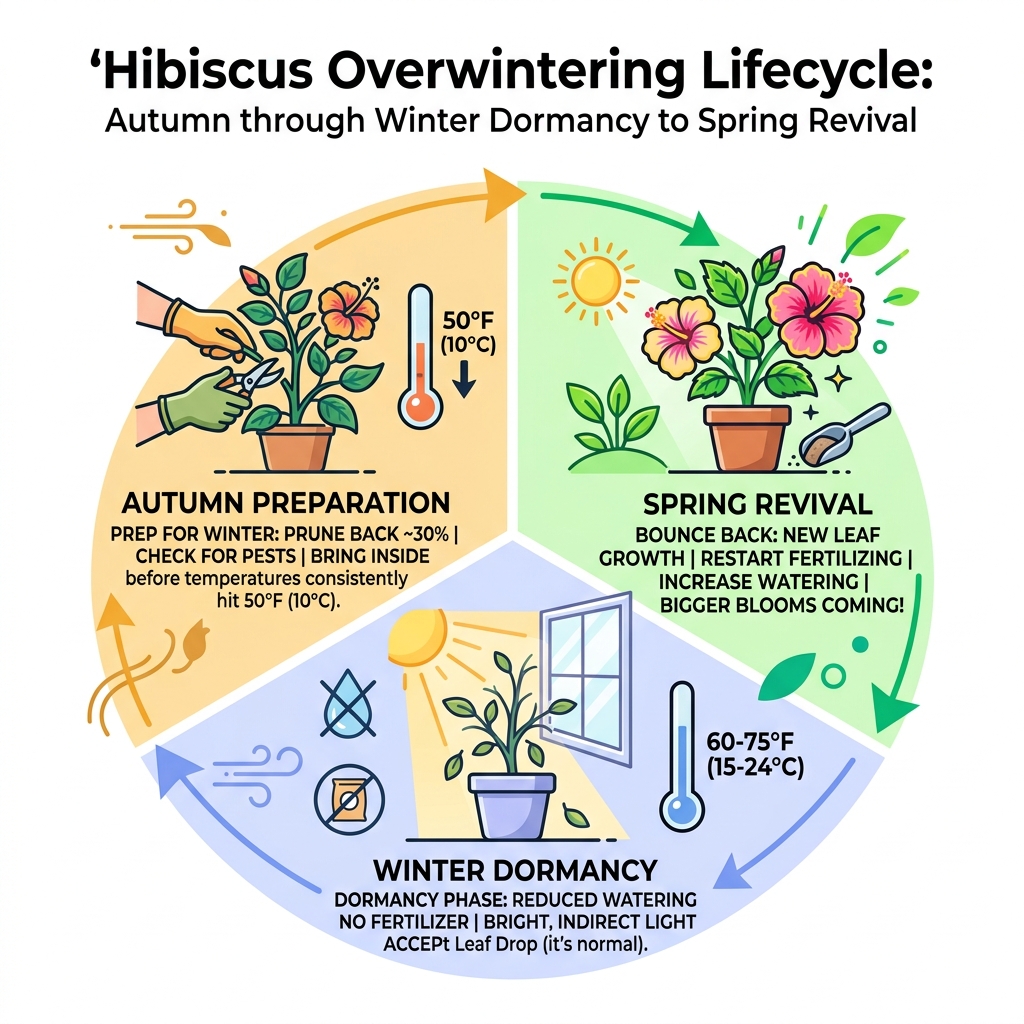
- Watch the temperature – Bring your plant in when nighttime lows consistently hit 50°F (10°C)
- Prep the plant – Prune back by about 30%, check for pests, and treat if needed
- Pick the right spot – A south-facing window with 6-8 hours of bright light works best
- Adjust your care – Water less, stop fertilizing, and keep temps between 60-75°F (15-24°C)
- Expect some leaf drop – This is normal; the plant will bounce back in spring
Tropical hibiscus (Hibiscus rosa-sinensis) simply cannot survive freezing temperatures. Even a handful of nights below 50°F can cause serious damage — and a hard frost will kill the plant outright.
The good news? Overwintering hibiscus indoors is much easier than most people think. Your plant may look a little rough by February, but come summer, it will reward you with bigger, more spectacular blooms than anything you’d buy fresh from a nursery.
When and Why: Bringing Hibiscus Inside for Winter
Timing is everything when it comes to the survival of your tropical beauties. We often get asked, “Can’t I just wait until the first frost?” The short answer is a resounding no. Waiting for frost is like waiting for a car to run out of gas before looking for a station—you’re already in trouble.
Tropical hibiscus are native to warm, humid climates in Asia. They thrive in heat but have zero tolerance for the “big chill.” Scientific research on hibiscus cold sensitivity shows that these plants begin to experience physiological stress long before the water in your birdbath turns to ice.
The 50°F (10°C) Rule
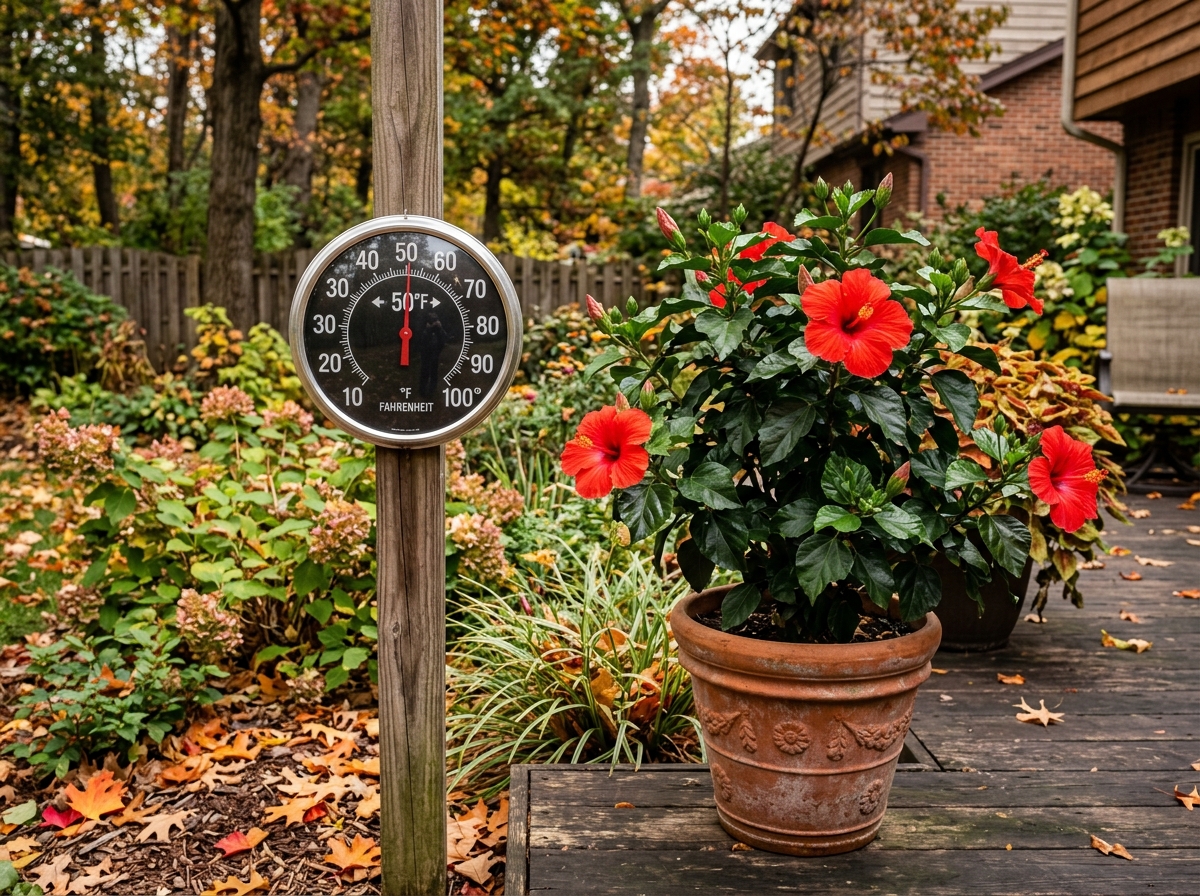
We recommend using the 50°F (10°C) rule. When nighttime temperatures consistently drop to 50°F, it is time to start the process of bringing hibiscus inside for winter. While some varieties can briefly tolerate dips into the 40s or even a very short exposure to 24°F (-4°C), it’s not worth the risk. Cold soil leads to root dysfunction, and chilly air causes the plant to drop its buds and yellow its leaves.
Check your local frost dates, but keep a closer eye on the 10-day forecast starting in September or October. If you see a string of nights in the low 50s, consider that your “evacuation order.”
Identifying Your Hibiscus Variety
Before you start hauling heavy pots, we need to make sure your plant actually needs to come inside. Not all hibiscus are created equal.
- Tropical Hibiscus (Hibiscus rosa-sinensis): These are the ones with glossy, deep green leaves and flowers in vibrant shades of orange, yellow, bright red, or multi-colors. They usually live in pots. These must come inside.
- Perennial Hardy Hibiscus (Rose Mallow): These have duller, heart-shaped or maple-like leaves and dinner-plate-sized flowers (white, pink, or red). They are cold-hardy down to USDA Zone 4 (some even survive -30°F!). These stay outside; they will die back to the ground and regrow in late spring.
- Rose of Sharon (Hibiscus syriacus): This is a woody shrub or small tree that is very hardy. It loses its leaves in winter but stays planted in the ground quite happily.
If you have a tropical variety, keep reading. If you have a hardy one, you can give it a nice layer of mulch and go back to sipping your pumpkin spice latte.
Preparing Your Plant for the Indoor Transition
You wouldn’t move into a new house without cleaning it first, right? Your hibiscus feels the same way. Moving a plant from the great outdoors to a climate-controlled living room is a shock to its system. We want to make that transition as smooth as possible.
The Pruning Phase
Many gardeners are afraid to prune, but when bringing hibiscus inside for winter, pruning is your best friend. It reduces the plant’s “mass,” meaning it needs less water and light to stay alive. It also helps the plant fit through your doorway!
- How much? You can safely prune back by 30% to 50% of the plant’s total size.
- Where to cut? Use clean, sharp shears. Cut about a quarter-inch above a leaf node (the little bump where a leaf meets the stem). This encourages bushier growth later on.
- Why? Removing leggy growth and “dead wood” allows the plant to focus its energy on its core health during the dark winter months.
Refreshing the Pot
If your hibiscus spent the summer in the ground, you’ll need to dig it up and pot it in a container with high-quality potting mix (never garden soil, which is too heavy and full of bugs). If it’s already in a pot, check the drainage holes. If they are clogged with roots, it might be time for a quick trim of the root ball or a slightly larger container.
| Feature | Houseplant Method | Dormancy Method |
|---|---|---|
| Light Needs | High (6-8 hours sun) | Low (Dark or dim) |
| Temperature | 60-75°F (Living areas) | 40-50°F (Garage/Basement) |
| Watering | When top inch is dry | Once a month (Minimal) |
| Appearance | Green leaves, maybe a bloom | No leaves, looks like sticks |
| Best For | People with sunny windows | People with limited space |
Pest Control Before Bringing Hibiscus Inside for Winter
This is the step most people skip, and it’s the one they regret most in January when spider mites are taking over their curtains. Outdoor plants are part of an ecosystem; indoor plants are just snacks for hitchhiking bugs.
- The Wash: Two to three weeks before the move, start washing your plant with a firm spray from the garden hose twice a week. This knocks off most aphids and whiteflies.
- The Treatment: On the final day before bringing it in, apply neem oil or horticultural soap. Be sure to hit the undersides of the leaves—that’s where the villains hide.
- The Soil: Some people use a diluted insecticidal soap drench to ensure no ants or soil-dwelling pests make the trip.
- The Quarantine: If you have other houseplants, keep your hibiscus in a separate room for the first 1-2 weeks. This gives you time to spot any pest outbreaks before they spread.
For more general tips on keeping your green friends happy during the cold months, check out our guide on indoor-plant-care-during-winter.
Mastering Indoor Care: Light, Water, and Humidity
Once your hibiscus is safely inside, it’s going to act a little dramatic. It might drop some leaves or look a bit sad. Don’t panic! It’s just adjusting to its new “apartment.”
The Search for Light
Light is the “food” for your hibiscus. Outdoors, it was getting full, unfiltered sun. Indoors, even the brightest window is significantly darker.
- The Best Spot: A south-facing or west-facing window is ideal. It needs at least 6-8 hours of bright, direct light.
- Grow Lights: If your home is a bit cave-like, you’ll need to supplement. Use grow lights for 10-12 hours a day. We’ve found that even a simple, inexpensive “shop light” with the right bulbs can keep a hibiscus green and happy.
- Rotation: Rotate the pot a quarter-turn every week so all sides get equal light, preventing the plant from leaning toward the window like it’s trying to escape.
Temperature and Drafts
We like to keep our indoor hibiscus between 60°F and 75°F (15-24°C). This mimics their natural tropical environment.
One thing hibiscus hate more than cold is a draft. Keep them away from:
- Heating vents (which dry them out)
- Drafty doors
- Air conditioning blasts (if you live in a climate where you still run it in fall)
Watering and Feeding While Bringing Hibiscus Inside for Winter
This is where many well-meaning plant parents go wrong. Because the plant is growing slower indoors, it needs much less “fuel.”
- The Finger Test: Only water when the top inch or two of soil feels dry to the touch. In winter, this might only be once a week or even once every ten days.
- Drainage is King: Never let the pot sit in standing water. Use a saucer and empty it after watering. Sogginess leads to root rot, which is the fastest way to kill a hibiscus.
- Feeding: Generally, we stop fertilizing from late fall until March. The plant is in a “rest period.” If you must fertilize, use a very diluted, half-strength balanced formula once a month.
- Humidity: Indoor air is notoriously dry in winter. Use a pebble tray with water under the pot (making sure the pot sits above the water line) or a small humidifier. Misting helps, but the effects are very temporary.
Troubleshooting Common Winter Hibiscus Issues
Don’t be surprised if your plant starts looking a little “unattractive” by December. It’s normal for a hibiscus to lose some of its luster during the winter.
The Yellow Leaf Drop
If you move your plant inside and half the leaves turn yellow and fall off within a week, don’t throw it away! This is a classic response to environmental shock. The plant is shedding leaves it can no longer support with the lower indoor light levels. As long as the branches are still “pliable” (they bend instead of snapping like a dry twig), the plant is alive.
Bud Blast
If your hibiscus develops flower buds that fall off before opening, this is called “bud blast.” It’s usually caused by stress—either a sudden temperature change, a draft, or inconsistent watering. While it’s disappointing, it’s the plant’s way of saying, “I’m focusing on survival right now, not fancy flowers.”
Leggy Growth
If the plant starts growing long, thin, pale stems with tiny leaves, it’s “stretching” for light. This is a sign you need to move it to a brighter spot or turn on the grow lights.
Spring Awakening: Transitioning Back Outdoors
When the birds start singing and the grass turns green, you’ll be tempted to chuck your hibiscus back onto the patio immediately. Resist the urge! This is the most dangerous time for your plant.
The Hardening Off Process
Your plant has spent months in a protected, climate-controlled “bubble.” The outdoor sun is much more intense, and the wind can be brutal. You must harden off the plant over about 10 to 14 days.
- Days 1-3: Put the plant outside in a fully shaded, protected spot for 2-3 hours, then bring it back in.
- Days 4-6: Move it into dappled sunlight for 4-5 hours.
- Days 7-10: Gradually increase the time and the intensity of the sun.
- The Final Move: Once nighttime temperatures are consistently above 50°F (10°C) and there is zero threat of frost, it can stay out permanently.
Spring Refresh
Once it’s back outside, give it a good “haircut” to remove any leggy winter growth. This is also the perfect time to repot with fresh soil and resume your regular fertilizing schedule. By June, you’ll see the first of those glorious, trumpet-shaped blooms.
Frequently Asked Questions about Overwintering Hibiscus
Is it normal for my hibiscus to lose all its leaves indoors?
Yes, it can be! If the light is very low or the temperature is cool, the plant may go into a “forced dormancy.” As long as the stems remain green inside (scratch the bark gently with your fingernail to check) and are flexible, the plant is fine. It will sprout new leaves once it gets back into the spring sun.
Can I keep my hibiscus in an unheated garage?
Only if the garage stays above freezing (ideally above 40°F). In this scenario, the plant will go fully dormant and lose all its leaves. You only need to water it about once a month—just enough so the soil doesn’t become “bone dry.” This is a great space-saving method if you don’t mind looking at a pot of sticks all winter!
Should I repot my hibiscus before moving it inside?
We generally recommend waiting until spring to do a major repotting. However, if the plant is severely root-bound or the soil is infested with pests, a “refresh” of the top few inches of soil or moving it into a slightly larger pot with fresh mix is a good idea before bringing hibiscus inside for winter.
Conclusion
At Futuro Ciencia, we believe that gardening shouldn’t stop just because the thermometer drops. Bringing hibiscus inside for winter is a rewarding way to preserve your favorite tropical plants and ensure your garden is even more vibrant next year. By following these steps—watching the temperature, pruning properly, and managing light and water—you can transform your home into a tranquil winter oasis.
Ready to level up your indoor garden? Explore more info about indoor plant care and let us help you keep your space green and purifying all year long. Happy overwintering!
