
Why the Right Soil is the Secret to Thriving Houseplants
Houseplant soil mix recipes are the foundation of healthy indoor plants — and getting them right makes everything else easier.
Here are the most popular DIY recipes to get you started:
| Plant Type | Base | Drainage | Extras |
|---|---|---|---|
| Tropical (all-purpose) | 2 parts coco coir | 1 part perlite | 1 part compost |
| Aroid (Monstera, Philodendron) | 1 part potting mix | 1 part orchid bark + 1 part perlite | ½ part activated charcoal |
| Succulent/Cactus | 1 part potting mix | 1 part pumice or coarse sand | Small amount of worm castings |
| Prayer Plant (Calathea, Maranta) | 2 parts coco coir | 1 part perlite | 1 part compost + worm castings |
| Carnivorous Plants | Pure sphagnum moss | Perlite or sand | No added nutrients |
Most store-bought potting mixes are a gamble. Quality varies wildly, labels are often vague, and many mixes hold too much moisture — which is the number one reason indoor plants struggle.
The good news? Making your own mix is simpler than it sounds, and it puts you in full control of your plant’s most critical resource: its soil.
Think of soil as your plant’s home base. It does four key jobs:
- Holds your plant upright
- Retains just enough moisture between waterings
- Drains excess water so roots don’t rot
- Delivers nutrients to keep leaves green and growth strong
When any one of those four things is off, your plant will tell you — usually in ways that look like overwatering, underwatering, or mystery browning.
In this guide, we’ll walk through exactly what goes into a great houseplant soil mix, give you proven recipes for every plant type, and help you avoid the most common mistakes.
Understanding the Basics: Potting Mix vs. Garden Soil
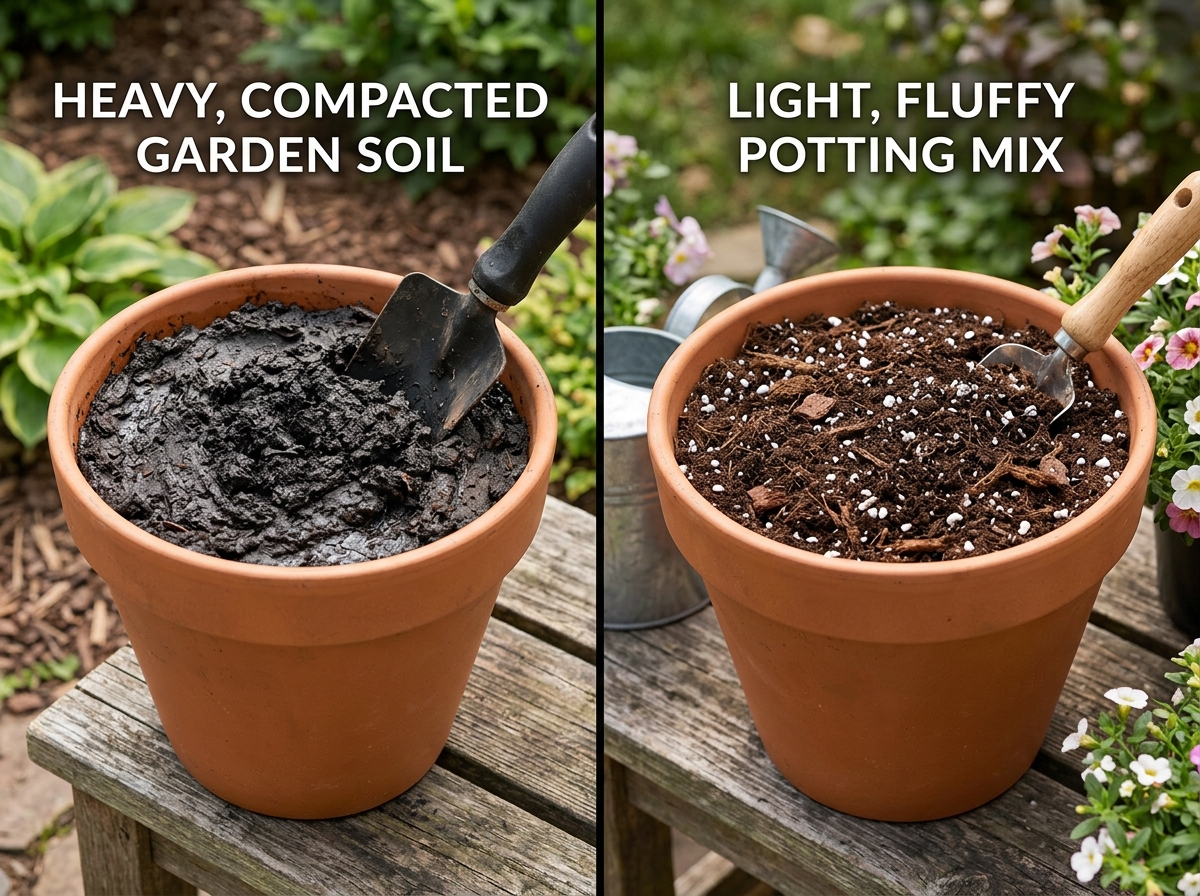
One of the most common mistakes beginners make is grabbing a bag of “garden soil” for their indoor Monstera. To the naked eye, dirt is dirt, right? Unfortunately, using garden soil indoors is a recipe for disaster.
Garden soil is designed for the great outdoors. It is heavy, dense, and contains natural clays. While this is fine in a garden bed where worms and weather keep things moving, in a confined pot, garden soil compacts tightly. This literally suffocates the roots. Furthermore, garden soil is “alive” in a way that isn’t ideal for your living room; it often contains weed seeds, fungi, and insect larvae (like the dreaded fungus gnat) that thrive once they enter the warm, stable environment of your home.
In contrast, a high-quality potting mix is usually “soilless.” It is a carefully engineered blend of materials like peat or coco coir, perlite, and bark. It’s significantly lighter, fluffier, and sterile. This sterility is vital because it ensures you aren’t inviting a pest infestation into your home from day one. When looking for the best soil for indoor plants, we always prioritize a mix that balances “water-holding capacity” with “air porosity.”
Why DIY is better than store-bought
You might wonder why we bother with houseplant soil mix recipes when you can just buy a pre-made bag. While convenience is great, DIY offers several game-changing advantages:
- Customization: A cactus and a fern have completely different lifestyles. One wants to be bone-dry in a week; the other wants a humid, damp “blanket” around its roots. Store-bought “all-purpose” mixes try to please everyone and often end up pleasing no one.
- Cost-Effectiveness: If you have a growing collection, buying individual components in bulk (like a large block of coco coir and a big bag of perlite) is significantly cheaper than buying small, premium bags of specialized soil.
- Quality Control: We have all opened a cheap bag of potting soil only to find it’s mostly sticks, rocks, and mystery “forest products.” By mixing your own, you ensure every handful is high-quality and nutrient-dense.
- Pest Prevention: Many commercial bags are stored outdoors at big-box stores, where they can become infested with gnats before you even buy them. When we store our own dry ingredients in airtight containers, we keep the bugs out.
Essential Ingredients for Houseplant Soil Mix Recipes
To master your own blends, you need to understand the “pantry” of ingredients available to us. Each component serves a specific biological purpose.
The Base (Moisture & Structure)
- Coconut Coir: This is our favorite base. It’s a sustainable byproduct of the coconut industry. It holds moisture exceptionally well but doesn’t compact like traditional soil.
- Peat Moss: A traditional choice that is slightly acidic. It’s great for moisture, but it can be difficult to re-wet if it ever dries out completely (becoming “hydrophobic”).
The Aerators (Drainage & Air)
- Perlite: Those little white “Styrofoam” looking bits? That’s actually volcanic glass that has been heated until it pops. It is essential for creating “drainage pathways.” Scientific research on perlite and soil aeration shows that it significantly prevents the soil from becoming anaerobic (oxygen-free), which is the primary cause of root rot.
- Pumice: Similar to perlite but heavier. It won’t float to the top of the pot when you water, making it a premium choice for long-term stability.
- Orchid Bark: Chunky bits of fir or pine bark. These create large air pockets, mimicking the natural environment of “epiphytic” plants (plants that grow on trees in the wild).
The Amendments (Nutrients & Health)
- Worm Castings: Often called “black gold,” this is organic matter processed by worms. It is a gentle, slow-release fertilizer that won’t burn your plant’s roots.
- Activated Charcoal: This helps “clean” the soil by absorbing toxins and preventing the buildup of odors and bacteria, especially in pots without drainage holes.
- Vermiculite: A mineral that acts like a sponge. It holds more water than perlite and is excellent for plants that never want to dry out, like ferns.
Sustainable alternatives to peat moss
At Futuro Ciencia, we are big fans of sustainability. Peat moss is harvested from peat bogs, which are massive carbon sinks. Removing peat releases carbon into the atmosphere and destroys ancient ecosystems.
Coconut coir is the leading sustainable alternative. Research on coconut coir as a peat substitute highlights that it has a more neutral pH than peat and is much easier to moisten. It also lasts longer before breaking down. If you are looking for a more “woody” feel, finely shredded pine bark can also provide excellent structure and a lower carbon footprint.
5 Custom Recipes for Your Indoor Jungle
Ready to get your hands dirty? Here are our tried-and-true houseplant soil mix recipes for the most common indoor plants. When mixing, we recommend using a “part” as any measuring container (a scoop, a cup, or a bucket) to keep the ratios consistent.
1. All-Purpose Tropical Houseplant Soil Mix Recipes
This is our “bread and butter” mix. It works for Spider Plants, Peace Lilies, Pothos, and many Ficus species.
- 2 parts Coco Coir (moistened)
- 1 part Perlite
- 1 part Sterilized Compost or Worm Castings
- Optional: A handful of horticultural sand
This mix stays moist enough to keep tropicals happy but has enough perlite to ensure the roots can breathe. It’s a great starting point for any new plant parent.
2. The “Chunky” Aroid Mix
Aroids like Monstera, Philodendron, and Alocasia are often “climbers” in the wild. They hate having “wet feet.”
- 1 part All-purpose potting mix
- 1 part Orchid Bark
- 1 part Perlite (preferably the “chunky” #3 grade)
- ½ part Activated Charcoal
This mix looks more like mulch than soil, and that’s exactly what Aroids love. The bark and charcoal create “drainage pathways” that prevent water from sitting against the stem. When selecting indoor plant pots and planters, pair this mix with a terracotta pot for even better aeration.
3. Succulent and Cactus Gritty Mix
Succulents are built to store water in their leaves, so they don’t need much in the soil.
- 1 part Potting mix
- 1 part Pumice or Coarse Sand
- 1 part Perlite
Avoid “play sand” or beach sand, as they are too fine and can actually clog the soil. You want “horticultural sand” or poultry grit. This mix should feel gritty and fall apart immediately if you squeeze a handful. This ensures you never have to worry about the best containers for indoor plants becoming a swamp.
4. The Prayer Plant (Calathea/Maranta) Mix
These “divas” of the plant world love humidity and constant moisture but are very sensitive to salt buildup.
- 2 parts Coco Coir
- 1 part Vermiculite
- 1 part Perlite
- ½ part Worm Castings
Using coco coir instead of peat is better here because it doesn’t become as acidic over time. The vermiculite ensures the soil stays “damp-not-wet,” which keeps Calathea leaves from getting those dreaded crispy brown edges.
5. Carnivorous Plant Mix
Venus Flytraps and Pitcher Plants live in bogs where the soil has zero nutrients. If you give them regular soil or fertilizer, they will die.
- 2 parts Long-fiber Sphagnum Moss
- 1 part Perlite
Do not add compost, worm castings, or charcoal. These plants need a “clean,” acidic, and nutrient-poor environment to thrive.
Preparation, Storage, and Maintenance Tips
Mixing your own soil is a bit like baking; the order of operations matters!
Step 1: Pre-moisten your base. If you are using a dry brick of coco coir, soak it in warm water until it expands. It should feel like a wrung-out sponge. Mixing dry ingredients is dusty and can actually repel water the first time you try to use it.
Step 2: Safety first. Ingredients like perlite and vermiculite are dusty. This dust contains silica, which isn’t great for your lungs. We always recommend wearing a simple dust mask and mixing in a well-ventilated area or outdoors.
Step 3: Sterilization. If you are using homemade compost, we suggest “baking” it. Spread it on a baking sheet and put it in the oven at 180°F (82°C) for about 30 minutes. This kills any fungus gnat larvae or weed seeds without destroying the organic matter. Just a warning: it might smell a bit earthy!
Step 4: Storage. Store your finished houseplant soil mix recipes in airtight plastic bins or buckets. This keeps the moisture level consistent and, most importantly, prevents bugs from moving in.
When to refresh your soil
Soil isn’t permanent. Over time, the organic bits (like bark and coir) break down and compress. Nutrients are washed away every time you water. We generally recommend refreshing the soil every 12 to 24 months.
If you notice your plant’s growth has stalled, or if water is sitting on top of the soil for a long time before soaking in, it’s time to learn how to repot indoor plants. Fresh soil provides a “reboot” for the plant’s root system. If you find the roots are circling the bottom of the pot, check out our guide on solutions for overcrowded roots in indoor plants to give them the space they need.
Troubleshooting and Common Mistakes
Even with the best houseplant soil mix recipes, things can go wrong. Here is how we handle common issues:
- Fungus Gnats: If you see tiny black flies, your soil is likely too wet or wasn’t sterile. Let the soil dry out more between waterings and consider a top-dressing of sand or pebbles to prevent gnats from laying eggs.
- Hydrophobic Soil: If water runs straight down the sides of the pot and leaves the root ball dry, your peat-based soil has become “hydrophobic.” To fix this, bottom-water the plant by sitting the pot in a basin of water for 30 minutes until the soil re-hydrates.
- Compaction: If the soil feels hard as a rock, you didn’t add enough perlite or bark. You’ll need to gently poke holes in the soil with a chopstick (aerating) or repot with a chunkier mix.
- Root Rot: If the leaves are yellowing and the stems feel mushy, you likely have root rot. This happens when the soil stays wet for too long. Check our tips on recognizing and remending root rot in indoor plants and indoor plant root rot solutions immediately.
- Nutrient Deficiency: If your plant looks pale, it might have used up all the “fuel” in the soil. You can supplement your mix by fertilizing houseplants naturally with compost teas or seaweed extracts.
Frequently Asked Questions about Houseplant Soil Mix Recipes
Can I use garden soil for my indoor plants?
We strongly advise against it. Garden soil is too heavy, which leads to root suffocation and drainage issues in pots. It also introduces pests and diseases into your home. Always stick to a “soilless” potting mix for indoor use.
How often should I refresh my houseplant soil mix recipes?
Most houseplants benefit from fresh soil every 1 to 2 years. This replenishes lost nutrients and fixes soil compaction. If your plant is a fast grower, you might need to do it sooner to accommodate its expanding root system.
How do I prevent fungus gnats in my DIY mix?
The best defense is sterilization and storage. Bake your compost/soil components at 180°F before mixing, and keep your finished batches in airtight containers. Also, avoid overwatering, as gnats need damp surface soil to survive.
Conclusion
Creating the perfect environment for your plants starts from the ground up. By mastering a few basic houseplant soil mix recipes, you are giving your indoor garden the best possible chance to thrive. Whether you are tending to a delicate Calathea or a rugged Snake Plant, the right blend of aeration, moisture, and nutrients will transform your space into a tranquil oasis.
At Futuro Ciencia, we believe that everyone can have a green thumb with the right guide. For more tips on maintaining your purifying, brightening plants, visit us at https://www.futurociencia.com/. Happy planting!
