
Why Indoor Plants for Mental Health Are Worth Your Attention
Indoor plants for mental health are one of the simplest, most affordable ways to reduce stress and lift your mood — especially if you spend most of your time at home.
Here’s a quick look at the best beginner-friendly options and what each one does for you:
| Plant | Mental Health Benefit | Maintenance Level |
|---|---|---|
| Golden Pothos | Stress relief, mood boost | Very low |
| Snake Plant | Calm, better sleep | Very low |
| ZZ Plant | Reduces rumination, resilience | Very low |
| Peace Lily | Anxiety relief, relaxation | Low |
| Spider Plant | Mood lift, accomplishment | Low |
| Aloe Vera | Calming, air purifying | Low |
| Monstera | Mindfulness, focus | Medium |
Most of us spend up to 90% of our time indoors. That’s a lot of time cut off from nature — and it shows. According to the World Health Organization, around 5% of adults worldwide live with depression. In the UK alone, stress, anxiety, and depression were responsible for 55% of all working days lost in 2021–22.
The good news? You don’t need a garden or a green thumb to fight back.
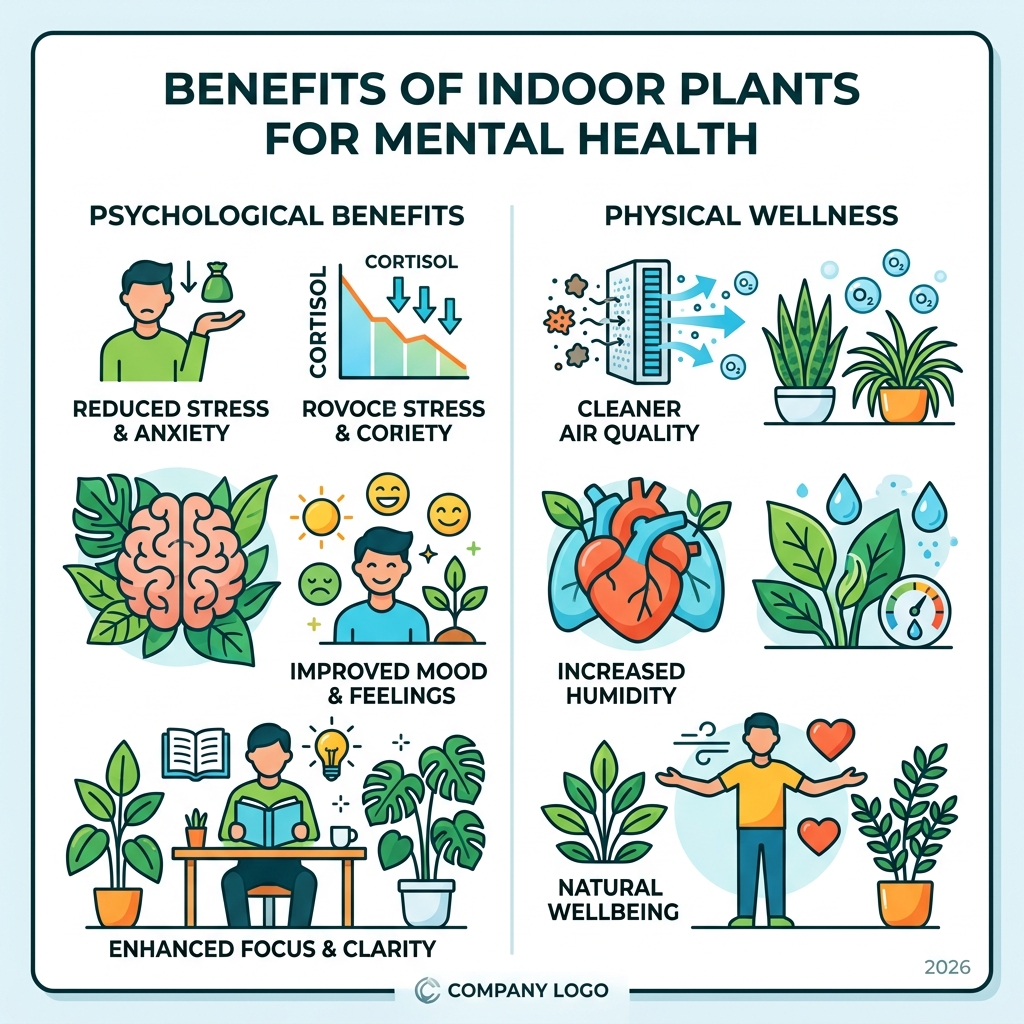
Research consistently shows that simply being around plants lowers cortisol (your stress hormone), reduces blood pressure, and improves your overall mood. One study found that tending to an indoor plant for just one month significantly reduced both stress and depressive symptoms in people going through difficult life events.
And the barrier to entry is low. Even one healthy, well-chosen plant on your desk or windowsill can make a real difference.
This guide compares the best beginner-friendly indoor plants for mental wellness — so you can find the right fit for your space, your schedule, and your state of mind.
The Science Behind Indoor Plants for Mental Health
It sounds almost too simple to be true: can a pot of soil and some green leaves really change how your brain functions? According to a wealth of scientific data, the answer is a resounding yes. We aren’t just imagining that “sigh of relief” we feel when walking into a green space.
The Cortisol Connection
When we are stressed, our bodies pump out cortisol. While this was great for outrunning sabertooth tigers, it’s less helpful when we’re just trying to clear our inbox. Research highlighted by RHS Science: houseplants for wellbeing / RHS indicates that interacting with indoor plants can suppress sympathetic nervous system activity. This leads to lower blood pressure and a measurable reduction in psychological stress. In fact, one study showed that having plants in a workspace could reduce fatigue and headaches by a staggering 20–25 percent.
Attention Restoration Theory (ART)
Ever feel like your brain is “fried” after staring at a screen for six hours? That’s directed attention fatigue. Attention Restoration Theory suggests that looking at nature—even a small indoor plant—allows our “directed attention” to rest. The “soft fascination” provided by the complex patterns of a leaf helps our minds recover, improving focus and productivity. This is why we often recommend NASA’s Secret List: The Best Air-Cleaning Plants for Bedroom Health to help create a restorative environment where you sleep and recharge.
Building Resilience Against Rumination
Rumination—the habit of replaying negative thoughts over and over—is a major contributor to anxiety and depression. A fascinating mixed-method study titled Thriving Through Stressful Life Events with Nature: A Mixed-Method Study on Tending Indoor Plants and Rumination Resilience | MDPI followed participants who tended to a ZZ plant for one month.
The results were remarkable:
- Depressive symptoms were significantly reduced compared to a control group.
- Resilience (the ability to bounce back from hardship) increased.
- Tending the plant acted as a “structured distraction,” giving people a sense of agency and a “bridge” to the natural world when they felt stuck indoors.
Physical Health and Air Quality
We cannot talk about indoor plants for mental health without mentioning the air we breathe. Over 4 million people die prematurely every year due to indoor air pollution. Plants like the Snake Plant and Peace Lily work quietly in the background to remove Volatile Organic Compounds (VOCs) from our air. When we breathe better, we feel better. It’s a physical foundation for mental wellness.
Top 7 Beginner Plants for Stress and Anxiety
If you’re new to “plant parenthood,” the last thing you want is a finicky fern that dies the moment you look at it sideways. That would just add to your stress! Instead, we suggest starting with these “hard-to-kill” heroes.

1. Golden Pothos (Epipremnum aureum)
Often called “Devil’s Ivy” because it’s nearly impossible to kill, the Pothos is the ultimate beginner plant.
- Mental Health Benefit: Provides instant gratification. Its fast growth gives you a sense of accomplishment and “green” success.
- Care Tip: It thrives in almost any light. If it wilts, it’s just telling you it’s thirsty. Once you water it, it pops right back up!
- Learn More: Check out our guide on Easy Indoor Plants for Beginners.
2. Snake Plant (Sansevieria)
The Snake Plant is a champion of the “set it and forget it” lifestyle.
- Mental Health Benefit: It’s a nighttime oxygen producer, making it ideal for bedrooms to improve sleep quality. Its architectural, upright leaves provide a sense of stability and “minimalist beauty.”
- Care Tip: It actually prefers to be left alone. Water it only when the soil is bone dry.
3. ZZ Plant (Zamioculcas zamiifolia)
The ZZ plant was the star of the MDPI rumination study mentioned earlier.
- Mental Health Benefit: Its waxy, deep green leaves are incredibly soothing to look at. It symbolizes resilience because it can survive in very low light and with very little water.
- Care Tip: Perfect for windowless offices or dark corners. If you’re a busy person, this is for you. See more Hardy Indoor Plants for Busy People.
4. Peace Lily (Spathiphyllum)
If you want a plant that “talks” to you, get a Peace Lily.
- Mental Health Benefit: Known for its air-purifying qualities and beautiful white blooms that symbolize peace and tranquility. It can help regulate indoor humidity, which is great for respiratory health.
- Care Tip: It will dramatically droop when it needs water, making it a great “reminder” plant for those building a routine.
5. Spider Plant (Chlorophytum comosum)
The Spider Plant is the gift that keeps on giving.
- Mental Health Benefit: It produces “babies” (plantlets) that you can easily clip off and grow into new plants. Sharing these with friends is a great way to build social connection and self-confidence.
- Care Tip: They love bright, indirect light and are very forgiving of occasional neglect.
6. Aloe Vera
Beyond being a pretty succulent, Aloe Vera is a functional medicine cabinet.
- Mental Health Benefit: The act of using a leaf to treat a minor burn or skin irritation fosters a deep sense of connection to nature’s healing power.
- Care Tip: Needs a sunny spot (like a kitchen windowsill) and very little water.
7. Monstera Deliciosa
Known as the “Swiss Cheese Plant,” the Monstera is for those who want a bit of “jungle” in their living room.
- Mental Health Benefit: Watching a new, giant leaf slowly unfurl is a lesson in mindfulness and patience. It brings a bold, tropical energy that can combat the “winter blues.”
- Care Tip: It needs a bit more space and light than the others, but it’s still quite sturdy. For those with a “black thumb,” see our list of Indoor Plants that Survive Neglect.
Choosing Plants Based on Appearance and Psychology
Did you know that the shape of a leaf can change how you feel? It sounds like interior design magic, but there is real psychology behind it.
The Power of Rounded Shapes
According to the article How Do Plants Make Your Home Happier? , humans generally prefer curved and rounded shapes over sharp, jagged ones. This is likely an evolutionary trait; sharp things (like thorns or jagged rocks) represent danger, while rounded, lush forms represent safety and abundance.
- Calming Foliage: Plants with rounded leaves, like the Pothos or Weeping Fig, elicit positive emotions and a sense of relaxation.
- The “Palm” Effect: Many people associate the arching fronds of a palm with holidays and tropical relaxation. This “biophilic stimulus” can trigger happy memories and lower cortisol levels just by being in your field of vision.
Lushness and Color
A study of 520 people found that plants with high leaf area and dense canopies—like the Pothos and Palm—delivered the greatest sense of well-being. Sparse, spiky plants like certain cacti were rated lower for relaxation (though they are still great for “security” vibes!).
When you are Styling Houseplants in Your Living Room, try to prioritize “lushness.” A dense green corner acts as a visual “anchor” for the room, creating a sanctuary away from the digital world.
The Importance of Health
This is a crucial point: an unhealthy, dying plant can actually have a negative impact on your mental health. It can trigger feelings of guilt or failure. This is why we at Futuro Ciencia emphasize choosing low-maintenance plants for beginners. A single, thriving, vibrant green plant is much better for your mood than a dozen struggling ones.
Maximizing the Psychological Impact of Your Green Space
Once you’ve picked your plants, where you put them and how you care for them matters just as much as the species itself.
Create a “Green Nook”
Instead of scattering one plant in every room, try grouping them. Creating a dedicated Plant Corner Decoration: The Perfect Green Nook can create a powerful “micro-environment.” When you step into that corner, your brain receives a concentrated dose of nature, signaling that it’s time to de-stress.
Tending as Mindfulness
Don’t look at watering as a chore; look at it as a ritual. The study on ZZ plants showed that the act of tending—checking the soil, wiping the leaves, watching for new growth—is what builds rumination resilience. It gives you a moment of “respite” where your only job is to care for another living thing. For more tips on how to fit this into a busy schedule, read our Indoor Plant Care Tips for Beginners.
Visibility is Key
To get the most indoor plants for mental health benefits, place your plants where you spend the most time.
- Office: A small succulent or ZZ plant on your desk can boost productivity.
- Living Room: A large Monstera or Snake Plant near the TV can help you unwind.
- Bedroom: Peace Lilies or Snake Plants can improve air quality while you sleep.
If your home doesn’t get much sun, don’t worry! There are plenty of Indoor Plant Care for Low Light strategies to keep your green friends happy in even the dimmest apartments.
Natural Ventilation
While plants are great at filtering air, they aren’t magic. For the best mental and physical health results, combine your plant collection with good old-fashioned fresh air. Open your windows when possible to let the breeze interact with your plants. This creates a more “active” natural environment that feels less stagnant.
Frequently Asked Questions about Indoor Plants for Mental Health
Which indoor plants for mental health are best for anxiety?
For anxiety, we often recommend plants that engage multiple senses, especially scent.
- Lavender and Rosemary: While often grown outdoors, they can thrive on a sunny indoor windowsill. Their scents are scientifically proven to lower cortisol levels and heart rate.
- Peace Lily: Its calming white flowers and air-purifying abilities make it a top choice for creating a peaceful atmosphere.
- Scented Herbs: Mint or Lemon Balm can be grown in small pots. Rubbing the leaves to release their scent is a great “grounding” exercise during a panic attack or high-stress moment. You can find more ideas in our guide to Indoor Plants for the Home Office.
How many indoor plants for mental health do I need to see results?
You don’t need to turn your home into a literal jungle (unless you want to!). Research suggests that even a single, healthy plant within your line of sight can provide significant mood-boosting benefits. The key is quality over quantity. A single plant that you have a “relationship” with—one that you notice growing and changing—is more effective for mental wellness than twenty plants you ignore. For creative ways to show off your single “hero” plant, check out Displaying Indoor Plants: Unique Stylish Ideas.
What are the best low-maintenance indoor plants for mental health beginners?
If you’re worried about your ability to keep things alive, stick to the “Big Three”:
- Snake Plant: Can go weeks without water and survives in low light.
- ZZ Plant: Thrives on neglect and has beautiful, waxy leaves.
- Pothos: Grows fast and tells you exactly when it’s thirsty. These are the gold standard for Hardy Indoor Plants for Busy People.
Conclusion
At Futuro Ciencia, we believe that your home should be more than just a place to sleep—it should be a sanctuary that supports your mental well-being. Incorporating indoor plants for mental health isn’t just about decoration; it’s about reclaiming a piece of the natural world for yourself.
Whether you start with a single Golden Pothos on your nightstand or a towering Monstera in your living room, the act of nurturing a plant fosters a sense of agency and emotional regulation. It reminds us that growth takes time, that resilience is possible even in low light, and that we are all connected to the living world around us.
Ready to start your journey toward a happier, greener home? We’re here to help you every step of the way with care schedules and expert guides.
