
Your Cat Is Treating Your Ponytail Palm Like a Snack — Here’s What to Know
A cat eating ponytail palm leaves is a frustrating but very common situation — and the good news is it’s not an emergency.
Quick answer:
- The ponytail palm (Beaucarnea recurvata) is non-toxic to cats, according to the ASPCA
- Eating a small amount is unlikely to cause serious harm
- Large amounts may cause mild stomach upset, vomiting, or temporary appetite loss
- If symptoms persist beyond 1-2 days, contact your vet
- To stop the behavior, elevate the plant, use deterrents, and offer cat grass as a redirect
So why does your cat keep going back to it? Those long, ribbon-like leaves move in the slightest breeze, and to a cat, that’s basically an open invitation to pounce, chew, and destroy.
One cat owner on a popular pet forum described coming home to find their ponytail palm looking like it had received a buzz cut — courtesy of their very enthusiastic cat.
It’s annoying. It’s messy. And it doesn’t have to keep happening.
This guide walks you through exactly how to protect your plant — and keep your cat out of trouble.
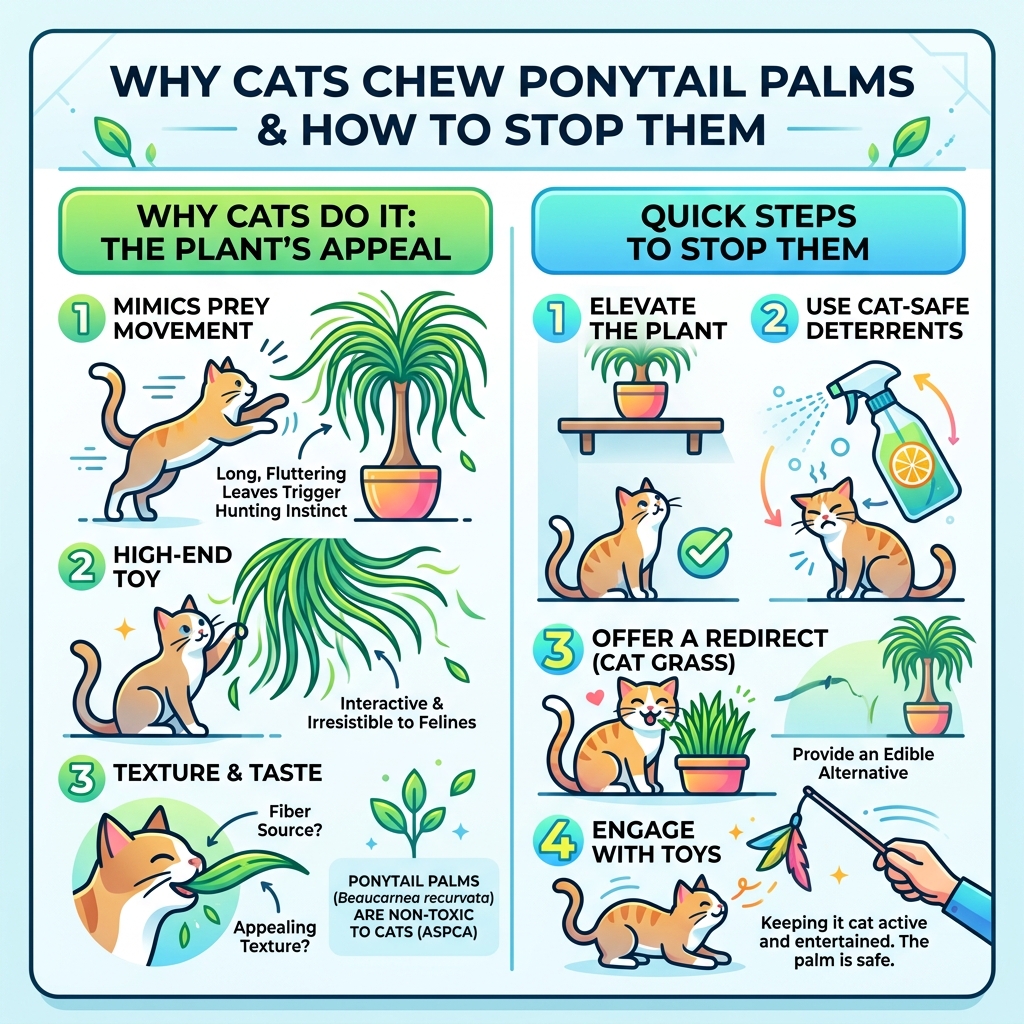
Why is my cat eating ponytail palm leaves?
If you’ve ever caught your cat eating ponytail palm fronds, you might wonder if they’ve suddenly decided to go vegan. The reality is much more instinctual. The Beaucarnea recurvata isn’t just a plant to a feline; it’s a high-end interactive toy that happens to be edible.
The primary draw is the ponytail palm’s unique structure. Unlike a sturdy fiddle leaf fig or a broad-leafed monstera, the ponytail palm features long, thin, ribbon-like leaves that cascade from the top of its bulbous trunk. These leaves are incredibly lightweight. Even the smallest draft from an air conditioner or a person walking by causes the fronds to flutter. To a cat, this movement mimics the twitching of a bird’s feathers or the tail of a mouse, immediately triggering their predatory hunting instinct.
Beyond play, cats often seek out greenery for dietary reasons. In the wild, felines consume grass to help move hairballs through their digestive tract or to induce vomiting when they have an upset stomach. Indoor cats don’t lose this instinct. If they don’t have access to outdoor grass, the long, green blades of your ponytail palm look like a gourmet substitute.
Boredom also plays a massive role. A cat left alone with a dangling, bouncy plant is eventually going to swat at it. Once they swat it, they bite it. Once they bite it and realize it has a satisfying, crunchy texture, the habit is formed.

Why your cat eating ponytail palm is a common behavior
We often hear from indoor gardeners that their ponytail palms have been “ravaged” or “given a buzz cut.” This is so common that some pet owners have nicknamed the plant “expensive cat grass.”
The texture of the leaves is a major culprit. They are slightly coarse and fibrous, which provides a tactile sensation that many cats find irresistible. In fact, on community forums like TheCatSite, users frequently discuss how their cats ignore high-quality toys in favor of a miniature ponytail palm bonsai.
Because the plant is non-toxic, many cats will chew on it repeatedly without showing immediate signs of distress, which reinforces the behavior. They learn that “playing” with the plant results in a fun texture and a bit of dietary fiber, making it a difficult habit to break without our intervention.
Is the ponytail palm toxic to cats?
The most important question for any pet parent is: Is my cat in danger?
According to the ASPCA, the ponytail palm (Beaucarnea recurvata) is officially classified as non-toxic to cats, dogs, and horses. You can find this confirmation in the ASPCA Toxicity Guide.
Botanically speaking, the ponytail palm isn’t even a true palm. It belongs to the Asparagaceae family and is actually a type of succulent. It lacks the harmful chemicals found in many other houseplants, such as:
- Calcium oxalate crystals: Which cause intense mouth pain and swelling (found in Pothos and Peace Lilies).
- Proteinase or Histamines: Which can cause severe allergic reactions.
Understanding the difference between toxic and irritating
While the plant is “non-toxic,” that doesn’t mean it’s “edible” in the way cat food is. There is a distinct difference between a plant being poisonous and a plant being an irritant.
A cat eating ponytail palm leaves is essentially consuming a large amount of raw, tough fiber. If a cat overindulges, their stomach may struggle to break down the material. This often leads to physical irritation of the stomach lining.
Think of it like a human eating a giant bowl of kale stems; it’s not “poisonous,” but you’re probably going to have a stomach ache later. In cats, this irritation often manifests as immediate vomiting. This is actually a defense mechanism — the body realizes it can’t digest the fibrous fronds and sends them back up.
It is also vital to distinguish the ponytail palm from the Sago Palm. While they share a similar name and “exploding” leaf shape, the Sago Palm (Cycas revoluta) is extremely toxic and can be fatal. If your cat ate a “palm” and is showing severe symptoms, double-check which plant you actually have.
What to do if your cat eating ponytail palm leads to vomiting
It can be frightening to find your cat hacking up green plant bits, but in most cases involving a ponytail palm, the cat will recover quickly.
If your cat has ingested the plant, you may notice:
- Vomiting: Usually containing visible green leaf fragments.
- Nausea: Your cat might smack their lips or drool slightly.
- Appetite Loss: They may refuse their next meal because their stomach feels unsettled.
- Lethargy: They might want to hide or sleep more than usual while they process the discomfort.
In some cases shared on TheCatSite, owners have reported their cats acting “off” or trembling slightly after a binge. This is usually due to the physical exertion of vomiting or mild acid reflux rather than a chemical toxin.
Immediate steps after a cat eating ponytail palm incident
If you catch your cat in the act or find the evidence later, follow these steps to help them recover:
- Monitor Behavior: Keep a close eye on them for the next 24 to 48 hours. Most “plant hangovers” resolve within a day.
- Withhold Food Briefly: If your cat is actively vomiting, remove their food bowl for 2-4 hours to let their stomach settle. Do not withhold water, but ensure they aren’t gulping it down too fast, which can trigger more vomiting.
- Check the Mouth: Briefly check their mouth and gums for any stuck leaf fragments that could cause irritation or a choking hazard.
- The Bland Diet: Once the vomiting has stopped for several hours, offer a small amount of “bland” food. A mix of boiled chicken breast (no skin, no bones, no seasoning) and a little white rice can be very soothing.
- Consult a Vet: If your cat is still refusing food after 24 hours, or if you see blood in the vomit (which can indicate esophageal irritation), call your veterinarian. Experts on Dial A Vet suggest watching for increased thirst or extreme lethargy as signs that something else might be wrong.
- Medication (With Vet Approval): In some cases of persistent nausea, vets may recommend over-the-counter acid reducers like Pepcid AC (famotidine), but never administer medication without confirming the correct dosage for your cat’s weight with a professional.
How to stop your cat eating ponytail palm for good
We love our plants, and we love our cats. To keep both happy, we need to implement some “houseplant security.” Here is how we recommend protecting your greenery:
1. Elevation is Key The simplest way to stop a cat eating ponytail palm is to move the plant where the cat cannot reach. High bookshelves, mantels, or hanging planters are excellent options. However, cats are world-class jumpers. If there is a “launchpad” (like a chair or a side table) nearby, they will find a way up.
2. Use Scent and Taste Deterrents Cats have highly sensitive noses and tongues. You can make your plant unappealing by using:
- Citrus: Place lemon or orange peels on top of the soil. Cats generally detest the smell of citrus.
- Bitter Apple Spray: Available at most pet stores, this can be sprayed directly on the leaves to make them taste terrible.
- Cayenne Pepper: A very light dusting of cayenne pepper on the leaves (or a diluted spray) can discourage curious nibblers.
3. Physical Barriers If your ponytail palm is large and sits on the floor, consider surrounding the pot with “booby traps” that cats dislike:
- Aluminum Foil: Most cats hate the sound and feel of foil under their paws.
- Sticky Tape: Double-sided tape around the base of the pot can deter them from getting close.
- Decorative Cages: Some owners use wire mesh or birdcages to protect smaller ponytail palms while still allowing the plant to breathe and grow.
Comparison of Cat Deterrent Methods
| Method | Ease of Use | Effectiveness | Potential Downside |
|---|---|---|---|
| Elevation | High | High | Depends on cat’s jumping ability |
| Citrus Peels | Very High | Medium | Needs frequent replacement |
| Bitter Spray | Medium | High | Must be reapplied after misting plant |
| Aluminum Foil | Medium | Medium | Not very aesthetically pleasing |
| Cat Grass Redirect | High | Very High | Doesn’t work for all “stubborn” chewers |
Redirecting your cat to safe greenery
Stopping a behavior is much easier if you provide an alternative. If your cat is craving fiber or play, give them a “legal” outlet.
- Cat Grass: This is usually a mix of wheat, oats, or barley. It grows quickly and is specifically meant for cats to chew on. By placing a pot of cat grass in an accessible area, you can often “lure” them away from your ponytail palm.
- Spider Plants: These are also non-toxic and have dangling leaves that satisfy the “hunting” urge, though they can have a mild hallucinogenic effect on some cats, so moderation is key!
- Enrichment: Sometimes a cat eating ponytail palm is just a bored cat. Increase playtime with wand toys or laser pointers to tire them out so they aren’t looking for trouble in your pots.
Frequently Asked Questions about cats and palms
Is the sago palm safe for cats?
Absolutely not. This is a critical distinction every plant owner must know. The Sago Palm (Cycas revoluta) contains cycasin, which is a potent toxin.
- Symptoms: Bloody vomiting, diarrhea, jaundice, liver failure, and death.
- Warning: Every part of the sago palm is toxic, but the seeds (nuts) are the most dangerous. If you suspect your cat has eaten a Sago Palm, this is a medical emergency. Go to an emergency vet immediately.
Can eating ponytail palm cause long-term health issues?
Generally, no. An occasional nibble will not cause permanent damage to your cat’s organs. However, if a cat is a “chronic” chewer and vomits several times a week, it can lead to:
- Esophageal Irritation: Constant stomach acid in the throat can cause inflammation.
- Weight Loss: If they are vomiting up their meals along with the plant.
- Dental Issues: While rare, the fibrous leaves could potentially get stuck between teeth or under the gum line.
For the plant, the “long-term health issues” are mostly cosmetic. Ponytail palms grow very slowly. A cat that eats the new growth at the top can leave the plant looking stunted or scarred for months or even years.
How do I fix a ponytail palm damaged by my cat?
If your plant looks like it survived a lawnmower accident, don’t despair. Ponytail palms are incredibly resilient.
- Trim the Damage: Use a clean, sharp pair of scissors to trim away the ragged, chewed ends. You can cut them at an angle to mimic the natural shape of the leaf.
- Remove Brown Tips: If the chewed ends turn brown, simply trim that dead tissue away.
- Adjust Watering: If the plant has lost a lot of foliage, it won’t need as much water as usual. Wait until the soil is completely dry before watering again to avoid root rot.
- Be Patient: It may take several months to see significant new growth, but as long as the bulbous trunk (the caudex) is firm and healthy, the plant will recover.
Conclusion
Living with both cats and plants requires a bit of strategy, but it’s entirely possible to maintain a beautiful, green home without sacrificing your pet’s comfort. At Futuro Ciencia, we believe that every space can be a tranquil oasis. By understanding that your cat eating ponytail palm leaves is a natural (if annoying) behavior, you can take the right steps to manage it.
Use our indoor plant care schedules to keep your greenery healthy, and always prioritize pet-safe varieties if you have a curious feline. For more tips on building a botanical sanctuary that welcomes your furry friends, check out our guide on Indoor plants for beginners with pets.
With a little elevation, a few citrus peels, and a dedicated pot of cat grass, you can keep your ponytail palm’s “ponytail” long, lush, and — most importantly — unchewed.
