
Why Bringing Begonias Inside for Winter Is Worth the Effort
Bringing begonias inside for winter is the best way to save these frost-sensitive plants from dying when temperatures drop. Here’s the short version of what you need to do:
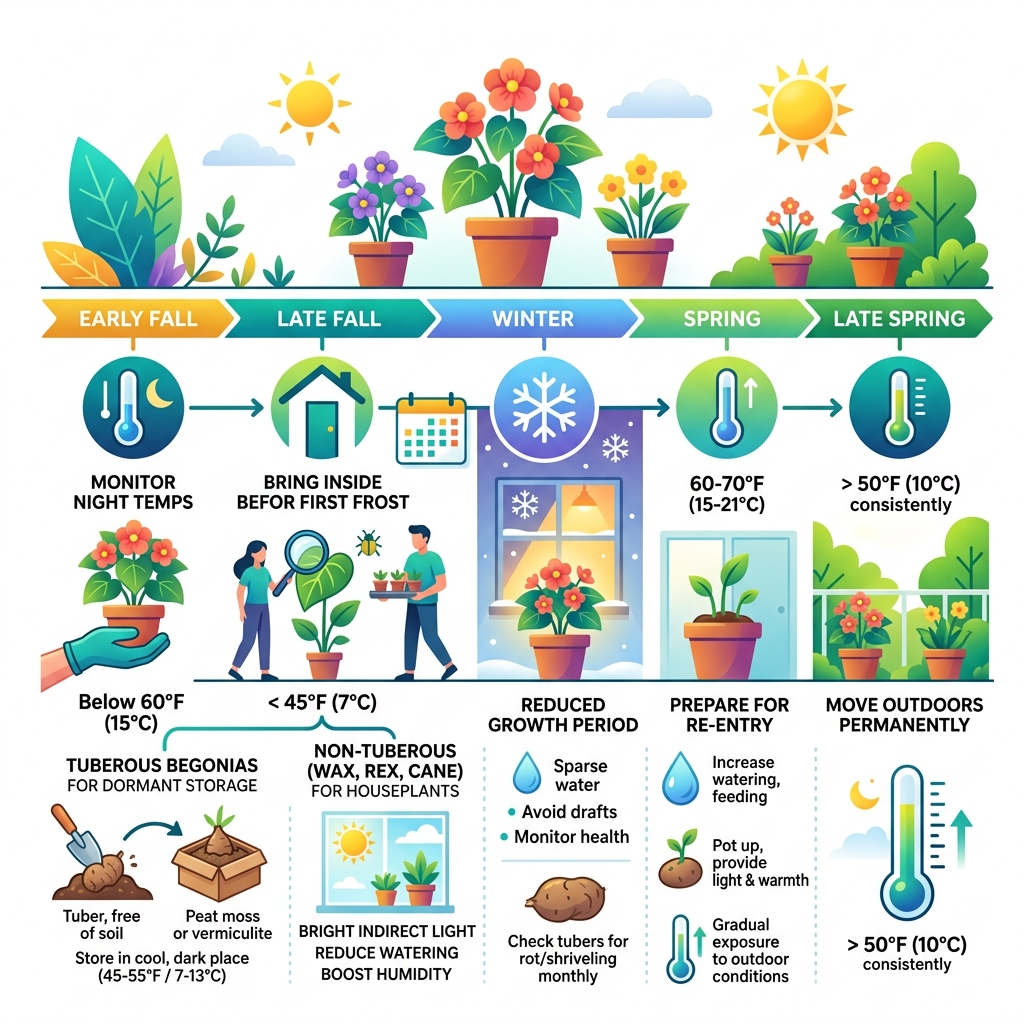
- Time it right — Move begonias indoors when nighttime temperatures fall below 60°F, before the first frost
- Know your type — Tuberous begonias need tuber storage; wax, Rex, cane, and rhizomatous types can live indoors as houseplants
- Inspect first — Check for pests and treat with insecticidal soap before bringing plants inside
- Acclimate gradually — Move plants in stages over 1-2 weeks to reduce shock
- Adjust your care — Give them bright indirect light, reduce watering, and boost humidity indoors
Begonias are tropical plants at heart. They love warmth, humidity, and mild temperatures year-round. But in most of North America and Europe, winter has other plans.
Below 32°F (0°C), frost kills begonia tissue fast. Even temperatures below 45°F can stress the plant badly. That’s why most gardeners either lose their begonias every fall or scramble to save them.
The good news? With the right approach, you can keep begonias alive indoors all winter — and bring them back outside in spring healthier than ever. Some tuberous begonias can even survive this way for 10 years or more.
This guide walks you through exactly how to do it, step by step, based on the type of begonia you have.
Explore more about bringing begonias inside for winter:
Identifying Your Begonia Type for Winter Success
Before we start moving pots, we need to play detective. Not all begonias are created equal, and their “winter personalities” vary wildly. If you treat a Rex begonia like a Tuberous one, you’ll end up with a very dead plant.
Here are the most common types we encounter:
- Tuberous Begonias: Known for massive, rose-like blooms. These have a thick, potato-like tuber underground. They must go dormant in winter.
- Wax Begonias: The classic bedding plants with shiny, succulent-like leaves. They have fibrous roots and can live as year-round houseplants.
- Rex Begonias: Grown for their psychedelic, colorful foliage. They are rhizomatous and love high humidity but don’t require a dormant period.
- Cane Begonias (Angel Wings): These grow tall, woody stems that look like bamboo. They are tough and make excellent indoor companions.
- Rhizomatous Begonias: These grow from thick stems that creep along the soil surface. They are generally the easiest to transition indoors.
Why does this matter? It dictates whether you are keeping the plant active or putting it to sleep. Tuberous types need to be dug up and stored in a cool, dark place, while the others prefer a sunny windowsill.
Comparison of Begonia Types and Winter Needs
| Begonia Type | Root System | Winter Strategy | Ideal Temp |
|---|---|---|---|
| Tuberous | Tuber | Full Dormancy (Storage) | 40°F – 50°F |
| Wax | Fibrous | Active Houseplant | 60°F – 73°F |
| Rex | Rhizome | Active Houseplant (High Humidity) | 65°F – 73°F |
| Cane | Fibrous | Active Houseplant | 60°F – 75°F |
| Rhizomatous | Rhizome | Active Houseplant | 60°F – 70°F |
For a deeper dive into these varieties, check out the Growing Indoors | American Begonia Society guide.
Essential Steps for Bringing Begonias Inside for Winter
Timing is everything. If you wait until the morning you’re scraping ice off your windshield, it’s likely too late. We recommend bringing begonias inside for winter as soon as nighttime temperatures consistently dip below 60°F (15°C).
While some varieties can tolerate a light “kiss” of frost to trigger dormancy (specifically tuberous types), most foliage begonias will suffer cellular damage the moment the thermometer hits 32°F. To stay organized, we suggest using our indoor-plant-maintenance-checklist to track your transition dates.
Pest Inspection Before Bringing Begonias Inside for Winter
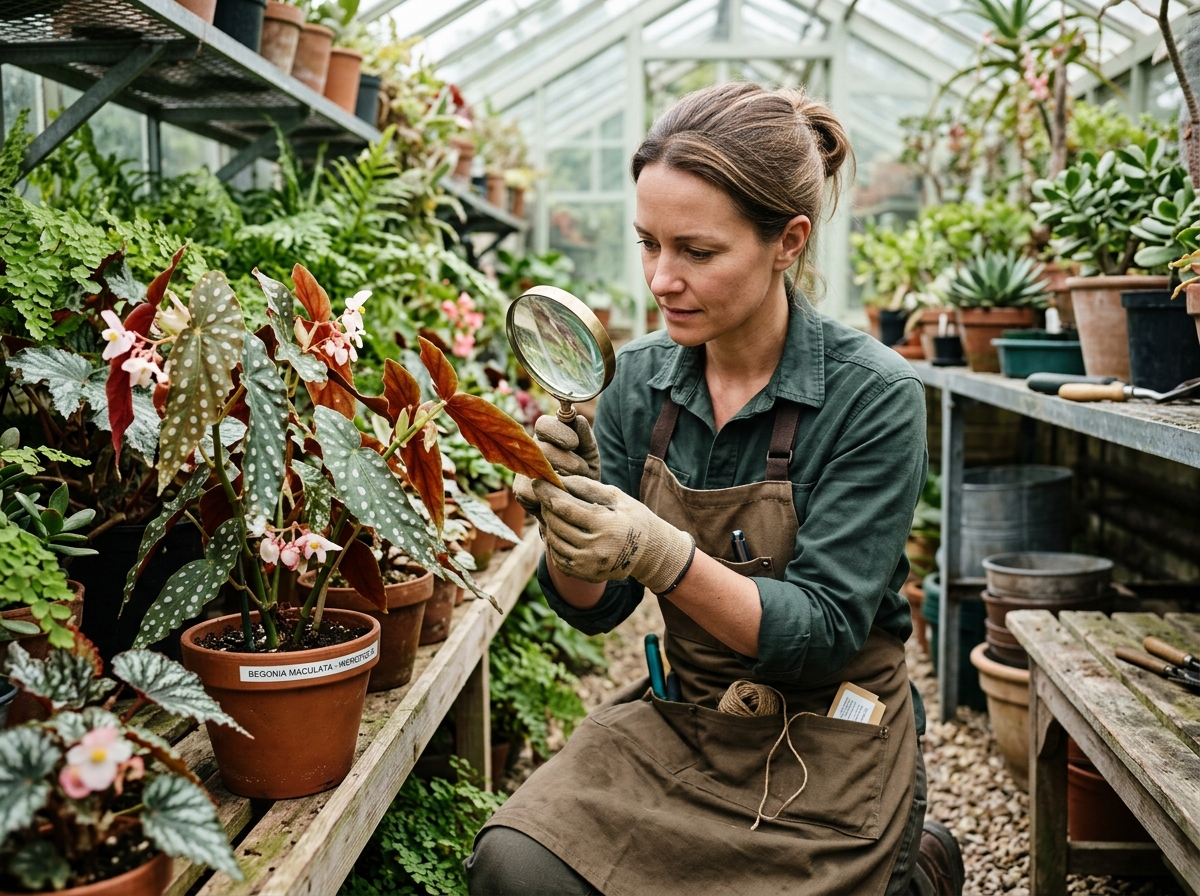
The last thing we want is to invite a Trojan Horse of aphids into our living room. Outdoor plants are part of a balanced ecosystem where predators keep pests in check. Inside, without ladybugs to stop them, a few hitchhikers can become a full-blown infestation.
- The Visual Scan: Check the undersides of leaves and the “armpits” (nodes) of the stems. Look for white cottony spots (mealybugs) or tiny green crawlers (aphids).
- The Root Check: If the plant is in a pot, slide it out gently. Check for slugs or soil pests that might have crawled in through the drainage holes.
- The Bath: Give the foliage a gentle wash with a hose. Once dry, we recommend spraying the plant with insecticidal soap or neem oil as a preventative measure.
- The Pot Wash: Scrub the outside of the pot to remove spider eggs or fungal spores.
For more help on identifying these tiny troublemakers, our indoor-plant-care-tips-for-beginners covers the basics of pest management.
Acclimation Strategies After Bringing Begonias Inside for Winter
Plants hate sudden changes. Imagine being moved from a humid, sun-drenched patio to a dry, dimly lit apartment in a single afternoon. The result? A “leaf drop” tantrum.
To prevent shock, we use a “reverse hardening off” method:
- Week 1: Move the plants to a porch or a spot with more shade than their usual summer home.
- Week 2: Bring them inside for the night, but put them back out during the day.
- Week 3: Move them inside permanently to their designated winter spot.
This gradual shift helps the plant adjust its respiration and light absorption. If you live in a smaller space, our guide on indoor-plant-care-for-apartments offers great tips on finding the perfect transition microclimate.
Indoor Care, Maintenance, and Troubleshooting
Once the plants are settled, the goal is survival, not necessarily rapid growth. Light is the biggest challenge. Even though begonias are “shade lovers” outdoors, the “shade” outside is often brighter than the light next to a window indoors.
Place your begonias near an east or south-facing window. If they start reaching toward the glass or looking “leggy,” they need more light. You can find specific light levels in our indoor-plant-light-requirements guide. If natural light is lacking, don’t worry—indoor-plant-care-for-low-light situations can be fixed with simple LED grow lights kept on for 8-10 hours a day.
Maintain a consistent indoor-plant-care-routine by keeping temperatures between 65°F and 73°F. Avoid placing pots near drafty doors or heating vents, which can cook the leaves.
Watering and Humidity Requirements
The biggest killer of indoor begonias isn’t the cold—it’s the watering can. In winter, plants grow slower and need less water.
- The Finger Test: Wait until the top inch of soil feels dry and crumbly before watering.
- The Drainage Rule: Never let a begonia sit in a saucer of water. This leads to “wet feet” and root rot.
- The Humidity Hack: Indoor air in winter is notoriously dry. Misting helps for about five minutes, but it’s not a long-term fix. Instead, use a pebble tray. Fill a tray with gravel and water, then set the pot on top (ensuring the bottom of the pot doesn’t touch the water). As the water evaporates, it creates a humid microclimate.
For more advanced moisture management, check out our humidity-tips-for-houseplants and our indoor-plant-care-tips-for-busy-people.
Preventing Common Winter Problems
Keep an eye out for these three “Winter Villains”:
- Powdery Mildew: This looks like a dusting of flour on the leaves. It thrives in stagnant, humid air. Improve air circulation by giving plants plenty of space.
- Root Rot: If the leaves turn yellow and the stems feel mushy at the base, you’re overwatering. Stop immediately and let the soil dry out completely.
- Leaf Drop: A few lost leaves are normal during the transition. However, if it continues, check for drafts or low light.
Staying on top of an indoor-plant-care-schedule is the best defense. For a complete deep-dive into seasonal adjustments, read our article on indoor-plant-care-during-winter.
Managing Tuberous Begonias: Dormancy and Storage
Tuberous begonias are the “divas” of the family. They insist on a winter nap. If you try to keep them growing all winter, they will often weaken and fail to bloom the following year.
Here is our step-by-step process for “putting them to bed”:
- Stop Watering: In late fall, stop watering. Let the foliage turn yellow and die back naturally. This sends the energy from the leaves back into the tuber.
- The First Frost: A very light frost (above 28°F) can actually help signal the plant that it’s time to sleep.
- Lift and Clean: Dig the tubers out of the soil. Cut the stems back to about one inch. Gently brush off the dirt, but don’t scrub them—you don’t want to damage the “skin.”
- The Curing Phase: Lay the tubers in a warm, dry place for 2-3 weeks until the remaining stem stub dries up and falls off easily.
- Storage: Place the tubers in a box filled with dry peat moss, vermiculite, or sawdust. Store them in a cool, dark place (like a basement or garage) where temperatures stay between 40°F and 50°F.
- The Monthly Check: Once a month, peek into the box. If a tuber feels mushy or looks moldy, throw it away before it infects the others.
Transitioning Back Outdoors and FAQs
When spring arrives, we don’t just toss our begonias back into the garden. We have to “harden them off” just like we did in the fall, but in reverse.
Wait until the danger of frost has passed and nighttime temperatures stay reliably above 50°F. Start by putting them in a shaded, protected spot for an hour a day, gradually increasing their “outdoor time” over two weeks.
Can begonias be overwintered outdoors?
In most climates, the answer is no. However, there is one notable exception: Begonia grandis (Hardy Begonia). This species can survive down to USDA Zone 6 if it is tucked away in a sheltered spot and covered with a thick layer of mulch or straw. For almost every other variety, bringing begonias inside for winter is mandatory for survival.
When is the best time to move begonias back outside?
The “Magic Number” is 50°F (10°C). If the overnight lows are hitting this mark, it’s safe to start the acclimation process. For tuberous types, you can start “waking them up” indoors in March by potting them up and placing them on a sunny windowsill, giving you a head start on the blooming season.
Is it better to overwinter or buy new plants?
This is a personal choice, but we lean toward overwintering!
- Pros: You save money, your plants get larger and more impressive every year, and you can preserve rare varieties. Tuberous begonias actually produce more flowers as the tuber grows larger over the years.
- Cons: It takes up indoor space and requires a bit of effort.
If you have a common variety of wax begonia and very little light, you might choose to compost it and buy fresh in the spring. But for Rex or Tuberous types, the reward is well worth the work.
Conclusion
Bringing begonias inside for winter doesn’t have to be a stressful chore. By identifying your plant type and following a few simple steps for pest control and acclimation, you can enjoy these tropical beauties year-round. Whether you’re storing tubers in a basement or keeping a Rex begonia as a centerpiece in your living room, you’re participating in a rewarding cycle of gardening.
At Futuro Ciencia, we believe that a home filled with healthy plants is a more tranquil, vibrant place to live. We hope this guide helps you transform your winter space into a lush oasis. For more tips on keeping your green friends happy, explore our full library of indoor-plant-care resources!
