
Why Most Indoor Plants Die (And How to Stop It From Happening)
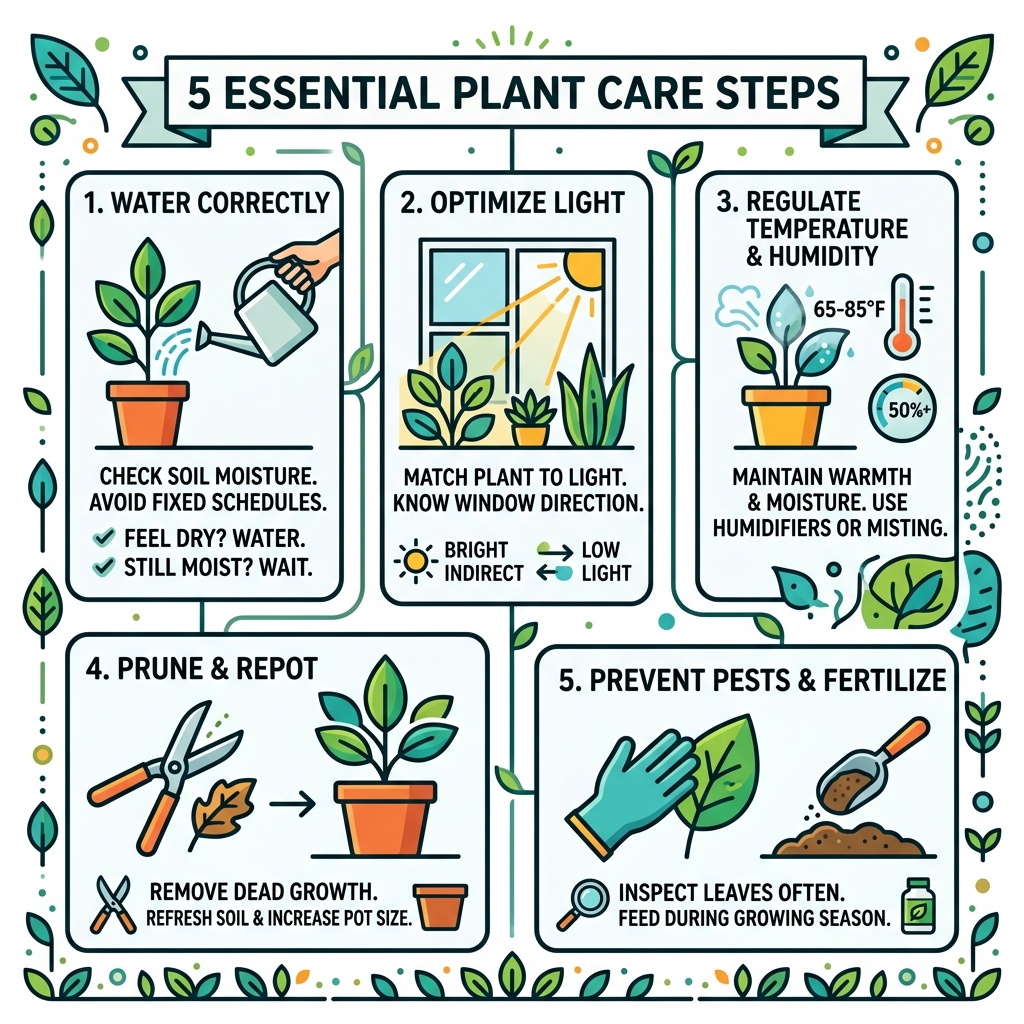
The 5 ways to take care of plants that make the biggest difference are watering correctly, providing the right light, regulating temperature and humidity, pruning and repotting, and preventing pests with proper fertilization.
Here’s a quick overview:
- Water correctly – Check soil moisture before watering; never water on a fixed schedule
- Optimize light – Match your plant to your window direction and available light
- Regulate temperature and humidity – Keep plants in the 65-85°F range with 50%+ humidity for tropicals
- Prune and repot – Refresh soil every 12-18 months and remove dead growth regularly
- Fertilize and prevent pests – Feed during the growing season and inspect leaves often
Most houseplants don’t die from neglect. They die from too much love — specifically, too much water.
Overwatering is the single leading cause of houseplant death. And for busy urban households where routines get disrupted, it’s incredibly easy to either forget entirely or overcompensate by watering too often.
The good news? Healthy plants don’t need complicated care. They need consistent care built around a few core habits.
Whether you’re nursing a struggling fiddle leaf fig or trying to keep a simple pothos alive, the five areas below cover everything that matters.
1. Master Hydration and Soil Quality
Watering is perhaps the most misunderstood aspect of plant parenting. We often think of it as a chore to be done every Sunday morning, but plants don’t follow our calendars. They follow the laws of evaporation and photosynthesis. If it’s been a cloudy week, your plant is “breathing” less and therefore needs less water. If the heater has been blasting, that soil is going to dry out fast.
Understanding the balance between hydration and aeration is the first of our 5 ways to take care of plants. To keep your green friends happy, you must learn to read the signs they give you.
| Feature | Overwatering Signs | Underwatering Signs |
|---|---|---|
| Leaves | Yellowing, soft, mushy, or browning tips with a yellow halo | Wilting, crispy brown edges, curling, or dropping off |
| Stems | Mushy or unstable at the base | Shriveled or brittle |
| Soil | Constantly wet, moldy, or smells like rot | Pulled away from the sides of the pot, bone dry |
| Pests | Presence of fungus gnats (tiny black flies) | Presence of spider mites (thrive in dry air) |
One of the best tools you can use is a Watering Schedule for Indoor Plants that adapts to the seasons. More houseplants die from overwatering than any other cause!
Hydration as one of the 5 ways to take care of plants
The “finger test” is your best friend. Insert your finger into the soil up to the second knuckle (about 2 inches deep). If the soil feels dry, it’s time to water. If it feels damp, wait a few days. For those who prefer tech, a moisture meter can give you a more precise reading.
When you do water, use room temperature water (ideally around 68°F). Cold water can shock the roots of tropical plants, which are used to warm rainforest rain. We recommend “bottom watering” for many species—place the pot in a tray of water and let the soil wick up moisture for 20 minutes. This ensures the root ball is thoroughly saturated without compacting the topsoil. For more detailed guidance, check out these Expert tips on watering houseplants.
Choosing the right soil and drainage
Soil isn’t just “dirt.” For a plant in a pot, the soil is its entire world. Most houseplants require a mix that provides both moisture retention and aeration. A standard potting mix is often too dense on its own. We love adding soil amendments like perlite or pumice to help with drainage and vermiculite to help hold just enough moisture.
A good DIY ratio for many tropicals is 1 part potting soil, 1 part perlite, and 1 part peat moss or coco coir. This creates the “fluffy” environment roots love. If you are a new plant parent, read our Indoor Plant Care Tips for Beginners to learn why your pot must have drainage holes. Without them, water pools at the bottom, leading to the dreaded root rot.
2. Optimize Light for 5 Ways to Take Care of Plants
Light is food for plants. Through photosynthesis, they turn light energy into the sugars they need to grow. If your plant isn’t getting enough light, it can’t “eat,” and no amount of water or fertilizer will save it.

Understanding your home’s light is crucial. Generally:
- South-facing windows: Provide the most intense, direct light. Perfect for cacti and succulents.
- East/West-facing windows: Provide moderate light. East gets gentle morning sun; West gets hotter afternoon sun.
- North-facing windows: Provide low, indirect light. Best for low-light tolerant species.
To dive deeper into these nuances, see our guide on Indoor Plant Light Requirements.
Matching species to light levels
Not all plants are created equal. A Fiddle Leaf Fig is a notorious light-hog, requiring bright, filtered light to maintain those massive leaves. On the other hand, Snake plants and ZZ plants are famous for their ability to tolerate low-light conditions, making them perfect for offices or hallways.
When selecting a plant, be honest about your space. Don’t put a sun-loving Echeveria in a dark corner! If you notice your plant is reaching toward the window (becoming “leggy”) or losing its variegation (the white or yellow patterns on the leaves), it’s telling you it needs more light. For a scientific breakdown, read about Why plants need light for growth.
Adjusting for low-light conditions
If your apartment feels more like a cave than a greenhouse, don’t despair. You can use artificial grow lights to supplement natural sun. Simple full-spectrum LED bulbs can work wonders and don’t require fancy setups.
Another pro tip: rotate your pots! Give your plant a quarter-turn every time you water. This ensures all sides get equal light exposure, preventing the plant from leaning or growing lopsided. Also, keep your windows clean—dust can block a surprising amount of usable light.
3. Regulate Temperature and Humidity
Most of our favorite houseplants come from tropical regions where it is perpetually warm and humid. Our homes, unfortunately, are often the opposite—especially in winter when the heater dries out the air.
The ideal temperature range for most houseplants is between 65°F and 85°F. If you are comfortable in a t-shirt, your plants are likely comfortable too. However, they hate “cold feet” and hot drafts. Keep them away from air conditioning vents, space heaters, and drafty windows.
Humidity is the silent killer. Most tropical houseplants prefer a relative humidity of 50% or higher, yet the average home in winter can drop to 10-20%. You can find more on Maintaining houseplant humidity here.
Managing seasonal environmental changes
As the seasons shift, so should your care. In winter, plants enter a semi-dormant state. They grow slower and need less water and zero fertilizer. In summer, they might benefit from a “vacation” outdoors in a shaded spot, but you must acclimate them slowly to avoid leaf scorch.
To boost humidity during dry months, try these methods:
- Pebble Trays: Fill a tray with pebbles and water, then set the pot on top (ensure the bottom of the pot doesn’t touch the water).
- Grouping: Cluster plants together to create a humid microclimate.
- Humidifiers: The most effective way to keep your “tranquil oasis” thriving.
- Misting: While it feels productive, misting only raises humidity for a few minutes. It’s better for cleaning dust than for long-term hydration.
For more seasonal advice, check our Indoor Plant Care Tips for Beginners.
4. Practice Strategic Pruning and Repotting
Plants are living things that eventually outgrow their “clothes.” Repotting isn’t just about giving the roots more room; it’s about refreshing the soil. Over time, soil loses its nutrients and becomes compacted, making it harder for roots to breathe.
Most houseplants need to be repotted every 12 to 18 months. Signs that it’s time include:
- Roots circling the inside of the pot or poking out the drainage holes.
- Water running straight through the pot without soaking in.
- The plant looking too large for its container (top-heavy).
- Growth has completely stalled during the spring/summer.
When you do move up, only choose a pot 1 to 2 inches larger in diameter. A pot that is too big holds too much water, which can lead to root rot. Learn the step-by-step process in our guide on How to Repot Indoor Plants.
Maintenance as one of the 5 ways to take care of plants
Pruning is the “haircut” your plant needs to stay healthy. Removing dead or yellowing leaves allows the plant to redirect its energy to new, healthy growth. Use clean, sharp shears and make cuts at a 45-degree angle just above a leaf node (where the leaf joins the stem).
Cleaning is also vital. Dust on leaves blocks sunlight and can harbor pests. Wipe large leaves with a damp cloth or give your plants a gentle “shower” in the sink to rinse them off. This simple act of hygiene is one of the most effective 5 ways to take care of plants.
Garden weeding and outdoor maintenance
If you have an outdoor garden, maintenance involves a few extra steps. Mulching is a game-changer; a 2-inch layer of mulch helps retain soil moisture and suppresses weeds. Weeds aren’t just ugly—they compete with your plants for water and nutrients.
For long-term success, consider using landscape fabric under your mulch and always sanitize your tools with rubbing alcohol between plants to prevent the spread of disease. For more, see our Pruning and cleaning guide.
5. Prevent Pests and Use Proper Fertilization
Even in the cleanest homes, pests happen. They can fly in through windows or hitch a ride on a new plant. The key is early detection. Periodically check the undersides of leaves and the joints of stems for any signs of movement or unusual spots.
Common culprits include:
- Spider Mites: Look for tiny webs and speckled leaves.
- Mealybugs: These look like small bits of white cotton.
- Fungus Gnats: Tiny black flies that live in overly wet soil.
If you find them, isolate the plant immediately to prevent the spread. You can treat most pests with neem oil or a simple solution of water and mild dish soap. For more persistent bugs like mealybugs, a cotton swab dipped in rubbing alcohol works wonders. Check out Indoor Plant Pests and How to Remove Them for more recipes.
Effective pest and disease control
Prevention is the best medicine. A healthy, unstressed plant is much more resistant to pests than a struggling one. This is why following all Treating common plant pests protocols is so important. Always quarantine new plants for two weeks before adding them to your main collection.
Fertilization frequency and types
Think of fertilizer as a vitamin supplement, not a meal. You should only fertilize during the growing season (spring through early fall). Never fertilize a plant that is stressed, diseased, or sitting in bone-dry soil, as this can burn the roots.
Most plants do well with a balanced “10-10-10” fertilizer, which represents the ratio of Nitrogen (for foliage), Phosphorus (for roots and flowers), and Potassium (for overall health).
- Water-soluble: Easy to apply during regular watering, usually every 2-4 weeks.
- Granular: Slow-release pellets that feed the plant over several months.
Remember: “Less is more.” It is much easier to fix a slightly under-fertilized plant than one with fertilizer burn.
Frequently Asked Questions about Plant Care
How do I know if I am overwatering my plants?
The most common signs of overwatering are yellowing leaves that feel soft or limp, mushy stems, and a foul smell coming from the soil (root rot). You might also notice tiny black flies called fungus gnats buzzing around the damp soil. If the leaves are turning yellow but feel crispy, that might actually be underwatering!
What are the best low-maintenance plants for beginners?
If you’re just starting out, we recommend the “indestructibles”:
- Snake Plant: Can go weeks without water and thrives in low light.
- ZZ Plant: Extremely drought-tolerant and has beautiful waxy leaves.
- Pothos: A trailing vine that “tells” you when it’s thirsty by drooping slightly.
- Spider Plant: Very forgiving and produces cute “babies” you can propagate.
How often should I fertilize my indoor plants?
Generally, you should fertilize once a month during the growing season (March to September). We recommend diluting your liquid fertilizer to half-strength to avoid over-salting the soil. During the dormant winter months, stop fertilizing entirely to let the plant rest.
Conclusion
At Futuro Ciencia, we believe that anyone can have a green thumb. It isn’t a magical gift; it’s simply the result of observing your plants and responding to their needs. By mastering these 5 ways to take care of plants, you can transform your living space into a tranquil oasis filled with purifying, oxygen-rich life.
Our mission is to help you brighten your home with plants that don’t just survive, but thrive. Whether you are looking for a low-maintenance snake plant for your office or a statement monstera for your living room, we are here to support your journey.
Ready to level up your plant game? Start your journey to a tranquil oasis with our Indoor Plant Care Guides and let us help you create the indoor jungle of your dreams!
