
Why Houseplant Display Ideas Can Transform Your Home
Houseplant display ideas range from simple shelf arrangements to full vertical plant walls — here are the most effective ways to get started:
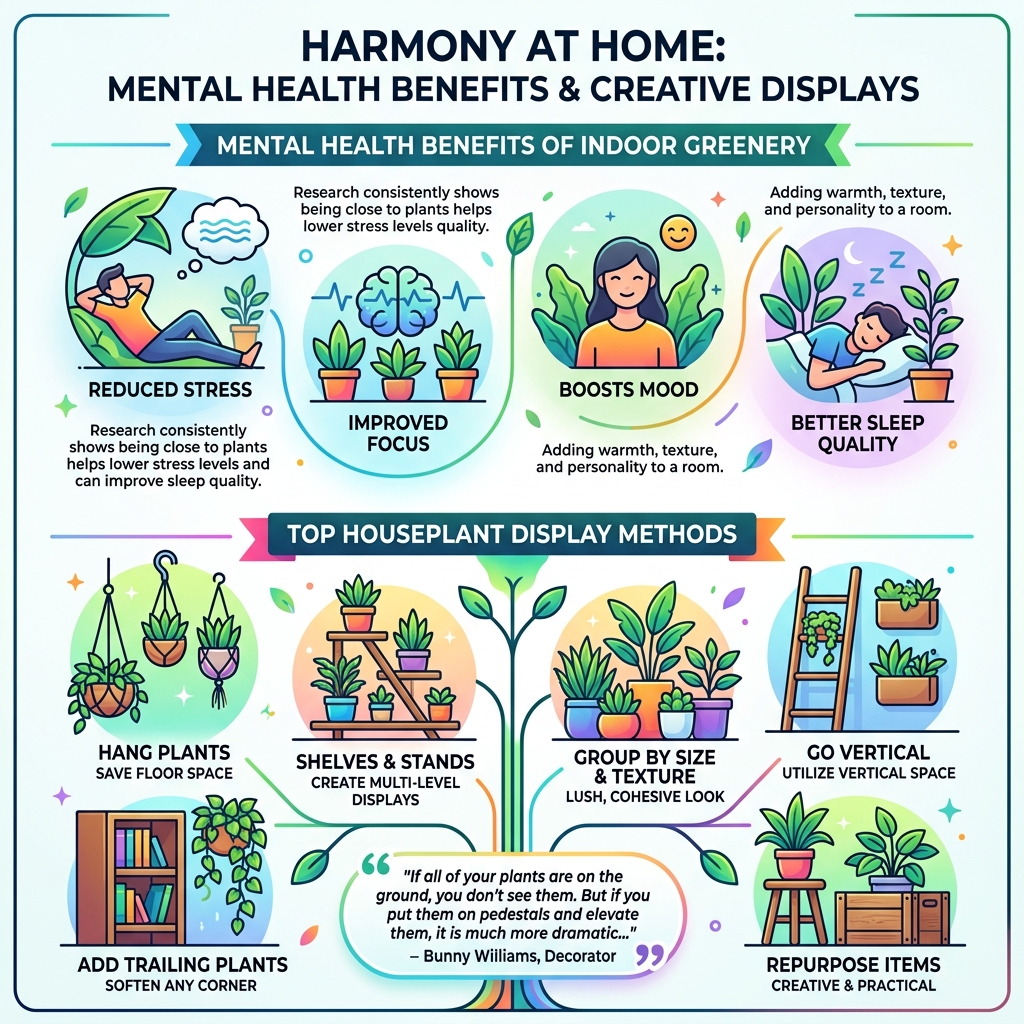
- Hang plants from ceilings, windows, or clothing racks to save floor space
- Use shelves and stands to create multi-level displays with visual depth
- Group plants by size and texture for a lush, cohesive look
- Add trailing plants like pothos or spider plants to soften any corner
- Go vertical with ladder shelves, wall pockets, or pegboard systems
- Repurpose everyday items — stools, crates, and baskets all make great plant displays
Whether you have one plant or one hundred, how you display them makes all the difference.
There’s a reason so many people are filling their homes with greenery. Research consistently shows that being close to plants helps lower stress levels and can even improve sleep quality. And beyond the well-being benefits, a thoughtfully arranged plant display can completely change the feel of a room — adding warmth, texture, and personality that no piece of furniture quite matches.
As iconic decorator Bunny Williams put it: “You don’t want everything low. If all of your plants are on the ground, you don’t see them. But if you put them on pedestals and elevate them, it is much more dramatic, and it makes the room so much more interesting.”
The good news? You don’t need a big budget or a huge space. From a 272-square-foot NYC studio to a sprawling living room, the right display strategy works anywhere.
This guide covers the most creative, practical, and affordable ways to display your houseplants — no matter your space, style, or skill level.
Maximizing Vertical Space with Houseplant Display Ideas
When we run out of floor space, we look up! Utilizing vertical space is one of the smartest houseplant display ideas for anyone living in a compact home. By moving your greenery to the walls and ceiling, you create a “living wallpaper” effect that draws the eye upward, making your ceilings feel higher and your rooms more expansive.
One of our favorite high-impact projects is the full-scale plant wall. You can create a 6’ by 6’ vertical garden for around $300 by using retail garment racks attached to the wall with sturdy brackets. When you add climbing plants and self-watering wall pockets, you transform a plain wall into a lush, oxygen-rich masterpiece. If a full wall feels intimidating, ladder shelves are a fantastic alternative. They offer multiple tiers for different plant sizes without requiring you to drill a dozen holes.
For those of us dealing with tight quarters, check out these Small Space Plant Styling Ideas to see how even the narrowest nook can become a green sanctuary. From wall-mounted felt pockets to simple ceiling hooks, the goal is to keep the floor clear while surrounding ourselves with nature.

Small Space Houseplant Display Ideas for Renters
We know the struggle of wanting a jungle but needing to keep your security deposit. Renters have to be clever with houseplant display ideas that don’t involve permanent changes. One “genius” hack we’ve seen involves using a standard IKEA clothes rack. Instead of coats, hang an array of macrame planters at different heights. This creates a portable “green screen” that can even act as a room divider in a studio apartment.
Tension rods are another secret weapon. You can install a heavy-duty tension rod across a window frame to hang several lightweight plants like air plants or small succulents. Over-the-door organizers aren’t just for shoes anymore; the clear pockets are perfect for small potted herbs or cuttings. And never underestimate the power of high-quality adhesive Command hooks for lightweight trailing vines like heartleaf philodendron.
Using Macrame and Hanging Planters
There is something timelessly bohemian about macrame, but it’s also incredibly functional. Hanging planters allow trailing vines—like Pothos, Spider plants, or String of Pearls—to cascade naturally, adding soft, organic lines to our rigid indoor architecture.
If you want to try something more industrial-chic, consider using a copper pipe mounted to the wall or ceiling. It provides a sleek bar from which you can hang multiple plants using “S” hooks. We also love the idea of repurposing window valances as narrow shelves. By placing small pots along the top of a window frame, you capture the best light while creating a beautiful “fringe” of foliage around your view.
Room-by-Room Styling for a Tranquil Oasis
Every room in our home has a different “vibe” and different environmental conditions. To create a truly cohesive look, we need to tailor our houseplant display ideas to the specific function of each space. In the living room, for example, we often want a “focal point”—one large, stunning specimen that anchors the decor. A tall Fiddle Leaf Fig or a massive Monstera Deliciosa in a beautiful wicker basket can serve as a living sculpture.
When we think about Styling Houseplants in the Living Room, we focus on scale and proportion. If you have a large sofa, you need a large plant to balance it. Small succulents might get “lost” on a big coffee table, but they look perfect when grouped in odd numbers (the rule of three!) on a side table or mantel.
Creating a Bathroom Jungle
The bathroom is often the most overlooked room for plants, yet it’s the one where many tropical species thrive the best. Because of the high humidity from showers, moisture-loving plants like Ferns, Orchids, and Calathea feel right at home.
If you have a walk-in shower with a ledge or a window, you can create a literal “showering in the rainforest” experience. For bathrooms with frosted windows, you can hang plants directly in front of the glass. The frosting provides the perfect bright, indirect light that tropical plants crave without scorching their leaves. We also suggest removing the plastic stakes from store-bought Orchids; letting the flower stems cascade naturally over the side of a shelf looks much more elegant and “wild.”
Functional Greenery in the Kitchen and Bedroom
In the kitchen, we like our plants to work for us. A windowsill herb garden is the ultimate combination of beauty and function. Imagine plucking fresh basil or mint right while you cook! If you’re short on counter space, hanging bars (like those used for pots and pans) are perfect for small hanging planters.
For the bedroom, the focus should be on serenity and air quality. Snake plants and Peace Lilies are our top picks here. Snake plants are unique because they release oxygen at night, which can help us breathe easier while we sleep. Placing a few of these in sleek, modern pots on your nightstand or in a corner can create a peaceful “Cocoon” effect. For more inspiration on where to put your leafy friends, explore these Indoor Plant Display Ideas.
Creative and Affordable DIY Solutions
You don’t need to spend a fortune at high-end boutiques to have a stylish home. Some of the best houseplant display ideas come from repurposing things we already have. We’ve seen incredible displays made from:
- Thrift Store Finds: Old wooden ladders make perfect multi-level plant stands.
- Painted Stools: A simple wooden stool from a yard sale, painted in a bold color, becomes a chic pedestal.
- Wooden Crates: Stacked crates create a rustic, modular shelving unit for a “plant corner.”
- Kitchen Items: Vintage tea tins, spice jars, and even colanders (great for drainage!) make unique planters.
- Cinder Blocks: For an industrial look, stack cinder blocks with wooden boards to create sturdy, affordable shelving.
Unique and Quirky Houseplant Display Ideas
If you want your plant collection to be a conversation starter, it’s time to get a little quirky. Test tube propagation stations are a huge trend right now. By mounting a row of glass test tubes to a wooden block on your wall, you can watch the roots grow on your cuttings—it’s like living science art!
For a touch of whimsy, we’ve seen people use vintage toy trucks as succulent planters or hollow out old hardcover books to hold air plants. One of the most dramatic “statement” pieces is a plant chandelier. You can take an old wrought-iron light fixture, remove the bulbs, and replace them with small trailing plants. Another favorite is using “bust” planters—figurative pots shaped like heads—where the plant acts as the “leafy hair.”
Building a Cohesive Aesthetic
To keep your home from looking like an accidental greenhouse (unless that’s the goal!), we recommend building a cohesive aesthetic. This involves choosing a color palette for your pots. For a minimalist look, stick to all white or terra cotta. For a maximalist vibe, mix patterns and textures but perhaps keep the colors within a certain family, like “jewel tones.”
The Art of Indoor Plant Placement teaches us that grouping plants with contrasting textures—like a spiky Sansevieria next to a soft, ruffling Fern—creates visual interest. We also love the “repetition” technique. Lining up three identical plants in identical pots on a windowsill creates a rhythmic, orderly feel that is very pleasing to the eye.
Essential Tips for Maintaining Healthy Decorative Displays
A beautiful display is only as good as the health of the plants within it. When we group plants together, we aren’t just doing it for looks; we are creating a mini microclimate. As plants breathe (a process called transpiration), they release moisture into the air, raising the local humidity. This is a lifesaver for tropical plants during the dry winter months.
However, drainage is the number one challenge with decorative displays. Many “pretty” pots don’t have holes. We recommend adding a 10cm-deep layer of horticultural grit or pebbles to the bottom of the pot before adding soil to prevent the roots from sitting in water. Alternatively, keep your plant in its plastic nursery pot and simply set it inside the decorative one (this is called “cachepot” styling).
| Plant Type | Light Requirement | Best Display Location |
|---|---|---|
| Succulents | Bright, Direct | Windowsills, Sunny Desks |
| Ferns | Bright, Indirect | Bathrooms, North-facing Windows |
| Snake Plant | Low to Bright | Bedrooms, Dark Corners |
| Pothos | Low to Bright | High Shelves, Hanging Baskets |
| Orchids | Intermediate | Filtered Light, Hallways |
If you have a dark corner that is just screaming for a plant, don’t give up! You can use grow light bulbs in your existing lamps or hide LED strips under your shelves. This allows you to place plants almost anywhere. For more detailed advice, check out these Indoor Plant Placement Tips.
Grouping Plants for Better Health
Grouping plants isn’t just about aesthetics; it’s a strategic move for easier maintenance. When your plants are clustered on a tiered stand or a dedicated shelf, it’s much easier to monitor them for pests or thirst. You can water them all at once, and the shared humidity keeps them lush.
We also suggest “seasonal rotation.” Just like you change your wardrobe, you might need to move your plants. A plant that loves a south-facing window in the winter might get scorched there in the summer. Keeping your plants on movable stands or lightweight shelves makes this rotation a breeze.
Frequently Asked Questions about Houseplant Displays
How do I display plants in a room with very little natural light?
We recommend focusing on “low-light legends” like Snake Plants, ZZ Plants, or Pothos. However, even these need some light. The best trick is to use grow lights. You can find stylish LED grow lights that look like normal desk lamps. Another trick is to use mirrors to reflect what little light you have into the darker corners of the room.
What are the best low-maintenance plants for decorative shelves?
If you want the “look” without the work, go for succulents or the ZZ plant. They have thick, waxy leaves that store water, meaning they can handle a bit of neglect. Trailing “Silver Satin” Scindapsus is also very forgiving and looks stunning draped over the edge of a high bookshelf.
How can I safely hang heavy plants from the ceiling?
Safety first! Always use a stud finder to locate a ceiling joist before screwing in a hook. If you can’t find a joist, you must use a toggle bolt or a heavy-duty drywall anchor. Always check the weight rating on your hooks and your macrame hangers—remember that a freshly watered plant is much heavier than a dry one!
Conclusion
At Futuro Ciencia, we believe that every home has the potential to become a tranquil oasis. By experimenting with these houseplant display ideas, you aren’t just decorating a room; you’re inviting life, color, and serenity into your daily routine. Whether you’re building a massive plant wall or just finding the perfect pedestal for a single, beloved cactus, the effort is always worth it.
Maintaining these displays doesn’t have to be a guessing game. We provide personalized indoor plant care schedules and guides to ensure your greenery stays as vibrant as the day you brought it home. Ready to breathe new life into your space? Transform your home today and let us help you grow your own indoor sanctuary.
