
What Is a Big Chinese Money Plant (and How Large Can It Actually Get)?
A big Chinese money plant — the beloved Pilea peperomioides — can grow over 60 cm (24 inches) tall when given the right care. Here’s a quick snapshot of what to expect:
- Typical size: 8-12 inches (20-30 cm) tall and wide
- Maximum size: Over 24 inches (60 cm) tall at full maturity
- Growth speed: Can double in size in a single year with ideal light conditions
- Time to full size: Several years of consistent care
- Key factors: Light, watering routine, pot size, and soil quality
The Chinese Money Plant goes by many names — pancake plant, UFO plant, coin plant, friendship plant. All of them nod to its most striking feature: nearly perfectly round, coin-shaped leaves on long, slender stems.
It originates from the Yunnan Province in Southern China, nestled at the foot of the Himalayas. In the wild, it grows as ground cover on damp, rocky mountain slopes. That humble origin is actually good news for busy plant owners — this is a plant built to handle less-than-perfect conditions.
It belongs to the Urticaceae family (the nettle family) and is completely non-toxic to pets and children — a big plus for households.
What makes it so popular right now? Three things: its quirky good looks, its forgiving nature, and the fact that it practically grows new baby plants on its own to share with friends.
The Secrets to a Big Chinese Money Plant: Light and Water
If we want to transform our living rooms into lush, green sanctuaries, we have to start with the two pillars of plant health: light and water. For a big Chinese money plant, these aren’t just survival needs; they are the fuel for that impressive 24-inch vertical growth.
In our experience at Futuro Ciencia, most growth stunting happens because the plant is “surviving” rather than “thriving.” To get those dinner-plate-sized leaves and a sturdy central trunk, we need to mimic the bright, clear air of the Yunnan mountains.
Maximizing Growth with Proper Rotation
One of the most common sights in indoor gardening is a Pilea leaning desperately toward the window like it’s trying to make a break for it. This is called phototropism. While it’s charming to see your plant “reaching” for the sun, it leads to a lopsided, weak-stemmed specimen that will eventually collapse under its own weight.
To achieve a big Chinese money plant with a thick, straight trunk, rotation is non-negotiable. We recommend a 90-degree turn every single week. A good trick is to rotate the pot every time you water. This ensures that every leaf gets its fair share of indoor-plant-light-requirements, leading to a balanced, dome-like shape that can support a taller height.
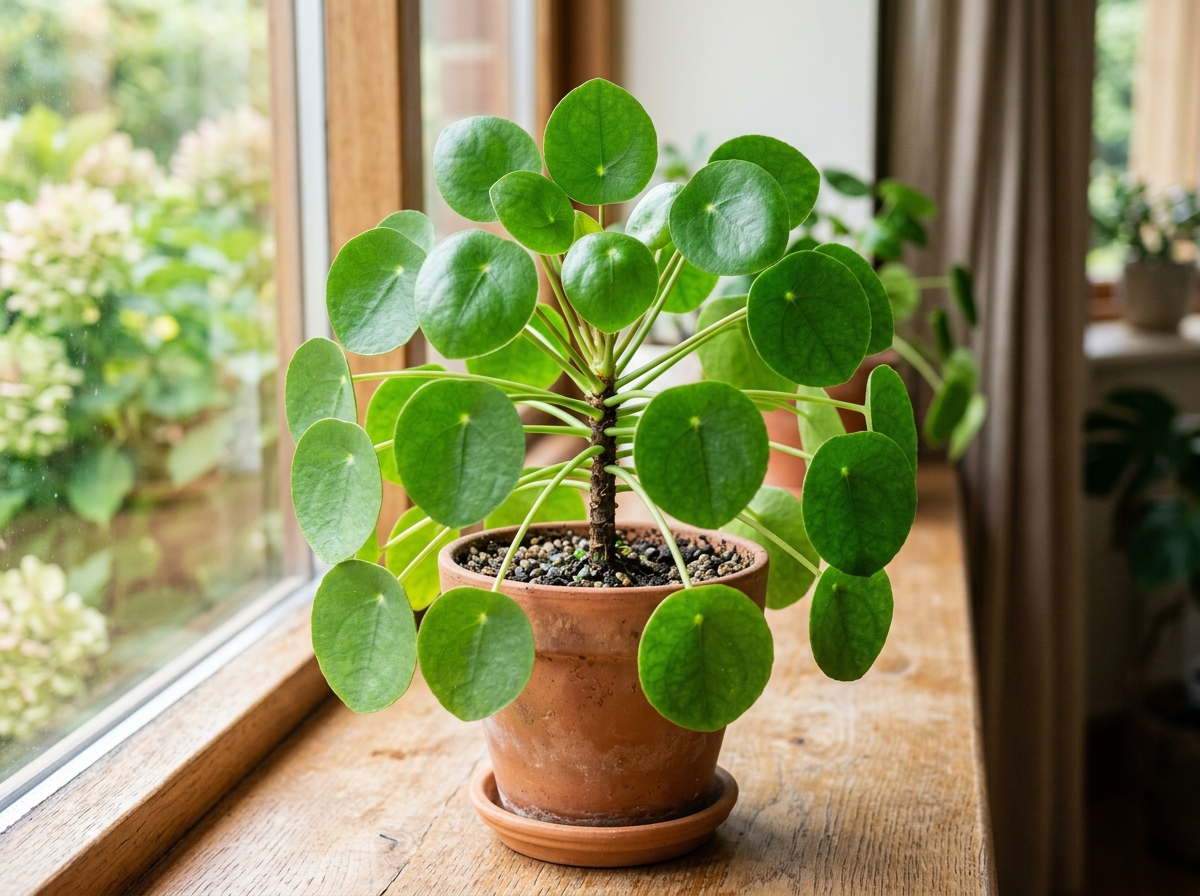
The ideal light for a Pilea is “bright, indirect light.” But what does that actually mean in a home? We suggest placing your plant about 3 to 6 feet away from a south-facing window. If you are in the northern hemisphere, this spot provides consistent, powerful light without the harsh direct rays that can scorch those beautiful round leaves. If you only have north-facing windows, you might find your Pilea grows more slowly and develops smaller leaves. In that case, move it as close to the glass as possible without it touching the cold pane.
Watering Techniques for a Big Chinese Money Plant
Watering is where most Pilea parents get nervous. Should you keep it wet? Should it be bone dry? The secret to a big Chinese money plant is consistency. These plants are somewhat succulent-like; they store moisture in their thick leaves and stems.
We follow a simple “finger test” before we even think about grabbing the watering can. Stick your finger about two inches into the soil. If it feels dry and no soil clings to your skin, it’s time. You can also water your pilea based on its visual cues — the leaves will begin to droop slightly when they are thirsty. This is the plant’s way of saying, “Hey, a little help here?”
However, there is a fine line between a thirsty plant and a drowning one. Overwatering is the fastest way to trigger recognizing-and-remending-root-rot-in-indoor-plants. When the roots sit in stagnant water, they stop absorbing oxygen, turn mushy, and the plant will eventually die.
To prevent this, we always use a terracotta pot. Terracotta is porous, meaning it allows the soil to “breathe” and helps excess moisture evaporate through the sides of the pot. It’s like a built-in safety net for those of us who might be a little too generous with the watering can. Always ensure your pot has a drainage hole, and never let the plant sit in a saucer full of water for more than an hour. Following a proper watering-schedule-for-indoor-plants is the backbone of long-term success.
Potting and Soil for Maximum Stature
If you want your Pilea to reach its record-breaking 24-inch height, you can’t just use any old dirt from the backyard. The root system of a big Chinese money plant needs a specific environment: rich in nutrients but incredibly well-draining.
The best-soil-for-indoor-plants for a Pilea is a high-quality, peat-based or coco-coir-based potting mix amended with plenty of perlite. We generally use a ratio of 2 parts potting soil to 1 part perlite. This creates air pockets in the soil, allowing the roots to expand quickly without being compressed. Pileas prefer a slightly acidic to neutral pH, ideally between 6.0 and 7.0.
The Importance of Repotting
You might have heard that Pileas like to be root-bound. While they are resilient and can tolerate a tight pot, they won’t grow “big” if their roots have nowhere to go. To encourage a larger size, we recommend learning how-to-repot-indoor-plants and performing the task every spring or early summer.
When you notice roots peeking out of the drainage holes, it’s time for an upgrade. Move up only one pot size at a time (about 2 inches wider in diameter). Using a pot that is too large can lead to soil staying wet for too long, which we already know is a recipe for disaster. Always use a pot with a drainage hole. To further boost drainage, we like to place about an inch of small stones at the very bottom of the pot before adding the soil.
| Feature | Terracotta Pots | Plastic/Glazed Pots |
|---|---|---|
| Breathability | High (porous walls) | Low (traps moisture) |
| Weight | Heavy (sturdy for tall plants) | Light (can tip over) |
| Watering Frequency | More frequent | Less frequent |
| Risk of Root Rot | Low | Moderate to High |
| Growth Support | Excellent for oxygenating roots | Good for moisture-loving plants |
Fertilizing Your Big Chinese Money Plant
Think of fertilizer as a multivitamin for your plant. During the active growing season (spring through late summer), your Pilea is working hard to produce new leaves and offshoots. It needs a steady supply of nitrogen, phosphorus, and potassium.
We recommend a balanced, liquid fertilizer. Many growers swear by a standard 10-10-10 formula diluted to half strength. However, if you want to go the premium route, Liquid Gold Leaf is a fantastic option that provides professional-grade nutrients.
A good fertilizing-houseplants-naturally routine involves feeding your plant every 2-4 weeks during the summer. When winter hits and growth slows down, stop fertilizing entirely. Forcing a dormant plant to grow with heavy nutrients can lead to weak, “leggy” growth that ruins the aesthetic of a big Chinese money plant.
Advanced Care: Staking, Pruning, and Propagation
Once your Pilea reaches about 10-12 inches, you’ll notice something interesting: the bottom leaves may start to fall off naturally, leaving a bare “trunk.” This is perfectly normal! As the plant matures, it focuses its energy on the top canopy. However, a 24-inch Pilea can become top-heavy.
To Stake or Not to Stake?
To keep your big Chinese money plant growing vertically, you might need to provide some support. A simple bamboo stake or a slender moss pole can work wonders. Use soft plant ties to gently secure the main stem to the stake. This prevents the “trailing” look and encourages the plant to put its energy into height.
Pruning and Maintaining the Mother Plant
Pruning isn’t just about making the plant look pretty; it’s about health. We use pruning-tips-for-indoor-plants to remove any yellowing or damaged leaves at the base. This improves air circulation and prevents pests from hiding in decaying foliage.
If you want a “bushy” look rather than a tall “tree” look, you can leave the “pups” (the baby plants) in the pot with the mother. They will fill out the base of the plant, hiding the bare stem. However, if you want the mother plant to reach maximum height, we suggest removing the pups so she doesn’t have to share her nutrients.
Propagation: The “Pass-It-Along” Legacy
The Pilea is famous for being the “Friendship Plant” because it produces so many offshoots. It is truly one of the most easy-to-grow-indoor-plants when it comes to propagation.
When the pups are about 3 inches tall, they are ready to leave the nest. We use a sterilized X-Acto knife to cut the pup away from the main root system, ensuring we get a bit of the connecting root (the rhizome) with it. You can then place the pup in a small jar of water. Within a few weeks, you’ll see white roots forming. Once the roots are an inch long, pot them in a small container with a well-draining mix, and you’ve officially started a new generation!
Troubleshooting Common Growth Stunting Issues
Even with the best intentions, things can go wrong. If your big Chinese money plant has stopped growing or looks “sad,” it’s usually trying to tell you something.
Why Are the Leaves Turning Yellow?
This is the most common question we receive. If the bottom-most leaves are turning yellow and falling off one by one, don’t panic! This is natural aging. However, if the yellowing is widespread, you might be dealing with a watering issue.
Check out our guides on why-are-my-indoor-plant-leaves-turning-yellow and how-to-fix-yellow-leaves-on-houseplants. Usually, yellow leaves combined with mushy stems mean overwatering. If the leaves are yellow and the soil is bone dry, it’s likely underwatering.
Leggy Stems and Small Leaves
If your Pilea looks “stretched out” with huge gaps between the leaves, it is “leggy.” This is a clear sign of low light. The plant is physically stretching to find a light source. To fix this, move it closer to a window or supplement with a LED grow light for 8-14 hours a day.
White Spots on the Leaves
Have you noticed tiny white dots on the underside of your Pilea’s leaves? Many new plant parents mistake these for pests like mealybugs. In reality, these are usually mineral deposits. Pilea leaves have pores that “sweat” out excess minerals from tap water. If you see them, try switching to filtered water or rainwater. It’s purely an aesthetic issue and won’t hurt the plant.
Drooping and Curling
When when-indoor-plant-leaves-droop-causes-and-solutions become a concern, look at your environment. Curling leaves can sometimes be a sign of heat stress or very low humidity. While Pileas are fine with average home humidity, they don’t like being blasted by a heater or an AC vent. Keep them in a stable temperature range above 50°F (10°C).
Frequently Asked Questions about Pilea Size
How long does it take to reach maximum size?
Pilea growth is surprisingly fast! In ideal conditions, a small 2-inch starter plant can reach a foot tall in just a year or two. To reach the “giant” status of 24 inches, it typically takes 3 to 5 years of consistent care. Because they are such easy-indoor-plants-for-beginners, reaching these milestones is a very rewarding journey.
Is the Chinese Money Plant safe for pets?
Yes! One of the reasons we love the Pilea at Futuro Ciencia is that it is non-toxic to cats, dogs, and humans. It’s one of the best hardy-indoor-plants-for-busy-people who also happen to have curious furry friends. You can let it grow big and tall without worrying about safety.
Can I grow a large Pilea outdoors?
You can, but only if you live in a very mild climate (USDA zones 9-11). They cannot handle frost. If you live in a cooler area, you can move your Pilea to a shaded patio during the summer. They actually love the fresh air and extra light, which can trigger a massive growth spurt. Just make sure to bring them back inside before the temperature drops below 50 degrees Fahrenheit. Even as indoor-plants-that-survive-neglect, they have their limits when it comes to the cold!
Conclusion
Growing a big Chinese money plant is more than just a hobby; it’s a way to bring a piece of the ancient Yunnan mountains into your home. By mastering the balance of bright indirect light, consistent watering, and the right soil, you can transform a tiny “pup” into a 24-inch architectural masterpiece.
At Futuro Ciencia, we believe that every home deserves to be a tranquil oasis. These plants don’t just brighten our rooms; they purify our air and provide a sense of calm in a busy world. Whether you are staking your plant for height or sharing its “babies” with your neighbors, the journey of growing a Pilea is one of constant reward.
Ready to take your indoor garden to the next level? Check out More info about indoor plant care for more schedules and tips to keep your green friends thriving. Happy growing!
