
The Easiest Plant You’ll Ever Own: Snake Plant Care Instructions at a Glance
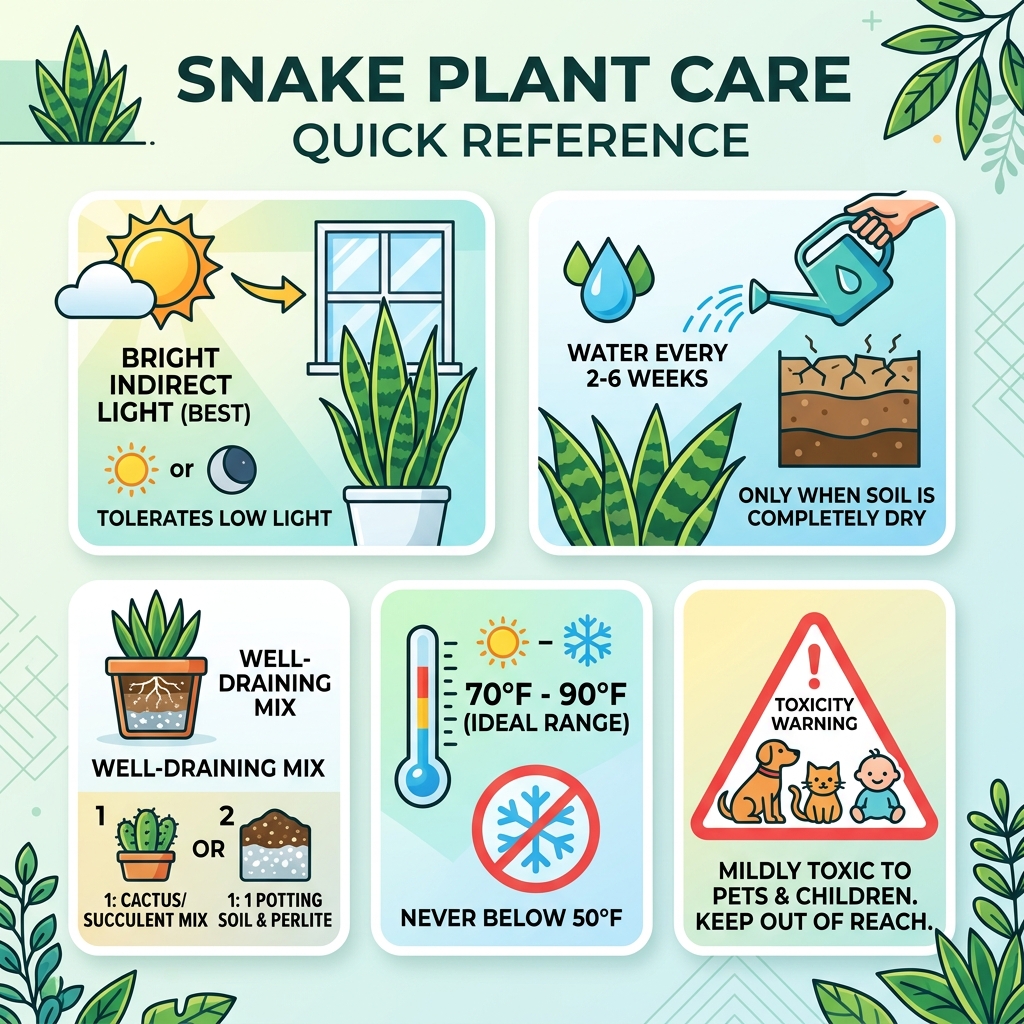
Snake plant care instructions are simpler than you might think — here’s what your plant needs to thrive:
- Light: Bright indirect light is best; tolerates low light
- Water: Every 2–6 weeks, only when the top 2 inches of soil are completely dry
- Soil: Well-draining cactus or succulent mix (or a 1:1 blend with regular potting soil)
- Temperature: 70°F–90°F; never below 50°F
- Fertilizer: Half-strength balanced fertilizer (10-10-10) once in spring and once in summer
- Repotting: Every 3–5 years, or when roots push out of the drainage holes
- Toxicity: Mildly toxic to pets and children — keep out of reach
If you’ve ever watched a houseplant slowly decline despite your best efforts, you’re not alone. Busy schedules make it hard to stay on top of watering routines, light requirements, and everything else plants seem to demand.
That’s exactly why the snake plant (Dracaena trifasciata, also called mother-in-law’s tongue) has become one of the most popular houseplants in the world. It is, as many plant lovers put it, almost unkillable.
It stores water in its thick leaves like a succulent. It tolerates low light. It actually does better when you forget about it for a few weeks. In fact, the most common way people accidentally kill a snake plant is by caring too much — specifically, by overwatering it.
Whether you’re a first-time plant parent or just someone with a packed calendar, this guide will walk you through everything you need to keep your snake plant healthy and happy.
Understanding the Resilient Snake Plant
Before we dive into the nitty-gritty of snake plant care instructions, let’s get to know this architectural marvel. Known scientifically as Dracaena trifasciata (and formerly as Sansevieria trifasciata), this plant is a member of the Asparagaceae family—making it a distant cousin to garden asparagus and agaves.
Originally hailing from the tropical regions of West Africa, snake plants have adapted to survive in harsh, dry environments. This heritage is exactly why they are easy indoor plants for beginners and top the list of indoor plants that survive neglect.
Growth and Longevity
In their natural habitat, they are hardy in USDA Zones 9–11. Indoors, they are exceptionally long-lived. On average, a snake plant lives between 5 to 10 years, but with proper care, many reach the 25-year mark or beyond. They are slow growers, typically adding only a few inches of height per year. Depending on the variety, a mature indoor snake plant can stand anywhere from 6 inches (like the ‘Hahnii’) to 5 feet tall (like the ‘Laurentii’).
Varieties to Look For
You might see several “personalities” at the garden center:
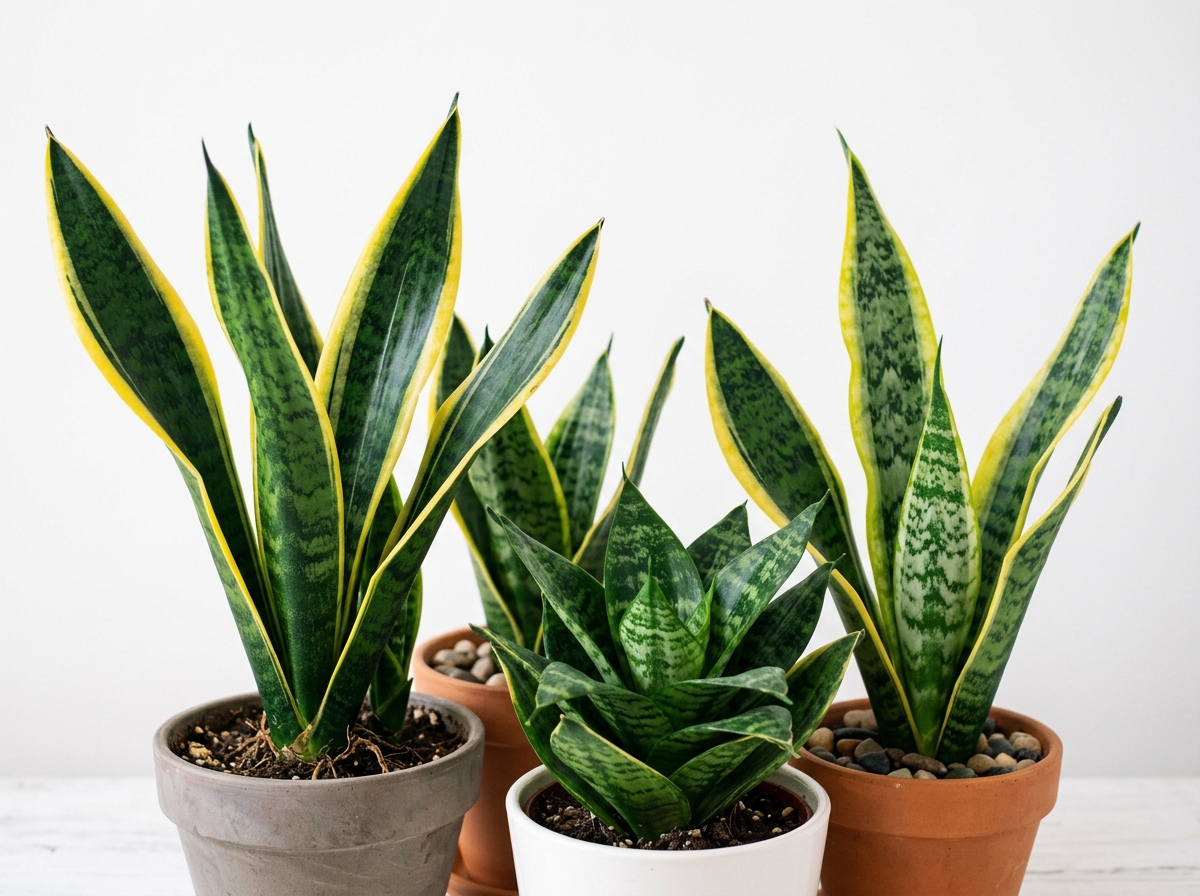
- Laurentii: The classic tall variety with yellow margins.
- Zeylanica: Similar to Laurentii but without the yellow edges; features dark green “tiger stripes.”
- Hahnii (Bird’s Nest): A compact variety that grows in a rosette shape, perfect for desks.
- Bantel’s Sensation: A rarer find with thin, white-striped leaves.
Essential Snake Plant Care Instructions
The secret to success with these plants is often doing less, not more. We like to think of them as the “introverts” of the plant world—they appreciate their space and don’t want to be fussed over every day.
To keep your plant looking its best, we recommend a few simple maintenance steps. First, because the leaves are wide and upright, they tend to collect dust. Every few weeks, take a damp microfiber cloth and gently wipe down each leaf. This isn’t just for aesthetics; removing dust helps the plant breathe and absorb light more efficiently.
When it comes to feeding, snake plants are light eaters. We suggest using a balanced 10-10-10 fertilizer diluted to half-strength. Apply this only during the growing season—once in the spring and once in mid-summer. Follow these indoor plant care tips for beginners and avoid fertilizing at all during the winter months when the plant is dormant.
If you notice a leaf that has become damaged or yellowed, don’t worry. You can follow our pruning tips for indoor plants by using a sharp, sterilized knife to cut the leaf off at the soil line.
Lighting and Temperature for Snake Plant Care Instructions
One of the biggest myths is that snake plants prefer dark corners. While they are champions of low-light indoor plants for apartments, they actually perform best in 8 to 10 hours of bright, indirect sunlight.
- Bright Indirect Light: This is the “sweet spot.” Think of a spot near an east-facing window or a few feet back from a south-facing one.
- Low Light: They will survive in a hallway or office with minimal windows, but growth will be very slow, and variegated varieties may lose their vibrant colors and turn solid green.
- Direct Sun: Avoid harsh, direct afternoon sun, which can scorch the leaves and cause unsightly brown patches.
Temperature is equally important. These plants love the same temperatures we do—ideally between 70°F and 90°F. They are quite sensitive to the cold; never let the temperature drop below 50°F. Make sure to keep them away from drafty windows or air conditioning vents during the summer and winter months. For more details, check out our guide on indoor plant light requirements.
Watering and Soil for Snake Plant Care Instructions
If you want to “snake” your way to success, you must master the art of the dry-out. The number one killer of these plants is root rot caused by soggy soil.
The Golden Rule: Always check the soil before reaching for the watering can. Stick your finger into the soil; if the top 2 inches feel dry, it’s time to water. If you feel any moisture at all, wait another few days.
| Season | Watering Frequency | Soil Condition |
|---|---|---|
| Spring & Summer | Every 2–3 weeks | Dry top 2 inches |
| Fall | Every 3–4 weeks | Nearly completely dry |
| Winter | Every 6–8 weeks | Completely dry |
When you do water, do it deeply. Pour water until it runs out of the drainage holes at the bottom of the pot. After about 15 minutes, empty the saucer so the plant isn’t sitting in “wet feet.” This is a crucial part of a healthy watering schedule for indoor plants.
For the soil, skip the heavy, peat-based potting mixes. You need something that drains fast. We recommend a high-quality best soil for indoor plants, specifically a cactus and succulent mix. You can also make your own by mixing regular potting soil with perlite or coarse sand at a 1:1 ratio. During the colder months, remember to adjust your routine as per our indoor plant care during winter guidelines—watering should be significantly reduced.
Advanced Maintenance: Repotting and Propagation
One of the quirks of the snake plant is that it actually enjoys being “pot-bound.” Its roots (rhizomes) are incredibly strong and prefer a tight space. In some cases, a happy snake plant can grow roots so strong they actually crack a terracotta pot!
When and How to Repot
You generally only need to learn how to repot indoor plants for your snake plant every 3 to 5 years. Signs that it’s time include roots growing out of the drainage holes or the plant becoming so top-heavy that it tips over.
- Choose the Pot: Select a heavy pot (like terracotta) that is only 1–2 inches wider than the current one. Heavy pots prevent tall plants from toppling.
- Remove Gently: Turn the pot sideways and gently slide the plant out.
- Refresh Soil: Shake off old soil and place the plant in the new pot with fresh cactus mix.
- Wait to Water: Wait a few days before watering to allow any damaged roots to callous over.
Propagation: Making New Plants
Propagating a snake plant is a fun way to expand your collection or share with friends. There are three main ways to do it:
- Division: This is the easiest method. When repotting, you’ll see “pups” (baby plants) growing from the main rhizome. Use a clean knife to cut the pup away, ensuring it has some roots attached, and plant it in its own small pot.
- Leaf Cuttings (Soil): Cut a healthy leaf into 3-inch segments. Important: Remember which end was the “bottom” (the part closest to the soil). Let the segments dry for two days, then stick the bottom end into moist soil.
- Leaf Cuttings (Water): Place a whole leaf or a large segment in a jar with an inch of water. Change the water weekly. Once roots are an inch long, move it to soil. Note: Variegated plants (like Laurentii) often lose their yellow edges when propagated this way, reverting to solid green.
Troubleshooting Common Snake Plant Problems
Even the toughest plants have bad days. If your plant looks a little “off,” use this checklist to identify the culprit.
- Yellow, Mushy Leaves: This is a classic sign of overwatering and potential root rot. Stop watering immediately. If the base of the plant is soft, you may need to take healthy cuttings and start over. This is one of the most common indoor plant care mistakes.
- Wrinkled or Shriveled Leaves: Your plant is thirsty! While they are drought-tolerant, they do eventually need a deep soak.
- Drooping Leaves: This can be caused by a lack of light (the plant is “stretching” to find sun) or severe overwatering.
- Pests: While rare, you might encounter mealybugs or spider mites. You can spot mealybugs as white, cottony spots in the crevices of the leaves. Treat these by wiping the leaves with a cotton swab dipped in rubbing alcohol or using neem oil. Learn more in our guide on indoor plant pests and how to remove them.
Did you know? Under specific conditions—usually when the plant is slightly stressed and receiving plenty of light—it may produce a flower stalk. The flowers are greenish-white, resemble lilies, and have a very strong, sweet fragrance at night.
Safety, Air Purification, and Household Benefits
The snake plant isn’t just a pretty face; it’s a functional addition to your home. It is frequently cited in studies regarding air purification, such as the famous NASA Clean Air Study.
The “Nighttime” Oxygen Producer
Most plants take in CO2 and release oxygen during the day (photosynthesis). However, snake plants are among a select group that can perform Crassulacean Acid Metabolism (CAM). This means they absorb CO2 and release oxygen at night. This makes them the ultimate low-light indoor plants for apartments and perfect companions for bedrooms to help improve sleep quality. They are also known to filter out household toxins like formaldehyde, xylene, and toluene.
A Note on Safety
While they are fantastic indoor succulents that are easy to care for, they do come with a warning. Snake plants contain saponins, a natural chemical produced by the plant to protect itself from insects and fungi.
- Pets: If cats or dogs chew on the leaves, it can cause nausea, vomiting, and diarrhea.
- Children: Ingestion can cause similar upset and a numbing sensation in the mouth or throat.
- Skin: The sap can sometimes cause mild skin irritation.
We always recommend placing your snake plant on a high shelf or plant stand if you have curious furry friends or little ones running around.
Frequently Asked Questions about Snake Plant Care Instructions
How often should I water my snake plant?
You should water your snake plant every 2–6 weeks. The exact timing depends on the light and temperature in your home. In a bright, warm room, you might water every 2 weeks. In a dim, cool room, once a month is usually plenty. The most important part of snake plant care instructions is to ensure the top 2 inches of soil are bone-dry before adding more water.
Are snake plants toxic to cats and dogs?
Yes. As mentioned above, snake plants contain saponins. While usually not fatal, ingestion leads to gastrointestinal distress (vomiting/diarrhea) and drooling. If you suspect your pet has eaten a significant amount, contact your veterinarian.
Can snake plants live in windowless rooms?
While they are incredibly hardy, no plant can survive in total darkness indefinitely. In a windowless room (like a basement or an interior bathroom), the plant will eventually weaken and die unless you provide artificial “grow lights” or leave the overhead lights on for at least 8–10 hours a day.
Conclusion
At Futuro Ciencia, we believe that everyone deserves to live in a space that feels like a tranquil oasis. By following these snake plant care instructions, you can bring a touch of architectural elegance into your home without the stress of a demanding maintenance schedule.
Whether you’re looking to purify your air, brighten a dark corner, or simply enjoy the “unkillable” nature of this West African native, the snake plant is a perfect choice. Ready to take the next step in your green journey? Explore our indoor plant care routine to see how easily these plants fit into your life.
Start your plant care journey today and transform your space into a lush, healthy sanctuary!
