
The Easy-Care Indoor Plant You’ve Been Looking For
How to care for elephant bush succulent is simpler than you might think. Here’s a quick overview:
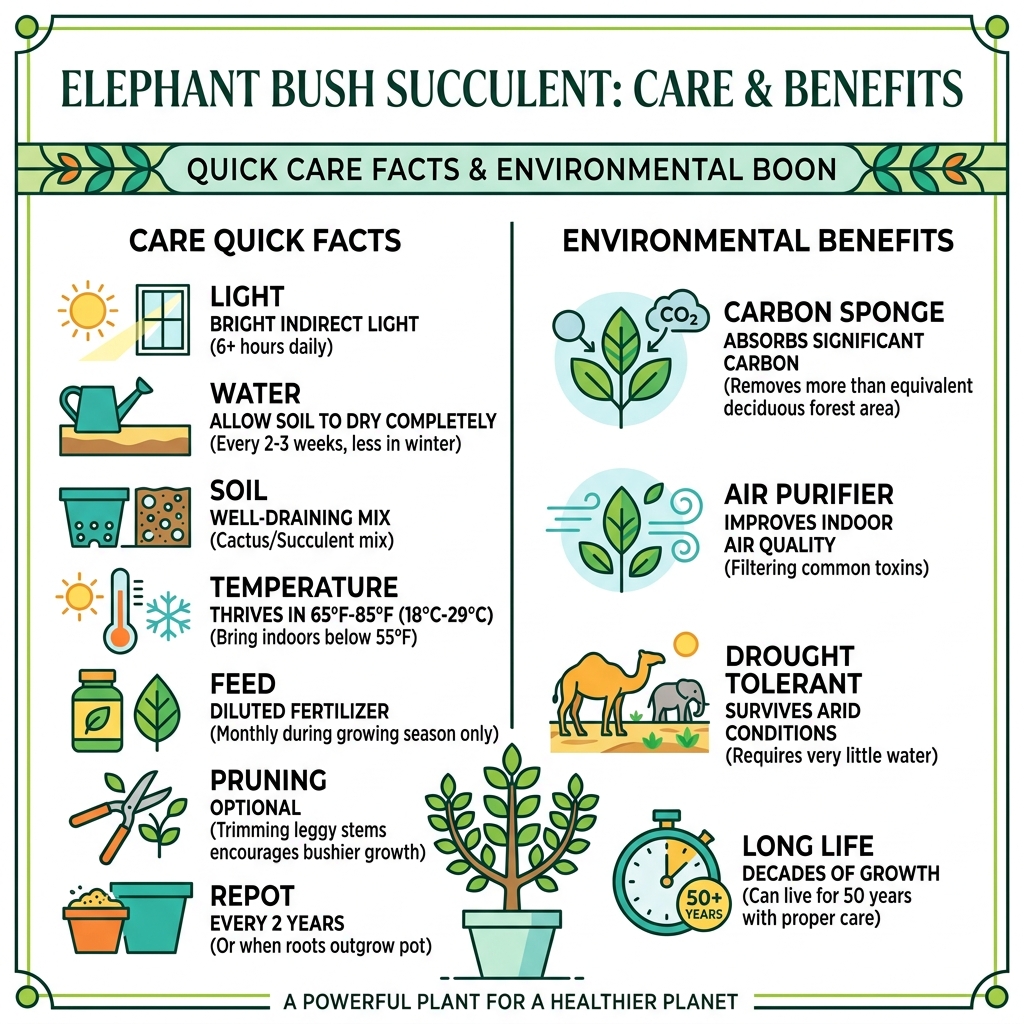
- Light: Bright indirect light, at least 6 hours daily near a south- or west-facing window
- Water: Only when the top inch of soil is completely dry — roughly every 2-3 weeks in spring/summer, monthly in fall/winter
- Soil: Well-draining cactus or succulent mix with perlite or coarse sand
- Temperature: Keep between 65°F-85°F (18°C-29°C); bring indoors if it drops below 55°F
- Fertilizer: Diluted balanced fertilizer once a month during the growing season only
- Pruning: Optional, but trimming leggy stems encourages bushier growth
- Repotting: Every 2 years, or when roots outgrow the pot
Meet Portulacaria afra — nicknamed Elephant Bush, Spekboom, or “bacon tree” in its native South Africa. Elephants, rhinos, and even tortoises browse its small, glossy leaves in the wild. And it turns out, this tough little plant is just as easygoing in your living room.
It grows slowly, forgives missed waterings, and thrives on a little benign neglect. For busy homeowners who want greenery without the stress, it’s hard to beat.
What makes it even more remarkable? Elephant Bush is a powerful carbon sponge — it absorbs more carbon from the air than an equivalent area of deciduous forest. Beautiful and good for the planet.
With the right setup, your plant can live for decades. Some reach 50 years old with proper care.
Understanding the Basics: How to Care for Elephant Bush Succulent
When we talk about how to care for elephant bush succulent, we are discussing a plant that is a true survivor. Native to the arid and semi-arid regions of South Africa, Portulacaria afra is a semi-evergreen succulent shrub that can reach heights of 20 feet in the wild. However, don’t let those giant proportions scare you! When grown as a houseplant or in a container, it typically stays a manageable 3 feet tall.
One of the most common points of confusion for new plant parents is the difference between the Elephant Bush and the Jade Plant (Crassula ovata). While they look remarkably similar with their fleshy green leaves and woody stems, they belong to entirely different families. The Elephant Bush is part of the Didiereaceae family.
| Feature | Elephant Bush (Portulacaria afra) | Jade Plant (Crassula ovata) |
|---|---|---|
| Stem Color | Distinct reddish-brown to purple | Typically brownish-grey |
| Leaf Size | Smaller, thinner, and more frequent | Larger, thicker, and oval |
| Growth Habit | Faster growing, more flexible/trailing | Slower growing, more rigid/upright |
| Edibility | Edible (sour, citrusy flavor) | Toxic to pets and humans |
We often recommend this plant as one of the indoor succulents that are easy to care for because of its extreme drought tolerance. In its native habitat, it acts as a keystone species, providing essential food for wildlife. Beyond its beauty, scientific research on carbon sequestration in Portulacaria afra highlights its incredible ability to pull CO2 from the atmosphere using both normal and CAM (Crassulacean Acid Metabolism) pathways, making it a literal breath of fresh air for your home.
Optimal Growing Conditions: Light, Soil, and Temperature
To truly master how to care for elephant bush succulent, we need to mimic its South African home. This means plenty of light, very little “wet feet,” and warm temperatures.
The most critical factor in your plant’s success is drainage. Because these plants store water in their leaves and stems, they are highly susceptible to rot if left in standing water. We always suggest using unglazed pottery, like terracotta, which allows moisture to evaporate through the walls of the pot. Choosing the best containers for indoor plants is the first step toward a healthy succulent.
Light Requirements for Elephant Bush Succulent
Light is the fuel that keeps your Elephant Bush vibrant. In the wild, they soak up intense, direct sun all day. Indoors, they need at least 6 hours of bright light daily. A south-facing window is usually the “gold-standard” spot.
However, be careful if you are moving a plant that has been in a dark corner directly into the summer sun. It can actually get a “sunburn,” where the leaves turn yellow or develop white, crispy patches. We recommend acclimating it gradually over a week or two. If you notice your plant looks “stretched out” (etiolated) with large gaps between the leaves, it’s a sign it needs more light. In such cases, supplementing with grow lights can help maintain its compact, bushy shape. You can learn more about specific indoor plant light requirements to ensure your succulent stays happy.
Temperature and Humidity for Elephant Bush Succulent
The Elephant Bush loves it warm. The ideal temperature range is between 65°F and 85°F. While it is quite hardy, it is not frost-tolerant. If you live in USDA zones 9-11, you can grow it outdoors year-round, but for the rest of us, it needs to come inside once nighttime temperatures dip toward 40°F-50°F.
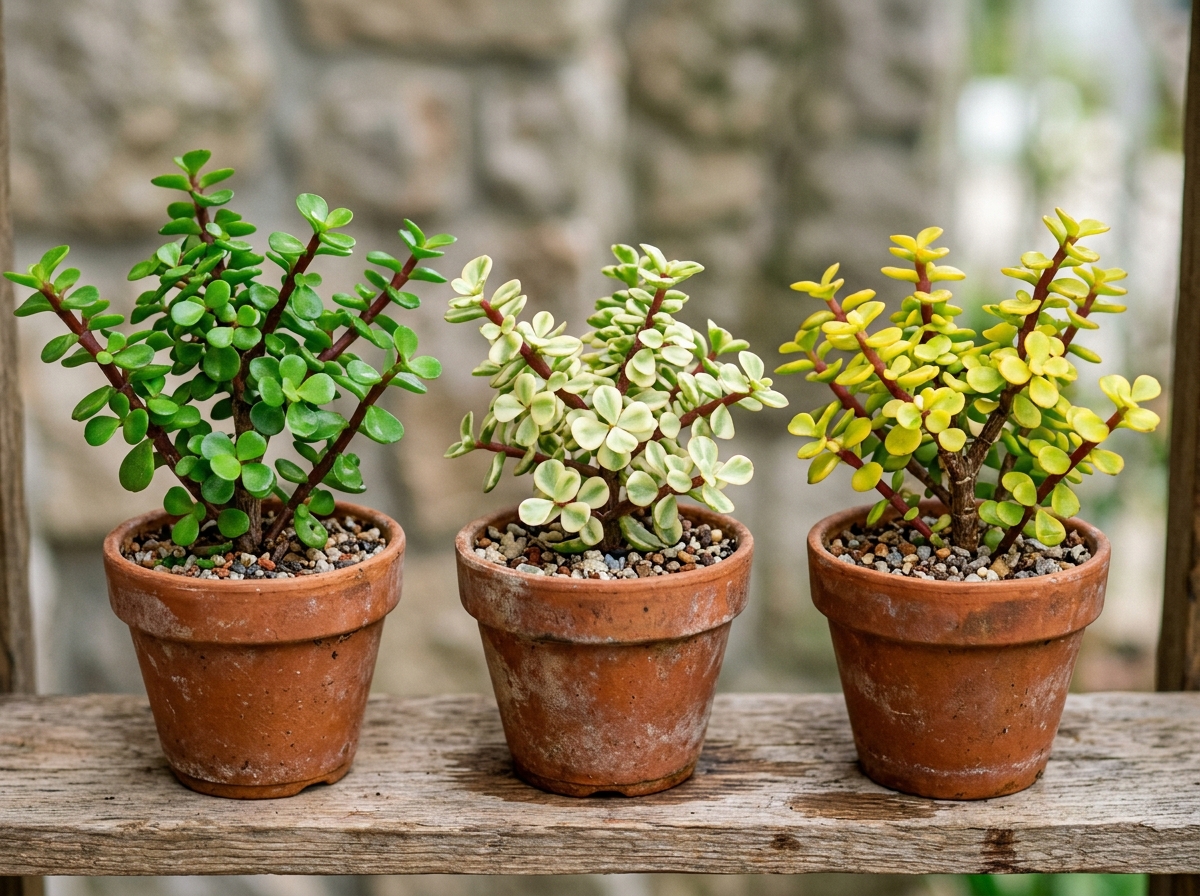
Regarding humidity, the standard green variety is perfectly happy with dry indoor air. Interestingly, the Rainbow Elephant Bush (Variegata) actually prefers slightly higher humidity and warmer temperatures (75°F+) compared to its green cousins. No matter the variety, always keep your plant away from cold drafts or direct blasts from heating vents, which can cause sudden leaf drop. For more tips on managing the colder months, check our guide on indoor plant care during winter.
Mastering the Watering and Feeding Schedule
Watering is where most people go wrong with succulents. When learning how to care for elephant bush succulent, we must adopt the “soak and dry” method. This means you water the plant thoroughly until water runs out of the drainage holes, and then you wait—sometimes for weeks—until the soil is completely dry before watering again.
Because Elephant Bush has slightly thinner leaves than some other succulents, it may need water slightly more frequently than a thick-leaved cactus, but it is still firmly in the low-water indoor plants category. During the winter dormancy period, you should significantly reduce watering. We often wait until the leaves just start to look slightly wrinkled or shriveled before giving it a drink in the winter.
Preventing Root Rot and Drainage Issues
Root rot is the number one killer of the Elephant Bush. If the roots sit in soggy soil, they will suffocate and decay. To prevent this, we recommend the “finger test”: stick your finger two inches into the soil. If you feel any moisture at all, don’t water!
Using the best soil for indoor plants, specifically a cactus or succulent mix, is vital. These mixes often contain perlite, pumice, or poultry grit to ensure the water moves through quickly. If you find your soil is staying wet for too long, you can find indoor plant root rot solutions and indoor plant root rot solutions-3/ on our site. It is much easier to save an underwatered Elephant Bush than an overwatered one!
Maintenance: Pruning, Repotting, and Propagation
One of the reasons we love the Elephant Bush is its versatility. It can be a trailing plant in a hanging basket, a tall privacy screen in a garden, or a beautiful, tiny bonsai.
Pruning: You don’t have to prune, but doing so keeps the plant from getting leggy. We like to pinch off the tips of the stems in late spring. This encourages the plant to branch out, creating a fuller, bushier look. Because it produces buds so readily, it is a favorite for beginner bonsai enthusiasts.
Repotting: You should look into how to repot indoor plants roughly every two years. If you see roots circling the bottom of the pot or poking out of the drainage holes, it’s time for a larger home. Use a pot that is only about 1-2 inches wider than the current one to avoid giving it too much soil, which can hold excess moisture. If you notice your plant’s growth has stalled, it might be dealing with solutions for overcrowded roots in indoor plants.
Propagation: This is the most rewarding part of how to care for elephant bush succulent. You can easily grow new plants from the cuttings you take during pruning!
- Cut a 3-4 inch healthy stem.
- Remove the bottom leaves.
- Let the cutting sit in a dry spot for a few days until the end “calluses” over.
- Stick the callused end into a fresh pot of succulent soil.
- Keep it in a warm, bright spot and water sparingly until roots form (usually 4-6 weeks).
Troubleshooting Common Elephant Bush Problems
Even with the best intentions, you might run into a few hiccups. Here is how to diagnose and fix them:
- Yellowing Leaves: This is often a sign of overwatering or a sudden change in light. Check the soil moisture first. If the soil is dry, the plant might just be adjusting to a new location.
- Leaf Drop: Sudden leaf drop is usually caused by a “shock” to the system—either a cold draft, moving the plant too quickly, or extreme overwatering. If the stems feel mushy, it’s likely indoor plant root rot solutions-2/.
- Wrinkly Foliage: This is the plant’s way of saying, “I’m thirsty!” If the leaves look puckered and thin, give it a good soak.
- Pests: Keep an eye out for mealybugs (they look like tiny bits of white cotton) and spider mites. You can treat these by wiping the leaves with a cotton swab dipped in rubbing alcohol or using a gentle neem oil spray. Be careful with petroleum-based pesticides, as succulents can be sensitive to them.
Frequently Asked Questions about Elephant Bush
Is Elephant Bush toxic to cats and dogs?
Good news for pet owners! Unlike the Jade plant, the Elephant Bush is non-toxic to cats, dogs, and humans. In fact, it is edible. In South Africa, the leaves are often used in salads, soups, and stews to add a sour, citrusy crunch. While we don’t necessarily suggest snacking on your houseplant, it’s a relief to know it’s safe for your furry friends.
Why are my Elephant Bush leaves wrinkling?
As mentioned earlier, wrinkling is almost always a sign of underwatering. The plant is using up its internal water reserves stored in the leaves. If you see this, check the soil. If it’s bone-dry, give it a thorough watering. If the soil is wet but the leaves are wrinkling, you may have a root problem that is preventing the plant from absorbing water.
How do I make my Elephant Bush grow faster?
If you want to speed up growth, ensure it gets plenty of bright light and consistent warmth. During the growing season (spring and summer), you can apply a nitrogen-rich fertilizer at half-strength once a month. In early summer, a fertilizer with a bit more phosphorus and potassium can also help strengthen the stems.
Conclusion
Mastering how to care for elephant bush succulent is a rewarding journey that brings a piece of the South African wilderness into your home. Whether you are attracted to its status as a “carbon sponge,” its edible leaves, or its incredible resilience, Portulacaria afra is a plant that gives back far more than it takes.
At Futuro Ciencia, we believe that everyone can transform their living space into a tranquil oasis. By following these simple steps for light, water, and soil, you’ll ensure your Elephant Bush thrives for decades to come, purifying your air and brightening your home. Start your journey to a greener home today!
