
The Cool Guide to Indoor Azalea Care
Why Most Indoor Azaleas Die (And How to Keep Yours Alive)
Azalea plant care indoors comes down to a few non-negotiable basics:
| Care Factor | What Your Azalea Needs |
|---|---|
| Light | Bright, indirect light near a window |
| Temperature | 60-65°F (15-18°C) during the day |
| Watering | Consistently moist soil, never waterlogged |
| Soil | Acidic mix, pH 4.5-6.0 |
| Humidity | Higher than average indoor air |
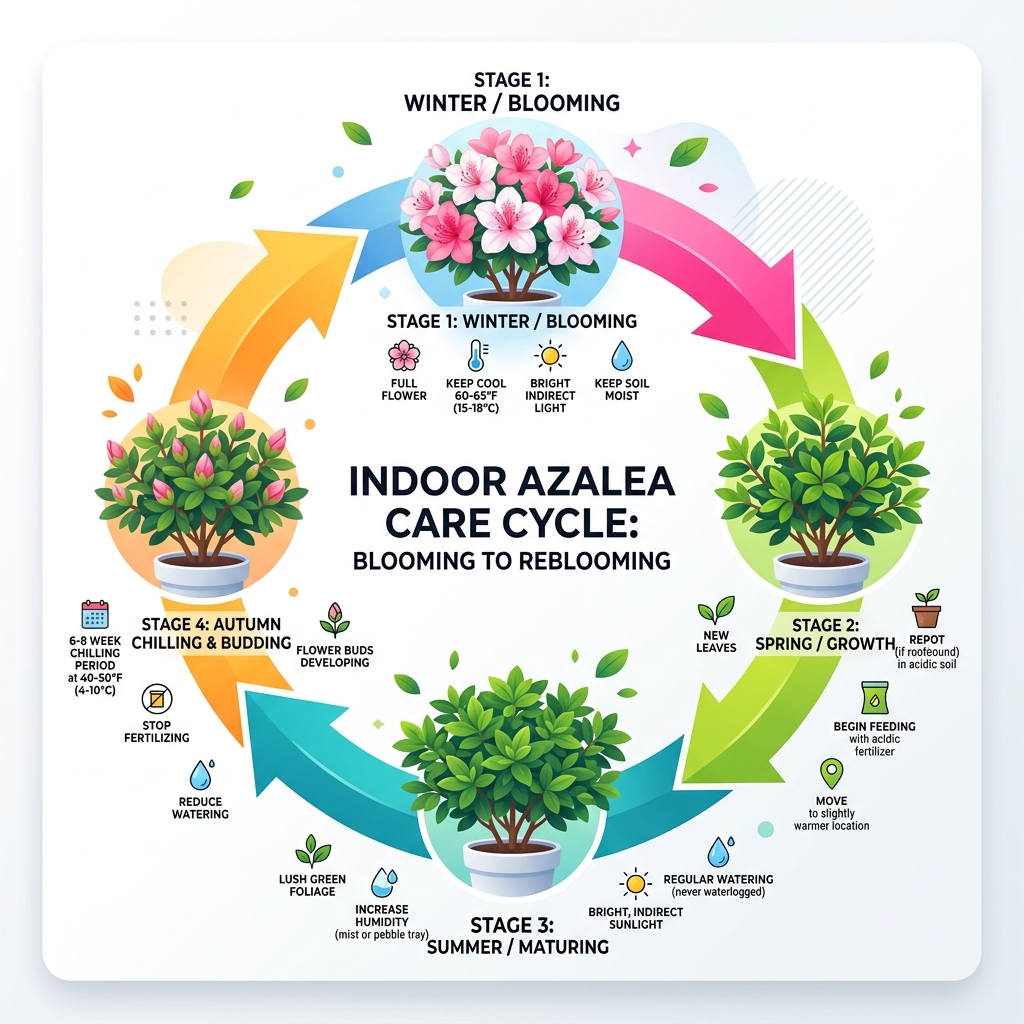
| Reblooming | 6-8 week chilling period at 40-50°F |
Get these right, and your azalea can live for decades and bloom every single year.
Here’s a frustrating truth: most indoor azaleas die within weeks of being brought home — not because they’re fragile, but because they’re often sold crammed into tiny pots that dry out almost instantly. One reader described buying three different azaleas over a few years and losing every single one within a month.
It’s a common story.
The good news? The plant isn’t the problem. With the right setup, a florist’s azalea (Rhododendron simsii) is a genuinely rewarding houseplant. Its initial bloom can last six weeks or more, and it can rebloom year after year with a little seasonal attention.
This guide covers everything you need — from picking the right variety to troubleshooting a wilting plant — so you can stop losing azaleas and start enjoying them.
Choosing the Best Varieties for Azalea Plant Care Indoors
When we talk about azalea plant care indoors, the first step is making sure you actually have an indoor variety. Many people mistakenly buy hardy garden azaleas and try to keep them in a heated living room, which usually leads to a very quick, very crispy demise.
For successful indoor growing, we look for “Greenhouse Azaleas” or “Florist Azaleas.” These are primarily derived from Rhododendron simsii. Unlike their rugged outdoor cousins, these beauties are bred for stunning, long-lasting floral displays and a more compact habit.
Here are the top contenders for your indoor oasis:
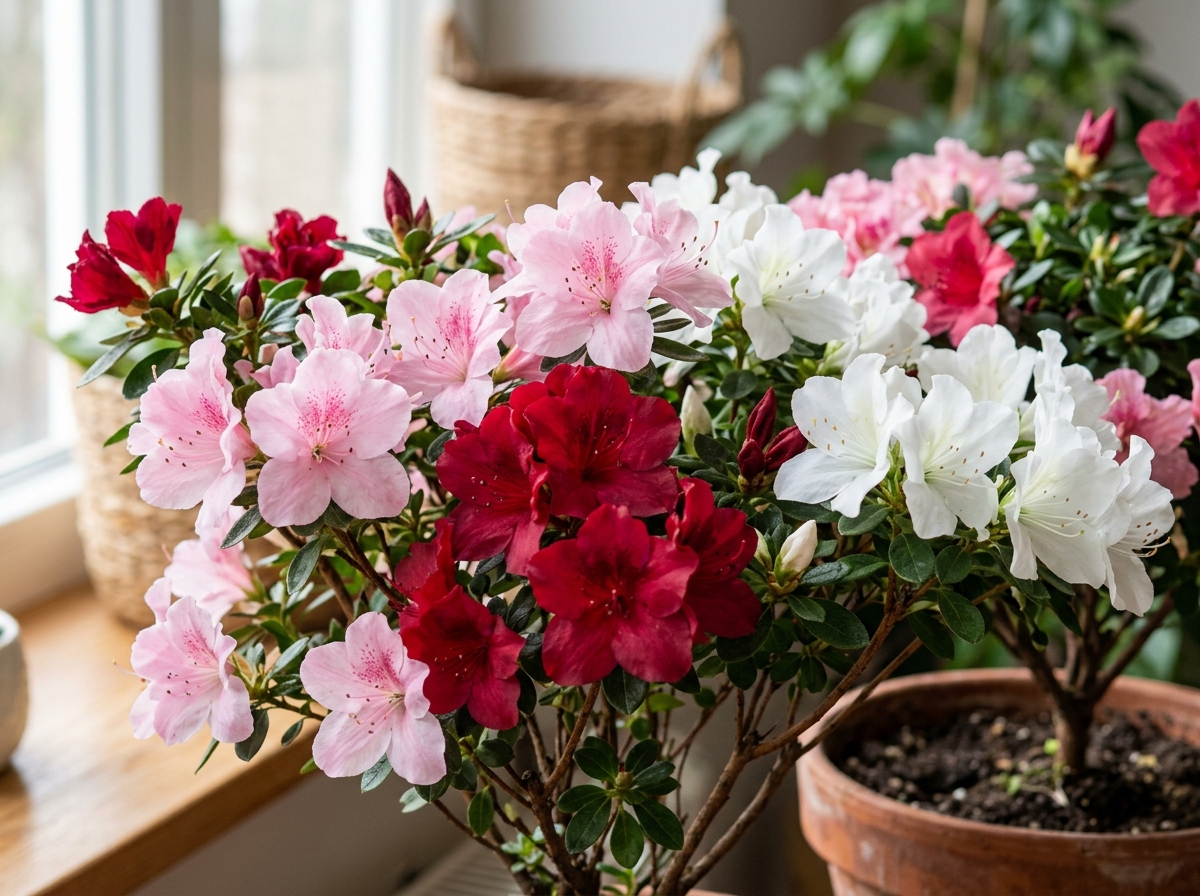
- Belgian Indica: These are the classic florist azaleas. They offer massive, often double blooms in shades of pink, white, red, and bicolor. They are slightly more sensitive to cold than other types but thrive in standard indoor “cool” spots.
- Southern Indica: While often grown outdoors in warmer climates, these can be adapted for indoor use if you have a very bright, cool sunroom.
- Dwarf Encore Azaleas: These are a game-changer. While many florist azaleas are treated as “disposable” gifts, Encore varieties are bred to be robust and reblooming. They have evergreen leaves and can transition between your patio in summer and your home in winter.
- Japanese Azaleas (Kurume): Known for being exceptionally floriferous with smaller, dainty flowers, these can be trained into stunning indoor topiaries.
If you are just starting your journey, we recommend checking out our indoor-plant-care-tips-for-beginners to build a solid foundation before tackling the specific needs of the azalea.
Essential Environmental Conditions: Light, Temperature, and Humidity
Think of the azalea as a guest who prefers a cool, misty morning in the mountains rather than a sweltering afternoon at the beach. To master azalea plant care indoors, we must mimic those “mountain” conditions.
Optimal Lighting for Azalea Plant Care Indoors
Azaleas need plenty of light to fuel those spectacular blooms, but they hate being “cooked.” We recommend placing your plant near an east-facing window. This provides gentle morning sun and bright, indirect light for the rest of the day.
If your only option is a south-facing window, be sure to use a sheer curtain to filter the rays. Direct, intense afternoon sun will scorch the leaves and cause the delicate flower petals to shrivel. If you lack natural light, you can use artificial grow lights. To keep an azalea happy, aim for 12-16 hours of light daily, with the light source positioned about 12 inches above the foliage. For more on this, see our guide on indoor-plant-light-requirements.
Managing Temperature and Humidity for Success
Temperature is where most indoor gardeners trip up. Azaleas thrive in “room temperature” only if your room is on the cooler side. Ideally, keep them between 60-65°F (15-18°C) during the day. At night, they actually prefer it even cooler—around 50-55°F. This temperature drop helps the flowers last longer; in a hot, dry room, blooms might fade in days, whereas in a cool room, they can last for six weeks!
Humidity is equally vital. Most homes are far too dry for azaleas, especially in winter. We suggest:
- Pebble Trays: Place the pot on a tray filled with pebbles and water (ensure the pot sits on the stones, not in the water).
- Humidifiers: A small room humidifier is the most effective way to prevent bud drop.
- Strategic Placement: Keep your plant far away from heating vents or fireplaces.
Check out our indoor-plant-placement-tips and humidity-tips-for-houseplants for more creative ways to boost moisture levels.
Mastering Watering and Soil Requirements
Watering is the most frequent cause of death for indoor azaleas. They are the “Goldilocks” of the plant world: they hate being dry, but they die if they sit in water.
| Method | Pros | Cons |
|---|---|---|
| Top Watering | Quick and easy for daily checks. | Can lead to dry spots in the root ball if the soil is compacted. |
| Bottom Soaking | Ensures the entire root ball is saturated; great for peat-heavy soils. | Takes more time (15-30 mins); requires a basin. |
The Secret to Watering Azalea Plant Care Indoors
Research shows that indoor azaleas evaporate between 35cl and 50cl of water per week. That is a lot of moisture leaving a small pot! Because they are often sold “underpotted” (too much plant, too little soil), they can dry out in less than 48 hours.
The Golden Rules of Azalea Watering:
- Never let it dry out completely. Once an azalea wilts, it is very hard to bring back.
- Use lime-free water. Azaleas are acid-loving. If your tap water is “hard” (alkaline), it will slowly kill the plant. Use rainwater, distilled water, or water from a dehumidifier.
- The Ice Cube Method: Some growers swear by placing 2-3 large ice cubes on the soil daily. As they melt, they provide a slow-release drink and keep the roots slightly cool.
- The Revitalizing Bath: If the soil feels very dry, submerge the entire pot in a bucket of room-temperature water for 15 minutes until bubbles stop rising. Drain thoroughly afterward.
For more help with timing, see our watering-schedule-for-indoor-plants.
Potting, Repotting, and Soil Composition
Standard potting soil is usually a death sentence for azaleas because the pH is too high. They require acidic soil (pH 4.5 to 6.0). We recommend a mix of one-third peat moss or ericaceous compost to ensure the acidity stays where it needs to be.
You should generally only need to repot every 1 to 2 years. When you do, only go up one pot size (e.g., from a 6-inch to an 8-inch pot). Azaleas actually prefer a slightly “snug” fit. Ensure your pot has excellent drainage—azalea roots can die if submerged in waterlogged soil for as little as 90 minutes!
Learn more about selecting-indoor-plant-pots-and-planters and the best-soil-for-indoor-plants to give your azalea the perfect home.
Long-Term Maintenance: Fertilizing, Pruning, and Reblooming
Once your azalea finishes its first spectacular bloom, the real work begins. To keep it as a permanent member of your indoor garden, you need a seasonal plan.
Fertilizing and Pruning
- Fertilizing: Never fertilize while the plant is in bloom—this tells the plant to grow leaves instead of flowers. Once the flowers fade, use a fertilizer specifically for acid-loving plants (like an azalea or camellia food). We recommend a balanced N-P-K ratio like 3-2-1, diluted to half-strength, every 2-4 weeks from April through September. Avoid fertilizing in winter. See our tips on fertilizing-houseplants-naturally.
- Pruning: Prune immediately after the flowering period ends. Use sharp shears to remove dead or weak branches and shape the plant. You can also “pinch” the tips of new green shoots in spring to encourage a bushier, fuller shape. Check our pruning-tips-for-indoor-plants for more details.
How to Get Your Indoor Azalea to Rebloom
This is the “Holy Grail” of azalea plant care indoors. To trigger new buds, the plant needs to think it has gone through a winter.
- The Summering: In late spring, move your azalea outdoors to a shady, protected spot. This helps flush out any salts from the soil and strengthens the plant.
- The Chilling Period: This is the non-negotiable step. From November to early January, the plant needs a “chilling period” of 6 to 8 weeks. It must be kept in a spot that stays between 40-50°F (4-10°C), such as an unheated porch or a cool basement with a grow light.
- The Reset: During this time, reduce watering (just enough to prevent wilting) and stop fertilizing.
- The Return: In January, move the plant back to its warmer (60-65°F) spot. Within a few weeks, you should see new buds beginning to swell.
Troubleshooting Pests, Diseases, and Wilting
Even with the best azalea plant care indoors, issues can arise. Catching them early is the key to survival.
- Spider Mites: If you see tiny webs or mottled yellow leaves, you likely have mites. They thrive in dry air. Increase humidity and wash the foliage with insecticidal soap.
- Mealybugs: These look like tiny bits of white cotton in the leaf axils. Dab them with a cotton swab dipped in rubbing alcohol.
- Root Rot: If leaves turn brown and mushy and the soil smells “off,” you’ve overwatered. This is often fatal, but you can try repotting into fresh, dry acidic soil.
- Chlorosis (Yellow Leaves): If the leaves turn yellow but the veins stay green, your soil is likely too alkaline. Use an iron supplement and ensure you are using lime-free water.
- The “Curative Bath”: If you forget to water and your azalea looks like a dried-up crisp, don’t give up immediately. Give it a 15-minute soak in a bucket of water. If the leaves haven’t all fallen off within 24 hours, there’s a chance it might recover.
Avoid these and other common-indoor-plant-care-mistakes by staying observant!
Frequently Asked Questions about Indoor Azaleas
Why are my azalea leaves turning yellow?
Yellow leaves are usually a cry for help regarding the soil. It often means the soil pH has become too alkaline (above 6.0), preventing the plant from absorbing iron. It can also be a sign of nitrogen deficiency or simple overwatering. Check the soil moisture first; if that’s fine, it’s time to check your water source and soil acidity.
Are indoor azaleas toxic to pets?
Yes, and this is important: Azaleas are poisonous. They contain grayanotoxins, which can cause vomiting, drooling, and even heart failure in cats and dogs if ingested. Always keep your azalea on a high shelf or in a room where pets aren’t allowed. If you have curious nibblers, you might want to consider pet-friendly alternatives.
How long do indoor azalea flowers last?
A single flower usually lasts about two weeks, but because the buds open at different times, the total “show” can last 6 weeks or more. To extend this, keep the plant in a cool room (under 65°F) and “deadhead” (remove) withered flowers promptly to keep the plant’s energy focused on the remaining buds.
Conclusion
At Futuro Ciencia, we believe that bringing nature inside shouldn’t be a source of stress. While azalea plant care indoors requires a bit more attention than a typical cactus, the reward is a living, breathing bouquet that brightens even the darkest winter days. By focusing on acidic soil, consistent moisture, and that all-important cool chilling period, you can transform your home into a tranquil oasis.
Ready to expand your indoor jungle? How to Care for Indoor Potted Azaleas offers even more variety-specific tips, or you can explore More info about indoor plant care right here on our site. Happy growing!
