
The Easiest Way to Get Free Plants: Propagate Pothos in Water
Want to propagate pothos in water but not sure where to start? Here’s the quick version:
- Cut a healthy stem (4-6 inches) just below a node
- Remove the lower leaves so no leaves sit in the water
- Place the cutting in a jar of clean, room-temperature water with the node submerged
- Wait 7-14 days for roots to appear, 3-6 weeks for roots ready to pot
- Change the water every 1-2 weeks to keep it fresh
Pothos (Epipremnum aureum) is one of the most forgiving houseplants you can own. It tolerates low light, irregular watering, and general neglect better than almost anything else you can grow indoors.
And here’s the best part: you can make more of them for free.
Water propagation is the simplest way to multiply your pothos collection. No special equipment. No soil. No experience needed. Just a cutting, a jar of water, and a little patience.
It’s also surprisingly satisfying. You can watch the roots grow right through the glass — which makes it much easier to know exactly what’s happening with your plant at any stage.
Whether you have one trailing vine on your desk or a sprawling plant that needs a trim, this guide will walk you through everything you need to get new roots growing fast.

Why You Should Propagate Pothos in Water
We often hear from beginners who are terrified of “killing” their plants. If that sounds like you, then water propagation is your new best friend. At Futuro Ciencia, we believe that transforming your home into a tranquil oasis shouldn’t be stressful. Pothos, often called “Devil’s Ivy” because it’s nearly impossible to kill, is the perfect candidate for this journey.
One of the biggest advantages of choosing to propagate pothos in water is the ability to visually monitor the health of your plant. In soil, you’re essentially guessing what’s happening beneath the surface. In a glass jar, you can see every tiny white root as it emerges. It’s a great way to build your “green thumb” confidence.
Furthermore, it is incredibly cost-effective. You don’t need to buy expensive rooting hormones or specialized seed-starting mixes. If you have a pair of scissors and a glass of water, you’re ready to go. This method is highlighted in our guide on easy-indoor-plants-for-beginners/ because it has a nearly 100% success rate if you follow the basic steps.
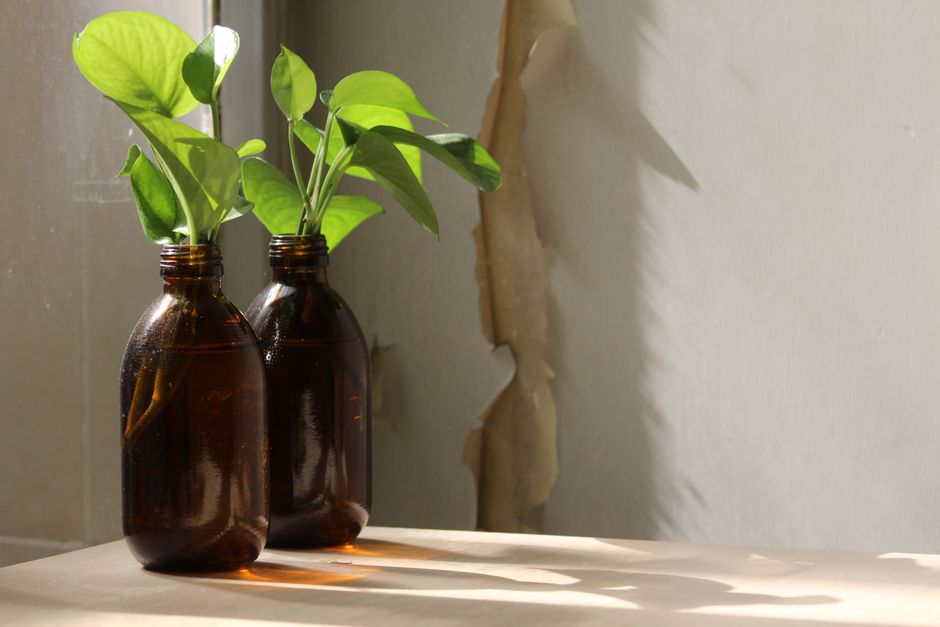
Beyond the practical benefits, there’s an undeniable aesthetic appeal. A row of glass jars or vintage bottles filled with trailing green vines can brighten up a windowsill or kitchen counter instantly. For more ways to integrate plants into your daily life, check out our indoor-plant-care-tips-for-beginners/.
Essential Tools and Materials for Success
While we call this the “Lazy Gardener’s Guide,” even the most relaxed plant parent needs a few basic tools. Using the right materials from the start prevents common issues like rot or bacterial growth.
- Sterilized Scissors or Pruning Shears: Never just “snap” the vine with your fingers. This crushes the stem tissues and makes it harder for the plant to take up water. Use sharp, clean tools to ensure a crisp cut. This is a fundamental part of our pruning-tips-for-indoor-plants/.
- Glass Containers: Clear glass is best for monitoring roots, but narrow-neck bottles are particularly helpful because they support the leaves and keep them from falling into the water.
- Water Quality: While pothos is hardy, it can be sensitive to the chlorine and fluoride found in some tap water. We recommend using filtered water or letting tap water sit out for 24 hours to “off-gas” the chemicals.
- Room-Temperature Water: Shocking a fresh cutting with ice-cold water is a recipe for failure. Ensure the water is between 65°F and 80°F.
- Liquid Fertilizer (Optional): If you plan on keeping your pothos in water long-term, you’ll eventually need a diluted liquid fertilizer to provide the nutrients that soil usually offers.
Step-by-Step: How to Propagate Pothos in Water Successfully
The process of taking a cutting and turning it into a new plant is called vegetative propagation. This works because pothos plants have “totipotent” cells in their nodes—cells that can transform into whatever the plant needs, whether that’s a new leaf or a root.
Here is the breakdown of how we recommend you propagate pothos in water:
| Feature | Water Propagation | Soil Propagation |
|---|---|---|
| Visibility | High (roots are visible) | Low (roots are hidden) |
| Success Rate | Extremely High | Moderate to High |
| Root Strength | Weaker (water roots) | Stronger (soil roots) |
| Maintenance | Weekly water changes | Constant moisture monitoring |
| Ease for Beginners | Best | Moderate |
Integrating this into your indoor-plant-care-routine/ is simple. Whenever your main plant starts looking a bit “leggy” or overgrown, it’s time to take some cuttings!
Selecting the Perfect Pothos Stem Cutting
Not every part of the vine is created equal. To ensure success, you need to pick a healthy section of the plant. Look for vines that are vibrant green and free of pests. Avoid any stems that have yellowing leaves or signs of rot, as these are already stressed and unlikely to root well.
A good cutting should be about 4 to 6 inches long and contain 3 to 5 leaves. This provides enough foliage to photosynthesize and create energy for root growth without overwhelming the stem. One of the common-indoor-plant-care-mistakes/ we see is people trying to propagate a single leaf without any stem attached. A leaf alone will not grow roots; you must have a node.
Preparing Your Cutting to Propagate Pothos in Water
The “node” is the most important part of the plant. It is the small, brown bump on the stem where a leaf meets the vine. This is where the new roots will emerge.
- Identify the Node: Find the little bumps along the vine.
- The Cut: Using your sterilized shears, make a clean cut at a 45-degree angle about half an inch below the node. The angle increases the surface area for water absorption.
- Leaf Removal: Strip away the bottom 1 or 2 leaves. You want a bare section of stem with at least one or two nodes that will be submerged in water. If leaves are left underwater, they will rot, creating bacteria that can kill your new roots.
- Exposure: By exposing the node, you’re telling the plant exactly where to focus its energy.
Scientific research on vegetative propagation shows that nodes are essentially the “brain” of the stem cutting, containing the concentrated auxins (growth hormones) necessary for root initiation. You can read more about this biological process in depth at the University of Florida’s research database.
Maintenance and Rooting Timeline
Once your cutting is in its jar, place it in a spot with bright, indirect light. Avoid direct sunlight, which can cook the cutting or encourage excessive algae growth.
What to expect:
- 7 to 14 Days: You should see tiny white nubs or “sprouts” emerging from the submerged nodes.
- 3 to 6 Weeks: The roots will grow exponentially. Once they are about 2 to 3 inches long, they are considered mature enough for the next step.
During this time, maintenance is key. We suggest adding this to your indoor-plant-care-schedule/. You should change the water every 5 to 7 days. Why? Because as the plant sits in water, it emits urea and other waste products. If the water isn’t refreshed, these secretions can actually poison the cutting. Fresh water also provides a new boost of oxygen, which roots need to breathe.
Troubleshooting and Long-Term Care
Even with the easiest plants, things can occasionally go wrong. The most common issue is root rot.
- Healthy Roots: Should be white or light tan, firm, and slightly fuzzy.
- Rotting Roots: Will look brown or black, feel “mushy” to the touch, and may have a foul odor.
If you notice rot, don’t panic! Remove the cutting, rinse it under room-temperature water, and trim away the mushy parts with sterilized scissors. Clean the jar thoroughly, fill it with fresh water, and try again.
Algae Growth: If your jar is in a very bright spot, you might see green film forming on the glass or the roots. While a little algae won’t kill the plant, too much can compete for oxygen. To prevent this, you can use an opaque container (like a ceramic vase) or simply clean the glass more frequently.
If you notice any tiny hitchhikers on your leaves, refer to our guide on indoor-plant-pests-and-how-to-remove-them/ to handle them safely.
Transitioning Cuttings to Soil
Many people choose to propagate pothos in water as a temporary step before moving the plant into a permanent pot. This transition is the most delicate part of the process.
“Water roots” are structurally different from “soil roots.” Water roots are thinner and more fragile because they don’t have to push through dense earth. If you wait too long (e.g., several months) to move your plant to soil, it may experience “transplant shock” because the roots have become too specialized for a liquid environment.
When to Move Your Propagate Pothos in Water Project to a Pot
The “sweet spot” for transplanting is when the roots are 2 to 3 inches long. You also want to look for secondary roots (smaller roots branching off the main ones).
Steps for a successful move:
- Prepare the Pot: Use a small pot with excellent drainage.
- The Right Mix: Use a high-quality, well-draining potting soil. You can learn about the best options in our guide on best-soil-for-indoor-plants/.
- Planting: Gently hold the cutting in the pot and fill in around the roots with soil. Do not pack the soil too tightly; you don’t want to snap the fragile water roots.
- Moisture is Key: For the first two weeks, keep the soil slightly moister than you normally would for a pothos. This helps the “water roots” acclimate to their new home.
- Patience: Don’t be surprised if the plant doesn’t grow new leaves for a few weeks. It is busy converting those water roots into sturdy soil roots.
For a deeper dive into the mechanics of moving plants, see our articles on how-to-repot-indoor-plants/ and how-to-repot-indoor-plants-2/.
Frequently Asked Questions about Pothos Propagation
Can pothos live in water permanently?
Yes! Pothos can absolutely live its entire life in water. This is a form of hydroponics. However, since water doesn’t contain the natural minerals found in soil, you must provide them. Use a high-quality liquid fertilizer diluted to about one-quarter strength and add it to the water once a month. You will also need to clean the container and the roots regularly to prevent algae and bacterial buildup. A water-grown pothos will generally grow slower than its soil-grown cousins.
Why are my pothos cuttings not rooting?
If you’ve been waiting for more than three weeks and see nothing, check these three things:
- Light: Is it too dark? Cuttings need energy from light to grow roots.
- Temperature: Is there a cold draft? Pothos are tropical; they won’t root if they are shivering.
- The Node: Did you actually include a node in the water? Double-check that those brown bumps are submerged.
What is the best time of year to propagate?
While you can propagate pothos in water at any time of year, you will see the fastest results in the spring and summer. This is when the plant is in its active growing phase. During the winter, the plant’s metabolism slows down, and rooting can take twice as long. If you must propagate in winter, using a heat mat or placing the jar in a consistently warm room can help.
Conclusion
At Futuro Ciencia, our mission is to help you transform your living space into a purifying, brightening oasis. Learning how to propagate pothos in water is one of the most rewarding skills a plant parent can have. It allows you to expand your collection indefinitely, create thoughtful gifts for friends, and ensure that even if your main plant has a mishap, you have “backups” ready to go.
There is a profound sense of fulfillment in watching a tiny cutting develop a complex root system and eventually become a lush, trailing vine. It builds the confidence you need to tackle more challenging plants in the future.
Ready to get started? Grab your scissors, find a beautiful jar, and take that first cut. If you want to make sure your new plants stay healthy for years to come, be sure to download our Indoor Plant Care Schedule for expert tips delivered right to your inbox. Happy growing!
