
The Ultimate Angel Wing Begonia Indoor Guide
The Plant With a Confusing Name That’s Actually Easy to Grow
Angel wing plant care indoors is simpler than you might expect — but first, you need to know what plant you’re actually dealing with.
Here’s a quick-start summary:
- Light: Bright, indirect light (east or west-facing window)
- Water: Every 1-2 weeks; let the top inch of soil dry out first
- Humidity: 50-80% — use a pebble tray or humidifier
- Temperature: 65-85°F (18-30°C); never below 50°F (10°C)
- Soil: Well-draining mix with perlite and organic matter
- Fertilizer: Balanced 10-10-10 liquid fertilizer during the growing season
- Toxicity: Toxic to cats and dogs — keep out of reach
Now, here’s where it gets confusing.
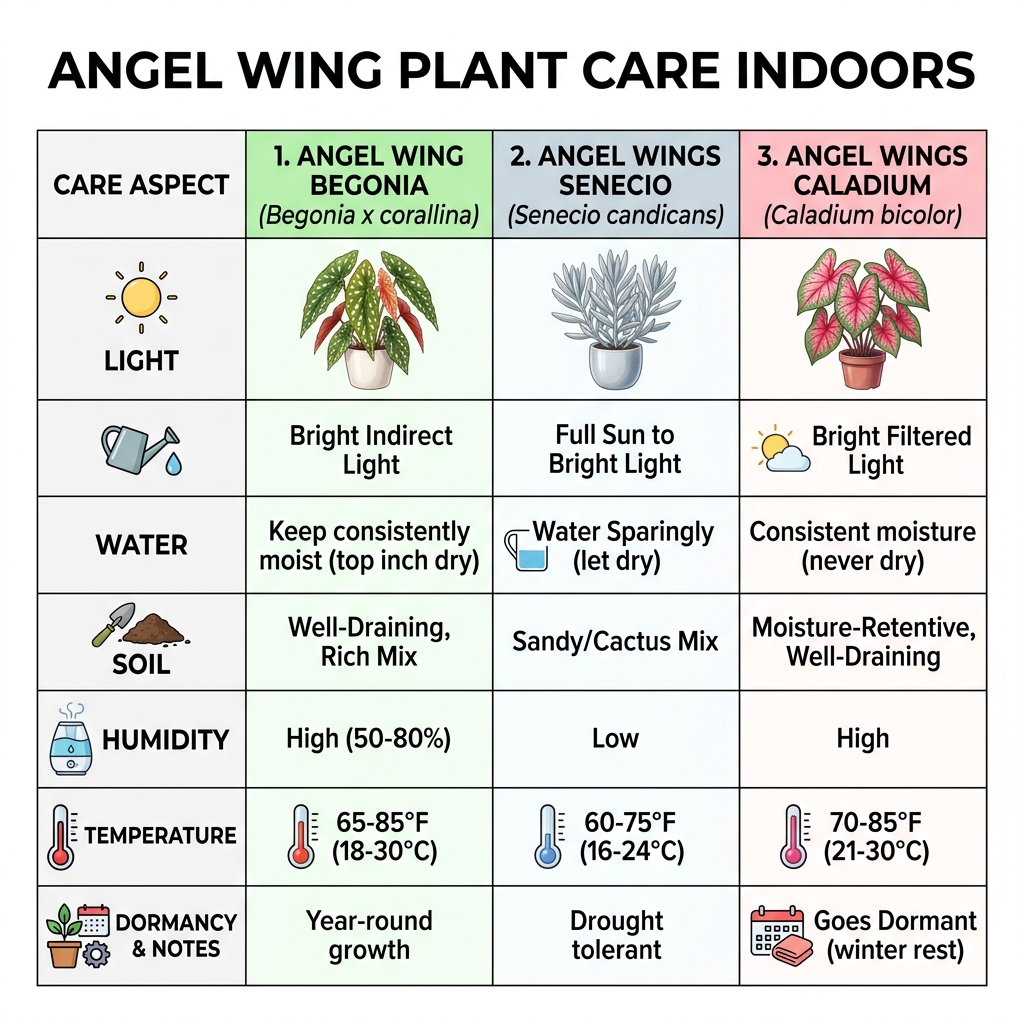
Search “angel wing plant” and you’ll find three very different plants sharing that common name:
- Angel Wing Begonia (Begonia x corallina) — a cane-type begonia with speckled leaves and drooping flower clusters, native to Brazil
- Angel Wings Senecio (Senecio candicans) — a silvery, velvet-leaved succulent that prefers dry soil and full sun
- Angel Wings Caladium (Caladium bicolor) — a tropical plant with large, heart-shaped, colorful leaves that goes dormant in winter
Their care requirements are completely different. Watering advice for a Senecio (water sparingly, dry soil) would quickly kill a Begonia (keep consistently moist). Getting this wrong is one of the most common reasons these plants struggle indoors.
This guide focuses primarily on the Angel Wing Begonia — the most popular of the three as a year-round indoor houseplant, and arguably the easiest begonia you can grow.
Terms related to angel wing plant care indoors:
Essential Angel Wing Plant Care Indoors
When we bring an Angel Wing Begonia into our homes, we are inviting a piece of the Brazilian rainforest into our living space. These plants are “cane begonias,” named for their tough, bamboo-like stems that can grow surprisingly tall. In fact, while most indoor specimens stay between 12 and 30 inches, a happy plant in ideal conditions can reach up to 5 feet — or even 10 feet if you let it!
To keep these “angels” from looking like “devils,” we need to balance their three core needs: light, water, and soil.
Light Requirements for Angel Wing Plant Care Indoors
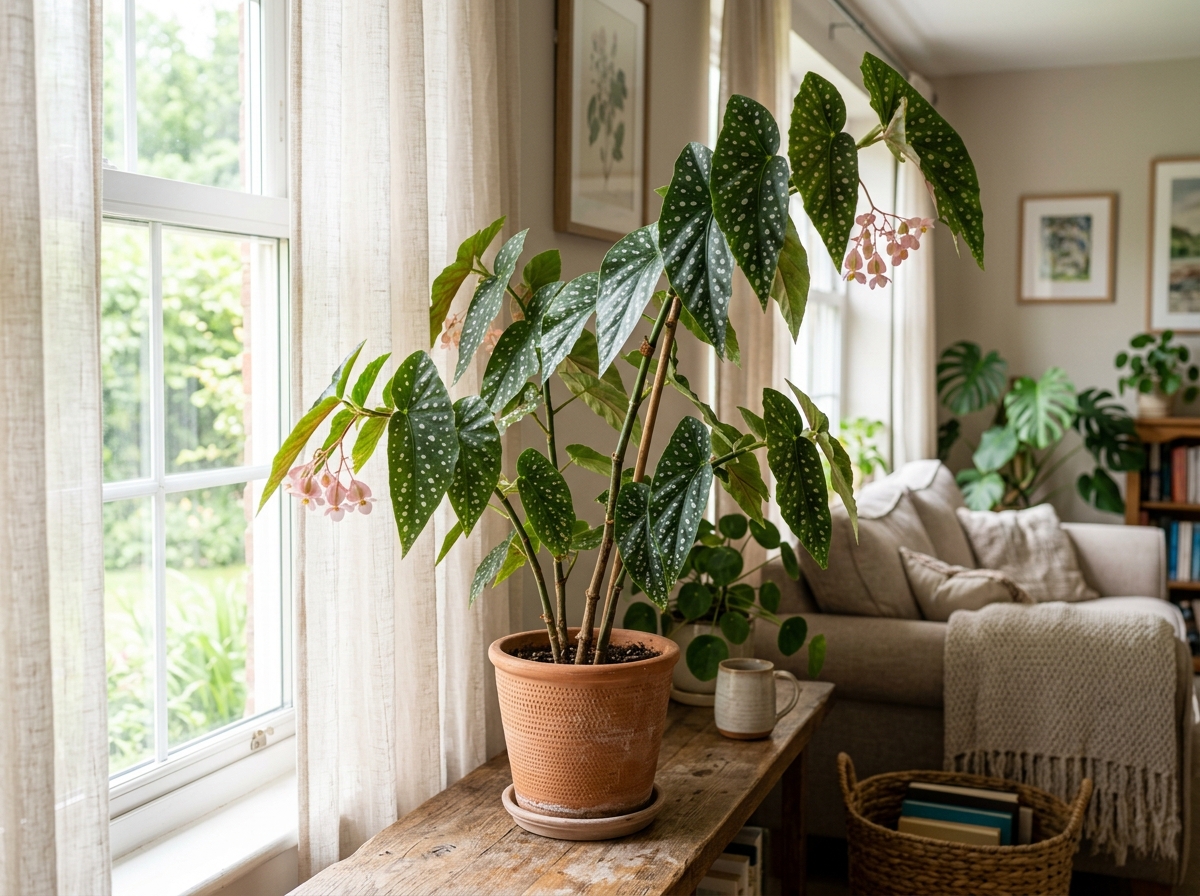
Lighting is the “engine” of your plant. For the Angel Wing Begonia, the sweet spot is bright, indirect light. If you place it in a dark corner, it will become “leggy” (stretching out with long gaps between leaves) and may refuse to flower. However, if you put it in harsh, direct midday sun, those beautiful leaves will scorch and turn crisp.
We recommend an eastern or western exposure. A spot about 3 feet away from a southern window also works beautifully. If your home is naturally dim, don’t worry! These plants respond very well to full-spectrum LED grow lights. Aim for 4 to 6 hours of bright light daily.
One fascinating detail we’ve noticed is how light intensity affects the plant’s appearance. If you want deep green leaves with high-contrast silver spots, medium light is often better. If you want the plant to produce those magnificent clusters of pink or red flowers, you’ll need to move it into brighter light. Just be aware that very bright light can sometimes cause the silver spots to fade slightly.
Watering and Soil for Angel Wing Plant Care Indoors
Watering is where most indoor gardeners get nervous. We follow a simple rule: the “finger test.” Stick your finger into the soil; if the top inch feels dry, it’s time to water. Usually, this happens every 1 to 2 weeks, depending on the season.
When you water, do it thoroughly. We like to saturate the soil until water runs out of the drainage holes at the bottom of the pot. This ensures the entire root system gets a drink. However, never let the plant sit in a saucer of standing water, as this is a fast track to root rot.
The soil mix is your second line of defense against rot. A standard “heavy” potting soil stays wet for too long. We suggest a well-draining mix. A great recipe is:
- 50% high-quality potting soil
- 25% perlite or vermiculite (for aeration)
- 25% peat moss or coco coir (for moisture retention)
For those of us who tend to be “over-waterers,” using a terracotta or clay pot is a lifesaver. These porous materials wick away excess moisture, helping the soil breathe.
If you’re looking for more detailed schedules, check out our More info about indoor plant care section.
Optimizing the Environment: Temperature and Humidity
Because these plants hail from tropical South America, they aren’t fans of the “dry heat” or “arctic blasts” found in many modern homes.
Temperature: The ideal range for angel wing plant care indoors is between 65°F and 85°F (18-30°C). They are quite resilient within this range, but once the temperature drops below 55°F, growth will stunt. If it hits 50°F or lower, the plant may suffer permanent damage or die. Keep them away from drafty windows in the winter and away from direct AC vents in the summer.
Humidity: This is the secret ingredient for lush, vibrant leaves. Angel Wing Begonias thrive in 50% to 80% humidity. If your indoor air is too dry, you’ll notice the edges of the leaves turning brown and crispy.
We have a few tricks to boost humidity without turning your living room into a swamp:
- Pebble Trays: Fill a shallow tray with pebbles and water, then set the pot on top (ensuring the bottom of the pot isn’t touching the water).
- Grouping: Plants “breathe” out moisture. By grouping your begonia with other houseplants, you create a humid microclimate.
- Humidifiers: A small space humidifier nearby is the most effective solution during dry winter months.
Scientific research shows that maintaining consistent humidity not only helps the plant thrive but also reduces the risk of leaf drop and certain pests. Just avoid misting the leaves directly; water sitting on the foliage can encourage powdery mildew, a common fungal foe for begonias.
Advanced Maintenance: Pruning, Fertilizing, and Flowering
Once your plant is settled, it’s time to move from “surviving” to “thriving.”
Fertilizing: Angel Wing Begonias are heavy feeders. They can show substantial growth within just six weeks if fed correctly. We recommend the “weekly weakly” method: use a balanced liquid fertilizer (like a 10-10-10 NPK ratio) diluted to quarter strength every time you water. Alternatively, you can feed them at half strength every two weeks during the spring and summer. When you see flower buds forming, you can switch to a phosphorus-rich fertilizer to encourage more vibrant blooms.
Pruning for Bushiness: Left to their own devices, cane begonias can become “leggy” or top-heavy. To encourage a full, bushy shape, we need to be brave with the scissors. Once your plant reaches about 12 inches in height, pinch off the growing tips. This forces the plant to branch out sideways rather than just growing up.
If you have an older plant that looks like a few long sticks with leaves only at the top, don’t be afraid to prune it back significantly in late winter or early spring. You can cut the canes down to about 6 inches; this “reset” often results in a much more attractive, dense plant.
Staking: Because these plants grow on upright canes, they can become floppy as they get taller. Using a bamboo stake or a moss pole can help support the weight and prevent the stems from snapping.
Flowering: Begonias are monoecious, meaning they have separate male and female flowers on the same plant. To encourage flowers indoors, ensure the plant gets plenty of bright (but filtered) light and consistent nutrients. Some enthusiasts even use “Tamaya” training — a method of pruning the begonia into a small, tree-like shape that showcases the drooping flower clusters beautifully.
Troubleshooting Common Angel Wing Begonia Problems
Even with the best angel wing plant care indoors, issues can arise. Here is how to spot and fix them:
- Yellowing Leaves: This is usually a sign of overwatering. Check the roots for mushiness (rot) and let the soil dry out more between waterings.
- Brown, Crispy Edges: This usually points to low humidity or underwatering. Increase the moisture in the air or check your soil more frequently.
- Drooping Foliage: Your plant is likely thirsty or experiencing a sudden temperature shock. Give it a thorough drink or move it away from a draft.
- Leaf Drop: Sudden loss of leaves can happen if the plant is moved to a new location or if the temperature drops too low.
- Powdery Mildew: This looks like white flour dusted on the leaves. It thrives in high humidity with poor air circulation. To treat it, improve the airflow around the plant and use a spray of baking soda and water or a commercial fungicide.
- Pests (Mealybugs and Spider Mites): Mealybugs look like tiny bits of white cotton in the leaf joints. Spider mites are nearly invisible but leave fine webs. We recommend isolating the plant immediately and treating it with neem oil or insecticidal soap once a week for a month.
Propagation and Repotting for Long-Term Success
The natural lifespan of an Angel Wing Begonia is typically 2 to 6 years, but you can keep your collection going indefinitely through propagation.
Propagation: Cane begonias are incredibly easy to propagate from stem cuttings (note: they cannot be grown from leaf cuttings like Rex begonias).
- Cut a 2-3 inch section of a healthy stem with at least two nodes (the little bumps where leaves grow).
- Remove the lower leaves.
- Place the cutting in a jar of clean water or directly into moist potting soil.
- If using water, you’ll see roots in about two weeks. Once the roots are an inch long, transplant them into soil.
- We like to plant the new cuttings back into the “mother” pot to create a fuller, bushier look.
Repotting: Angel Wing Begonias actually prefer to be slightly pot-bound. This helps support their tall canes and prevents the soil from staying too wet. You only need to repot every year or two, typically in early spring. Choose a new pot that is only 1-2 inches wider than the current one. If the plant is very tall, choose a heavy pot (like terracotta or ceramic) to prevent it from tipping over.
Frequently Asked Questions about Angel Wing Begonias
Is the Angel Wing Begonia safe for pets?
No. Unfortunately, Angel Wing Begonias contain calcium oxalate crystals, which are toxic to cats and dogs. If ingested, they can cause oral irritation, drooling, vomiting, and difficulty swallowing. The most toxic part of the plant is underground (the roots), but the leaves and stems are also dangerous. We recommend keeping these plants on high shelves or in rooms that are inaccessible to your furry friends.
How do I encourage my Angel Wing Begonia to flower?
The two biggest factors are light and food. Move your plant to the brightest spot possible without giving it direct sun. Then, switch to a fertilizer with a higher middle number (phosphorus), which specifically targets bloom production. A slight drop in nighttime temperatures (down to 60°F) can also sometimes trigger a blooming cycle.
Why are the spots on my leaves fading?
Fading spots are usually a reaction to light. If the light is too intense, the plant produces more chlorophyll to protect itself, which can mask the silver variegation. If the light is too low, the plant might lose its “luster.” Try moving the plant a few feet back from the window to see if the contrast returns.
Conclusion
At Futuro Ciencia, we believe that angel wing plant care indoors is one of the most rewarding journeys a plant parent can take. These plants aren’t just decorations; they are dynamic, fast-growing companions that can transform your home into a tranquil, purifying oasis.
By following these steps — managing your light, mastering the “finger test” for watering, and keeping the humidity high — you’ll enjoy a stunning display of “angelic” foliage and vibrant blooms for years to come. If your plant ever feels like it’s struggling, a quick pruning or a fresh cutting can always give it a second life.
Ready to grow your indoor jungle? Transform your space with expert indoor plant care and let us help you maintain the perfect schedule for your green friends.
