
What You Need to Know About Begonia Maculata Care Indoor
Begonia maculata care indoor is simpler than you might think — once you know the basics.
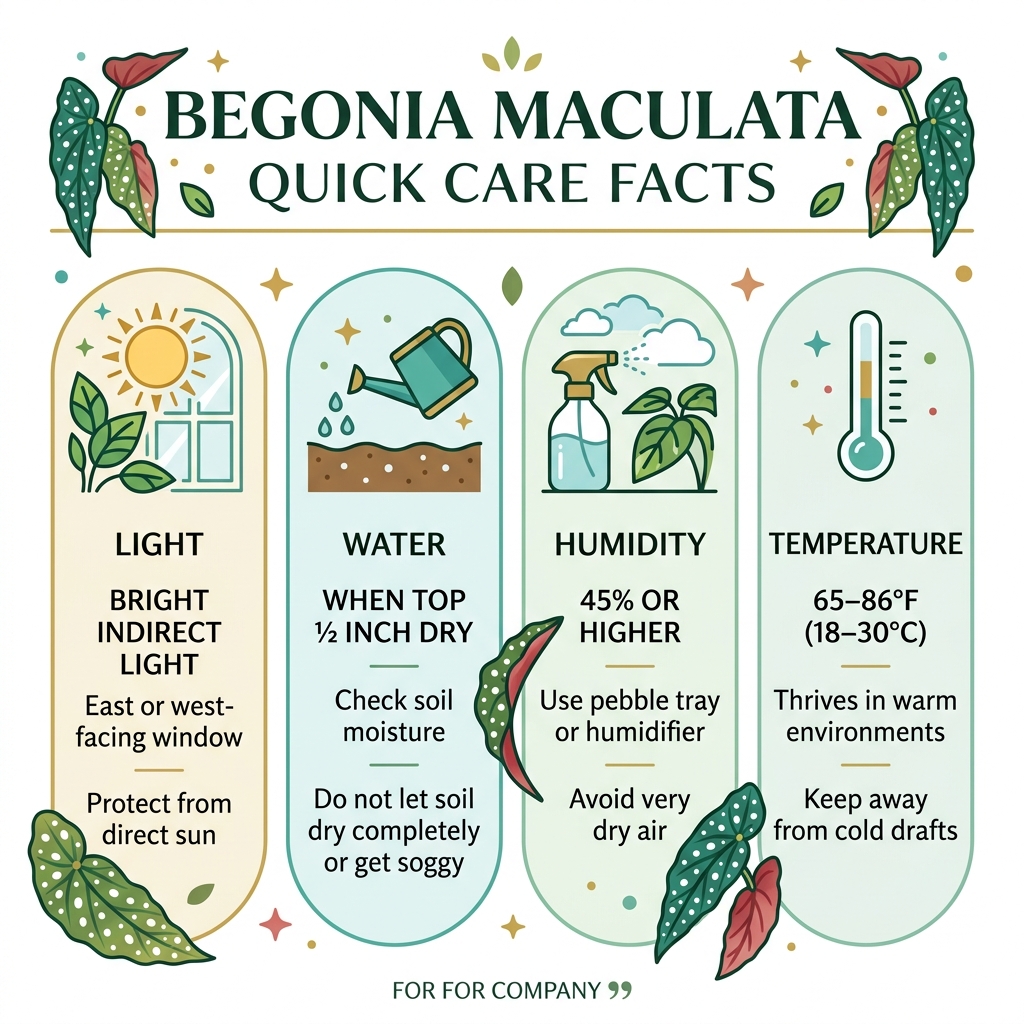
Here’s a quick reference to keep your plant healthy:
| Care Factor | What to Do |
|---|---|
| Light | Bright indirect light; east or west-facing window |
| Water | When top ½ inch of soil is dry |
| Temperature | 65–86°F (18–30°C) |
| Humidity | 45% or higher; use a pebble tray or humidifier |
| Fertilizer | Balanced liquid fertilizer every 2–4 weeks in spring and summer |
| Soil | Well-draining mix with perlite or orchid bark |
| Repotting | Every 1–2 years in spring |
| Toxic to pets? | Yes — keep away from cats and dogs |
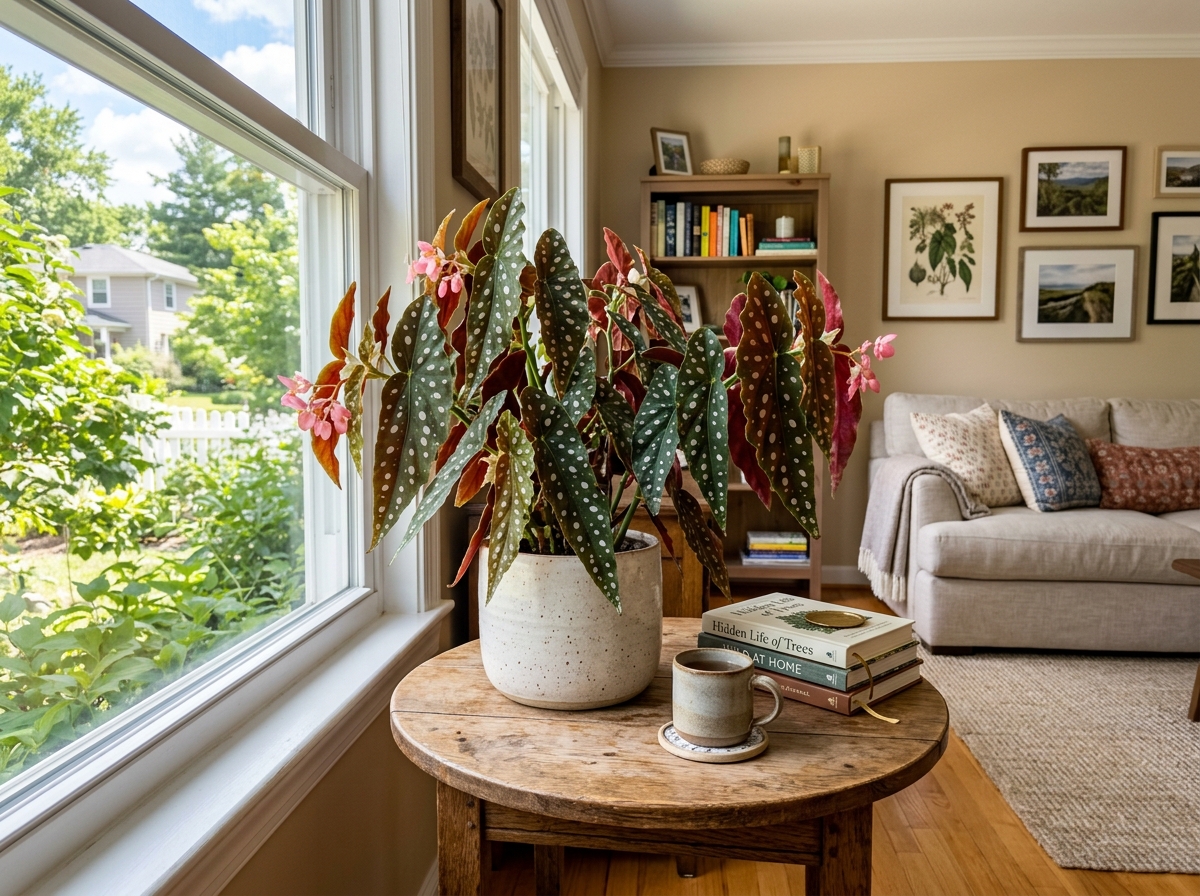
The Begonia maculata — also called the Polka Dot Begonia or Angel Wing Begonia — is one of the most eye-catching houseplants you can grow indoors. Its dark olive-green leaves are dotted with silver-white spots and backed by a deep burgundy-red underside. It’s native to the tropical rainforests of Brazil, which tells you a lot about what it needs: warmth, humidity, and filtered light.
It has a reputation for being fussy. And honestly? That reputation is partly deserved. It won’t thrive if you ignore it for weeks, and it won’t forgive a soggy pot. But with a consistent routine — nothing complicated — this plant rewards you with stunning foliage and even delicate white blooms.
This guide covers everything you need: light, water, soil, humidity, pruning, pests, and more. Whether your plant is thriving or struggling, you’ll find the answers here.
Explore more about begonia maculata care indoor:
Essential Begonia Maculata Care Indoor Requirements
When we bring a Begonia maculata into our homes, we are essentially trying to recreate a slice of the Brazilian rainforest. In the wild, these plants live on the forest floor, shaded by towering trees but bathed in warm, humid air. Achieving successful begonia maculata care indoor means balancing these elements without going to extremes.
At Futuro Ciencia, we believe that understanding your plant’s natural habitat is the first step toward transforming your space into a tranquil oasis. The Polka Dot Begonia is an evergreen perennial that can grow surprisingly fast. Under the right conditions, it can add up to 12 inches of growth every single season, eventually reaching a mature height of 24 to 36 inches. It usually takes about four years to reach full maturity, but the journey there is visually stunning.
To keep this growth steady, you need to master three pillars: light, temperature, and humidity. If you are just starting out, you might want to check our indoor plant care tips for beginners to build a solid foundation.
Optimal Lighting for Begonia Maculata Care Indoor
Lighting is perhaps the most misunderstood aspect of begonia maculata care indoor. Many people assume “tropical” means “full sun,” but for this begonia, direct sunlight is a recipe for disaster.
The ideal spot is a place with bright, indirect light. Think of it as “filtered” sun—the kind of light that would peek through a canopy of leaves. An east-facing window is often the “Goldilocks” spot; it provides gentle morning sun that isn’t intense enough to scorch the leaves. West-facing windows can also work, provided there is a sheer curtain to block the harsh afternoon rays.
How do you know if the light is wrong?
- Too much light: The silver spots may fade, and the edges of the leaves will turn crispy and brown. This is leaf scorch.
- Too little light: The plant will become “leggy,” meaning the stems grow long and thin with huge gaps between the leaves as the plant “stretches” toward the nearest light source. You may also notice fewer blooms.
If your home lacks natural light, don’t worry. This species is surprisingly adaptable to artificial setups. A 75W grow light or cool white fluorescent bulbs kept about 2 inches above the foliage for 14 hours a day can produce fantastic results. For a deeper dive into lighting setups, read our guide on indoor plant light requirements.
Temperature and Humidity for Begonia Maculata Care Indoor
Since these plants hail from Brazil, they aren’t fans of the cold. We recommend keeping your indoor temperature between 65°F and 86°F (18–30°C). If the temperature drops below 60°F, the plant may go into shock, drop its leaves, or stop growing entirely. Keep them away from drafty windows in the winter and air conditioning vents in the summer.
Humidity is the “secret sauce” for begonia maculata care indoor. These plants thrive when humidity levels are above 45%, though they truly flourish at around 60%.
Pro Tip: Do not mist your Begonia maculata! While it seems helpful, misting doesn’t actually raise the ambient humidity for long. Worse, it leaves water sitting on the leaves, which is a primary cause of powdery mildew and fungal diseases.
Instead, try these methods:
- Pebble Trays: Fill a shallow tray with pebbles and water, then set the pot on top (ensuring the bottom of the pot doesn’t touch the water). As the water evaporates, it creates a humid microclimate.
- Humidifiers: This is the most effective way to keep your tropical plants happy during dry winters.
- Grouping: Place your begonia near other plants. Plants naturally release moisture through their leaves (transpiration), which helps the whole group stay hydrated.
For more ways to keep the air moist, check out our humidity tips for houseplants.
Watering and Soil Best Practices
Watering is where most Begonia maculata owners run into trouble. Because the stems are somewhat succulent-like, they can store a bit of water, making the plant slightly more drought-tolerant than other tropicals. However, they are extremely sensitive to overwatering.
How to Water Without Root Rot
The golden rule for begonia maculata care indoor is to wait until the top ½ inch to 1 inch of soil feels dry to the touch before watering again.
Use the “finger test”: stick your index finger into the soil up to the first knuckle. If the soil feels damp or sticks to your skin, wait a few days. If it feels dry and crumbly, it’s time for a drink. When you do water, do it thoroughly until water flows out of the drainage holes at the bottom of the pot. Always discard the excess water from the drainage tray; never let your begonia sit in a puddle, as this leads directly to root rot.
In the winter, the plant’s growth slows down, so you will likely only need to water about once a week. In the height of summer, you might find yourself watering every 4 days. For more help with timing, see our watering schedule for indoor plants. If you suspect you’ve already overwatered, don’t panic—read our indoor plant root rot solutions to try and save your green friend.
The Perfect Potting Mix
Your soil choice is your first line of defense against root rot. You need a mix that holds some moisture but allows the rest to drain away quickly. A standard “all-purpose” potting soil is usually too heavy on its own.
We recommend a “DIY” blend for the best begonia maculata care indoor:
- 2 parts Peat-based potting mix (or coco coir) for moisture retention.
- 1 part Perlite or Vermiculite for aeration and drainage.
- A handful of Orchid Bark to mimic the chunky, airy forest floor.
This combination ensures the roots can “breathe” while still having access to the nutrients they need. For a broader look at soil types, visit our guide on the best soil for indoor plants.
Maintenance: Fertilizing, Pruning, and Repotting
Maintenance is what separates a surviving plant from a thriving one. Because the Begonia maculata is such a vigorous grower, it needs regular “fuel” and occasional “haircuts.”
Encouraging Blooms and Bushy Growth
To keep your plant looking full and lush rather than tall and spindly, you should practice “pinching.” This involves using your fingernails or clean snips to remove the very tip of a growing stem. This signals the plant to grow outward from the nodes below, resulting in a bushier shape.
If your plant does produce its delicate white or pink flowers, enjoy them! Once they start to fade, “deadhead” them by snipping off the spent blooms. This prevents the plant from wasting energy on seed production and keeps the foliage looking tidy.
During the growing season (spring through summer), feed your plant every 2–4 weeks with a balanced liquid fertilizer diluted to half-strength. Never fertilize dry soil, as this can burn the sensitive roots; always water the plant lightly first. For organic options, look into fertilizing houseplants naturally.
When to Repot Your Polka Dot Begonia
Begonia maculata actually enjoys being slightly pot-bound, so don’t be in a rush to move it. Generally, you’ll only need to repot every 1–2 years.
Signs it’s time to repot:
- Roots are growing out of the drainage holes.
- Water runs straight through the pot without soaking in.
- Growth has completely stalled despite good light and fertilizer.
When you do repot, choose a container that is only 1–2 inches larger in diameter than the current one. Using a pot that is too large holds too much moisture, increasing the risk of rot. Spring is the best time for this transition. Need a step-by-step? Follow our guide on how to repot indoor plants.
Troubleshooting Common Pests and Leaf Issues
Even with the best begonia maculata care indoor, problems can arise. The leaves are the plant’s way of “talking” to you.
| Symptom | Likely Cause | Solution |
|---|---|---|
| Yellow Leaves | Overwatering or poor drainage | Check soil moisture; ensure pot has holes |
| Brown Crispy Edges | Low humidity or tap water chemicals | Use a humidifier; switch to filtered water |
| Drooping Leaves | Underwatering or temperature shock | Water the plant; move away from drafts |
| Small White Spots (Fuzzy) | Powdery Mildew | Improve air circulation; use a fungicide |
| Leggy Stems | Insufficient light | Move to a brighter location; prune back |
If you see yellowing and aren’t sure why, check out why are my indoor plant leaves turning yellow. If the tips are the only problem, our guide on fixing brown leaf tips on indoor plants will help you troubleshoot.
Identifying and Removing Pests
The most common pests for the Polka Dot Begonia are spider mites, mealybugs, and whiteflies.
- Spider Mites: Look for tiny webs on the undersides of leaves or between stems.
- Mealybugs: These look like small bits of white cotton tucked into the nodes of the plant.
To treat these, we recommend wiping the leaves with a cotton swab dipped in rubbing alcohol for immediate removal. For larger infestations, neem oil or insecticidal soap is highly effective. Regular dusting of the leaves with a damp cloth not only keeps the plant looking beautiful but also helps prevent pests from settling in. Learn more in our article on indoor plant pests and how to remove them.
Frequently Asked Questions about Begonia Maculata
Is Begonia maculata toxic to pets?
Yes, unfortunately, the Begonia maculata is toxic to both cats and dogs. The plant contains soluble calcium oxalates, which cause immediate irritation if chewed. Symptoms include drooling, oral pain, vomiting, and swelling of the mouth. The roots are the most toxic part of the plant. We recommend keeping this beauty on a high shelf or in a room where your furry friends can’t reach it. You can find more details in the ASPCA plant toxicity guide.
How do you propagate Begonia maculata?
One of the best parts of begonia maculata care indoor is how easy it is to make “baby” plants! Propagation is best done in the spring or summer.
- Cut: Use clean shears to take a 3–4 inch stem cutting that has at least two nodes (the bumps where leaves grow).
- Place: Put the cutting in a jar of filtered water, ensuring no leaves are submerged.
- Wait: Place the jar in a bright, warm spot. Change the water every few days to keep it fresh.
- Plant: In 5–8 weeks, you should see roots that are at least an inch long. You can then transplant the cutting into a small pot with our recommended soil mix.
For more pruning and propagation advice, see our pruning tips for indoor plants.
Why is my Begonia maculata dropping leaves?
If you just brought your plant home, it might simply be “acclimatizing.” Begonias hate being moved and may drop a few leaves as they adjust to the light and humidity of your home. However, if the leaf drop continues, check for low humidity or consistent drafts. A sudden drop in temperature is the most common reason for a healthy-looking plant to suddenly shed its foliage.
Conclusion
At Futuro Ciencia, our mission is to help you transform your living space into a tranquil oasis. While begonia maculata care indoor requires a bit of attention to detail, the reward is a living piece of art that brightens any room. By providing bright indirect light, keeping the humidity high, and being careful with your watering can, you can enjoy this Brazilian beauty for years to come.
Ready to expand your indoor jungle?
- Check out our indoor plant care tips for beginners to master the basics.
- Explore more in our Indoor Plant Care Category for specific guides on all your favorite species.
Happy growing!
