
The Best Big Low Maintenance Indoor Plants (Quick Answer)
Big low maintenance indoor plants are the easiest way to transform a room — and you don’t need a green thumb to keep them alive.
Here are the top 10 large, easy-care houseplants for busy people:
- Snake Plant – tolerates low light, water every 3-4 weeks
- ZZ Plant – nearly indestructible, water every 1-2 weeks
- Monstera Deliciosa – dramatic leaves, indirect light, moderate water
- Rubber Tree – sturdy and striking, water when top inch dries out
- Bird of Paradise – bold and tall, needs bright light
- Majesty Palm – feathery and tropical, water when slightly dry
- Corn Plant – slim and forgiving, tolerates low light
- Dragon Tree – architectural and tough, minimal watering
- Umbrella Tree – bushy and fast-growing, easy to maintain
- Yucca Elephantipes – desert-tough, barely needs water
Most people assume big plants are hard to keep alive. The opposite is often true.
Larger houseplants have more established root systems and bigger pots that hold moisture longer — making them more forgiving than small ones. Forget to water for a week? Most of these plants won’t even notice.
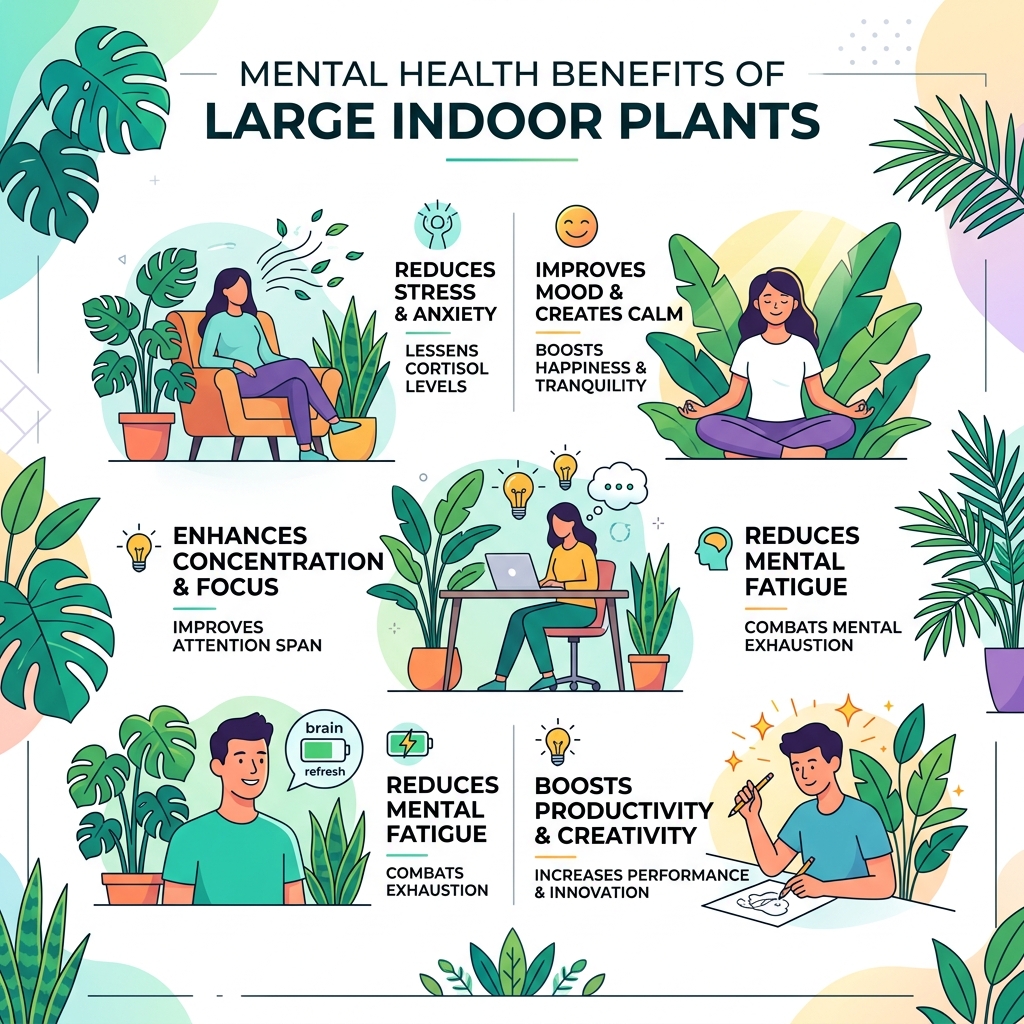
And the payoff is real. Research shows that living plants reduce cortisol levels and lower blood pressure more effectively than pictures or faux alternatives. A single tall plant in a corner can anchor a room, clean the air, and make your home feel like a completely different space.
Whether you’ve killed every plant you’ve ever owned or you’re just starting out, this list is built for you.
Why Choose Big Low Maintenance Indoor Plants for Your Home?
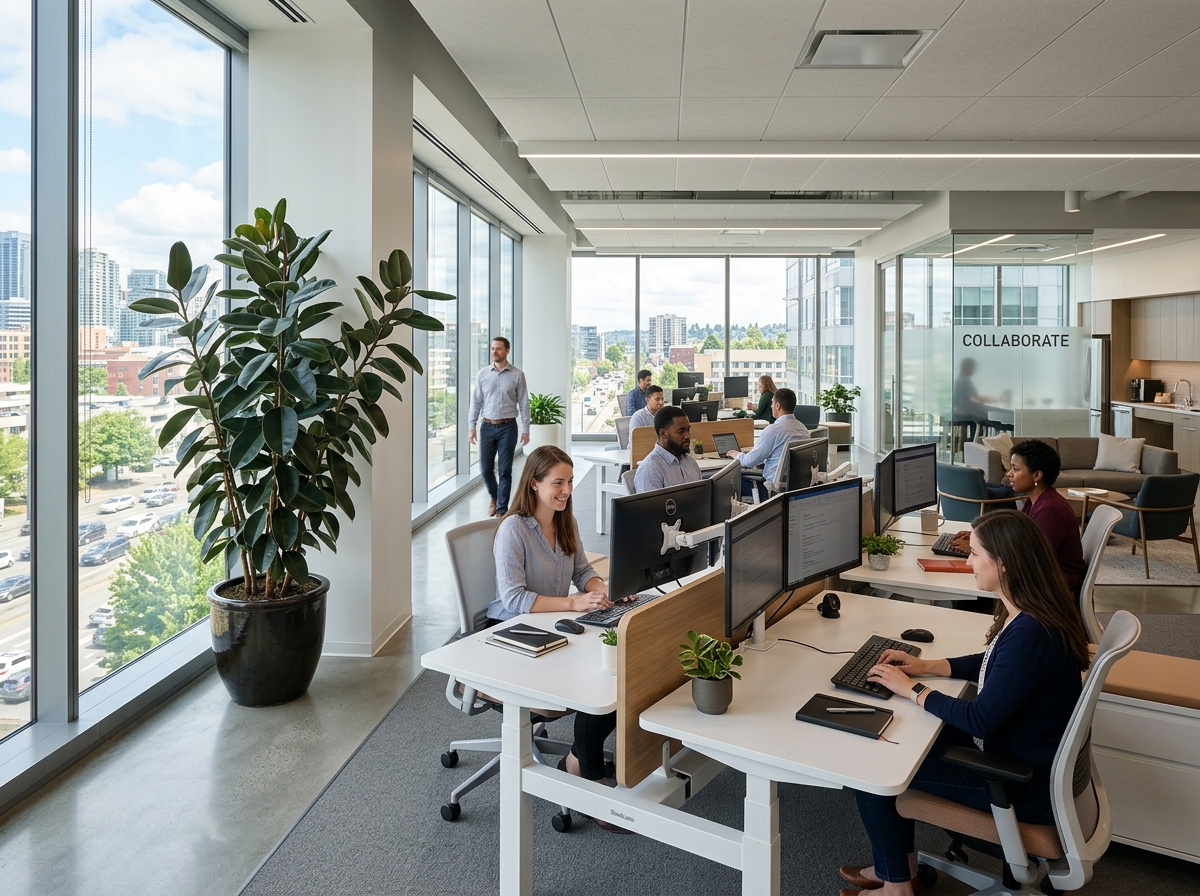
When we think about interior design, we often focus on furniture and paint. However, adding big low maintenance indoor plants is one of the most effective design moves we can make to anchor a room. These botanical giants provide a focal point that draws the eye upward, making ceilings feel higher and spaces feel more structured.
Beyond aesthetics, the health benefits are backed by science. The famous NASA Clean Air Study highlighted that many large-scale plants, such as palms and rubber trees, excel at removing indoor toxins like benzene and formaldehyde. Because these plants have a larger leaf surface area, they are essentially high-powered air purifiers that work 24/7 for free.
If you are someone who travels often or simply forgets that plants exist for weeks at a time, you are actually the perfect candidate for these species. Many of these varieties are hardy indoor plants for busy people because they have evolved to survive in harsh environments. In fact, many of the best options are indoor plants that survive neglect better than they handle over-attention.
| Plant Name | Mature Indoor Height | Light Requirement | Watering Frequency |
|---|---|---|---|
| Snake Plant | 3–4 feet | Low to Bright Indirect | Every 3–4 weeks |
| Majesty Palm | 8–10 feet | Bright Indirect | When top inch is dry |
| Rubber Tree | 6–10 feet | Medium to Bright | Every 1–2 weeks |
| Yucca | 8–10 feet | Bright Direct/Indirect | Every 3–4 weeks |
| ZZ Plant | 3 feet | Very Low to Bright | Every 2–3 weeks |
Top 10 Large Houseplants for Beginners
Starting your indoor jungle doesn’t require a degree in botany. The key is to choose “specimen plants”—large, individual plants that can stand alone as a piece of living furniture. These plants provide vertical interest, filling those awkward empty corners that a chair or lamp just can’t quite fix.
By selecting easy indoor plants for beginners, we ensure that our first experience with “big greenery” is a successful one. Let’s dive into the specifics of the top 10 big low maintenance indoor plants that will thrive in your home with minimal effort.
1. Snake Plant (Dracaena trifasciata)
The Snake Plant is the undisputed king of low-maintenance greenery. According to the Snake plant – Dracaena trifasciata | Kew botanical records, this plant is native to tropical Africa and has evolved a fascinating survival mechanism called CAM (Crassulacean Acid Metabolism). This means it opens its stomata at night to take in CO2, reducing water loss during the heat of the day.
Because of this, it is one of the best low water indoor plants available. It can easily go a month without a drink. Its stiff, sword-like leaves grow vertically, making it perfect for narrow spaces. It’s also a powerhouse for oxygen production at night, making it a popular choice for bedrooms.
2. ZZ Plant (Zamioculcas zamiifolia)
If you have a room with almost no natural light, the ZZ plant is your best friend. As detailed by The ZZ Plant | Yard and Garden, this plant features thick, fleshy stalks and shiny, waxy leaves that look like they’ve been polished.
The secret to its “unkillable” nature lies beneath the soil. ZZ plants grow from large, potato-like rhizomes that store water for long periods. This makes them indoor plants that need little care because they prefer to be left alone. We recommend watering only when the soil is bone-dry all the way through.
3. Monstera Deliciosa
Commonly known as the “Swiss Cheese Plant” due to the natural holes (fenestrations) in its leaves, the Monstera Deliciosa is the ultimate statement plant. While it starts small, it can quickly grow to 8 or 10 feet tall if given a moss pole for support.
Monsteras love bright, indirect light but are surprisingly adaptable to medium light levels. They bring a lush, tropical scale to any room. Just give them a sturdy pot—their heavy leaves and thick aerial roots can make them a bit top-heavy as they reach for the ceiling!
4. Rubber Tree (Ficus elastica)
The Rubber Tree is a classic for a reason. With its thick, leathery leaves—often in a deep burgundy or variegated white—it offers a sturdy trunk and a tree-like silhouette. It is excellent at air cleaning, specifically targeting toxins found in home furniture and carpets.
For those following indoor plant care tips for busy people, the Rubber Tree is ideal because it requires very little pruning. To keep it healthy, simply wipe the large leaves with a damp cloth once a month to remove dust, which helps the plant “breathe” and absorb light more efficiently.
5. Bird of Paradise
If you want “quiet luxury” in your living room, the Bird of Paradise (Strelitzia reginae) is the answer. It features massive, banana-like leaves that fan out to create a dramatic architectural display. While it can reach 6 feet indoors, it does require a bit more light than a Snake Plant. Place it near a sunny window, and it will reward you with steady growth. It’s a perfect floor plant for anchoring a large sofa or a sunny corner.
6. Majesty Palm
The Majesty Palm is the go-to choice for filling large, empty corners with feathery, tropical fronds. It can reach heights of 8 to 10 feet indoors, creating an instant “resort” vibe. While many palms are finicky, the Majesty Palm is one of the more reliable low maintenance plants for offices and homes because it can handle slightly lower light than its cousins. Just keep it away from cold drafts and give it a misting now and then to keep its humidity levels up.
7. Corn Plant (Dracaena fragrans)
The Corn Plant doesn’t actually grow corn, but its variegated leaves look remarkably like the stalks found in a field. It grows on thick, woody canes, giving it a very structural, tree-like appearance. It is a slow grower, which makes it one of the best low maintenance plants for offices-2/ because it won’t outgrow its designated space too quickly. It’s also quite narrow, making it perfect for tight hallways or corners.
8. Dragon Tree (Dracaena marginata)
With its spiky, red-edged leaves and slender, curving trunks, the Dragon Tree looks like something out of a modern art gallery. It is incredibly neglect-tolerant and can survive in lower light conditions for years. Its architectural form makes it a favorite for minimalist or modern home decor styles. If it gets too tall, you can simply snip the top off, and it will sprout new heads lower down!
9. Umbrella Tree (Schefflera)
The Umbrella Tree gets its name from its clusters of leaves that radiate out like the ribs of an umbrella. It is a bushy, fast-growing plant that can quickly fill a space with greenery. It’s one of those indoor plants that survive neglect-2/ because it isn’t overly picky about its watering schedule. It thrives in indirect sun and provides a soft, textured look that contrasts well with harder furniture lines.
10. Yucca Elephantipes
The “Spineless Yucca” is a desert native, which tells you everything you need to know about its care: it loves light and hates being overwatered. It features thick, wood-like stems and tough, green leaves. Because it is so drought-resistant, it is the perfect plant for the “forgetful” gardener. We often recommend this for high-light areas where other plants might scorch or dry out too fast.
Essential Care for Big Low Maintenance Indoor Plants
Maintaining big low maintenance indoor plants is mostly about setting them up for success from day one. Because these plants live in larger pots, they don’t need to be repotted often—usually only once every 3 to 5 years.
One of our top tips is to ensure you use a well-draining potting soil. Large pots hold a lot of dirt, and if that dirt stays soggy, it can lead to root rot. Always check that your decorative pot has drainage holes at the bottom. If it doesn’t, keep the plant in its plastic nursery liner and place that inside the decorative pot (this is called “double potting”).
Watering and Light Requirements for Big Low Maintenance Indoor Plants
The number one killer of indoor plants is “liquid love”—also known as overwatering. For most large plants, you should perform the “topsoil test.” Stick your finger two inches into the soil; if it feels damp, wait. If it’s dry, it’s time for a drink.
Light requirements vary, but “bright indirect light” is the sweet spot for almost everything on this list. This means a spot where the plant can see the sky but isn’t being hit by the direct, burning rays of the afternoon sun.
To prevent your plant from looking like the Leaning Tower of Pisa, remember to rotate it. Every time you water, give the pot a quarter-turn. This ensures all sides get equal light and the plant grows straight up. For more tips on managing moisture, check out our guide on low water indoor plants-2/.
Styling and Budget Tips for Big Low Maintenance Indoor Plants
You don’t have to spend hundreds of dollars to get the “big plant” look. Here are our favorite budget hacks:
- Buy Small, Grow Big: Most of the plants on this list grow relatively quickly. Buying a 2-foot Monstera is much cheaper than buying a 5-foot one. With a little patience and consistent light, it will reach floor-plant status in a year or two.
- Use Plant Stands: If your plant isn’t quite tall enough to anchor a corner, put it on a stand! Elevating a medium-sized plant by 12–18 inches instantly gives it the presence of a much larger specimen.
- Style by Decor:
- Modern: Use sleek, ceramic pots in matte black or white for Snake Plants and Dragon Trees.
- Boho: Pair a Monstera or Majesty Palm with a woven seagrass basket.
- Minimalist: A single, large Rubber Tree in a simple terracotta pot can act as the only “decor” a room needs.
Troubleshooting and Pet Safety
Even the easiest plants can run into trouble. If you notice “leggy” growth (long stems with few leaves), your plant is likely “stretching” for more light. Move it closer to a window. If you see browning tips, it might be a sign of low humidity or tap water chemicals; try using filtered water or grouping your plants together to create a tiny humid microclimate.
A Note on Pet Safety: Many of the most popular big low maintenance indoor plants, including the Snake Plant, ZZ Plant, and Rubber Tree, contain saponins or calcium oxalate crystals. These can be toxic if chewed on by curious cats or dogs. If you have pets, we recommend sticking to non-toxic varieties like the Majesty Palm, Parlor Palm, or Spider Plant. Always check toxicity levels before bringing a new “green roommate” home to your furry friends.
Frequently Asked Questions about Large Houseplants
Which big plants are safe for cats and dogs?
If you are looking for pet-friendly decor, palms are your best bet. The Majesty Palm and Parlor Palm are completely non-toxic. Spider plants are also safe and can grow quite large and bushy when placed in a pedestal planter. Always avoid Sago Palms, which are highly toxic.
How do I make my small plant grow into a large floor plant?
Patience is key, but you can speed things up with “annual soil top-ups.” Every spring, remove the top two inches of old soil and replace it with fresh, nutrient-rich potting mix. Ensure the plant is in a spot with “consistent light”—not too dark, or it will stop growing to save energy.
Can these plants survive in rooms with no windows?
No plant can survive in total darkness forever. However, the Snake Plant and ZZ Plant are famous for their endurance. They can survive for months in low-light conditions or under standard office fluorescent lighting. If you have a windowless room, we recommend using a “grow light” bulb in a standard lamp to give them the energy they need to thrive.
Conclusion
At Futuro Ciencia, we believe that everyone deserves to live in a tranquil oasis. Adding big low maintenance indoor plants is the fastest way to transform a sterile room into a living, breathing sanctuary. These plants don’t just brighten your corners; they purify your air and calm your mind.
By choosing species that practically grow themselves, you can enjoy all the benefits of a lush indoor jungle without the stress of a complicated maintenance schedule. Whether you start with a towering Yucca or a nearly indestructible ZZ plant, your home transformation starts with just one pot.
Explore our full guide to big low maintenance indoor plants and start your journey toward a greener, healthier home today!
