
Why Your Low Allergy Houseplants Choice Matters More Than You Think
Making the right low allergy houseplants choice can genuinely improve the air you breathe at home — without triggering sneezing, itchy eyes, or asthma flare-ups.
Here are the top 8 allergy-safe indoor plants to consider:
- Snake Plant – rarely flowers indoors, filters air at night
- Spider Plant – reduces airborne mold spores by up to 78%
- Peace Lily – traps mold spores, produces non-airborne pollen
- Areca Palm – acts as a natural humidifier
- ZZ Plant – almost never flowers, very low pollen risk
- Chinese Evergreen – broad leaves trap dust effectively
- Dracaena Janet Craig – strong allergen filtration, low maintenance
- Parlor Palm – non-toxic, low pollen, pet-friendly
Here’s something most people don’t realize: indoor air can be 2 to 5 times more polluted than outdoor air, according to the EPA. The main culprits aren’t plants — they’re mold spores, dust mite fragments, and pet dander floating around your home.
The good news? The right plants can actually help fight those allergens rather than add to them.
But not every houseplant is a safe pick. Some flowering varieties release pollen in concentrated amounts indoors. Others create damp soil conditions that encourage mold. Choosing wisely makes all the difference.
This guide cuts through the noise and shows you exactly which plants are safe, why they work, and how to care for them without turning plant ownership into a second job.
Science-Backed Benefits of Your Low Allergy Houseplants Choice
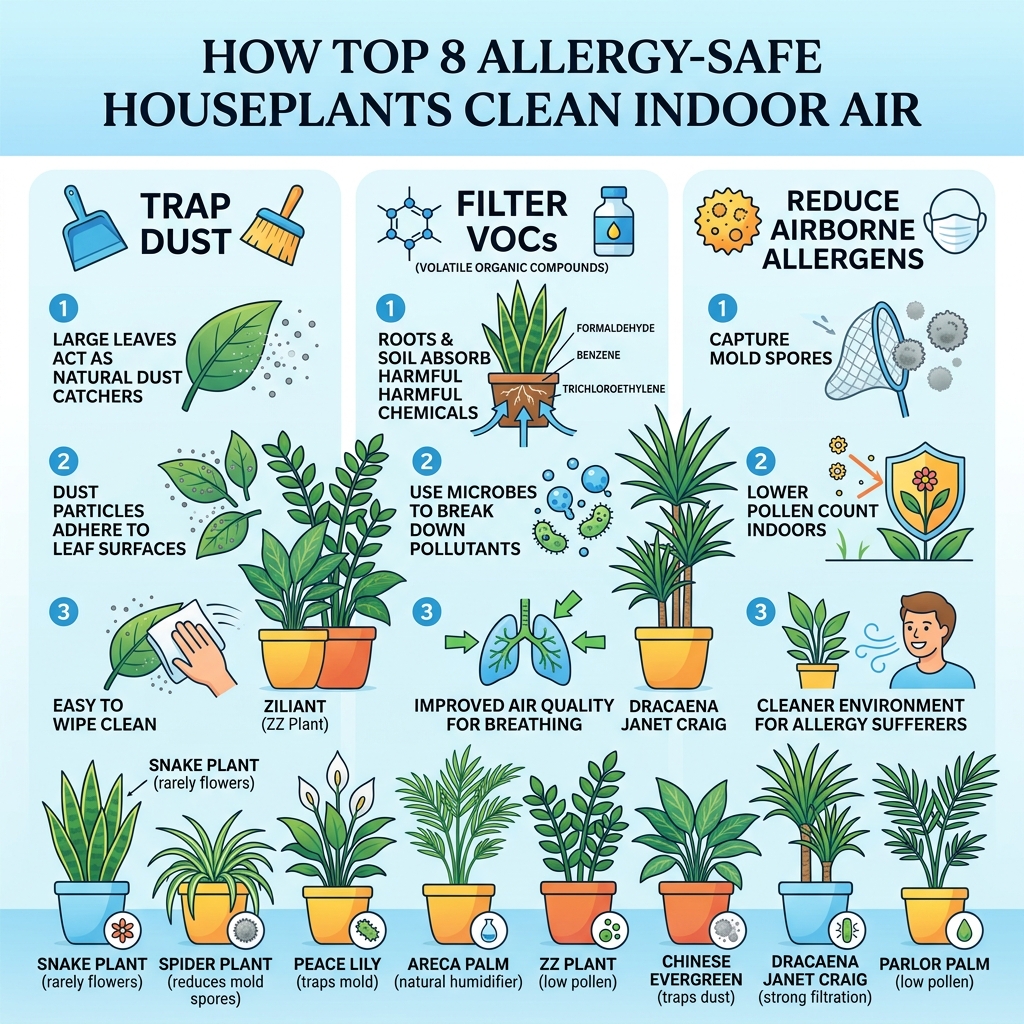
When we talk about a low allergy houseplants choice, we aren’t just looking for plants that won’t make you sneeze; we are looking for botanical partners that actively clean your environment. The relationship between indoor greenery and health was famously spotlighted by the 1989 NASA Clean Air Study. NASA researchers were looking for ways to clean the air in space stations, and they discovered that certain plants are remarkably efficient at removing Volatile Organic Compounds (VOCs) like formaldehyde, benzene, and trichloroethylene.
For those of us on Earth, these toxins often off-gas from everyday items like carpets, furniture glue, and cleaning supplies. Beyond chemical filtration, these plants offer a biological shield. For instance, a 2020 study from the University of Copenhagen found that Snake Plants could reduce airborne endotoxin levels — which are known triggers for asthma — by up to 32% in just 72 hours.
Another critical factor for allergy sufferers is humidity. Dry air can irritate the nasal passages, making you more susceptible to allergens. According to the American College of Allergy, Asthma & Immunology, maintaining a relative humidity (RH) of 45–55% is the “allergy-safe” sweet spot. Plants like the Boston Fern and Areca Palm release moisture through a process called transpiration, helping to keep your home in that healthy range.
For more deep-dives into the science of air cleaning, you can explore NASA’s Secret List: The Best Air-Cleaning Plants for Bedroom Health and read about Hypoallergenic Houseplants: Best & Worst Plants for Allergies.
Comparison Table: Allergy-Safe Efficiency
| Plant Name | Primary Allergy Benefit | Light Requirement | Best Placement |
|---|---|---|---|
| Snake Plant | Toxin removal & Night O2 | Low to Bright Indirect | Bedroom |
| Spider Plant | Mold spore reduction (78%) | Bright Indirect | Living Room |
| Peace Lily | Filters mold & VOCs | Low to Medium Indirect | Bathroom/Bedroom |
| Areca Palm | Natural humidifier | Bright Indirect | Large Living Spaces |
| ZZ Plant | Low pollen / Dust resistant | Low to Medium | Office/Hallway |
| Chinese Evergreen | Dust trapping | Low to Medium | Any Room |
| Dracaena Janet Craig | Formaldehyde filtration | Medium Indirect | Office |
| Parlor Palm | Low pollen / Pet-safe | Low to Medium | Apartment/Small Space |
Top 8 Allergy-Friendly Plants for a Sneeze-Free Home
Selecting the right greenery involves looking at the botanical traits of the plant. Does it flower often? (Bad for pollen). Are the leaves fuzzy? (Bad for dust). Is it prone to root rot? (Bad for mold). Here are our top picks for a healthy, high-style home.
1. Snake Plant (Sansevieria)
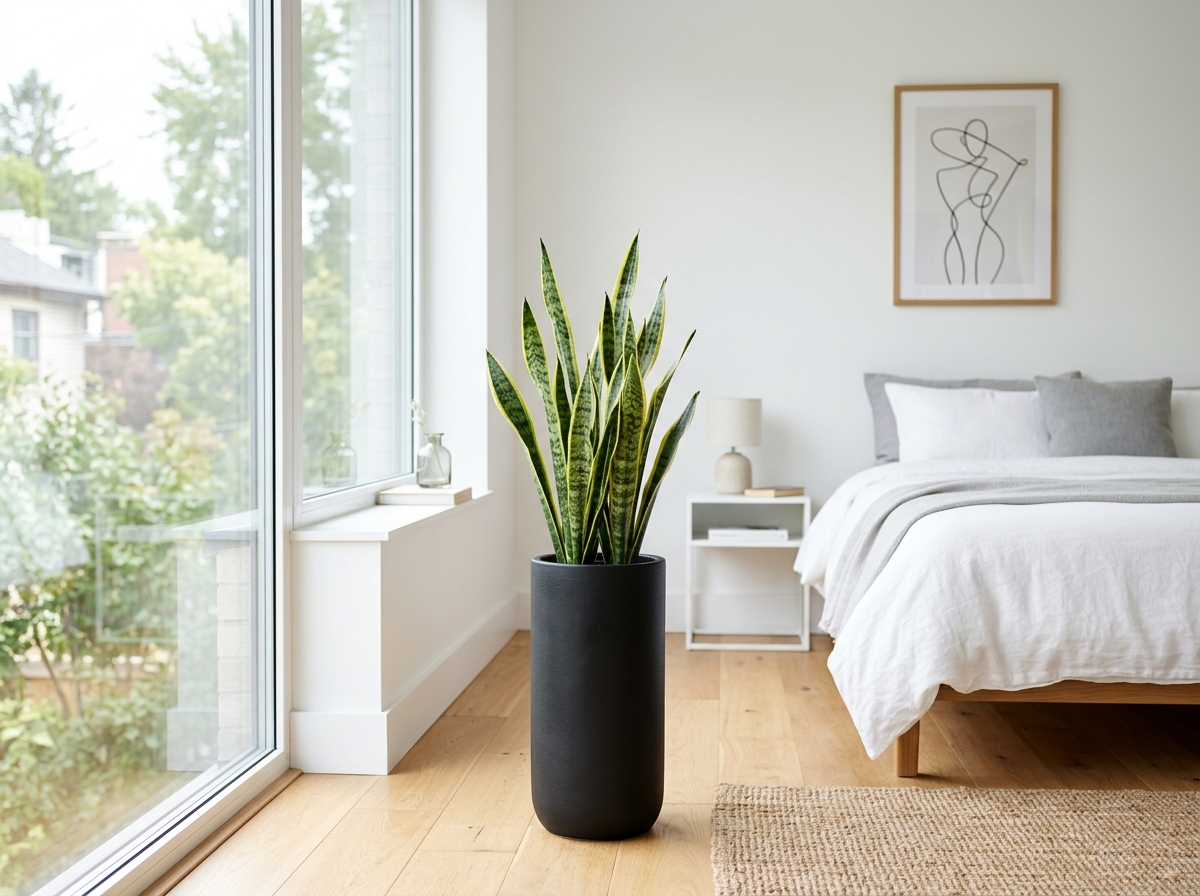
The Snake Plant is arguably the king of the low allergy houseplants choice. It is famous for its “Crassulacean Acid Metabolism” (CAM) photosynthesis. Unlike most plants that release oxygen during the day, the Snake Plant does it at night, making it the perfect bedroom companion. Because it rarely flowers indoors, the risk of pollen is virtually zero. Its upright, waxy leaves are also incredibly easy to wipe clean, preventing dust buildup.
2. Spider Plant (Chlorophytum comosum)
If you struggle with mold allergies, the Spider Plant is your best friend. A 2018 study from the University of Georgia showed that Spider Plants removed 78% more airborne mold spores per square meter per hour than rooms without plants. They are also incredibly resilient and safe for pets. Check out Our Favorite Air-Filter Plants: Indoor Collections for a Fresher Home to see why we love them.
3. Peace Lily (Spathiphyllum)
The Peace Lily is a heavy hitter in air purification. In a 2022 study published in Building and Environment, rooms with four mature Peace Lilies saw a 41% reduction in viable Cladosporium mold spores. While it does flower, the “pollen” it produces is heavy and sticky, meaning it falls to the leaf or floor rather than floating through the air. If you are extremely sensitive, you can simply snip the flower off at the base before it fully opens.
4. Areca Palm (Dypsis lutescens)
Known as a “natural humidifier,” a mature Areca Palm can release a significant amount of moisture into the air. This is vital for those with dry-sinus-triggered allergies. It is also one of the top plants for removing common household toxins. Because it is a “female” palm variety (if it flowers), it doesn’t produce the airborne pollen that male palms do.
5. ZZ Plant (Zamioculcas zamiifolia)
The ZZ plant is the ultimate “set it and forget it” plant. It thrives in low light and requires very little water, which reduces the risk of overwatering and subsequent mold growth in the soil. Its leaves are smooth and shiny, making them naturally resistant to dust accumulation. It’s an excellent low allergy houseplants choice for offices or dark corners. You can learn more about similar options in our guide to Easy Indoor Plants for Beginners.
6. Chinese Evergreen (Aglaonema)
The Chinese Evergreen is prized for its large, patterned leaves. These broad surfaces act like biological “dust magnets,” pulling particles out of the air. As long as you keep the leaves clean, this plant acts as a passive air filter. It’s also incredibly hardy and can handle the lower light levels found in many modern apartments.
7. Dracaena Janet Craig
The “Janet Craig” variety is specifically noted for its ability to filter formaldehyde. It has a structural, tree-like appearance but stays relatively compact. It is a slow grower, which means it won’t outgrow its pot or its welcome in your home too quickly. For more apartment-friendly ideas, see our list of Low-Light Indoor Plants for Apartments.
8. Parlor Palm (Chamaedorea elegans)
The Parlor Palm has been a favorite since Victorian times for a reason: it’s tough and elegant. It produces very little pollen and is completely non-toxic to cats and dogs. It’s a great way to add a tropical vibe to a room without introducing the high-pollen risks associated with larger, outdoor palm varieties.
Maintenance and Care for Your Low Allergy Houseplants Choice
Owning a plant is only half the battle; how you care for it determines whether it helps your allergies or hurts them. The two biggest risks with indoor plants are dust and mold.
Dust Prevention
Plants with large leaves are excellent at trapping dust, but if that dust stays on the leaf, it can eventually be released back into the room. We recommend wiping your plant leaves with a damp microfiber cloth every 7 to 10 days. This not only keeps the air clean but also allows the plant to photosynthesize more efficiently. For more tips on maintaining these beauties, check out Indoor Plants that Thrive in Low Light.
Mold Avoidance
Mold is the primary concern for many allergy sufferers. Mold grows when soil stays soggy for too long. To prevent this:
- Use well-draining soil: Mix in perlite or coarse sand to ensure water doesn’t sit.
- Wait to water: Only water when the top 1-2 inches of soil are dry to the touch. You can find more advice on this in our guide to Low Water Indoor Plants.
- Airflow: Ensure the room has decent circulation. Stagnant air is a breeding ground for spores.
- Monitor Humidity: Keep your home between 40-60%. If it goes above 65%, mold can begin to thrive regardless of your plants.
Caring for Your Low Allergy Houseplants Choice
For those with a busy schedule, we suggest “bottom watering.” Place your pot in a tray of water for 15-20 minutes and let the plant soak up what it needs. This keeps the top layer of soil dry, which significantly discourages mold and fungus gnats. We discuss these techniques further in Hardy Indoor Plants for Busy People and Indoor Plants that Survive Neglect.
How to Introduce Your Low Allergy Houseplants Choice Safely
If you have severe allergies, don’t turn your home into a jungle overnight. We recommend the “one-at-a-time” method.
- Introduction: Bring one new plant home.
- Monitoring: Observe your symptoms for 72 hours.
- Quarantine: Keep the new plant in a separate room initially to ensure it doesn’t have “hitchhiking” allergens like outdoor pollen on its leaves.
- Soil Prep: Consider repotting new plants with fresh, pasteurized potting mix to ensure the soil is mold-free from the start.
To identify your current plants and see if they fit the bill, browse our guide: Meet Your New Roommates: 50 Most Common House Plants with Pictures.
Plants to Avoid and Common Allergy Myths
Not all “green” is good for everyone. If you are prone to hay fever or asthma, stay away from these common triggers:
- Weeping Fig (Ficus benjamina): Their sap contains latex, which can become airborne and trigger reactions in people with latex sensitivities.
- Male Palms: Unlike female palms, male varieties release clouds of fine pollen.
- Ferns: Specifically those that produce spores on the underside of their fronds, like the Staghorn fern.
- Flowering Plants: Avoid Daisies, Chrysanthemums, and Sunflowers, which are high-pollen producers.
Common Myths
- Myth: Plants can replace a HEPA filter. While plants help, they aren’t mechanical filters. They are best used alongside a good air purifier.
- Myth: All flowers are bad. As we saw with the Peace Lily, some flowers produce heavy pollen that doesn’t stay airborne.
- Myth: Potting soil is always moldy. With proper drainage and watering, potting soil is perfectly safe. It’s the overwatering that causes the problem.
Frequently Asked Questions about Allergy-Friendly Plants
How many plants do I need per room for cleaner air?
The NASA recommendation for efficient air cleaning is at least one plant per 100 square feet of space. However, for a noticeable improvement in allergy mitigation, we suggest 3 to 5 medium-sized plants (in 6–8 inch pots) for an average-sized bedroom (120–150 sq. ft.).
Which of these plants are safe for pets and children?
Safety is a priority for us at Futuro Ciencia. According to ASPCA guidelines:
- Spider Plants and Areca Palms are non-toxic to cats and dogs.
- Snake Plants and Peace Lilies can cause mild irritation if ingested (mechanical irritation), so they should be kept on high shelves out of reach of curious pets and toddlers.
Can houseplants actually reduce airborne mold?
Yes! As mentioned earlier, the University of Georgia study confirmed that Spider Plants can significantly reduce airborne mold. Furthermore, Peace Lilies have been shown to reduce Cladosporium spores. The plants don’t just “eat” the mold; the root microbiome and the moisture levels they provide create an environment where mold is less likely to stay airborne.
Conclusion
Creating a healthy home environment doesn’t mean you have to live in a sterile, plant-free box. By making a smart low allergy houseplants choice, you can enjoy the mental and physical benefits of nature while actually improving your indoor air quality.
At Futuro Ciencia, we believe that your home should be a tranquil oasis. Whether you are looking for air-purifying giants or low-maintenance desk buddies, we are here to help you transform your space with plants that brighten your day without irritating your nose.
Ready to breathe easier? Transform your home with our expert indoor plant care guides and find the perfect green companion for your clear-headed home today.
