
What You Need to Know About Black Goldfish Plant Care
Black goldfish plant care is simpler than it looks — here’s the quick version:
- Light: Bright, indirect light; near an east-facing window is ideal
- Water: Let the top inch of soil dry out before watering; roughly every 9 days for a 5″ pot
- Soil: Well-draining mix with perlite or coco coir; pH 5.5–6.5
- Temperature: 65°F–80°F (18°C–27°C); never below 50°F (10°C)
- Humidity: 50–60% or higher
- Fertilizer: Every two weeks in spring and summer, half-strength, high-phosphorus formula
- Toxic to pets? No — safe for cats, dogs, and kids
Meet one of the most rewarding houseplants you can grow indoors.
The Black Goldfish Plant (Nematanthus gregarius, also sold as Nematanthus ‘Black Gold’) is a tropical epiphyte native to the rainforests of Brazil. In the wild, it grows on other trees — not in the ground — which explains everything about how it wants to be cared for: good airflow, fast-draining soil, warm temperatures, and plenty of indirect light.
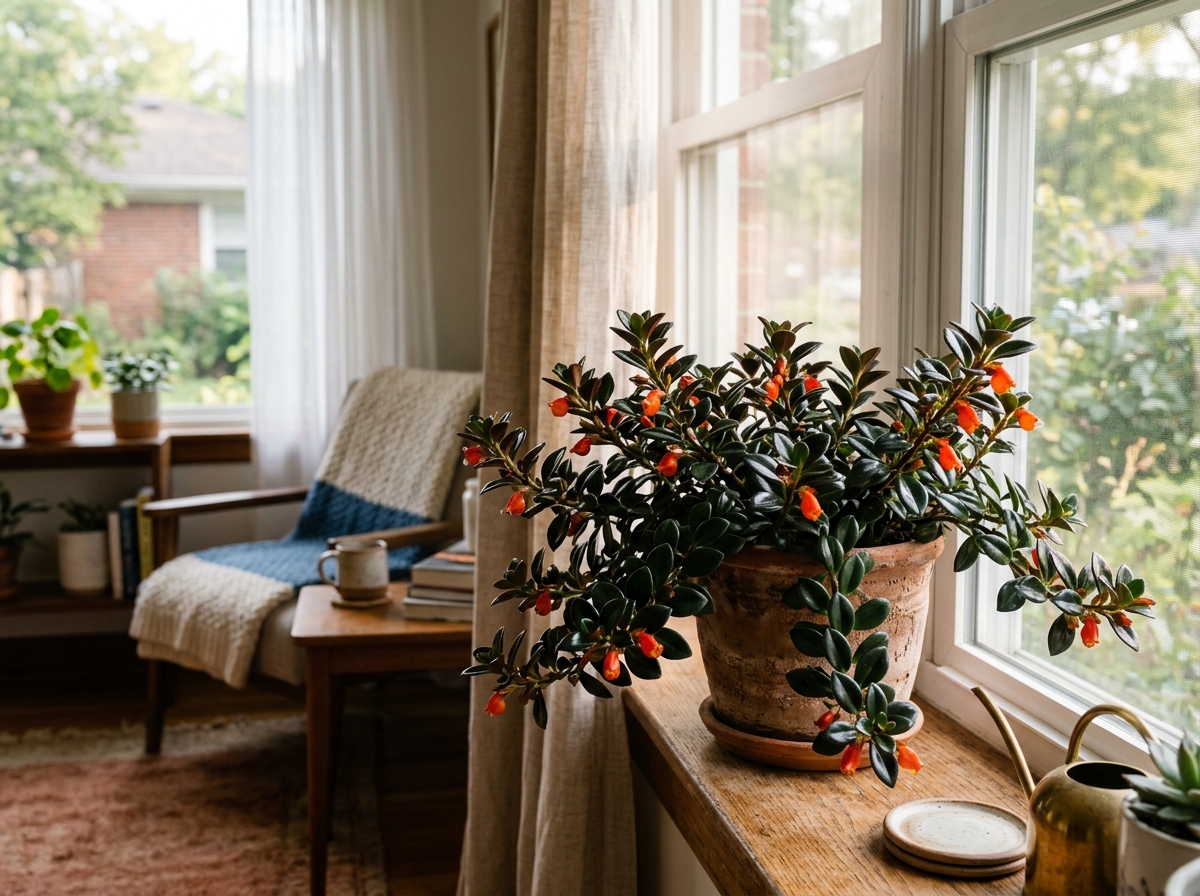
Its dark, glossy leaves give it a rich, lush look year-round. But the real showstopper? Its small, puffy, orange-red blooms that are shaped — unmistakably — like tiny leaping goldfish.
It’s part of the Gesneriaceae family, which also includes African violets and lipstick plants. And like those relatives, it has a reputation for being “a tad fussy” — but most problems come down to one thing: overwatering.
If you’re a busy plant owner who wants a striking, pet-safe, tropical plant that actually blooms indoors, this guide covers everything you need.
Mastering Black Goldfish Plant Care: Light, Water, and Soil
Successfully mastering black goldfish plant care starts with understanding its origins. Because this plant is an epiphyte, its roots aren’t designed to sit in heavy, waterlogged mud. They want to breathe! To mimic the Brazilian rainforest in your living room, we need to focus on three pillars: light, hydration, and the right “bedding” (soil).
Optimal Light for Black Goldfish Plant Care
Think of the light under a jungle canopy—dappled, bright, but rarely hitting the leaves directly. For the best results, place your plant less than three feet from a window. An east-facing window is the “Goldilocks” zone: it provides gentle morning sun without the scorching heat of the afternoon.
If you notice the stems becoming “leggy” (long gaps between leaves), your plant is stretching for more light. Conversely, if the leaves look bleached or develop brown, crispy spots, it’s getting a sunburn. We recommend providing 10 to 13 hours of light daily. If your home is a bit dark, don’t worry—you can supplement with LED grow lights placed about 6 to 12 inches above the foliage. For more tips on managing darker spaces, check out our guide on indoor-plant-care-for-low-light.
Understanding indoor-plant-light-requirements is the secret to getting those iconic goldfish blooms to appear. Without enough energy from the sun, the plant will focus on survival rather than flowering.
Watering Best Practices for Black Goldfish Plant Care
Watering is where most “plant parents” go wrong. The black goldfish plant care routine requires a “drench and dry” approach. We suggest waiting until the top inch of soil feels dry to the touch before watering again.
A great pro-tip is bottom watering. By placing the pot in a tray of water for 10-15 minutes, the roots soak up exactly what they need without getting the leaves wet. This is important because water sitting on the waxy leaves can cause unsightly brown spots. Always use room-temperature water; cold tap water can shock the tropical roots and lead to leaf drop. If your tap water is heavily chlorinated or high in fluoride, consider using filtered or distilled water to keep the leaf tips from browning.
For a more detailed look at how to time your hydration, see our watering-schedule-for-indoor-plants.
The Perfect Soil Mix
Don’t just grab a bag of “garden soil”—it’s too heavy. The best-soil-for-indoor-plants for a Nematanthus is a peat-based or coco-coir-based mix that stays airy. We love adding a handful of perlite or orchid bark to the mix to ensure maximum drainage. Aim for a slightly acidic pH between 5.5 and 6.5.
| Component | Purpose | Ratio |
|---|---|---|
| Peat Moss / Coco Coir | Moisture retention | 50% |
| Perlite | Aeration/Drainage | 30% |
| Vermiculite / Orchid Bark | Nutrient holding/Air pockets | 20% |
Creating the Perfect Tropical Oasis: Temperature and Humidity
If you want your Black Goldfish Plant to feel at home, you need to keep things cozy. These plants thrive in temperatures between 65°F and 80°F (18°C–27°C). They are quite sensitive to the cold; if the temperature drops below 50°F (10°C), the plant might “protest” by dropping its leaves or, worse, dying.
Humidity and Winter Care
In the rainforest, humidity is rarely below 50%. Our modern heaters and air conditioners tend to dry out the air, which can be a nightmare for your plant. To fix this, you can:
- Use a pebble tray: Fill a tray with pebbles and water, then set the pot on top (ensure the pot isn’t sitting in the water).
- Mist daily: Use a spray bottle with room-temperature water.
- Group plants: Tropical plants “breathe” out moisture, creating a mini-humidified zone when clustered together.
Check out our humidity-tips-for-houseplants for more creative ways to boost moisture.
During the winter, the plant enters a semi-dormant state. Its growth slows down, and its water needs decrease significantly. During this time, move it away from drafty windows or hot radiators, as sudden temperature fluctuations are a leading cause of stress for the Gesneriaceae family.
Fertilizing for Prolific Blooms
To get a “royal show” of orange fish, you need to feed your plant. During the growing season (spring through summer), use a water-soluble fertilizer every two weeks. We recommend a high-phosphorus formula (look for a 10-30-10 ratio) diluted to half-strength. Phosphorus is the fuel that drives flower production.
In the autumn and winter, stop fertilizing entirely. Giving the plant nutrients when it’s trying to rest can lead to salt build-up in the soil, which burns the roots. You can learn more about fertilizing-houseplants-naturally to keep your oasis chemical-free.
Maintenance: Pruning, Repotting, and Propagating Nematanthus
A little “tough love” goes a long way with black goldfish plant care. Without regular maintenance, these plants can become leggy and sparse.
Pruning for Bushy Growth
The best time to prune is right after the blooming cycle ends or in early spring. Don’t be afraid! You can prune the stems back by up to half their length. This encourages the plant to branch out, resulting in a much fuller, bushier appearance. Always use sterilized pruners to avoid spreading disease. For more techniques, see our pruning-tips-for-indoor-plants.
When to Repot
Unlike many plants, the Black Goldfish Plant actually likes to be slightly rootbound. This “crowded” feeling often triggers the plant to produce more flowers. We recommend learning how-to-repot-indoor-plants only every 2 to 3 years, or when you see roots peeking out of the drainage holes.
When you do repot, choose a container only 2 inches larger than the current one. If the pot is too big, the excess soil stays wet for too long, which is a one-way ticket to root rot. If you’re ready for a refresh, follow our guide on how-to-repot-indoor-plants-2.
Propagating New “Goldfish”
Want more plants for free? Propagation is incredibly easy!
- Cut a 4-inch stem section just below a “node” (where a leaf meets the stem).
- Remove the bottom leaves.
- Dip the end in rooting hormone.
- Place it in a moist mix of perlite and peat.
- Cover loosely with a plastic bag to lock in humidity.
In a few weeks, you’ll have new roots and a brand-new plant to gift to a friend!
Solving Common Black Goldfish Plant Care Problems
Even the best plant parents run into trouble sometimes. The key is to act fast when you notice something is off.
Yellowing Leaves and Root Rot
If the leaves are turning yellow and feeling mushy, you are likely overwatering. This leads to root rot, where the roots literally suffocate. If you suspect this, stop watering immediately and let the soil dry out. In severe cases, you may need to repot the plant into fresh, dry soil and trim away any black, slimy roots.
Pest Control
Keep an eye out for “uninvited guests.” Common pests include:
- Mealybugs: Look like tiny bits of white cotton in the leaf joints.
- Spider Mites: Look for fine webbing on the undersides of leaves.
- Aphids: Small green or black bugs on new growth.
You can treat most infestations with neem oil or insecticidal soap. For a deep dive into bug removal, read our guide on indoor-plant-pests-and-how-to-remove-them or learn how-to-combat-houseplant-pests.
Leaf Drop
If your plant suddenly drops its leaves while they still look green, it’s usually a sign of a “cold shock” or a sudden change in environment. Ensure your plant isn’t in the path of an air conditioning vent or a drafty door.
Frequently Asked Questions about Goldfish Plants
Is the Black Goldfish Plant toxic to pets?
Good news for animal lovers! The Black Goldfish Plant is non-toxic to cats, dogs, and horses. While we don’t recommend letting your cat use it as a salad bar (it might still cause a mild tummy ache), it won’t cause serious harm. It’s one of our favorite indoor-plants-for-beginners-with-pets.
Why is my Goldfish Plant not blooming?
If your plant is healthy but “fishless,” check three things:
- Light: It needs bright, indirect light to have the energy to bloom.
- Fertilizer: Switch to a high-phosphorus food in the spring.
- Temperature: Ensure it’s staying above 65°F. Many low-maintenance-flowering-indoor-plants just need a little extra sun to show off.
How long do these plants typically live?
With proper black goldfish plant care, these beauties can live for a decade or more! Regular pruning and refreshing the soil every few years will keep the plant vigorous and youthful. Keep our indoor-plant-maintenance-checklist handy to track your plant’s progress through the years.
Conclusion
At Futuro Ciencia, we believe every home deserves a touch of tropical elegance. The Black Goldfish Plant is the perfect candidate for transforming your space into a tranquil oasis. Its epiphytic nature makes it a unique conversation starter, and its forgiving personality makes it a joy to grow.
By following a consistent indoor-plant-care-routine, you’ll be rewarded with a cascading curtain of glossy “black” leaves and a school of leaping orange fish all year long.
Ready to grow your indoor jungle? Explore our Indoor Plant Care Category for more expert guides and schedules!
