
When Your Plants Look Sick: A Quick Guide to Common Indoor Plant Diseases
Common indoor plant diseases fall into a few main categories that every plant owner should know:
| Disease | Key Symptom | Main Cause |
|---|---|---|
| Root rot | Brown, mushy roots; wilting | Overwatering, poor drainage |
| Powdery mildew | White powdery coating on leaves | High humidity, low airflow |
| Gray mold (Botrytis) | Gray-tan fuzzy growth on leaves/flowers | Excess moisture, dead plant material |
| Fungal leaf spots | Brown or black spots on leaves | Wet foliage, poor air circulation |
| Bacterial leaf spots | Watery, dark lesions; tissue collapse | Splashing water, warm humid conditions |
| Anthracnose | Dark sunken spots, tip dieback | Fungi (Colletotrichum, Gloeosporium) |
| Virus | Mosaic patterns, distorted growth | Infected plants, pest transmission |
Your plant looks off. The leaves are yellowing, there are strange spots, or something just seems wrong. But is it a disease, a pest, or just too much water? It’s hard to tell.
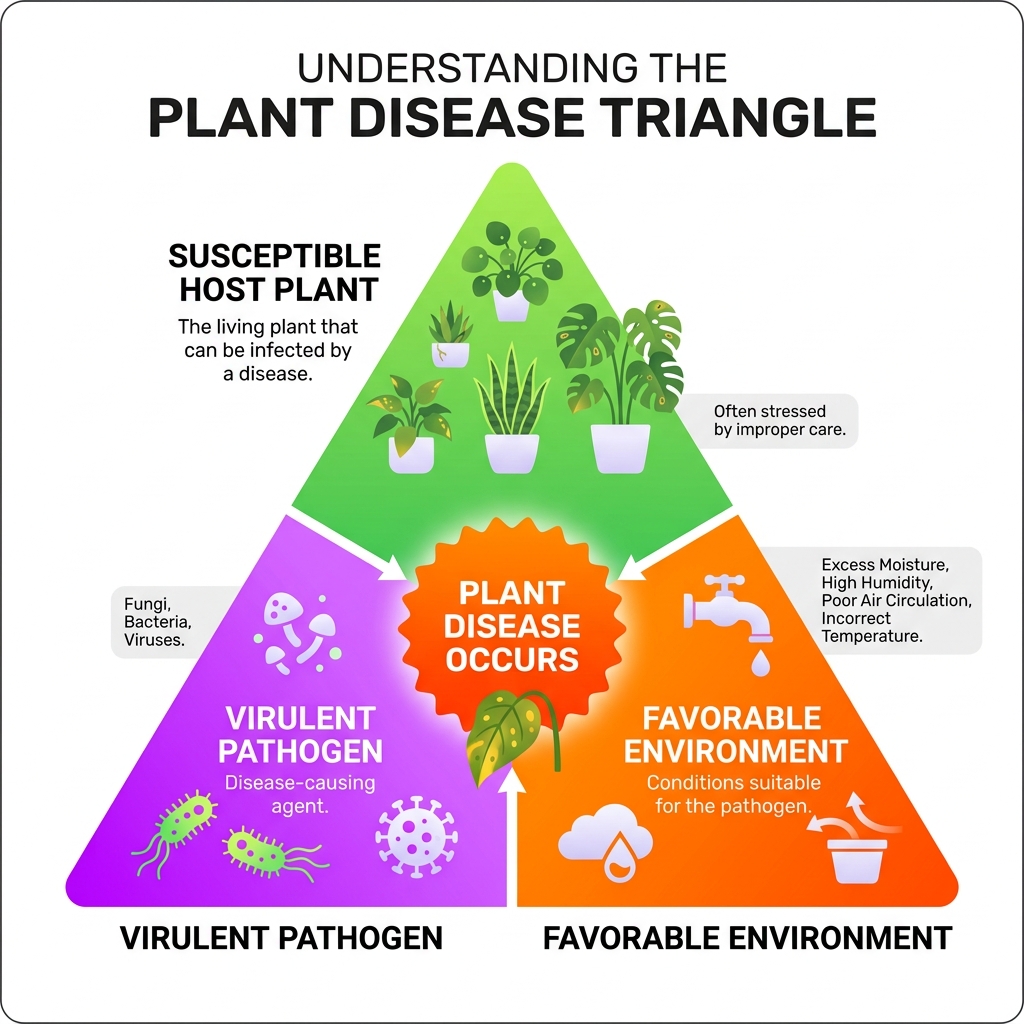
Here’s the thing: most houseplant problems are not actually diseases. They come from the wrong environment — too much water, too little light, stagnant air. True pathogens need the right conditions to take hold. When a plant is already stressed, diseases move in quickly.
The good news? Once you know what to look for, identifying and fixing these problems becomes a lot more manageable.
This guide walks you through the most common diseases affecting indoor plants, what causes them, and how to tell them apart from pests and environmental stress.
Identifying Common Indoor Plant Diseases: Fungal and Bacterial Pathogens
When we talk about common indoor plant diseases, we are usually referring to pathogens like fungi and bacteria. These microscopic invaders thrive in the cozy, often humid environments of our homes, especially if we get a little too enthusiastic with the watering can.
One of the most devastating issues we face as plant parents is root rot. Caused by water molds like Phytophthora and Pythium, this disease attacks the plant from the ground up. Because it starts underground, it is often advanced by the time we notice yellowing leaves or a “sad” appearance. If you suspect your plant is struggling below the surface, checking out indoor-plant-root-rot-solutions/ can provide immediate steps to save it.
Fungal leaf spots are another frequent visitor. These appear as distinct brown, black, or tan spots, often with a yellow halo. They spread through splashing water and poor air circulation. If your Monstera or Fiddle Leaf Fig is showing these marks, you might find our leaf-spotting-on-indoor-plants-a-guide-2/ particularly helpful for pinpointing the exact cause.
Bacterial leaf spots, while less common than fungal ones, are often more aggressive. They tend to look “water-soaked” or greasy and can lead to a total collapse of the leaf tissue. Unlike many fungal issues, bacterial diseases are notoriously difficult to treat with sprays, making prevention and sanitation your best friends. For a deeper dive into the technical side of these pathogens, the experts at Iowa State University offer a great resource on Diagnosing Houseplant Problems from Diseases | Yard and Garden.

Recognizing Symptoms of Common Indoor Plant Diseases
Identifying a disease is a bit like being a plant detective. You have to look for the clues the plant is leaving behind. Here are the symptoms we look for most often:
- Yellowing Foliage: While yellow leaves can mean many things, a general yellowing that starts at the bottom and moves up often signals root rot or nutrient issues.
- Mushy Stems: If the base of your plant feels soft or looks blackened, a fungal pathogen has likely taken hold of the crown or stem.
- White Powdery Coating: This is the classic sign of powdery mildew. It looks like someone dusted your plant with flour. It’s common on Grape Ivy, Begonias, and African Violets.
- Water-Soaked Lesions: Dark, soft spots that look like they are filled with liquid are a hallmark of bacterial infections.
- Stunted Growth: If a plant stops growing despite having plenty of light and food, a systemic infection might be the culprit.
Understanding these cues is the first step toward a cure. For a comprehensive look at how to handle these signs, check our guide on understanding-and-treating-houseplant-diseases/.
The Danger of Plant Viruses
Viruses are the “silent” threat in the indoor garden. Unlike fungi, which stay on the surface or in the soil, viruses circulate internally through the plant’s vascular system. This makes them essentially incurable.
Common symptoms of a viral infection include:
- Mosaic Patterns: Irregular light and dark green patches on the leaves.
- Ringspots: Concentric circles of yellow or brown.
- Distorted Leaves: Crinkled, narrowed, or otherwise “weird” looking new growth.
Because viruses are often spread by pests like aphids or through contaminated tools, sanitation is vital. If a plant is diagnosed with a virus, the hardest part is the solution: you must discard the plant. Keeping it around risks spreading the virus to your entire collection. The Indoor Plant Diseases | University of Maryland Extension provides excellent technical descriptions of these viral symptoms if you need a second opinion.
Environmental Triggers: Why Houseplant Diseases Develop
Pathogens are everywhere, but they only become a problem when the environment allows them to flourish. In the plant world, we call this the “Disease Triangle”: you need a susceptible host, a pathogen, and the right environment.
The biggest trigger for common indoor plant diseases is overwatering. More houseplants are killed by kindness (too much water) than by neglect. When soil stays soggy, roots can’t breathe. This lack of oxygen causes roots to die and rot, providing a buffet for fungal pathogens.
Other major triggers include:
- Poor Drainage: Pots without holes or saucers that are never emptied.
- Low Light: Plants in dark corners grow slowly and use less water, making them more prone to rot.
- Stagnant Air: Without airflow, moisture sits on leaves, inviting spores to germinate.
- Salt Buildup: Over-fertilizing or using hard water can lead to salt crusts on the soil, which stress the roots and make them vulnerable.
For more on how these cultural habits affect your plants, the Houseplant Diseases & Disorders | Home & Garden Information Center is an invaluable resource.
Impact of Humidity and Temperature
Humidity is a double-edged sword. While many tropical plants love it, high humidity combined with cool temperatures is a recipe for disaster.
Fungal spores, like those of gray mold (Botrytis), need a film of water to infect a plant. If your home is humid and the temperature drops at night, condensation forms on the leaves—giving those spores a perfect “landing strip.”
We also see physiological disorders like Oedema. This happens when a plant’s roots take up water faster than the leaves can release it through transpiration. The result? Internal cells burst, forming corky, blister-like swellings on the undersides of leaves. It’s not a disease, but it looks like one!
| Symptom | Overwatering | Underwatering |
|---|---|---|
| Leaf Texture | Soft, limp, or mushy | Dry, brittle, or crispy |
| Leaf Color | Yellowing or dull green | Brown edges or overall “off” color |
| Roots | Brown, black, slimy, smelly | Tan, dry, hollow, or shriveled |
| Soil | Stays wet for weeks; may have mold | Pulls away from the sides of the pot |
Distinguishing Disease from Pests and Abiotic Stress
One of the trickiest parts of plant care is telling the difference between a disease and a pest infestation. Some pests are so small they mimic the look of a fungus.
For example, spider mites are tiny arachnids that cause “stippling”—small yellow dots on leaves that can look like a fungal leaf spot from a distance. However, if you see fine webbing around the leaf joints, you’re dealing with mites, not a pathogen.
Mealybugs look like little bits of white cotton. Many people mistake them for a mold or mildew, but if you poke them with a cotton swab dipped in alcohol and they turn brown or dissolve, you’ve found a bug!
Fungus gnats are perhaps the most common nuisance. While the adults are just annoying, their larvae live in the soil and feed on organic matter and—you guessed it—plant roots. If you have a gnat problem, it’s often a sign your soil is too wet, which could lead to root rot. We have extensive guides on how-to-combat-houseplant-pests/ and indoor-plant-pests-and-how-to-remove-them/ to help you clear up these confusion points.
Abiotic Factors vs. Pathogens
“Abiotic” is just a fancy word for non-living. These are environmental stresses that cause symptoms that look like diseases but aren’t.
- Sunburn: Bleached, tan, or brown patches on the side of the plant facing the window.
- Nutrient Deficiency: If old leaves turn yellow but new ones are green, it might be a nitrogen deficiency. If new leaves are yellow with green veins, it’s likely iron deficiency.
- Fluoride/Chlorine Toxicity: Many plants (like Dracaena and Spider Plants) are sensitive to chemicals in tap water, which causes brown leaf tips.
- Chilling Injury: Cold drafts from windows can cause leaves to drop or develop dark, water-soaked spots that look like rot but are actually “frostbite.”
Prevention and Treatment: Keeping Your Indoor Oasis Healthy
Prevention is 90% of the battle. At Futuro Ciencia, we always say that a healthy plant is its own best defense.
Sanitation is your first line of defense. Always use sterile potting soil—never reuse soil from a diseased plant. If you are reusing old pots, scrub them thoroughly and soak them in a solution of one part bleach to nine parts water.
Quarantine is another secret weapon. When you bring a new plant home, keep it in a separate room for at least three weeks. This gives any hidden pests or diseases time to show up before they can jump to your existing collection.
If you do find a fungal issue, there are several treatments to try. For a deep dive into these methods, see our articles on indoor-plant-fungus-treatment/ and dealing-with-indoor-plant-fungus/.
Best Preventative Measures for Common Indoor Plant Diseases
To keep your indoor jungle thriving, we recommend these “Best Practices”:
- Monitor Regularly: Check the undersides of leaves and the stems every time you water.
- The Wet-Dry Cycle: For most plants, allow the top inch or two of soil to dry out before watering again. This prevents the constant moisture that fungi love.
- Space Them Out: Don’t crowd your plants. Good air circulation is the enemy of mold and mildew.
- Disinfect Your Tools: Wipe your pruning shears with isopropyl alcohol between every plant. This prevents you from accidentally moving a pathogen from one plant to the next.
- Use Natural Remedies: A simple spray of 1 tablespoon baking soda, 1/2 teaspoon non-detergent soap, and a gallon of water can help manage powdery mildew. Neem oil is also a fantastic natural preventative for both pests and some fungal issues.
For a more technical look at integrated pest management, the Houseplant Problems / Home and Landscape / UC Statewide IPM Program (UC IPM) offers a wealth of information on low-impact controls.
Frequently Asked Questions about Plant Health
How can I identify the symptoms of common indoor plant diseases?
Look for visual patterns. Fungal spots usually have defined borders, while bacterial spots look “melted.” Check the texture—powdery mildew is dry and dusty, while gray mold is fuzzy. Always look at the roots; if they aren’t firm and white/tan, you have a problem.
When should a severely diseased indoor plant be discarded?
If a plant has a virus, it must go immediately. If more than 50-70% of the root system is mushy and black, it is often more practical (and safer for your other plants) to discard it. Also, if you’ve been fighting a pest or disease for months with no progress, it might be time to start fresh.
How do I distinguish between root rot and simple overwatering?
Overwatering is the act, root rot is the result. If you overwater once, the plant might wilt or look limp, but the roots stay firm. Once the roots become dark, slimy, and emit a foul, swampy odor, the fungi have moved in, and you officially have root rot.
Conclusion
Maintaining a healthy indoor garden is a journey of observation and adjustment. By understanding the “usual suspects” among common indoor plant diseases, you can act quickly to save your green friends. Most issues start with the environment, so focus on getting your light, water, and air circulation right first.
At Futuro Ciencia, we believe that everyone can have a green thumb with the right tools. Our indoor plant care schedules and guides are designed to take the guesswork out of gardening, transforming your space into a tranquil, purifying oasis.
For more tips on keeping your plants in peak condition, explore More info about indoor plant care and join our community of plant lovers!
