
Why the Best Plants for Beginners Are Easier to Grow Than You Think
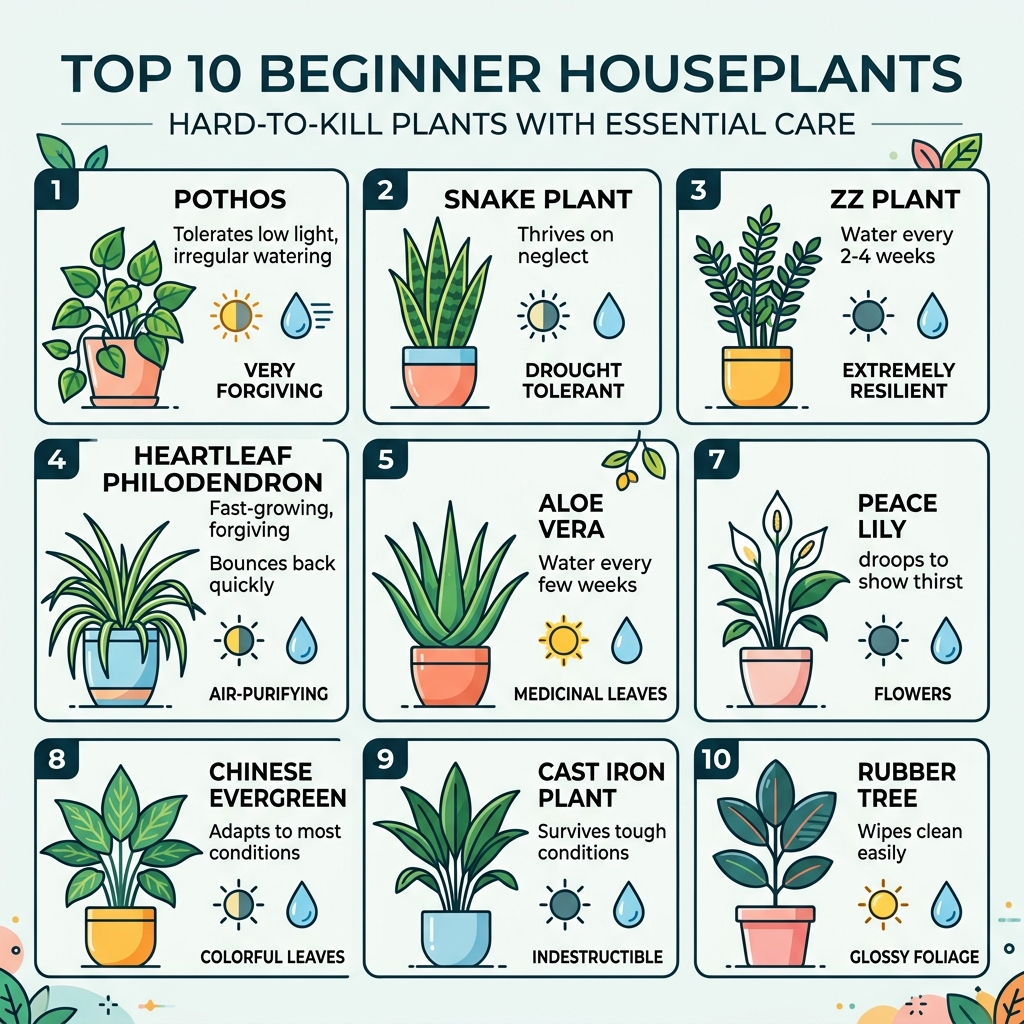
The best plants for beginners are ones that can survive a missed watering, handle inconsistent light, and still look great doing it. Here’s a quick look at the top picks:
Top beginner-friendly houseplants:
- Pothos – tolerates low light, irregular watering, nearly impossible to kill
- Snake Plant – thrives on neglect, stores water in its leaves
- ZZ Plant – drought-tolerant rhizomes, needs watering every 2-4 weeks
- Heartleaf Philodendron – fast-growing, forgiving, easy to find and cheap
- Spider Plant – low maintenance, bounces back quickly from neglect
- Aloe Vera – needs watering only every few weeks
- Peace Lily – handles low light and signals thirst by drooping
- Chinese Evergreen – adapts to most indoor conditions
- Cast Iron Plant – survives the toughest conditions
- Rubber Tree – tolerates irregular care, wipes clean easily
Most people who struggle with houseplants aren’t bad at it. They just picked the wrong plants.
A fiddle-leaf fig or an orchid can frustrate even experienced growers. But a pothos? It can survive weeks of neglect, dim corners, and inconsistent watering — and still vine cheerfully down your bookshelf.
Houseplants do more than look nice. Research shows they can reduce stress, boost mood, and even improve air quality. Snake plants, spider plants, and peace lilies all appear on NASA’s list of air-purifying plants. So getting this right is worth it.
The secret isn’t developing a green thumb. It’s choosing plants that are already wired to forgive you.
What Makes the Best Plants for Beginners So Forgiving?
When we talk about the best plants for beginners, we aren’t just looking for “pretty” greenery. We are looking for biological tanks—plants that have evolved to survive harsh environments. Whether you have a “black thumb” or are just a busy professional, the key to success is selecting species that possess high adaptability and neglect tolerance.
Adaptability and Neglect Tolerance
A forgiving plant is one that doesn’t throw a tantrum if you forget to water it for ten days. For example, the ZZ plant and Snake Plant have specialized structures (rhizomes and thick leaves) to store water, making them drought-tolerant. According to Scientific research on how houseplants reduce psychological stress, the presence of indoor plants can lower blood pressure and soothe the nervous system. However, that stress-reduction benefit disappears if the plant is so finicky that it causes you constant anxiety!
Matching Microenvironments
Success often comes down to matching the plant to your home’s specific conditions. We recommend assessing your light levels before shopping. Do you have a bright, south-facing window, or a dim corner in a north-facing apartment? By following Indoor Plant Care Tips for Beginners, you can learn to identify these microenvironments. For instance, Hardy Indoor Plants for Busy People are typically those that can handle the low-light, low-humidity conditions found in most modern offices and apartments.
Top 10 Low-Maintenance Houseplants for Any Home
If you are ready to transform your space into a tranquil oasis, these ten picks are the gold standard for durability.

- Pothos (Epipremnum aureum): Often called “Devil’s Ivy” because it is nearly impossible to kill. It grows fast, trails elegantly, and can live in almost any light condition.
- Snake Plant (Sansevieria): A “glutton for punishment.” It actually prefers to be left alone and can go weeks (or even a month in winter) without a drink.
- ZZ Plant (Zamioculcas zamiifolia): With waxy leaves so shiny they look plastic, this plant thrives on neglect. It is one of the top Indoor Plants that Survive Neglect.
- Spider Plant (Chlorophytum comosum): Famous for producing “babies” on long runners. It’s tough, air-purifying, and very easy to propagate.
- Heartleaf Philodendron: Similar to Pothos but with heart-shaped leaves. It’s cheap, easy to find, and grows incredibly fast, providing instant gratification for new owners.
- Aloe Vera: A functional succulent. It needs bright light but very little water. Plus, the gel inside the leaves can soothe minor burns.
- Peace Lily (Spathiphyllum): One of the few “easy” plants that flowers reliably. It “talks” to you by drooping when it’s thirsty and perking up immediately after a drink.
- Chinese Evergreen (Aglaonema): A sturdy plant that comes in beautiful variegated patterns. It is extremely tolerant of low light and dry air.
- Rubber Tree (Ficus elastica): Unlike its cousin the Fiddle Leaf Fig, the Rubber Tree is quite sturdy. It adds a bold, architectural look to a room with minimal effort.
- Cast Iron Plant (Aspidistra elatior): Named for its strength. It was a favorite in Victorian times because it could survive the dim, smoky conditions of coal-heated homes.
Comparison of Care Needs for Top Beginner Plants
| Plant Name | Light Requirement | Watering Frequency | Best Feature |
|---|---|---|---|
| Pothos | Low to Bright Indirect | Every 1-2 weeks | Fast-growing vines |
| Snake Plant | Any (Low to Bright) | Every 3-4 weeks | Air purification |
| ZZ Plant | Low to Medium | Every 3-4 weeks | Extremely drought-tolerant |
| Spider Plant | Medium Indirect | Every 1 week | Produces plantlets |
| Peace Lily | Low to Medium | Every 1 week | “Tells” you when thirsty |
We believe that starting with these Easy to Grow Indoor Plants is the best way to build your confidence.
The Best Plants for Beginners with Low Light Needs
Not everyone has floor-to-ceiling windows. If you live in a garden-level unit or want to green up a hallway, you need Low Light Indoor Plants for Apartments.
The ZZ Plant and Snake Plant are the champions of the shadows. They can survive in corners where other plants would wither. The Cast Iron Plant is another excellent choice for Low Maintenance Plants for Offices, as it handles the fluorescent lighting and lack of natural sun with ease. These plants grow slower in low light, which actually means they need even less water and fertilizer!
Best Plants for Beginners with Pets
Safety is a major concern for many of us. Many popular plants, like Pothos and ZZ plants, contain calcium oxalate crystals which can be irritating if chewed. If you have a curious cat or dog, check the Indoor Plants for Beginners with Pets guide.
The Spider Plant and Bird’s Nest Fern are fantastic non-toxic options. The Parlor Palm is another pet-safe favorite that adds a tropical vibe without the danger. For a full list of safety, we always recommend cross-referencing the ASPCA list of non-toxic plants.
Essential Care Guidelines to Keep Your Plants Alive
Even the hardiest plants need a little love. Most beginner mistakes come from “over-loving” a plant (usually by drowning it).
The Golden Rule of Watering
The most important of all Indoor Plant Care for Beginners is the “top-inch rule.” Before you reach for the watering can, stick your finger an inch into the soil. If it feels damp, walk away. If it’s dry, give it a soak. Always ensure your pots have drainage holes; sitting in water is the fastest way to cause root rot.
Light and Maintenance
Most Best Indoor Plants for Apartments prefer “bright, indirect light.” This means a spot where they can see the sky but the sun isn’t hitting their leaves directly. To keep your plants healthy, we suggest:
- Dusting Leaves: Use a damp cloth to wipe dust off leaves like the ZZ or Rubber Tree. This helps them “breathe” and photosynthesize.
- Fertilizing: Most easy plants only need a balanced liquid fertilizer once or twice a year, usually in spring or summer.
- Repotting: You generally only need to repot every two years once the roots start circling the bottom of the pot.
Troubleshooting Common Beginner Plant Problems
Don’t panic if your plant looks a little sad. Most issues are easy to fix if you know what to look for.
- Yellow Leaves: Usually a sign of overwatering. Let the soil dry out completely before watering again. For some plants, like the Madagascar Dragon Tree, losing a bottom leaf now and then is just natural aging.
- Wilting or Drooping: This is the plant’s way of saying “I’m thirsty!” Check the soil; if it’s bone dry, give it a deep drink.
- Brown Tips: This often happens to Spider Plants or Peace Lilies when the air is too dry. Try using a humidity tray (a saucer with pebbles and water) or misting the leaves.
- Leggy Growth: If your Pothos has long stems with very few leaves, it’s reaching for light. Move it closer to a window.
- Pests: If you see tiny webs or sticky residue, wipe the leaves with neem oil or insecticidal soap.
By following the tips in Easy Indoor Plants for Beginners, you can catch these problems early. Even Indoor Plants that Survive Neglect 2 appreciate a quick check-up once a week. For more specific apartment-living tips, see Best Indoor Plants for Apartments 2.
Frequently Asked Questions about Beginner Houseplants
How often should I water my new plants?
There is no “one size fits all” schedule. It depends on the light and temperature of your home. Use the top-inch rule: water when the top inch of soil feels dry. In winter, most plants go dormant and need significantly less water—sometimes only once a month for Snake plants!
Which plants are best for a windowless office?
If you have zero natural light, we recommend the ZZ Plant or Snake Plant. They can survive on fluorescent overhead lighting alone for long periods, though they will grow much slower than they would near a window.
Why are my plant’s leaves turning yellow?
The most common culprit is overwatering, which leads to root rot. However, it can also be a sign of nutrient deficiency or simply the plant shedding old leaves to make room for new growth. If the new growth looks healthy, don’t worry too much about one or two yellow leaves at the bottom.
Conclusion
Starting your journey as a plant parent doesn’t have to be intimidating. By choosing the best plants for beginners, you are setting yourself up for success from day one. Whether you want to brighten a dark corner with a ZZ plant or create a lush vining wall with Pothos, there is a perfect, hard-to-kill option for your lifestyle.
At Futuro Ciencia, we believe everyone deserves a tranquil oasis. Our goal is to help you gain the confidence to grow a thriving indoor garden that brings you joy and peace. Ready to stay on track? Check out our Indoor Plant Care Schedule to ensure your new green friends stay happy and healthy for years to come!
