
Why Your Peace Lily Keeps Drooping (And How to Finally Fix It)
A self watering peace lily is one of the easiest ways to keep this popular indoor plant healthy — without memorizing a watering schedule or coming home to dramatic, drooped leaves.
Quick answer: A self-watering pot holds water in a bottom reservoir. The plant draws moisture up through a wick or wicking soil as it needs it. This keeps the soil consistently moist — which is exactly what peace lilies love — and reduces your hands-on watering to a simple weekly reservoir check.
Best for:
- Busy homeowners who forget to water
- Beginners who struggle with overwatering or underwatering
- Anyone who travels and needs plants to survive a week or two unattended
Peace lilies are already one of the most forgiving houseplants around. They tolerate low light, purify indoor air, and produce elegant white blooms. But they do have one well-known drama: when they get thirsty, they really let you know — leaves drooping like they’ve run a marathon.
The problem is that most people either overreact and overwater, or they miss the signal entirely. Both lead to the same result: a struggling plant.
A self-watering setup solves this by removing the guesswork. The plant drinks only what it needs, when it needs it.
Why a self watering peace lily is the Ultimate Low-Maintenance Plant
If you have ever felt personally victimized by a plant that wilts the moment you look away, the self watering peace lily is your new best friend. In their natural habitat, these plants grow on the floors of tropical rainforests. This means they are accustomed to consistent moisture and high humidity, rather than the “flood and drought” cycle many of us subject them to in traditional pots.
By using a self-watering system, we are essentially replicating that tropical forest floor. The internal water reservoir ensures that the soil stays damp but not swampy, which is the “sweet spot” for healthy growth. This setup is a cornerstone of a successful indoor-plant-care-routine because it automates the most difficult part of plant parenting: knowing exactly when to pour.
For those just starting out, these are widely considered easy-indoor-plants-for-beginners. Beyond the ease of care, having a thriving Peace Lily in your home acts as a natural stress reducer. There is something incredibly calming about those deep green leaves and white “flowers” (which are actually modified leaves called spathes) that simply doesn’t work if the plant is constantly slumped over in a “theatrical plea for help.”
Benefits of Using a Self Watering Peace Lily Setup
Why make the switch? While traditional pots are fine for many species, the Peace Lily’s specific thirst makes it the perfect candidate for a reservoir system.
| Feature | Traditional Pot | Self-Watering System |
|---|---|---|
| Watering Frequency | Every 2-4 days | Every 7-14 days |
| Overwatering Risk | High (Root rot) | Low (Controlled uptake) |
| Travel Friendly | No (Needs a sitter) | Yes (Lasts 1-2 weeks) |
| Moisture Levels | Fluctuating | Consistent |
| Leaf Health | Prone to brown tips | Lush and green |
One of the biggest perks is travel convenience. A self watering peace lily can easily go 10 to 14 days without a refill, making it one of the best low-water-indoor-plants in terms of maintenance effort. This consistent hydration promotes superior root health. Instead of the roots sitting in stagnant water at the bottom of a saucer, they draw moisture upward as needed, which encourages a stronger, more even root system.
How the Reservoir and Wick System Works
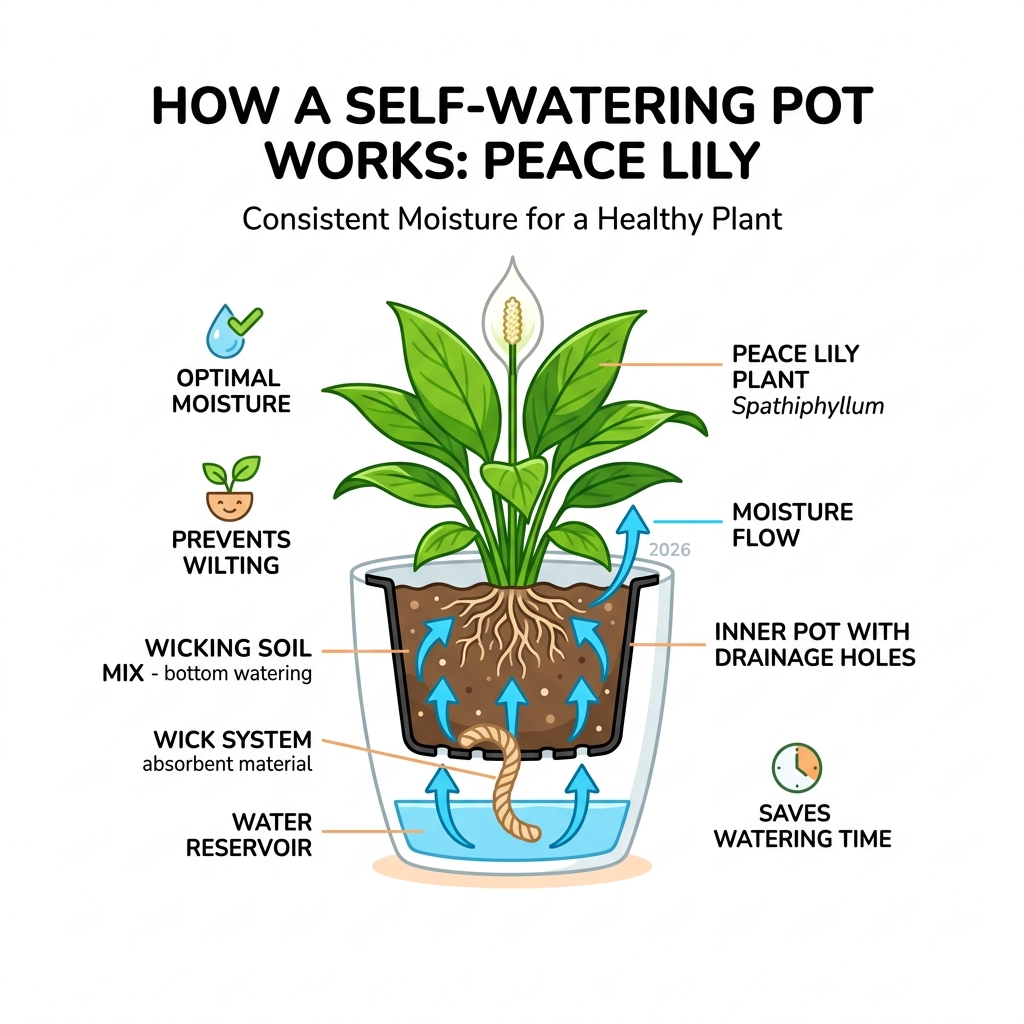
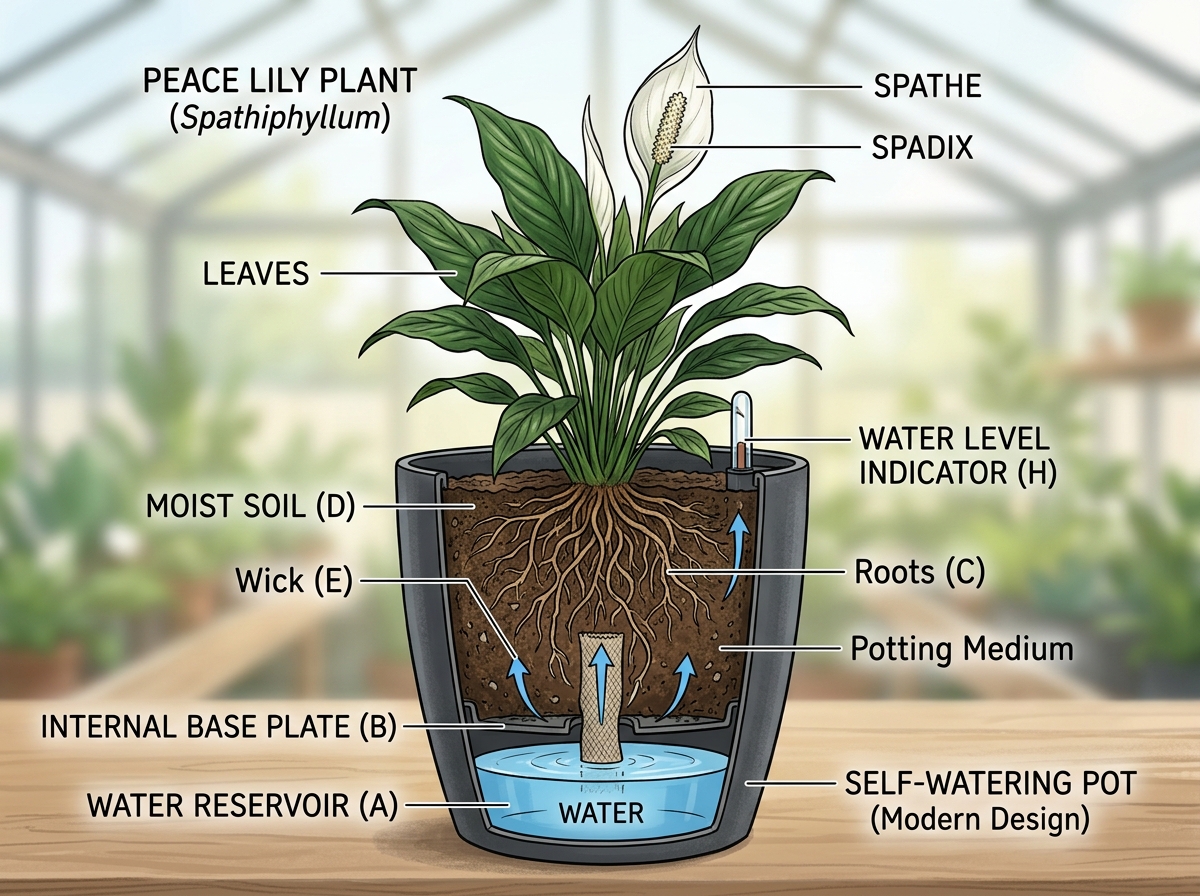
The magic behind the self watering peace lily is a scientific process called capillary action. Most of these pots consist of two main parts: an outer decorative shell that acts as a reservoir and an inner liner where the plant lives.
A wick (usually made of rot-resistant nylon or microfiber) connects the soil to the water in the reservoir. As the plant “breathes” and uses up moisture in the soil, the dry soil pulls more water up through the wick. It is a “bottom-watering” method that ensures the roots get hydrated without the foliage getting wet, which reduces the risk of leaf rot. Furthermore, because the water is stored below, it allows for better oxygenation of the upper soil layers, preventing the “suffocation” that often happens when we overwater from the top.
Essential Care Tips for Your Self-Watering System
Even with a “smart” pot, your self watering peace lily still needs a little love from its human. While the pot handles the hydration, you are responsible for the environment.
Peace lilies thrive in warm indoor environments, ideally between 18-30°C (65-85°F). They are sensitive to cold drafts, so keep them away from air conditioning vents or drafty winter windows. To really see them flourish, you should also follow these indoor-plant-light-requirements: bright, indirect sunlight is king. While they can survive in low light, they are less likely to produce those iconic white blooms without a bit of natural glow.
Don’t forget the air! Since they are tropical natives, maintaining average to above-average household humidity is vital. You can find more humidity-tips-for-houseplants on our guide, but a simple trick is to group your plants together to create a tiny, humid microclimate.
Choosing the Right Water and Refill Schedule
Peace lilies are famously “picky” about what they drink. They are sensitive to the chlorine and fluoride found in most tap water, which can cause the leaf tips to turn brown and crispy.
For the best results:
- Use Filtered Water: If possible, use filtered or distilled water.
- Dechlorinate: If you must use tap water, let it sit out overnight (24-48 hours) to allow the chemicals to dissipate.
- Temperature Matters: Always use lukewarm water. Cold water (anything 15°C colder than the air) can shock the roots and cause leaf browning.
How often should you refill? While the system is automated, you should still check the reservoir weekly. Most self watering peace lily setups allow the plant to go 1 to 2 weeks between refills. A good rule of thumb is to wait until the reservoir is nearly empty and the top inch of soil feels slightly dry before topping it up. This prevents the water from becoming stagnant. Check our watering-schedule-for-indoor-plants for more detailed timing.
Setting Up and Transitioning Your Self Watering Peace Lily
If you are moving a plant from a traditional pot into a self-watering one, the transition period is crucial. You can’t just drop it in and walk away!
First, ensure you are using the best-soil-for-indoor-plants. A light, airy mix—usually a combination of peat moss and perlite—is ideal for wicking. When you how-to-repot-indoor-plants, make sure the wick is in direct contact with the root ball.
For the first 2-3 weeks after repotting, you should actually water the plant from the top. This helps the soil settle and ensures the roots are established enough to start “pulling” water from the wick. Once you see new growth, you can rely solely on the reservoir.
Troubleshooting Common Peace Lily Issues
Even with the best tech, nature happens. If your self watering peace lily starts looking a little “off,” it’s usually trying to tell you something specific.
Preventing Root Rot and Overwatering
“But I thought the pot prevented overwatering?” It does, but it’s not foolproof. The most common mistake is keeping the reservoir constantly filled to the brim without ever letting the soil breathe. This can lead to stagnant water and lack of oxygen, causing indoor-plant-root-rot-solutions to become a necessary read.
To prevent this:
- Allow a “Dry” Day: Let the reservoir stay empty for 24 hours before refilling.
- Check the Soil: If the soil feels “mushy” or smells foul, you have a drainage issue.
- Ensure Airflow: Make sure the pot design allows for some air to reach the roots.
If you notice the leaves turning yellow, it’s a classic sign of too much moisture. We have a full guide on why-are-my-indoor-plant-leaves-turning-yellow to help you diagnose the exact cause. Usually, simply emptying the reservoir for a few days solves the problem.
What to Do When Your Plant Still Droops
If your plant is drooping even though the reservoir is full, you might have “hydrophobic” soil. This happens when peat-based soil gets too dry and actually starts repelling water. In this case, the wick can’t do its job.
To fix this, give the plant a thorough soak from the top until water runs out the bottom. This “resets” the soil’s ability to absorb moisture. If the plant is several years old, it might also be root-bound. When the roots take up more space than the soil, they can’t hold onto enough water. You can learn more about why-indoor-plants-droop and find when-indoor-plant-leaves-droop-causes-and-solutions in our troubleshooting archives.
Frequently Asked Questions about Self-Watering Peace Lilies
How often should I refill the water reservoir?
While every home environment is different, most people find a 7 to 14-day interval works best. In the summer, evaporation rates are higher, so you might check every 7 days. In the winter, the plant enters a semi-dormant state and might only need a refill every 2 weeks. Always check the top two inches of soil; if it’s dry, it’s time to refill. Keeping a consistent indoor-plant-care-schedule helps you stay on track.
Can a self watering peace lily survive in low light?
Yes! One of the reasons they are so popular is their indoor-plants-that-thrive-in-low-light status. They are perfect for north-facing windows or office corners. However, keep in mind that “survive” isn’t the same as “thrive.” In very low light, the plant will grow slower and rarely produce flowers. If you want those white blooms, check out our indoor-plant-care-for-low-light tips to maximize what little glow you have.
Is the self-watering pot safe for pets?
The pot is safe, but the plant requires caution. Spathiphyllum contains calcium oxalate crystals, which are toxic if ingested. If a curious cat or dog nibbles the leaves, it can cause mouth irritation, drooling, and vomiting. We recommend placing your self watering peace lily on a high shelf or plant stand out of reach of pets and children. While you are at it, keep an eye out for indoor-plant-pests-and-how-to-remove-them, though self-watering pots actually help deter some soil-borne pests like fungus gnats by keeping the top layer of soil drier.
Conclusion
At Futuro Ciencia, we believe that everyone deserves to live in a tranquil oasis. Our mission is to help you transform your space with plants that purify the air and brighten your mood without adding “gardening stress” to your to-do list. The self watering peace lily is the perfect example of how modern technology can support nature, giving you all the beauty of a tropical bloom with none of the “droopy leaf” drama.
By maintaining consistent moisture, providing bright indirect light, and using clean, lukewarm water, you can enjoy a lush, healthy plant for years to come. Ready to upgrade your home greenery? Start your indoor garden journey today and discover how easy it is to grow a thriving indoor jungle.
