
Why Repotting House Plants Into Bigger Pots Keeps Them Alive and Thriving
Repotting house plants into bigger pots is one of the most impactful things you can do to keep your indoor plants healthy. Here’s the quick version:
- Check for signs — roots poking out of drainage holes, soil drying out fast, or stunted growth
- Pick the right time — spring or early summer, when plants are actively growing
- Choose a pot 1-2 inches larger in diameter, with drainage holes
- Use fresh potting mix — not garden soil
- Water thoroughly after repotting, then ease off for a few weeks
Think of it like upgrading from a starter home. Your plant moved in, got comfortable, and now it’s bursting at the seams. Roots have nowhere left to go, nutrients in the old soil are long gone, and growth has stalled.
The good news? Repotting isn’t complicated. Most houseplants only need it every 2-3 years, and the process takes less than 15 minutes once you know what you’re doing.
Signs Your Plant Needs a New Home
How do you know when your leafy friend is literally “potty” for a change? Plants can’t tell us when their shoes are too tight, but they do drop some pretty obvious hints. If you notice your plant looks sad despite your best efforts, it might be time for repotting house plants into bigger pots.
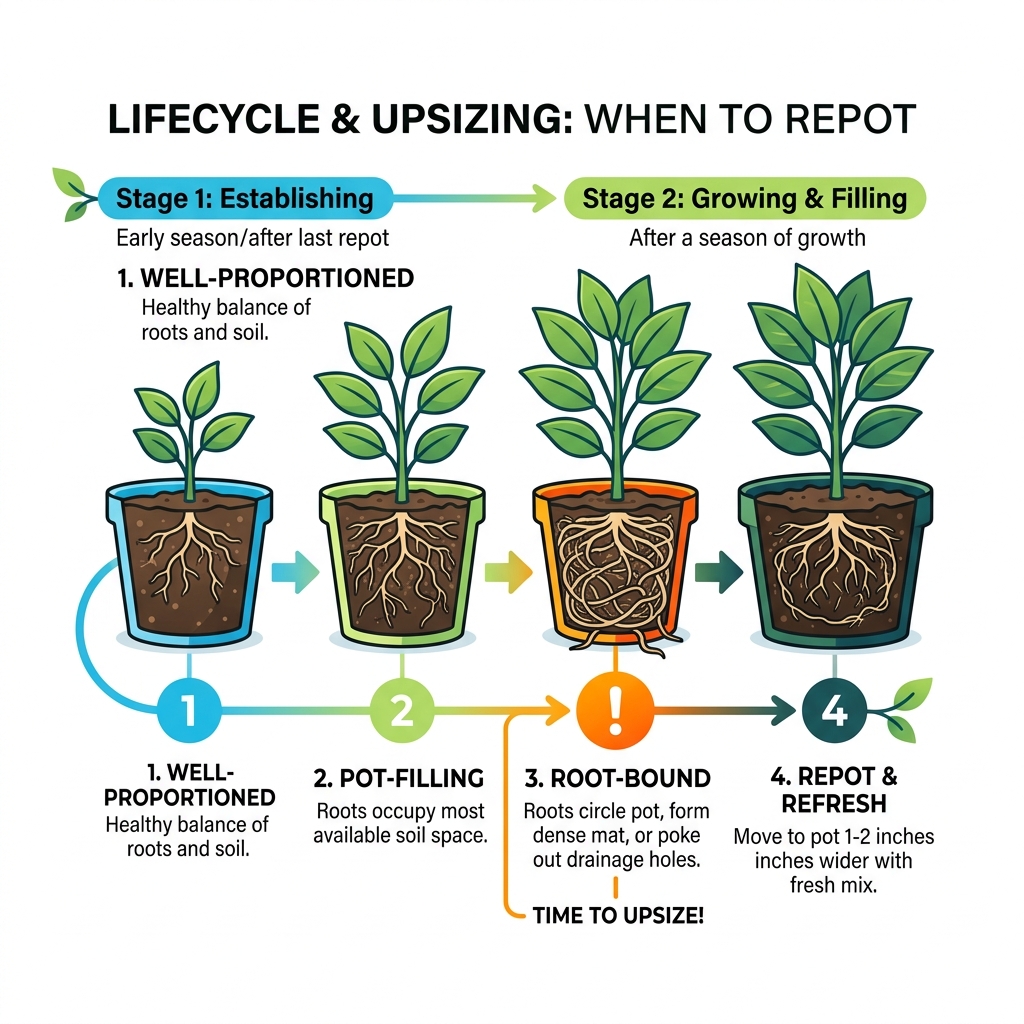
The most common indicator is a “root-bound” or “pot-bound” state. This happens when the roots have filled the available space and begun to circle the inside of the pot, eventually forming a dense, tangled mat with very little soil left to hold water or nutrients.
| Feature | Healthy Root System | Root-Bound Indicators |
|---|---|---|
| Root Appearance | White or light tan, flexible, spread throughout soil. | Brown or yellow, woody, circling the pot base. |
| Drainage Holes | Clear or with one or two small roots visible. | Thick roots protruding or even cracking the pot. |
| Growth Rate | Steady production of new, appropriately sized leaves. | Stunted growth or tiny new leaves despite fertilizer. |
| Soil Condition | Holds moisture for several days; looks dark and rich. | Dries out almost immediately; water runs straight through. |
| Plant Stability | Firmly anchored in the pot. | Plant looks top-heavy and tips over easily. |
If you see roots poking out of the drainage holes or creeping across the soil surface, that’s a clear SOS. Another subtle sign is yellowing lower leaves. While this can sometimes mean overwatering, in a root-bound plant, it often means the plant is shedding old growth because it can no longer support its own size with the limited resources available.
According to N.C. Cooperative Extension, soil depletion is also a factor. Over time, the organic matter in potting mix breaks down and “slumps,” losing the air pockets roots need to breathe. If you haven’t refreshed the home of your green companion in 2–3 years, it’s likely time for a change. For more specific advice on managing these crowded conditions, check out our guide on solutions for overcrowded roots in indoor plants.
Timing and Preparation for Repotting House Plants Into Bigger Pots
Timing is everything. You wouldn’t want someone to move your entire house while you were trying to sleep, and plants feel the same way!
The best time for repotting house plants into bigger pots is late winter or early spring. This aligns with the plant’s natural lifecycle. As the days get longer, plants enter a phase of “active growth.” This means they have the energy and hormonal drive to send out new roots into the fresh soil quickly, which helps them recover from the “shock” of being moved.
Avoid repotting in the middle of autumn or winter unless it’s a dire emergency (like a broken pot). During dormancy, plants grow very slowly. If you put them in a huge new pot of wet soil when they aren’t thirsty, you risk the soil staying waterlogged, which leads to the dreaded root rot.
Preparation Checklist
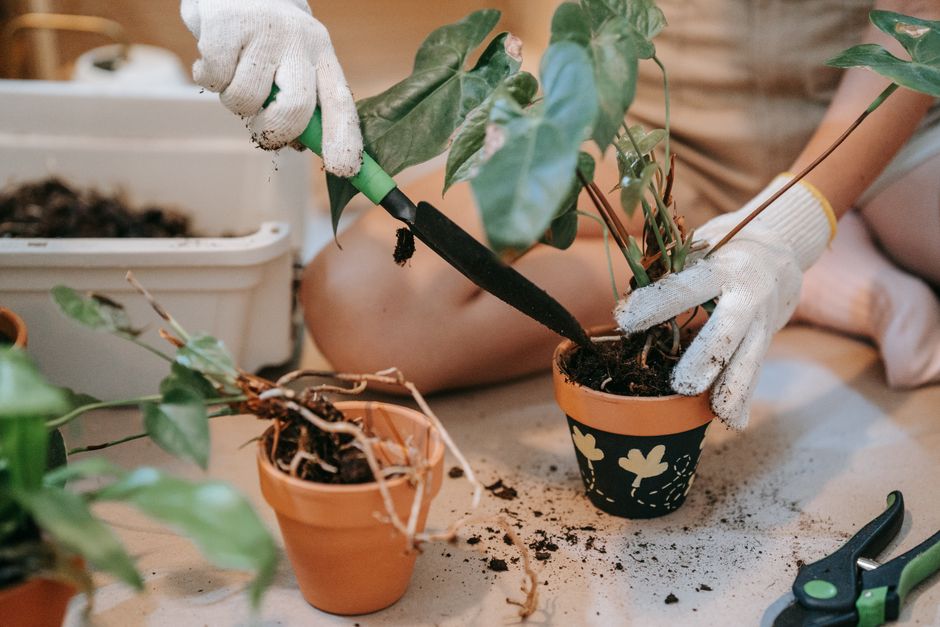
Before you get your hands dirty, gather your supplies to make the process smooth:
- A new pot: Ensure it has drainage holes! (More on this below).
- Fresh potting mix: Match the mix to your plant type.
- Tools: A small trowel, sharp sterilized shears, and perhaps a butter knife to loosen the edges.
- Mess Management: Lay down old newspapers or a tarp. Repotting is fun, but vacuuming soil out of a carpet is not.
- Hydration: Water your plant a day or two before the big move. A hydrated root ball is more flexible and less likely to break during the transition.
Choosing the Right Pot Size and Drainage
When it comes to repotting house plants into bigger pots, bigger isn’t always better. We recommend only upsizing by 1 to 2 inches in diameter. If your plant is currently in a 6-inch pot, move it to a 7 or 8-inch pot.
Why not go straight to a massive 12-inch container? This is called “overpotting.” A pot that is too large holds a massive volume of soil. If the plant’s roots aren’t large enough to drink all that water, the soil stays soggy for weeks. This creates a “death zone” where oxygen can’t reach the roots, leading to rot.
You also need to consider the material. As we discuss in our article on selecting indoor plant pots and planters, different materials behave differently:
- Terracotta/Clay: Porous and “breathes,” which is great for plants that like to dry out (like succulents). However, it pulls moisture and salts from the soil, so you may need to water more often.
- Plastic/Fiberglass: Lightweight and holds moisture well. These are excellent for tropical plants like ferns or Calatheas.
Whatever you choose, drainage holes are non-negotiable. If you have a beautiful decorative pot (a “cachepot”) without holes, keep the plant in a plastic nursery liner with holes and nestle it inside the decorative one. For more tips, see our guide on the best containers for indoor plants.
Selecting the Best Soil for Repotting House Plants Into Bigger Pots
Never use garden soil for your indoor plants. It’s too heavy, doesn’t drain well enough for a container environment, and can bring in unwanted guests like pests or fungi.
Instead, look for a high-quality “soilless” potting mix. These are usually made of peat moss or coco coir, perlite (those little white “popcorn” bits), and vermiculite. These ingredients ensure the mix is light, airy, and retains just the right amount of moisture.
According to Penn State Extension, specialty formulas can make a huge difference:
- Cacti/Succulents: Need a sandy, fast-draining mix.
- Orchids: Require bark-based mixes for maximum airflow.
- General Houseplants: A standard peat-free multipurpose mix works wonders.
Refreshing the soil provides a much-needed nutrient boost. Most potting mixes come with a small amount of fertilizer that lasts about 6 weeks, giving your plant a “welcome home” snack. You can learn more about picking the right medium in our deep dive on the best soil for indoor plants.
The Step-by-Step Process for Success
Now for the fun part! Let’s get that plant into its new home.
- Extraction: Turn the plant sideways, place your hand over the soil surface with the plant stem between your fingers, and gently squeeze the sides of the pot. If it’s stuck, run a butter knife around the inside edge. Never pull the plant by the stem; gravity and gentle tapping should do the work.
- The Root Massage: Once the plant is out, inspect the roots. If they are circling the bottom like a coiled spring, you need to “tease” them. Use your fingers to gently loosen the outer roots. This tells the plant, “Hey, you have room now! Go that way!”
- The Base Layer: Add a couple of inches of fresh, moistened potting mix to the bottom of the new pot.
- Positioning: Place the plant in the center. The top of the root ball should sit about 1 inch below the rim of the new pot. This “headspace” is crucial—it gives you a place for water to pool so it can soak in rather than spilling over the sides.
- Backfilling: Fill the gaps around the sides with fresh soil. Use your fingers to gently press down, but don’t pack it like you’re making a sandcastle. You want to eliminate large air pockets without crushing the delicate root structure.
- The Finishing Touch: Give the pot a few gentle taps on the table to help the soil settle.
For a more visual guide, you can refer to our how-to-repot-indoor-plants resource or the RHS Expert Guide.
Handling Root-Bound Plants and Pruning
Sometimes, you’ll encounter a plant that is so root-bound it looks like a solid block of wood. In these cases, a gentle massage won’t cut it. You may need to use sterilized shears to make a few vertical snips into the root mat or trim the very bottom of the coil.
The RHS Advice suggests that you can safely prune up to 1/3 of the root mass if necessary. This actually stimulates new growth! Also, look out for salt buildup—white, crusty deposits on the roots or the old pot. If you see these, gently wash the roots with lukewarm water before repotting.
If you find mushy, black, or foul-smelling roots during this process, you are likely dealing with root rot. Use clean scissors to snip those off entirely to prevent the spread. For more on this, see our article on how-to-repot-indoor-plants-2.
Post-Repotting Care and Avoiding Stress
Congratulations! The hard part is over. However, your plant is now in a state of “transplant shock.” It’s like moving to a new city; it takes a minute to find the grocery store and feel at home.
- Watering: Water the plant thoroughly until water runs out of the drainage holes. This helps the new soil settle against the roots.
- Light: Keep the plant in “bright, indirect light” for a week or two, even if it usually loves direct sun. Avoid harsh, direct rays while the roots are recovering.
- The No-Fertilizer Rule: Do not fertilize for at least 4 to 6 weeks. The fresh soil already has nutrients, and adding more can “burn” the newly stressed roots.
- Monitoring: It’s normal for a plant to look slightly wilted for a day or two. However, if it stays slumped or leaves start dropping rapidly, double-check your drainage.
If you are worried about the health of your roots during this transition, our guide on recognizing and remending root rot in indoor plants can help you troubleshoot.
Common Mistakes When Repotting House Plants Into Bigger Pots
We’ve seen it all, and we want to help you avoid the most common pitfalls:
- The Gravel Myth: Many people put gravel at the bottom of a pot thinking it helps drainage. Science says otherwise! Water doesn’t like to move from fine soil into coarse gravel until the soil is completely saturated, which actually raises the “water table” in your pot and increases rot risk.
- Using Garden Soil: As mentioned, it’s too dense and dirty for indoor use.
- Packing Too Tight: Roots need oxygen. If you pack the soil too hard, you’re essentially suffocating the plant.
- Oversized Pots: Stick to the 1-2 inch rule to avoid waterlogged soil.
- Wrong Season: Repotting in the dead of winter is a recipe for a slow recovery.
For more solutions to common watering and soil issues, check out our series on indoor-plant-root-rot-solutions, indoor-plant-root-rot-solutions-2, and indoor-plant-root-rot-solutions-3.
Alternatives: Keeping Your Plant the Same Size
What if you love your plant but simply don’t have room for a bigger pot? You can’t just leave it to suffer. Instead, you can perform root pruning.
By removing the plant, trimming away about 15-20% of the outer roots and the bottom of the root ball, and then replanting it in the same pot with fresh soil, you can maintain its size. This is a common technique in Bonsai and for large floor plants like Fiddle Leaf Figs that have reached their “maximum height” for your ceiling.
Another option is top-dressing. If the plant isn’t root-bound but the soil looks tired, simply scrape off the top 2 inches of old soil and replace it with fresh compost or potting mix. This provides a nutrient boost without the trauma of a full move.
Frequently Asked Questions about Repotting
How do I know if my pot has enough drainage?
A good pot should have at least one hole about the size of a nickel for every 6 inches of diameter. If water sits on top of the soil for more than a few seconds after watering, your drainage (or soil) is likely the problem.
Can I reuse old potting soil for new plants?
We don’t recommend it. Old soil is often depleted of nutrients, may contain accumulated salts from tap water, and could even harbor pests or diseases from the previous occupant. Always start fresh!
What should I do if my plant wilts immediately after repotting?
Don’t panic! This is often just transplant shock. Ensure the soil is moist (but not swampy), move it away from direct heat or drafts, and give it a week. Most plants will perk back up once the roots “grip” the new soil.
Conclusion
At Futuro Ciencia, we believe that every home deserves to be a tranquil oasis. By mastering the art of repotting house plants into bigger pots, you aren’t just performing a chore—you’re giving your purifying, brightening plants the space they need to thrive and beautify your life.
Whether you’re a first-time Pothos parent or an experienced indoor gardener, staying on top of your plant care schedules is the key to success. Ready to take your indoor jungle to the next level? Explore our full Indoor Plant Care Guide for more expert tips and tricks!
