
The Secret to Getting Chinese Money Plant Watering Just Right
Chinese money plant watering is simpler than most people think — but getting it wrong is one of the fastest ways to kill this otherwise easy-going houseplant.
Here’s the quick answer:
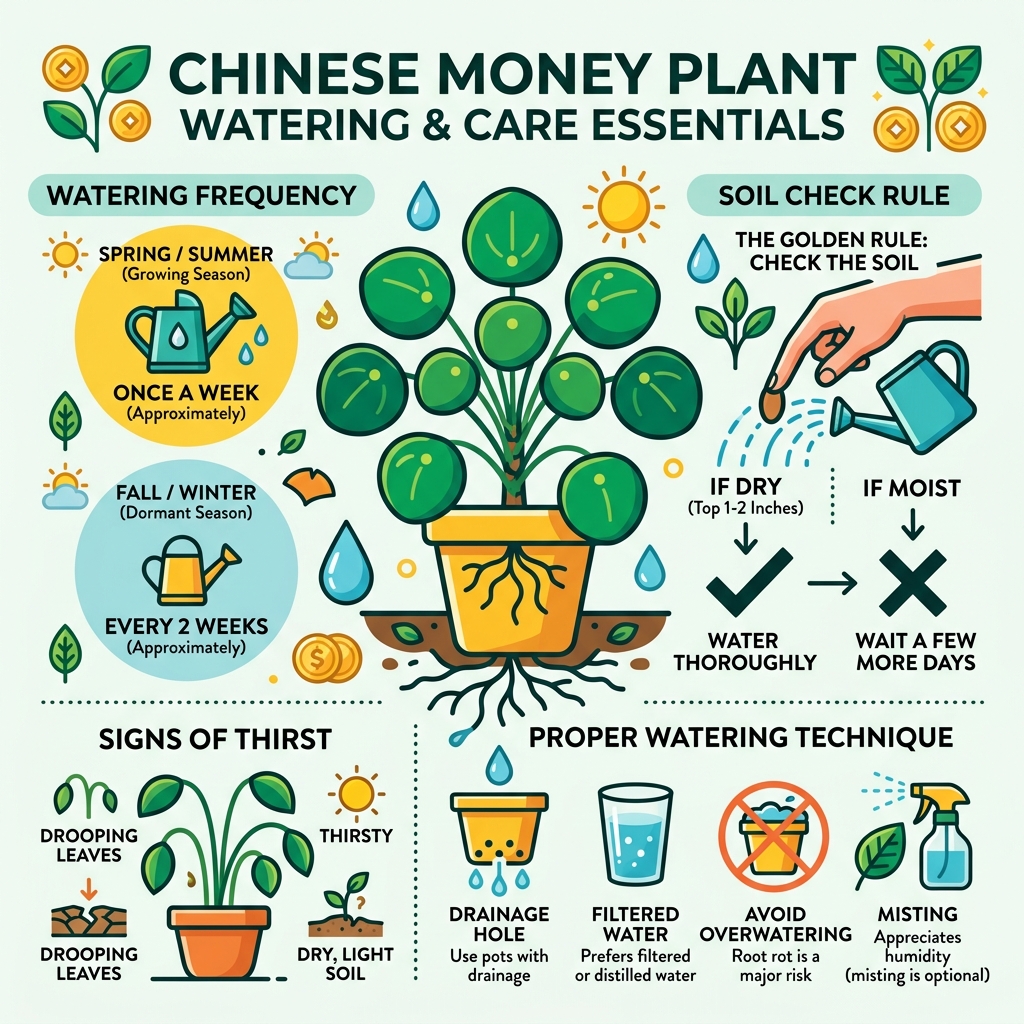
| Season | Watering Frequency | Soil Check |
|---|---|---|
| Spring / Summer | Once a week | Top inch dry |
| Fall / Winter | Every 2 weeks | Top 2 inches dry |
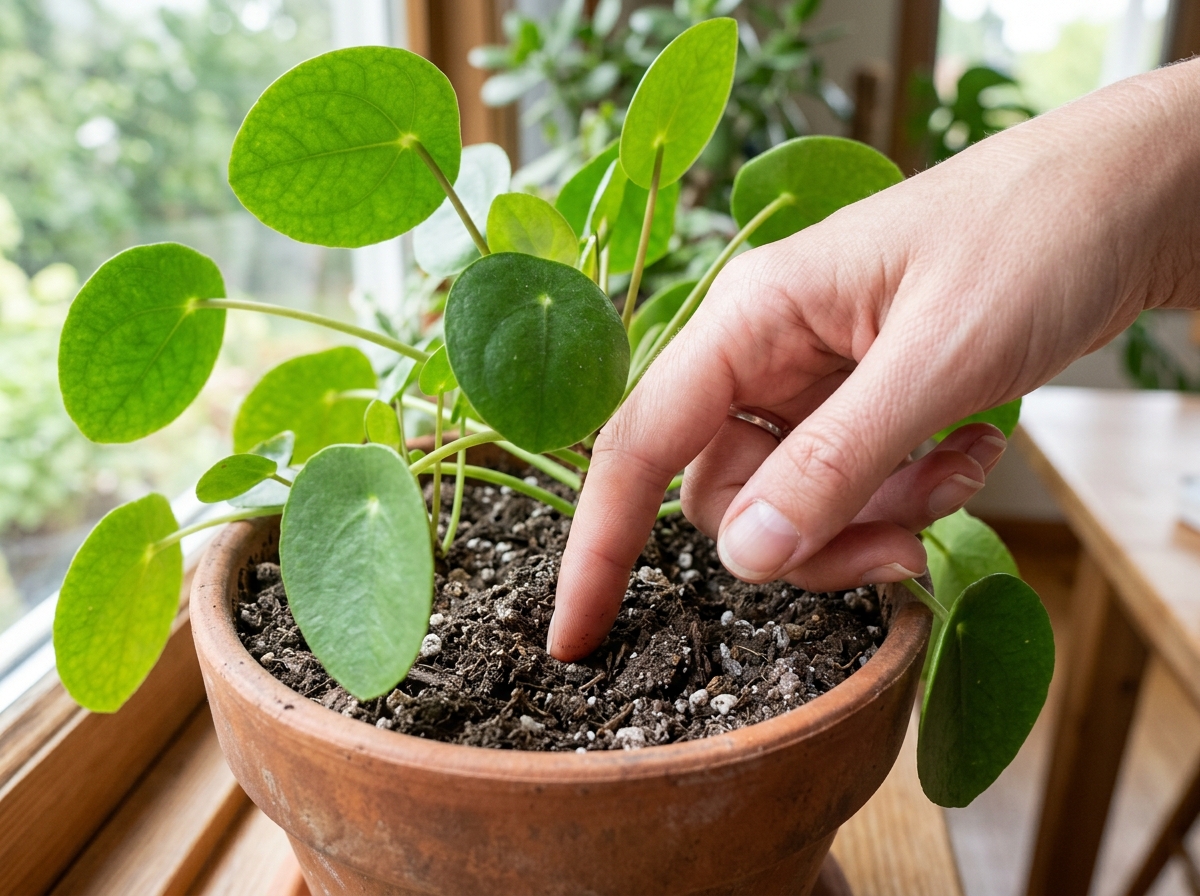
The golden rule: Stick your finger about an inch into the soil. If it feels dry, water thoroughly. If it still feels moist, wait a few more days.
The Chinese money plant originates from the Yunnan Province of southern China. It earned nicknames like “Pass-it-on plant,” “Pancake plant,” and “UFO plant” — partly for its distinctive coin-shaped leaves, and partly because healthy plants produce so many baby offshoots that owners can’t help but share them.
Beyond its quirky good looks, it carries a reputation for bringing prosperity and good fortune. But none of that matters if the roots are sitting in soggy soil.
The most common mistake busy plant owners make is overwatering. These plants actually prefer to dry out a little between drinks. They can survive up to two weeks without water — so when in doubt, wait it out.
Mastering Chinese Money Plant Watering
At Futuro Ciencia, we believe that the foundation of a thriving indoor jungle is a solid indoor-plant-care-schedule. When it comes to the Pilea peperomioides, “mastering” the water isn’t about following a rigid calendar; it’s about learning to read the plant’s cues.
In the wild, these plants grow in damp, rocky areas at high elevations in the Yunnan Province. However, in our homes, they are much more susceptible to root rot if we aren’t careful. The general consensus among experts is that a chinese money plant watering routine should follow the “Goldilocks” approach: not too much, not too little, but just right.
For most homes, this means watering once a week during the active growing season (spring and summer) and reducing that to once every two weeks (fortnightly) during the winter months. Because the plant’s metabolism slows down in the cold, it simply doesn’t “drink” as much. If you continue to water on a summer schedule during December, you’re likely to end up with a very unhappy, soggy plant.
To help you stay on track, we recommend checking out our guide on the watering-schedule-for-indoor-plants to see how the Pilea fits into your overall home collection.
Determining Your Chinese Money Plant Watering Frequency
While the “once a week” rule is a great starting point, several environmental factors can shift your schedule. No two homes have the same microclimate, so your chinese money plant watering needs may differ from your neighbor’s.
- Light Exposure: A Pilea sitting in a bright, west-facing window will dry out much faster than one tucked in a north-facing corner. More light equals more photosynthesis, which requires more water.
- Pot Size and Material: This is a big one. Smaller pots dry out faster than large ones. Furthermore, if your plant is in a terracotta pot, the porous clay will actually wick moisture away from the soil, meaning you might need to water more frequently. Plastic or glazed ceramic pots hold onto moisture much longer.
- Humidity levels: In a very dry home (common during winter when the heater is on), the soil evaporates moisture quickly. If you have a humidifier running, your plant will stay hydrated longer.
For those of us with hectic lives, we’ve put together indoor-plant-care-tips-for-busy-people to help automate these checks. If you are just starting your journey, our indoor-plant-care-tips-for-beginners can help you build the confidence to know exactly when to reach for the watering can.
Troubleshooting Chinese Money Plant Watering Issues
If you find yourself confused by conflicting advice—some apps might tell you “every 7 days” while a blog says “when 1/3 dry”—don’t panic. The best tool you have is your own hand.
- The Finger Test: This is the gold standard. Stick your index finger into the soil up to the first or second knuckle. If the soil feels dry and doesn’t cling to your skin, it’s time to water. If it feels cool and damp, leave it alone.
- The Skewer Test: If you don’t want to get your hands dirty, use a wooden chopstick or skewer. Push it deep into the pot and pull it out. If it comes out clean and dry, water. If it has dark damp soil clinging to it, wait.
- The Weight Test: This is a pro-tip for Pilea parents. Pick up your pot right after a thorough watering to feel how heavy it is. Then, pick it up a week later. When the plant is thirsty, the pot will feel significantly lighter. This is often the most reliable way to tell if the core of the root ball is dry.
Avoiding common-indoor-plant-care-mistakes often comes down to this simple observation. We’ve seen many enthusiasts struggle because they rely on a calendar rather than the soil. You can find more about these pitfalls in our article on common-indoor-plant-care-mistakes-2.
Signs of Overwatering and Underwatering
The Chinese Money Plant is quite vocal. It will “tell” you when it’s unhappy through its leaves. Recognizing these signs early can be the difference between a minor setback and a dead plant.
The Danger Zone: Overwatering
Overwatering is the #1 killer of the Pilea. Because they have relatively small root systems, they cannot handle sitting in stagnant water.
- Yellow Leaves: If the lower leaves start turning a pale yellow and falling off, you are likely overwatering.
- Soft, Mushy Stems: This is a dire sign of root rot. If the main stem feels squishy near the soil line, the plant is struggling to transport nutrients.
- Moldy Soil: A white, fuzzy growth on the soil surface is a sign that the environment is too damp.
If you suspect your plant is suffering, check out our indoor-plant-root-rot-solutions immediately. We also have a dedicated guide on recognizing-and-remending-root-rot-in-indoor-plants to help you perform “surgery” on the roots if necessary.
The Thirsty Zone: Underwatering
While the Pilea is somewhat drought-tolerant, it isn’t a cactus.
- Drooping Foliage: The most obvious sign is the “dramatic droop.” The stems will lose their turgor pressure and sag. The good news? They usually perk right back up within hours of a good soak.
- Brittle, Brown Patches: If the leaves feel crispy or develop brown edges, the humidity is too low or the plant has been dry for too long.
- Curling Leaves: Leaves that curl inward are often trying to conserve moisture.
Best Techniques for Hydrating Your Pilea
How you water is just as important as when you water. For a successful chinese money plant watering session, we recommend a few specific techniques.
1. Top Watering The traditional method. Pour room-temperature water around the base of the plant (avoiding the leaves) until water starts to run out of the drainage holes. Critical step: Always empty the saucer after 30 minutes. Never let your Pilea sit in a pool of water.
2. Bottom Watering This is our favorite method for Pilea in terracotta pots. Place the pot in a bowl or sink filled with a few inches of water. Let the plant “drink” from the bottom for about 30 to 45 minutes. The soil will wick up exactly what it needs. This ensures the entire root ball is hydrated without compacting the topsoil.
3. The Water Bath If your plant has become “bone dry” and the soil has pulled away from the edges of the pot, top watering won’t work—the water will just run down the sides. In this case, submerge the entire pot in a bucket of water until the bubbles stop rising. Then, let it drain thoroughly.
Regardless of the method, always use room-temperature water. Cold water from the tap can shock the sensitive roots of these tropical beauties. For a full breakdown of weekly tasks, refer to our indoor-plant-maintenance-checklist and integrate it into your indoor-plant-care-routine.
The Role of Soil and Pots in Proper Drainage
You can have a perfect chinese money plant watering schedule, but if your soil and pot aren’t up to the task, your plant will still struggle.
The Soil Mix Pilea peperomioides needs a “chunky” and well-draining mix. We recommend a peat-free compost or coco coir base mixed with a generous amount of perlite or pumice (about a 70/30 ratio). This creates air pockets in the soil, allowing the roots to breathe even after a heavy watering. If the soil is too heavy or contains too much clay, it will stay wet for too long, inviting bacteria.
The Pot Debate
- Terracotta: These are excellent for Pilea because the clay is porous. It breathes, allowing moisture to evaporate through the walls of the pot. It is much harder to overwater a plant in terracotta, making them perfect for low-water-indoor-plants.
- Plastic/Ceramic: These hold moisture much longer. If you use these, you must be extra vigilant with your finger tests.
Regardless of the material, a drainage hole is non-negotiable. Without one, water pools at the bottom, creating a “death trap” for roots. If you have a beautiful decorative pot without a hole, use it as a “cachepot”—keep the plant in a plastic nursery pot inside the decorative one, and remove it when it’s time to water. This is a staple strategy for maintaining low-water-indoor-plants-2.
Frequently Asked Questions about Pilea Care
Are Chinese Money Plants drought-tolerant?
Yes, to an extent. Because of their thick, succulent-like leaves, they store a small amount of water. A healthy, mature Chinese Money Plant can easily survive two weeks without a drink. In fact, they much prefer being slightly underwatered than overwatered. If you are going on a short vacation, your Pilea will likely be fine without a sitter. However, don’t push it too far; consistent neglect will lead to stunted growth and smaller leaves. If your home has low light, they will use water even slower, as discussed in our guide on indoor-plant-care-for-low-light.
Why are my Chinese Money Plant leaves curling?
Curling leaves are a common “cry for help.” If the leaves curl inward (like a cup), it’s usually a sign of low humidity or heat stress. The plant is trying to reduce the surface area exposed to the air to prevent water loss. If the leaves are curling and turning brown at the edges, it’s likely a combination of dry air and inconsistent moisture. During the colder months, indoor-plant-care-during-winter requires extra attention to humidity—consider a pebble tray or a humidifier to keep the air around 40-60% RH.
How can I tell when my Chinese Money Plant needs water?
The most reliable visual cue is the “droop.” When the plant is fully hydrated, the leaves stand out horizontally or slightly upward. When thirsty, the stems will begin to sag downward. Combine this visual cue with the “finger dip test” and the weight of the pot. If the soil is crumbly and dry to the touch, and the pot feels light as a feather, your Pilea is ready for its “tipple.”
Conclusion
At Futuro Ciencia, our mission is to help you transform your living spaces into tranquil oases. The Chinese Money Plant is a perfect partner in this journey—it’s stylish, easy to propagate, and brings a touch of “good luck” to any room. By mastering your chinese money plant watering technique, you aren’t just keeping a plant alive; you’re inviting prosperity and greenery into your home.
Remember: when in doubt, don’t sprout the watering can! Let the soil dry, watch the leaves, and enjoy the process of growing this “pass-it-on” treasure.
For more expert guides and personalized care schedules, visit us at https://www.futurociencia.com/. Happy planting!
