
Why Begonia Care Indoor Is Easier Than You Think
Begonia care indoor comes down to a few key habits: bright indirect light, careful watering, and enough humidity. Here’s a quick overview:
- Light: 4-6 hours of bright, indirect light daily (east-facing windows work great)
- Water: Only when the top inch of soil is dry — never let roots sit in soggy soil
- Humidity: Aim for 50-70% — a pebble tray with water does the trick
- Temperature: Keep between 65°F-75°F (18°C-24°C) during the day, above 60°F at night
- Soil: Light, well-draining mix with perlite or coco coir
- Feeding: Balanced liquid fertilizer every 2-4 weeks during the growing season
If you can nail those basics, your begonias will thrive. And the good news? They’re more forgiving than most people think.
With over 1,000 species worldwide, begonias are one of the most diverse plant families you can bring indoors. From the dramatic spiral-patterned leaves of Rex begonias to the delicate blooms of wax begonias, there’s a variety for every corner of your home.
But here’s the thing — most people struggle with begonias not because they’re difficult, but because different types need slightly different care. A rhizomatous begonia, for example, stores water in its thick stems and can bounce back from a missed watering. A tuberous begonia, on the other hand, goes fully dormant in winter.
Understanding which type you have changes everything.
Some rhizomatous varieties can even live 10 years or longer as houseplants with the right routine — a rewarding payoff for a little consistent attention. For more foundational advice, check out our indoor plant care tips for beginners.
Begonia care indoor vocab to learn:
Choosing the Best Varieties and Light
Before we dive into the nitty-gritty of soil and water, we need to talk about selection. Not every begonia you see at the garden center is destined for a long life on your bookshelf. Some are “gift plants” meant to bloom and be discarded, while others are hardy survivors that will grow with you for a decade.
According to Begonias as Houseplants | RHS Advice, successful indoor growing starts with matching the variety to your home’s environment. If you are just starting out, you might also want to look at our list of easy-indoor-plants-for-beginners to build your confidence.
Tip 1: Best Begonia Varieties for Indoors
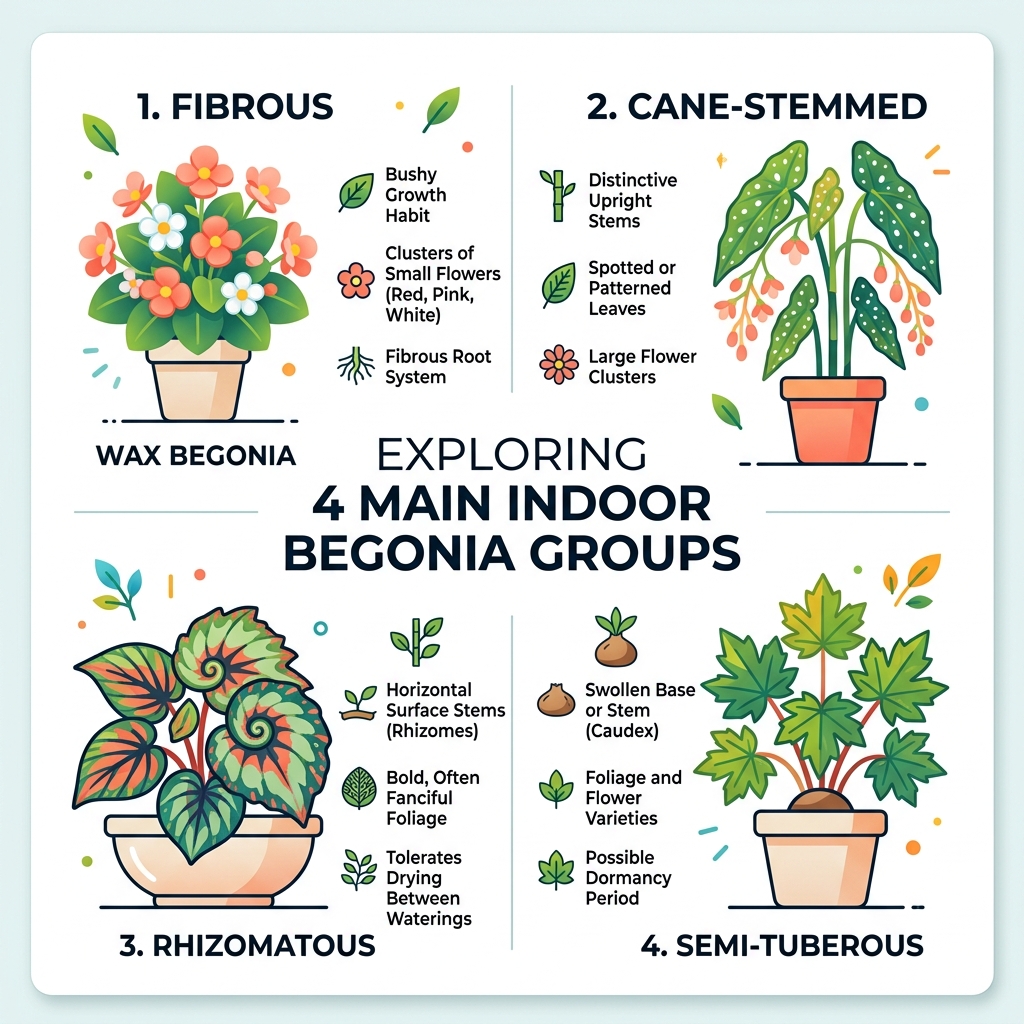
When we look at begonia care indoor, we generally group these plants into four categories based on their root structures and growth habits.
- Rex Begonias: These are the kings of foliage. Known for their metallic silvers, deep purples, and swirling patterns, they are rhizomatous hybrids. They stay relatively compact (usually 10-60cm in height) and are grown almost exclusively for their leaves.
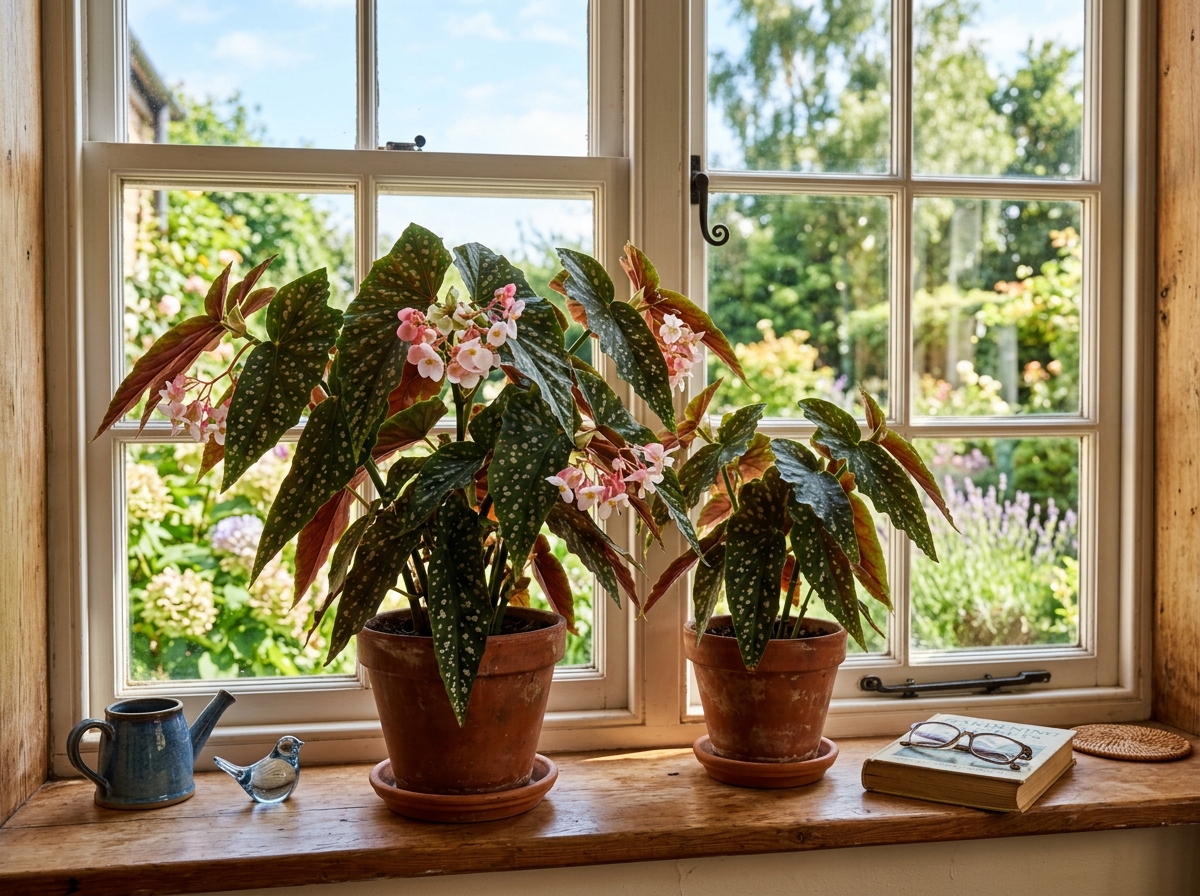
- Cane-stemmed Begonias: Often called “Angel Wing” begonias because of their long, pointed leaves, these grow on upright, bamboo-like stems. They are incredibly tough and can reach several feet in height if you don’t prune them back.
- Rhizomatous Begonias: These are the most diverse group. They grow from thick, creeping stems (rhizomes) that crawl along the soil surface. They are fantastic for beginners because those rhizomes store water, making them a bit more drought-tolerant.
- Wax Begonias (Fibrous-rooted): These are the classic bedding plants you see outdoors, but they make excellent, compact houseplants. They bloom almost constantly if given enough light.
Top Indoor Cultivars to Look For:
- ‘Lucerna’: A classic cane begonia with silver spots and red undersides.
- ‘Tiger Paws’: A rhizomatous beauty with chocolate-marked green leaves.
- ‘Iron Cross’ (B. masoniana): Famous for the dark brown “cross” pattern in the center of its textured green leaves.
- ‘Escargot’: A Rex variety where the leaf base curls into a perfect snail-shell spiral.
Tip 2: Bright Indirect Light Requirements
Light is where many plant parents go wrong. Begonias are like sunbathers who prefer a beach umbrella; they want the brightness, but they can’t handle the direct heat.
For the best begonia care indoor, aim for 4-6 hours of bright, indirect light daily. An east-facing window is often the “Goldilocks” spot — it provides gentle morning sun without the scorching intensity of the afternoon. If you only have south or west-facing windows, move your begonia a few feet back or use a sheer curtain to filter the rays.
Signs of Light Issues:
- Too much light: The leaves will look “bleached,” scorched, or develop crispy brown spots.
- Too little light: The plant will become “leggy” (stretched out with long gaps between leaves) and flowering varieties will stop blooming.
In the dark winter months or in homes with limited windows, we highly recommend supplemental LED grow lights. Keep them about 12-18 inches above the plant for 12-14 hours a day to keep the colors vibrant. For more on positioning, see our guide on indoor-plant-light-requirements. If your home is naturally dim, you might prefer indoor-plants-that-thrive-in-low-light.
Mastering Begonia Care Indoor: Water, Humidity, and Soil
Once you’ve found the right spot, the next hurdle is the “tropical spa” treatment. Begonias come from humid, forest-understory environments, so they don’t appreciate the dry, stagnant air found in many modern apartments.
Tip 3: Watering Best Practices
If there is one thing that kills indoor begonias faster than anything else, it’s overwatering. We like to think of begonias as the “picky eaters” of the plant world. They want their soil moist, but never soggy.
The golden rule for begonia care indoor is to water only when the top inch of soil feels dry to the touch. Stick your finger in — if it feels damp, wait a day or two. When you do water, do it thoroughly until water runs out of the drainage holes, then empty the saucer immediately. Never let the pot sit in a pool of water, as this leads to the dreaded root rot.
Pro Tip: Try to water the soil directly rather than splashing the leaves. Wet foliage is an invitation for fungal diseases like powdery mildew. For a deeper dive into timing, check out our watering-schedule-for-indoor-plants and learn how to avoid common-indoor-plant-care-mistakes.
Tip 4: Ideal Humidity and Temperature
Begonias thrive when humidity levels are between 50% and 70%. In the winter, when heaters are running, indoor humidity can drop to 20%, which causes those frustrating brown leaf edges.
How to boost humidity:
- Pebble Trays: Fill a shallow tray with pebbles and water, then set the pot on top (ensuring the bottom of the pot doesn’t touch the water). As the water evaporates, it creates a humid microclimate.
- Grouping: Group your plants together; they naturally release moisture through their leaves, helping each other out.
- Humidifiers: A small room humidifier is the most effective way to keep begonias happy.
As for temperature, if you’re comfortable, they probably are too. Aim for 65°F-75°F (18°C-24°C) during the day. Just be sure to keep them away from cold drafts, air conditioning vents, or radiators. For more humidity hacks, visit humidity-tips-for-houseplants.
Tip 5: Soil Mix and Potting Tips
Standard, heavy potting soil is too dense for begonias. They need a “fluffy” mix that allows their delicate roots to breathe. According to Growing Begonias Indoors | Home & Garden Information Center, a soil-less mix is often best.
Our Favorite Begonia Mix Recipe:
- 2 parts peat-free coir or peat moss (for moisture retention)
- 1 part perlite or vermiculite (for aeration)
- 1 part fine pine bark (for structure)
When it comes to pots, size matters. Jack Wallington, a noted garden expert, suggests that the small 9cm pots many begonias are sold in are often too small for long-term health. Moving a plant into a 15-20cm pot provides more root space and more stable moisture levels. Just ensure the pot has plenty of drainage holes! Learn more about choosing the best-soil-for-indoor-plants and how-to-repot-indoor-plants.
Maintenance: Feeding, Pruning, and Troubleshooting
A healthy begonia is a growing begonia. To keep that growth lush and the colors “popping,” you’ll need to provide a bit of extra fuel and the occasional haircut.
Tip 6: Fertilizing for Vibrant Foliage
Begonias are “small-plate sharers” — they prefer frequent, light feedings rather than one heavy dose. During the active growing season (spring through early autumn), feed them every 2-4 weeks with a balanced, water-soluble fertilizer diluted to half-strength.
- For Foliage Types (Rex/Rhizomatous): Use a fertilizer slightly higher in nitrogen to encourage those spectacular leaves.
- For Flowering Types (Cane/Wax): Use a fertilizer with a bit more phosphorus to support bloom production.
Always flush the soil with plain water every few months to wash away any mineral salt buildup, which can burn the roots. You can find more natural options in our guide on fertilizing-houseplants-naturally.
Tip 7: Pruning, Repotting, and Propagation
Don’t be afraid to use your shears! Pruning is essential for preventing “leggy” growth and encouraging a bushier, fuller plant.
- Pinching: Use your thumb and forefinger to pinch off the growing tips of young stems. This forces the plant to branch out.
- Pruning: For cane begonias that have grown too tall, cut the stems back to just above a leaf node in the spring.
- Repotting: Most begonias like to be slightly snug in their pots. Repot only when you see roots peeking out of the drainage holes, typically every 1-2 years. Move up only one pot size at a time.
Propagation Steps (Leaf Cuttings): One of the most magical parts of begonia care indoor is how easily they multiply.
- Cut a healthy leaf from a Rex or rhizomatous begonia.
- Use a clean knife to make small nicks across the main veins on the underside of the leaf.
- Pin the leaf flat onto a tray of moist, sandy compost.
- Keep it in a warm, bright spot (ideally covered with a plastic dome).
- In a few weeks, tiny “baby” begonias will sprout from each nick!
For more detailed techniques, see our pruning-tips-for-indoor-plants and how-to-repot-indoor-plants.
Tip 8: Troubleshooting Begonia Care Indoor Common Problems
Even with the best care, problems can pop up. The key is catching them early.
| Symptom | Likely Cause | Solution |
|---|---|---|
| Yellowing Leaves | Overwatering / Root Rot | Let soil dry out; check drainage. |
| Brown, Crispy Edges | Low Humidity / Heat Stress | Increase humidity; move from drafts. |
| White Powdery Spots | Powdery Mildew | Improve air flow; use fungicide. |
| Drooping Leaves | Underwatering / Shock | Check soil moisture; keep temp stable. |
| Sticky Residue | Pests (Aphids/Mealybugs) | Wipe with neem oil or soapy water. |
Powdery mildew is particularly common in humid environments with poor air circulation. If you see white fuzzy patches, isolate the plant and treat it immediately. For a full list of “villains,” check our guide on indoor-plant-pests-and-how-to-remove-them and learn how-to-fix-yellow-leaves-on-houseplants.
Seasonal Begonia Care Indoor and Winter Dormancy
As the days get shorter, your begonia’s needs will change. Most varieties enter a period of “rest” during the winter.
- Reduce Water: Since the plant isn’t growing as fast, it needs about 30% less water. Always check the soil before pouring.
- Stop Fertilizing: Give the plant a break from feeding until new growth appears in the spring.
- Watch the Temp: Ensure the room doesn’t drop below 55°F-60°F.
- Tuberous Storage: If you have tuberous begonias, they will die back completely. Stop watering, remove the dead stems, and store the tubers in a cool, dry place in a box of peat moss until spring.
For more winter-specific advice, read our guide on indoor-plant-care-during-winter.
Frequently Asked Questions about Indoor Begonias
Are begonias toxic to pets?
Yes. According to the ASPCA, all begonias contain calcium oxalate crystals, which are toxic to both cats and dogs. If ingested, they can cause oral irritation, drooling, vomiting, and difficulty swallowing. The most toxic part of the plant is the underground portion (rhizomes or tubers). We recommend keeping them on high shelves or in hanging baskets away from curious nibblers.
How long do indoor begonias live?
With proper begonia care indoor, these plants are remarkably long-lived. While semi-tuberous varieties (like Rieger begonias) are often treated as short-term “floral arrangements,” rhizomatous and cane varieties can easily live for 10 years or more. If a plant starts to look “tired” or woody after a few years, you can usually rejuvenate it with a hard pruning or by taking cuttings to start a “fresh” version of the parent plant.
Why is my begonia not blooming?
If your flowering begonia is only producing leaves, check three things:
- Light: It likely needs more “bright indirect” exposure.
- Fertilizer: You may be using too much nitrogen (which grows leaves) and not enough phosphorus (which grows flowers).
- Deadheading: Are you removing the old, wilted flowers? Removing spent blooms encourages the plant to put energy into new ones.
Conclusion
Mastering begonia care indoor is a journey that rewards you with some of the most stunning textures and colors in the botanical world. By choosing the right variety, respecting the “top inch dry” rule, and providing a little extra humidity, you can transform your home into a lush, tranquil oasis.
At Futuro Ciencia, we believe that a well-cared-for plant does more than just sit in a corner — it brightens your space and purifies your air. Whether you’re starting with a single Polka Dot begonia or building a massive Rex collection, we’re here to help you every step of the way.
Ready to expand your indoor jungle? Check out More info about indoor plant care services for more guides and schedules!
