
Why Most Houseplants Die From Too Much Love (Not Too Little)
A houseplant watering guide is the single most useful tool you can have as an indoor plant owner. Here’s the core of what you need to know right now:
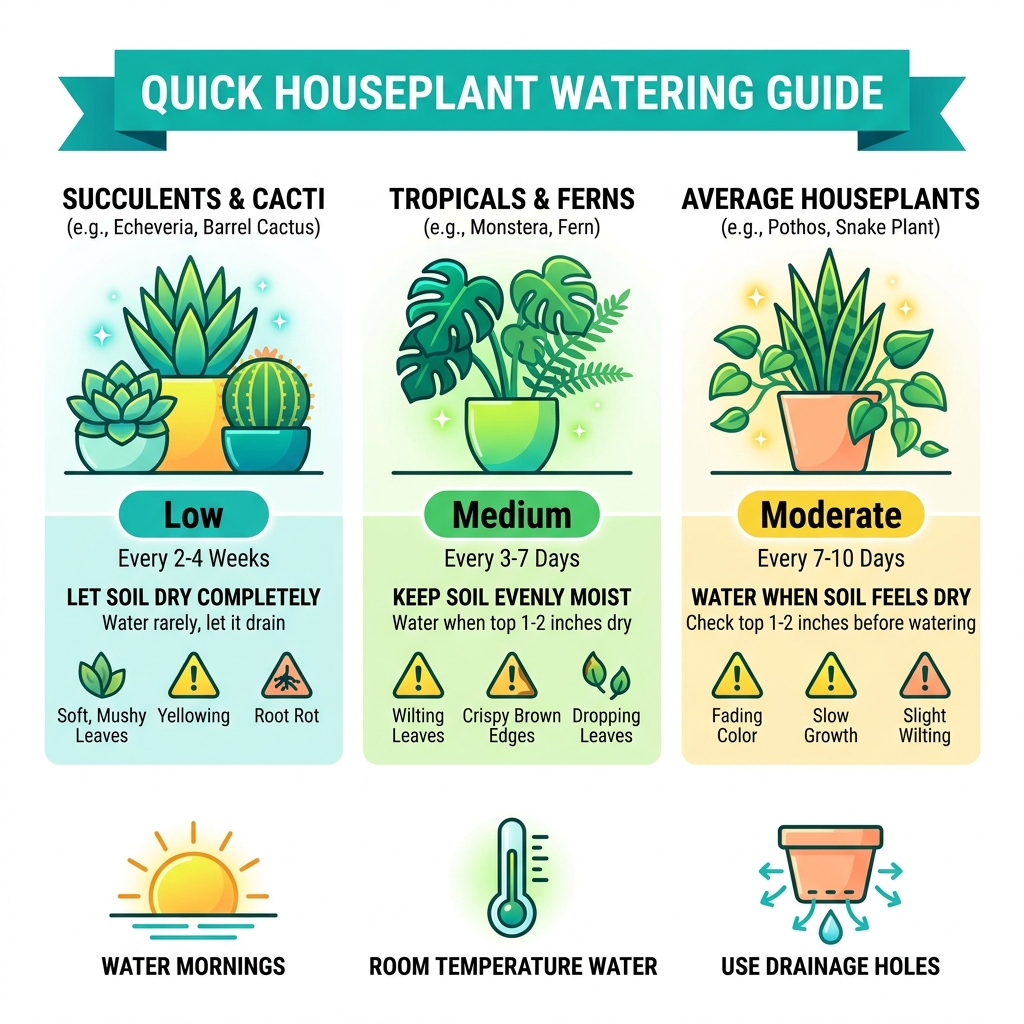
Quick Answer: How to Water Houseplants
- Push your finger 1-2 inches into the soil — only water if it feels dry
- Most houseplants need water every 7-10 days, but always check the soil first
- Succulents and cacti: water every 2-4 weeks, let soil dry out completely
- Tropicals and ferns: water every 3-7 days, keep soil evenly moist
- Never let pots sit in standing water for more than 45 minutes
- Water in the morning using room-temperature water
- Always use pots with drainage holes
Here’s a hard truth: overwatering is the number one reason houseplants die. Not pests. Not neglect. Water.
Most houseplants don’t die from a forgotten watering — they die with a watering can in someone’s hand. That’s because busy plant owners water on a fixed schedule, treating every plant the same, regardless of what the plant actually needs.
Plants are up to 95% water by composition, and they lose up to 90% of the water they absorb through a process called transpiration — releasing moisture through their leaves into the air. That means their water needs shift constantly based on light, temperature, season, and pot size.
A rigid watering schedule ignores all of that.
This guide will walk you through everything — from reading your plant’s signals to fixing common problems — so you can stop guessing and start growing.
The Science of Hydration: Why Plants Need Water
To truly master your houseplant watering guide, we first need to understand what water actually does for a plant. It’s not just about “quenching thirst.” Water is the lifeblood of every cellular process.
Plants are composed of up to 95% water. This high water content is essential for maintaining cell turgidity—the internal pressure that keeps stems upright and leaves crisp. When a plant lacks water, these cells collapse, leading to the familiar sight of wilting.
Beyond structure, water is a key ingredient in photosynthesis. Without it, plants cannot convert light into the glucose they need to grow. It also acts as a highway for nutrient transport, carrying minerals from the soil up through the roots to the furthest leaf tips.
However, plants are constantly losing moisture. Through a process called transpiration, water evaporates from the stomata (tiny pores) on the leaves. In fact, up to 90% of the water a plant absorbs is eventually lost to the air to help cool the plant and move nutrients. This is why environmental factors like dry air or high heat increase a plant’s “thirst.” Understanding this biological cycle is the first step in a solid indoor-plant-care-routine. For a deeper dive into these mechanics, you can explore How to Water Houseplants Properly: Frequency, Techniques, and Care Tips.
How to Use This Houseplant Watering Guide
The most important rule we teach at Futuro Ciencia is this: Never water on a calendar. A “Watering Wednesday” might work for you, but it rarely works for your plants. Instead of a schedule, we use a “check-in” system.
The Finger Test
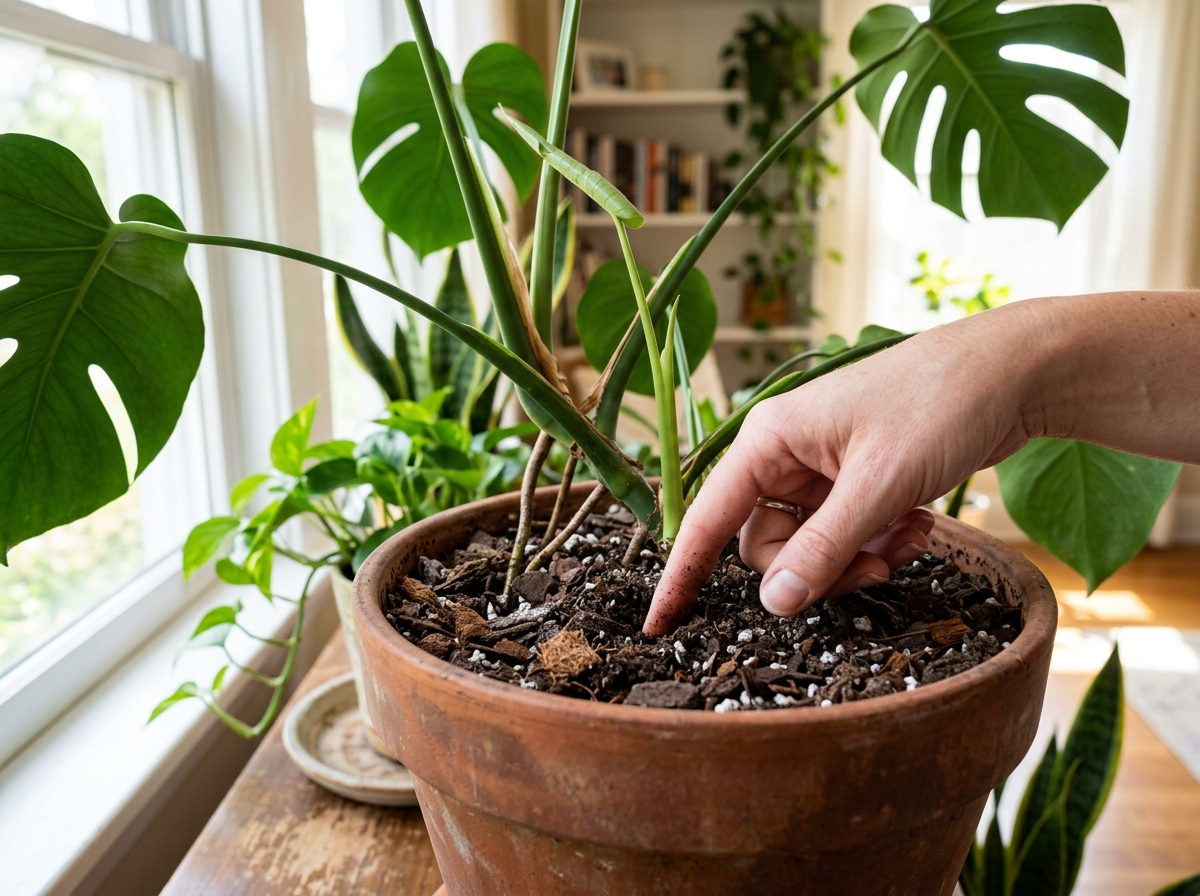
This is the gold standard of houseplant care. Insert your index finger into the soil up to the second knuckle (about 1-2 inches deep).
- If the soil feels damp or cool, wait.
- If it feels dry and crumbly, it’s time to fetch the watering can.
The Pot Weight Method
This is a favorite trick among professional interior plantscapers. Pick up your plant right after a thorough watering to feel its “heavy” weight. Check it again a few days later. As the plant uses water and the soil dries, the pot will become significantly lighter. With practice, you can tell if a plant needs water just by giving the pot a little lift.
Tools of the Trade
If you prefer data over touch, a moisture meter can be a great ally. Insert the probe to about 1/3 of the pot’s depth, roughly halfway between the plant stem and the pot edge. Always wipe the probe clean between plants to prevent the spread of soil-borne issues and ensure accuracy. For those with many “low-light” beauties, check out our watering-guides-the-secret-to-keeping-low-light-plants-alive for specialized tips.
Identifying Needs in Your Houseplant Watering Guide
Different plants have different “thirst zones.” Grouping your plants by these needs makes care much easier:
- The Drought-Tolerant (Red Zone): Cacti and succulents. These store water in their leaves and stems. Let the soil dry out 100% before watering again.
- The Moderate Drinkers (Green Zone): Pothos, Monsteras, and Philodendrons. They like the top 1-2 inches of soil to dry out, but they don’t want to sit in a desert for weeks.
- The Moisture Lovers (Blue Zone): Ferns and Peace Lilies. These prefer “evenly moist” soil—like a wrung-out sponge. If they dry out completely, they may drop leaves or crisp up immediately.
For a structured look at these groups, see our watering-schedule-for-indoor-plants.
Signs of Overwatering vs. Underwatering
Both problems can look surprisingly similar because both result in root death. If roots rot from too much water, they can’t drink; if they dry up from too little, they also can’t drink. Here is how to tell them apart:
- Overwatering: Leaves turn yellow (starting from the bottom), stems feel mushy or soft, and the soil may have a sour, moldy smell. This is the #1 killer and a highlight in our common-indoor-plant-care-mistakes guide.
- Underwatering: Leaves become crispy, brown at the tips, or curl inward. The soil will often shrink away from the sides of the pot, creating a visible gap.
Mastering Techniques: Top vs. Bottom Watering
How you apply the water is just as important as when. There are two primary schools of thought, and both have their place in your houseplant watering guide.
Top Watering
This is the traditional method: pouring water onto the soil surface until it drains out the bottom.
- Pros: It flushes out “soluble salts” (minerals from tap water and fertilizer) that can build up and burn roots.
- Cons: It can be messy and sometimes leads to “channeling,” where water runs down the sides of the pot without actually soaking the root ball.
Bottom Watering
Place your plant (in its nursery pot with holes) into a tray or sink filled with a few inches of water. Let it sit for 15-30 minutes.
- Pros: The soil absorbs exactly what it needs through capillary action. It’s excellent for plants like African Violets that hate getting their leaves wet, and it prevents fungus gnats by keeping the top layer of soil dry.
- Cons: It doesn’t flush out salts. If you only bottom-water, you must “top-flush” the soil every few months.
Best Practices for Your Houseplant Watering Guide
To keep your plants in peak condition, follow these professional standards:
- Always use drainage: Never plant directly into a pot without a hole. If you love a decorative “cachepot,” keep the plant in its plastic nursery liner inside the pretty pot.
- Empty the saucer: After watering, wait about 20-30 minutes, then dump any excess water sitting in the saucer. “Soggy feet” lead to root rot.
- Morning is best: Watering in the morning allows the plant to hydrate before the sun hits its peak and gives any splashes on the leaves time to dry, preventing fungal issues.
- Temperature matters: Use room-temperature water. Icy cold water can shock the tropical roots of plants like the Ficus Audrey or Calathea.
For more on avoiding these pitfalls, see common-indoor-plant-care-mistakes-2.
Environmental Factors That Influence Frequency
A houseplant watering guide isn’t a static document because your home is a living environment. Several factors will change how fast your soil dries out:
- Light Intensity: Plants in bright, southern-facing windows photosynthesize faster and “breathe” more, requiring water twice as often as those in dim corners. Check our guide on indoor-plant-light-requirements to see where your plants fall.
- Humidity: In dry winter apartments (often 20-30% humidity), plants lose water rapidly through their leaves. Grouping plants together or using a humidifier can slow this down.
- Pot Material: Terracotta is porous; it “breathes” and wicks moisture away, meaning you’ll need to water 30-50% more often than if you used plastic or glazed ceramic.
- Soil Type: A gritty mix with lots of bark or perlite drains fast, while a peat-heavy mix stays wet longer. Choosing the best-soil-for-indoor-plants is vital for moisture control.
Advanced Care: Water Quality and Seasonal Shifts
Not all water is created equal. While most hardy plants (like Pothos or Snake Plants) handle tap water just fine, more sensitive species like Calatheas, Spider Plants, and Dracaenas are picky.
- Chlorine and Fluoride: Tap water often contains these chemicals. Chlorine can be dissipated by letting water sit in an open container for 24 hours. Fluoride, however, does not evaporate and can cause brown leaf tips. For these plants, rainwater or filtered water is best.
- Softened Water: Avoid using water from a home softener. These systems often replace calcium with sodium (salt), which is toxic to plants over time.
The Seasonal Shift
Your watering habits must change with the seasons.
- Summer: High light and active growth mean your plants are at their thirstiest.
- Winter: Most houseplants go into a semi-dormant “rest” phase. Growth slows, and the sun is weaker. You should typically reduce your watering frequency by 25-50% during these months. Overwatering in winter is a leading cause of plant death. For more seasonal advice, see indoor-plant-care-during-winter.
Troubleshooting and Long-Term Maintenance
Even with the best houseplant watering guide, things can go wrong. Here is how to handle common crises:
Root Rot Recovery
If you’ve overwatered and the plant is collapsing, don’t panic. Remove the plant from its pot and inspect the roots. Healthy roots are white and firm; rotted roots are black, slimy, and smell bad. Trim away the rot, spray the remaining roots with a diluted hydrogen peroxide solution, and repot in fresh, dry soil.
Salt Leaching
Do you see a white, crusty buildup on your soil or the rim of your terracotta pot? That’s salt buildup. Every 4-6 months, take your plant to the sink and run water through the soil for several minutes (using about twice the volume of the pot). This “leaching” process washes away the harmful minerals.
Vacation Care
If you’re heading away for a week or two, you have options:
- Self-watering pots: These use a reservoir and a wick to provide consistent moisture.
- The Grouping Method: Move plants away from bright windows and group them together to create a mini-microclimate of higher humidity.
- Watering Globes: These glass bulbs slowly release water into the soil as it dries.
For a complete list of monthly tasks, keep our indoor-plant-maintenance-checklist handy.
Frequently Asked Questions about Watering
How often should I water my houseplants?
There is no single answer, but the average houseplant needs water every 7 to 10 days. However, you should always perform the finger test first. Factors like the size of the pot (smaller pots dry faster) and the time of year will constantly shift this requirement.
Is tap water safe for all indoor plants?
For about 80% of houseplants, tap water is perfectly safe. If you notice brown tips on “diva” plants like Calatheas or Peace Lilies, try switching to rainwater or distilled water. Always ensure the water is room temperature to avoid shocking the roots.
Can I save a plant that has been overwatered?
Yes, if caught early. The key is to stop watering immediately and improve drainage. If the soil is “soupy,” repotting into fresh, dry soil is the best way to save the root system from total collapse.
Conclusion
Mastering the art of the houseplant watering guide is the difference between a struggling plant and a thriving indoor oasis. By moving away from rigid schedules and learning to “listen” to your plants through soil checks and visual cues, you become a partner in their growth rather than a source of stress.
At Futuro Ciencia, we believe that everyone can have a green thumb—it just takes a little bit of science and a lot of observation. Ready to take the guesswork out of your plant parenting? Download our indoor-plant-care-schedule and start transforming your space into a tranquil, healthy sanctuary today. Happy growing!
