
Why a Plant Display Stand Transforms Your Indoor Garden
A plant display stand is one of the simplest upgrades you can make for your indoor plants. Here’s a quick look at your best options:
Top Plant Display Stand Types at a Glance:
| Type | Best For | Price Range |
|---|---|---|
| Tiered ladder stand | Multiple plants, small spaces | $15 – $45 |
| Corner stand | Unused corners, large collections | $45 – $175 |
| Single-pot pedestal | Statement plants, minimalist style | $20 – $70 |
| Wall-mounted | Tiny spaces, modern aesthetics | $25 – $60 |
| Adjustable stand | Mixed pot sizes (8-12 inch pots) | $20 – $50 |
Your plants deserve better than the floor. Sitting directly on the ground, pots miss out on airflow, drain poorly, and attract pests. Lifting them up changes everything.
A good stand does three things at once: it makes your plants healthier, keeps your space organized, and turns a scattered collection into a real design feature.
Whether you have one trailing pothos or a full jungle of 15 pots, there’s a stand built for your situation. The best-selling options on Amazon — like tiered wooden ladder stands with over 18,000 reviews — show just how popular this simple solution has become.
This guide covers the top plant stands worth buying right now, so you can stop second-guessing and start displaying.
Choosing the Perfect Plant Display Stand for Your Space
When we set out to find the ideal plant display stand, it is easy to get distracted by pretty designs. However, the “perfect” stand is the one that balances style with the physical needs of your leafy roommates. Before clicking “buy,” we recommend looking at a few critical factors.
Material and Weight Capacity
First, consider the weight. A ceramic pot filled with damp soil is surprisingly heavy! While a lightweight bamboo shelf might look airy and chic, a large Ficus or Monstera might require a heavy-duty iron frame. Most standard tiered shelves support between 11 and 33 lbs per level. If you have a massive specimen, look for stands specifically labeled “heavy-duty,” which often feature reinforced bars and wider bases for better stability.
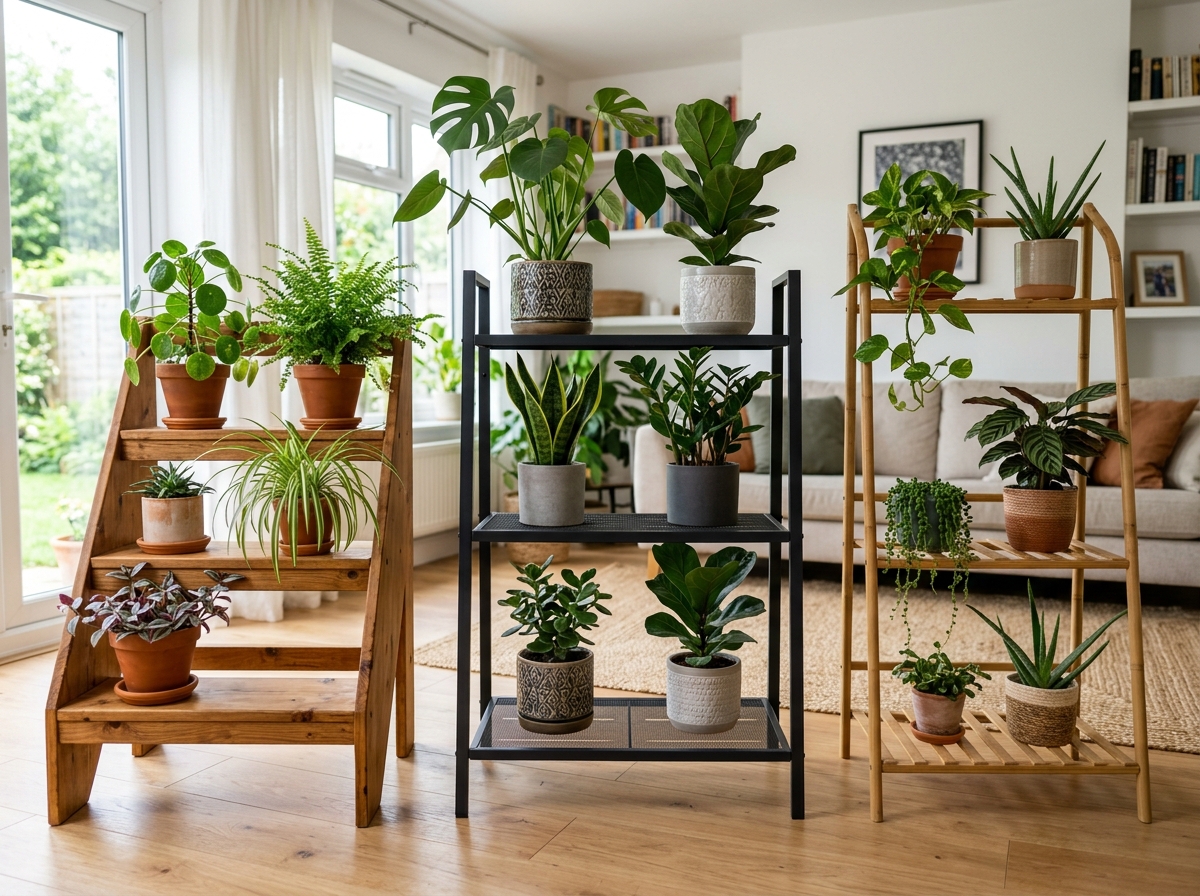
Material Comparison Table
| Material | Pros | Cons | Best Use |
|---|---|---|---|
| Wood (Pine/Cedar) | Natural look, warm aesthetic, often carbonized for durability. | Can rot if water pools; needs sealant for outdoor use. | Living rooms, rustic or boho decor. |
| Metal (Steel/Iron) | High weight capacity, very stable, often rust-resistant. | Can be heavy to move; industrial look isn’t for everyone. | Large plants, balconies, patios. |
| Bamboo | Eco-friendly, lightweight, naturally moisture-resistant. | Not as sturdy for very heavy pots; can fade in direct sun. | Bathrooms, kitchens, small succulents. |
Room Aesthetics and Light Access
Your choice should also harmonize with your existing decor. A mid-century modern pedestal fits a sleek living room, while a multi-tiered wooden ladder suits a cozy, bohemian nook. Beyond looks, think about sunlight. A tall, solid stand might block light for smaller plants behind it. High-low structures are excellent because they ensure that even the plants on the bottom shelf get their fair share of Vitamin D.
For more tips on matching your greenery to your home’s vibe, check out our guide on selecting indoor plant pots and planters and finding the best containers for indoor plants.
Popular Types of Plant Stands for Every Room
Every home has that one awkward corner or empty wall that needs a “glow-up.” Fortunately, there is a plant display stand configuration for every architectural quirk.
Tiered and Corner Designs
If you are a “plant parent” who can’t stop at just one, tiered stands are your best friend. They allow you to stack your collection vertically, which is a lifesaver in small apartments. Corner units are particularly effective; they turn unused 90-degree spaces into lush, green focal points. For a detailed breakdown of how to style these areas, see our article on plant corner decoration: the perfect green nook.
One highly-rated option is the 6-Tier Plant Stand with Adjustable Foot Pads. This metal-framed beauty is designed for stability even on slightly uneven floors, making it perfect for both indoor living areas and outdoor patios.
Nesting and Ladder Styles
Nesting stands come in sets of two or three that can be tucked under each other or spread out to create a cascading effect. Ladder styles, on the other hand, offer a more casual, “gardener’s shed” vibe. They are incredibly popular because they provide deep shelves for larger pots at the bottom and narrower shelves for smaller plants at the top. For more inspiration, explore our indoor plant display ideas.
Versatile Multi-Tiered Plant Display Stand Options
Vertical gardening isn’t just for outdoors anymore. Using a multi-tiered plant display stand lets you take advantage of the unused air space in your home.
- Trapezoidal Designs: The Giantex Wood Plant Stand, 5-Tier 10 Potted Trapezoid Plant Holder Rack is a fantastic example of a high-low structure. Its symmetrical shape isn’t just for looks—it ensures that no plant is shaded by the one above it, optimizing sunlight for all ten pots.
- Foldable Convenience: If you like to move your plants around or need something for a seasonal balcony display, the 3-Tier Bamboo Foldable Plant Stand with Display Shelf Rack is a winner. It is lightweight, eco-friendly, and can be tucked away in a closet when not in use.
- Large Capacity Racks: For those with an extensive collection, the 6-Tier Flower Wood Stand Plant Display Rack Storage Shelf offers a massive amount of real estate. Made from carbonized pine, it handles the weight of multiple pots while providing excellent ventilation through its slatted shelves.
Adjustable and Single-Pot Plant Display Stand Styles
Not everyone needs a “stadium seating” arrangement for their plants. Sometimes, you just want to elevate one beautiful fiddle leaf fig.
Adjustable stands are a modern innovation we absolutely love. They typically feature a bamboo or metal frame that can slide in or out to fit pots ranging from 8 to 12 inches in diameter. This means as your plant grows and needs a bigger pot, you don’t have to buy a new stand!
For those focusing on a minimalist aesthetic, floor pedestals or mid-century modern “bullet” planters are the way to go. These create a clean, sophisticated look that highlights the plant’s natural silhouette. If you’re working with a tight floor plan, check out our small space plant styling ideas and rooting for you: creative houseplant display ideas for more curated looks. You can also find more inspiration at displaying indoor plants: unique stylish ideas.
Material Matters: Wood, Metal, and Bamboo
The material of your plant display stand dictates more than just style—it determines how long the stand will last in your specific environment.
The Warmth of Wood
Wood is the classic choice. We often see pine, cedar, or fir used in these designs. A key term to look for is “carbonized.” This is a high-temperature treatment that makes the wood more resistant to warping, shrinking, and cracking. The 6-Tier Flower Wood Stand uses this process to ensure it stays sturdy even in humid environments. Wood brings a natural, grounding element to a room, which you can learn more about in our article on styling houseplants in the living room.
The Strength of Metal
For outdoor use or very heavy pots, metal is king. Look for powder-coated steel or wrought iron to prevent rust. Metal stands often feature intricate scrollwork or sleek, industrial lines. They are incredibly durable and easy to wipe down.
The Eco-Friendly Versatility of Bamboo
Bamboo is a fast-growing, sustainable material that is naturally resistant to moisture, making it a top choice for bathrooms or kitchens. The Multifunctional Bamboo Shelf Flower Plant Display Stand is a great example of a piece that works just as well for holding towels and toiletries as it does for orchids and ferns. It is lightweight and usually features a smooth, burr-free finish that is easy on the hands.
Maintenance and Functional Features for Longevity
To keep your plant display stand looking like new, a little bit of maintenance goes a long way.
- Drainage and Airflow: Always choose a stand with slatted shelves or mesh platforms. This prevents water from pooling under your pots, which can lead to root rot for the plant and water damage for the stand.
- Stability Features: If your floor is a bit wonky, look for stands with adjustable foot pads. This prevents the dreaded “wobble” that could lead to a crashed ceramic pot.
- Cleaning: For wood and bamboo, a simple wipe with a damp cloth is usually enough. For metal, you can use a mild soap. If you are using a wooden stand outdoors, applying a protective sealant once a year will help it fight off the elements.
- Mobility: If you like to chase the sun, look for stands with locking wheels. This makes it easy to roll your plants to a brighter window during the winter months.
For more styling and care tips, dive into our guide to indoor plant shelf styling or see how to maximize your greenery in our small space plant styling ideas 2 and styling houseplants in your living room guides.
Frequently Asked Questions about Plant Stands
Can plant stands be used outdoors?
Yes, but you must choose the right materials. Look for powder-coated metals, resin, or “carbonized” wood. Avoid untreated pine or indoor-only bamboo if the stand will be exposed to direct rain. Even weather-resistant stands benefit from being moved into a garage or shed during extreme winter weather to prevent rust or cracking.
How much weight can a typical plant stand hold?
Most multi-tiered stands support between 11 and 33 lbs per shelf. A heavy-duty iron stand might hold up to 120 lbs or more. Always check the manufacturer’s specs. If you have a particularly heavy pot, place it on the lowest shelf to keep the center of gravity low and prevent the stand from tipping.
Do plant stands help with plant health?
Absolutely! Elevating your plants improves air circulation around the foliage and the drainage holes. It also makes it much easier to spot pests like spider mites or mealybugs before they become a major problem. Plus, lifting plants higher often gives them better access to sunlight that might be blocked by furniture.
Conclusion
At Futuro Ciencia, we believe that your home should be a tranquil oasis. A well-chosen plant display stand is more than just furniture—it is a tool that helps your plants thrive while purifying your air and brightening your mood. Whether you choose a towering 6-tier wooden rack or a sleek, adjustable bamboo pedestal, you are taking a big step toward a more organized and beautiful indoor garden.
Ready to take your plant game to the next level? Explore our expert schedules and care tips to keep your new display looking vibrant all year round.
