
Why Your ZZ Plant Watering Schedule Is the Key to a Thriving Indoor Garden
A solid zz plant watering schedule is simpler than you might think — and getting it right is the single biggest factor in keeping this plant healthy.
Quick answer for busy plant owners:
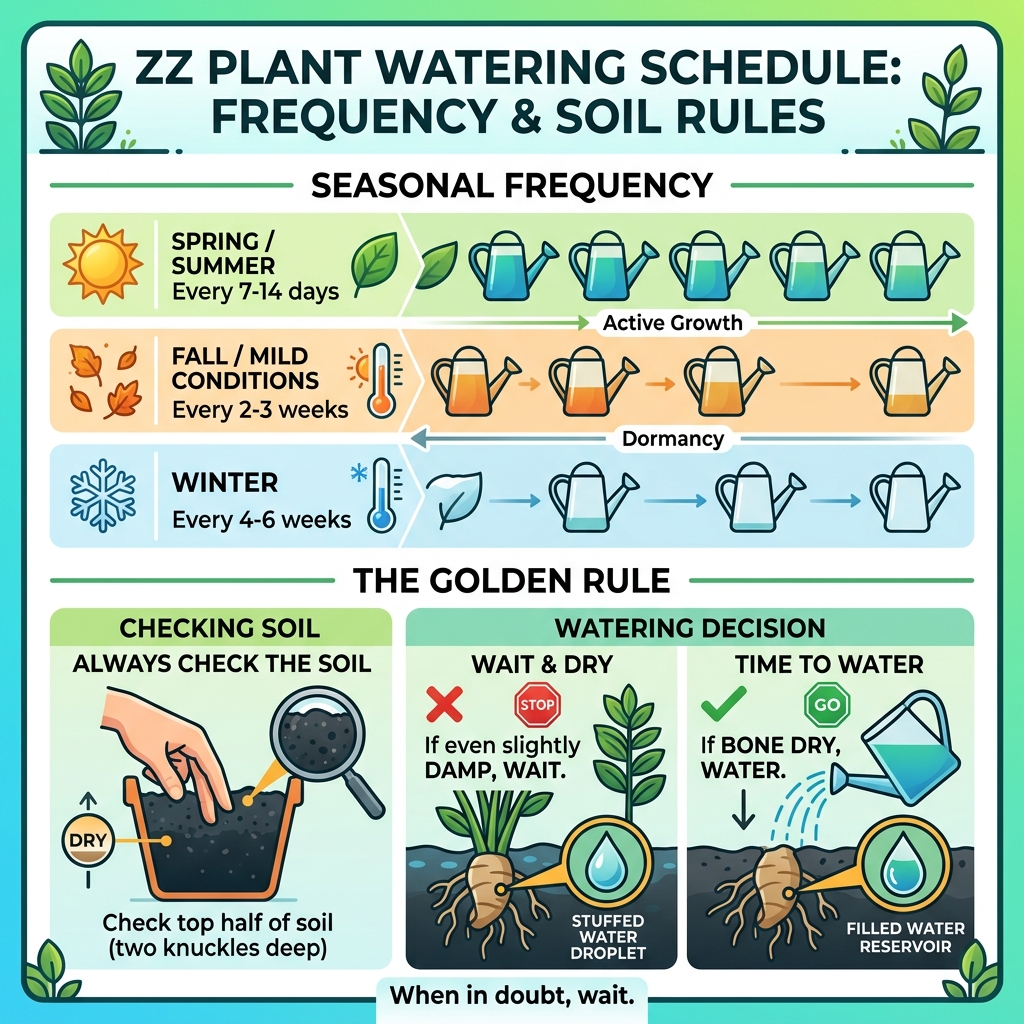
| Season | Watering Frequency |
|---|---|
| Spring / Summer | Every 7-14 days |
| Fall / Mild conditions | Every 2-3 weeks |
| Winter | Every 4-6 weeks |
The golden rule: Always let the top half of the soil dry out completely before watering again. When in doubt, wait.
The ZZ plant (Zamioculcas zamiifolia) is native to the drought-prone grasslands and forests of Eastern Africa. It evolved to survive long dry spells followed by heavy rain. That history shaped everything about how it handles water today.
The secret is in its rhizomes — thick, potato-like structures beneath the soil that store water like an internal reservoir. Its leaves also hold up to 91% water by composition. This means the plant can go weeks, sometimes up to two months, without a drink and still bounce back.
For busy homeowners, that’s great news. But it also means overwatering is a far bigger threat than underwatering. Most ZZ plant problems — yellowing leaves, mushy stems, root rot — trace back to too much water, not too little.
This guide covers everything: how to set a reliable watering routine, how to use self-watering pots safely, and how to catch overwatering (or underwatering) before it does serious damage.
Establishing Your ZZ Plant Watering Schedule
At Futuro Ciencia, we believe that the best zz plant watering schedule isn’t one found on a calendar, but one dictated by the plant’s soil. Because these plants are native to Eastern Africa, they are biologically programmed to expect periods of drought. If we provide water while the soil is still damp, we risk suffocating those precious, water-storing rhizomes.
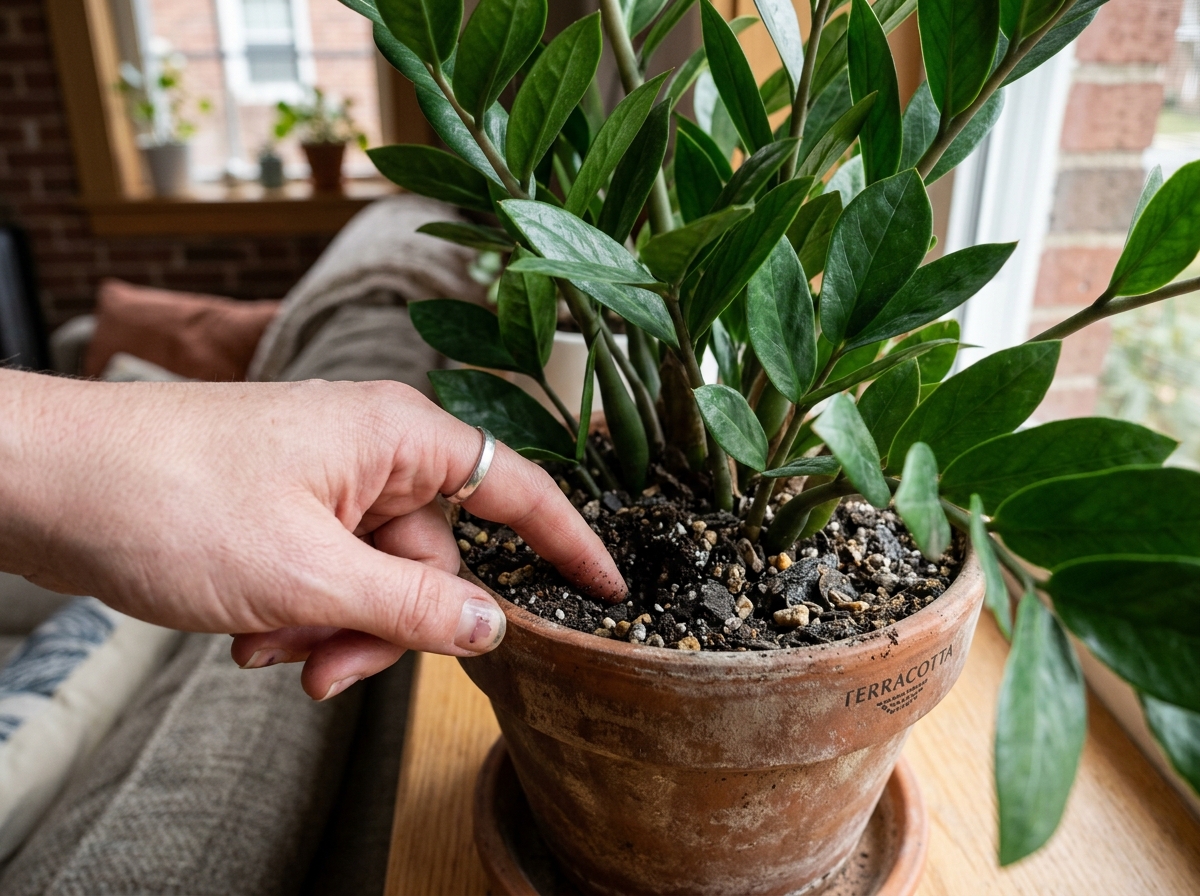
Generally, a healthy ZZ plant needs water every 2 to 3 weeks during mild seasons. However, the most accurate way to tell if it’s time for a drink is to check the soil moisture manually. We recommend the “Finger Test”: stick your finger about two inches (two knuckles deep) into the potting mix. If it feels even slightly damp, walk away. If it’s bone dry, it’s time to water.
For those who don’t want to get their hands dirty, the “Chopstick Test” is a classic pro-tip. Insert a wooden chopstick or skewer deep into the soil near the edge of the pot. If it comes out clean and dry, water. If soil clings to it or it looks dark and damp, your plant is still satisfied. You can also use a moisture meter; for a ZZ plant, you should wait until the needle hits the “dry” zone (typically a reading of 2 or 3) before adding more moisture.
Establishing a consistent watering-schedule-for-indoor-plants is about observation, not just habit. By following an indoor-plant-care-schedule, you ensure that the top half of the potting mix has completely dried out, which is the “sweet spot” for ZZ health.
Summer vs. Winter: A Seasonal ZZ Plant Watering Schedule
The sun is the engine that drives a plant’s thirst. During the spring and summer, your ZZ plant is in its active growth phase. Longer days and higher temperatures mean the plant processes water faster. In these peak months, your zz plant watering schedule might tighten to once every 7 to 14 days, especially if the plant is in a bright spot.
However, as the days shorten and temperatures drop, the plant enters a period of semi-dormancy. Its metabolism slows down significantly. This is where most “plant parents” run into trouble. During the colder months, it is vital to adjust your indoor-plant-care-during-winter routine. You should drastically cut back, watering perhaps only once every 4 to 6 weeks. In a very cold or dark room, a ZZ plant might even go two months without needing a drop. Always remember: cold soil stays wet longer, and wet, cold roots are a recipe for disaster.
Environmental Factors Influencing Your ZZ Plant Watering Schedule
No two homes are the same, which means no two watering schedules will be identical. Several factors play a role in how quickly your plant dries out:
- Light Exposure: This is the biggest factor. A ZZ plant in a bright, south-facing window will need water much more often than one tucked in a dim corner. While they are famous low-water-indoor-plants, their growth rate (and therefore water consumption) scales with light.
- Pot Material: Terracotta is porous and “breathes,” allowing moisture to evaporate through the walls of the pot. Soil in terracotta might dry out in 10-14 days. Conversely, plastic, ceramic, or metal pots trap moisture, meaning you might only water once a month.
- Humidity and Temperature: High humidity keeps leaves hydrated longer, while dry AC or heater air can suck moisture from the soil. Use our indoor-plant-maintenance-checklist to keep track of these environmental shifts.
- Plant and Pot Size: A large, established plant with a massive root system will drink more than a tiny starter plant. However, be careful with oversized pots; too much soil around a small plant holds excess water that the roots can’t reach, leading to rot.
Mastering Watering Techniques: Top, Bottom, and Self-Watering Pots
How you water is just as important as when you water. Each method has its pros and cons, but the goal remains the same: thorough saturation followed by complete drainage.
| Method | Best For… | Pro Tip |
|---|---|---|
| Top Watering | Flushing out minerals and salts. | Pour until water flows freely from the drainage holes, then empty the saucer. |
| Bottom Watering | Deep root saturation without wetting the stems. | Let the pot sit in 2 inches of water for 45-60 minutes until the top feels moist. |
| Self-Watering Pots | Forgetful owners or frequent travelers. | Use a very chunky, well-draining mix to prevent the soil from becoming a swamp. |
When top watering, we recommend using room-temperature water. Extremely cold water can shock the tropical rhizomes. While ZZ plants are generally hardy, if your tap water is heavily chlorinated, letting it sit out overnight allows the chemicals to dissipate, making it gentler on the plant. This is a key part of a successful indoor-plant-care-routine.
One of the most common-indoor-plant-care-mistakes is leaving the plant sitting in a saucer full of runoff water. After watering, wait about 20 minutes and then discard any water left in the tray. ZZ plants hate “wet feet.”
How to Spot and Fix Overwatering Signs
Overwatering is the “silent killer” of the ZZ plant. Because the plant stores so much water in its rhizomes and stems, it can look fine on the outside while its roots are literally drowning underneath.
Signs of Overwatering:
- Yellowing Leaves: If the leaves turn a bright, sickly yellow and feel soft or “mushy” rather than crispy, you are likely overwatering.
- Mushy Stems: Squeeze the base of the stems near the soil line. They should be firm. If they feel soft or collapse, rot has set in.
- Foul Odor: If you smell something akin to rotting potatoes coming from the soil, that is a clear sign of root rot.
- Leaf Drop: While underwatered plants drop leaves to save energy, overwatered plants drop leaves because the vascular system is failing.
If you suspect root rot, you must act quickly. Remove the plant from its pot and gently wash away the soil. Healthy roots are firm and white or light brown; rotten roots are black, slimy, and smell bad. Use sterilized shears to trim away all the rot. According to Scientific research on Zamioculcas zamiifolia care and toxicity, the plant is resilient, but it needs a clean slate to recover. Repot the survivors in fresh, dry, well-draining soil (like a succulent or cactus mix) and hold off on watering for at least a week. For more on avoiding these pitfalls, see our guide on common-indoor-plant-care-mistakes-2.
Identifying Underwatering and Reviving a Thirsty Plant
While it’s hard to underwater a ZZ plant, it is possible, especially if you’ve taken the “neglect” advice a bit too literally. Because the leaves are 91% water, the plant will literally begin to deflate when it runs out of reserves.
Signs of Underwatering:
- Wrinkled Stems (Petioles): The usually plump, smooth stems will develop vertical wrinkles as the plant uses up its internal water storage.
- Drooping: The entire plant may begin to lean or sag.
- Crispy, Brown Tips: Unlike the soft yellow of overwatering, underwatered leaves turn brown and brittle, starting at the tips.
- Curling Leaves: The leaflets may curl inward to reduce the surface area and prevent further moisture loss.
The ZZ plant is one of those indoor-plants-that-survive-neglect, often bouncing back even after losing all its leaves, provided the rhizomes are still firm. To revive a thirsty plant, use the “Soak Method.” Place the pot in a sink or basin filled with a few inches of water and let it drink from the bottom for about an hour. This ensures the soil becomes fully re-hydrated, as bone-dry soil can sometimes become “hydrophobic” and repel water.
For more tips on bringing plants back from the brink, check out our indoor-plants-that-survive-neglect-2 and indoor-plant-care-tips-for-beginners guides.
Frequently Asked Questions about ZZ Plants
Can I use tap water for my ZZ plant?
Yes, most ZZ plants are perfectly fine with tap water. They are not as sensitive to minerals as Calatheas or Spider Plants. However, if you have very hard water, you might notice white mineral crusts forming on the soil surface over time. If you want to be extra careful, use filtered water or let your tap water sit out for 24 hours before using it. Always ensure the water is room temperature to avoid shocking the roots. For more nuanced advice, see our watering-guides-the-secret-to-keeping-low-light-plants-alive.
How long can a ZZ plant go without water?
A healthy, established ZZ plant can easily go 3 to 4 weeks without water in normal conditions. In low-light or winter conditions, they have been known to survive for 2 months or more. This makes them the ultimate “vacation plant.” If you are heading out for a few weeks, don’t worry about hiring a plant sitter for your ZZ; it will likely be just fine when you return. They are truly indoor-plants-that-need-little-care.
Why is my ZZ plant “crying” or leaking water?
If you see small droplets of water on the tips of the leaves, don’t panic! This is a natural process called guttation. It usually happens after a thorough watering when the soil is very saturated and the air is humid. The plant is simply exhaling excess moisture. While it’s not harmful, it is a sign that your plant has plenty of water, so you can definitely wait a bit longer before your next watering session.
Conclusion
Mastering the zz plant watering schedule is the first step toward becoming a confident plant parent. By understanding the unique East African heritage of the Zamioculcas zamiifolia and respecting its water-storing rhizomes, you can transform your home into a lush, green oasis with very little effort.
At Futuro Ciencia, our mission is to help you find the perfect balance between care and neglect. Whether you are looking for more low-water-indoor-plants-2 or need a refined indoor-plant-care-schedule, we are here to support your journey. Remember: when it comes to the ZZ plant, less is almost always more. Happy planting!
