
Your Indoor Air May Be More Polluted Than You Think
Indoor air purifying plants are one of the simplest, most affordable ways to fight back against the hidden pollution inside your home.
Here are the best options, fast:
| Plant | Best For | Light Needs | Pet Safe? |
|---|---|---|---|
| Golden Pothos | Overall VOC removal (52%) | Low to medium | No |
| Spider Plant | Carbon monoxide, xylene | Low to bright indirect | Yes |
| Snake Plant | Nighttime oxygen, low light | Low to indirect | No |
| Peace Lily | Mold spores, benzene | Low to medium | No |
| Boston Fern | Formaldehyde, humidity | Bright indirect | Yes |
| Areca Palm | General purification | Bright indirect | Yes |
Here’s something most people don’t realize: the air inside your home is likely far worse than the air outside. Urban dwellers spend roughly 85–90% of their time indoors, and indoor air has been found to be 5–7 times more polluted than outdoor air.
Where does all that pollution come from? Your furniture, paint, cleaning products, and building materials quietly release toxic gases called Volatile Organic Compounds (VOCs) — things like formaldehyde, benzene, and xylene. Over time, breathing these in can lead to headaches, respiratory issues, and a cluster of symptoms sometimes called Sick Building Syndrome.
The good news? A well-chosen houseplant does more than just look nice on a shelf.
The Science of Indoor Air Purifying Plants
We often think of plants as simple decorations, but they are actually sophisticated biological filters. The modern fascination with indoor air purifying plants isn’t just a “green” trend; it’s rooted in serious scientific inquiry.
The most famous validation comes from a landmark 1989 study by NASA. Led by scientist Bill Wolverton, NASA was looking for ways to keep the air clean for astronauts in sealed space stations. They discovered that common houseplants could effectively remove organic chemicals from the air. This process is known as phytoremediation.
How Plants Actually “Clean” the Air
Plants don’t just “suck up” dirt like a vacuum. They use a combination of their leaves and their root systems:
- Stomata: These are microscopic pores on the leaves. While the plant “breathes” in carbon dioxide for photosynthesis, it also absorbs VOCs.
- Transpiration: As plants release water vapor, they create a pulling effect that draws air down into the root zone.
- Root Microorganisms: This is where the real magic happens. Microbes living in the soil around the roots break down the toxic chemicals and turn them into food for the plant.
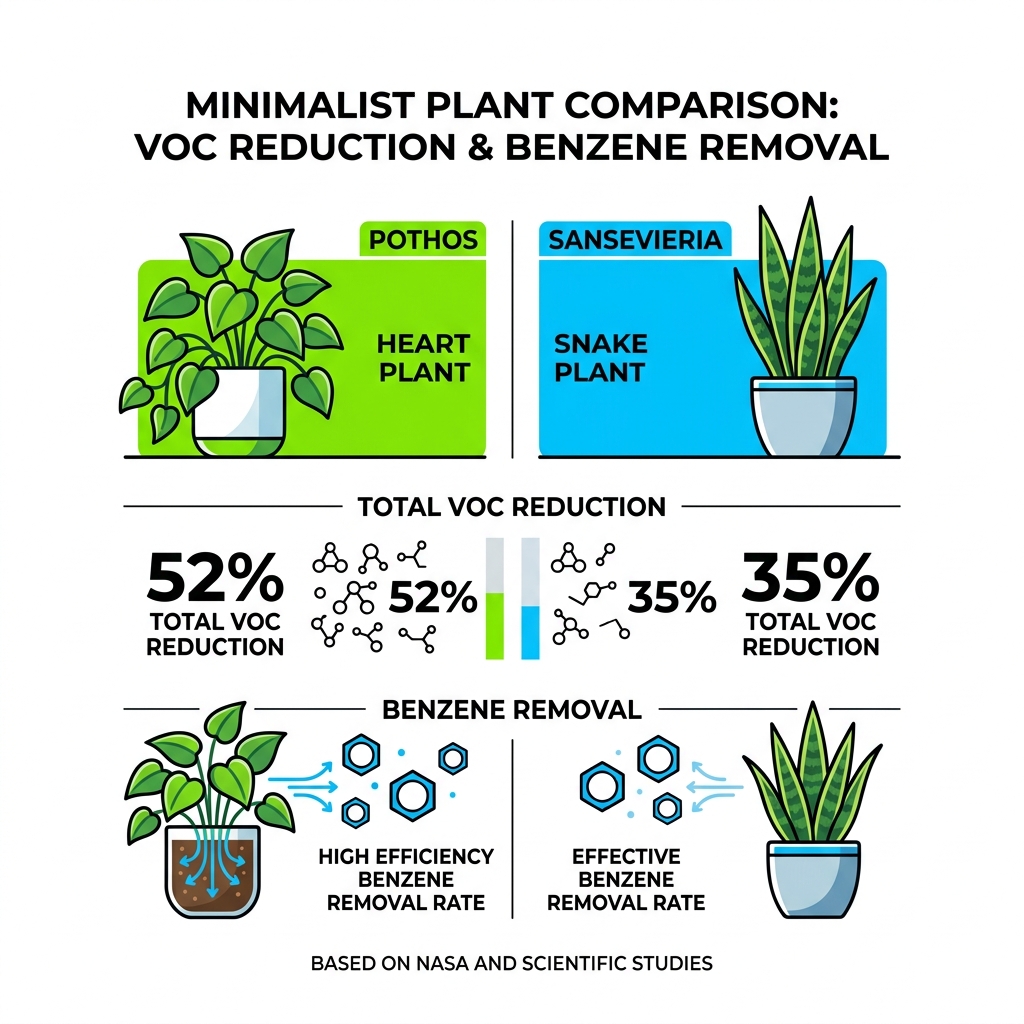
Recent scientific research on benzene removal has shown that certain species are incredibly efficient at tackling specific toxins. For example, some plants have a carbon dioxide absorption rate of 0.201 ppm per square centimeter of leaf area.
When comparing species, we see distinct differences in efficiency. While a mechanical air purifier is great for dust, plants excel at the chemical level.
Top NASA-Recommended Species for Your Home
If you are looking to start your indoor jungle, you want the heavy hitters. Not all plants are created equal when it comes to scrubbing the air. If you live in a smaller space, you might want to look into low-light-indoor-plants-for-apartments-2/ to find varieties that won’t mind a lack of windows.
Golden Pothos (Epipremnum aureum)
Often called “Devil’s Ivy” because it’s nearly impossible to kill, the Golden Pothos is a champion of air purification. Research shows it can achieve a 52% reduction in indoor air pollution. It is particularly effective at removing formaldehyde—the stuff found in carpets and plywood—with studies suggesting it can reduce levels by 81–96% within just 24 hours.
Peace Lily (Spathiphyllum)
The Peace Lily is one of the few indoor air purifying plants that also flowers. It’s a specialist in removing mold spores from the air, making it a great choice for bathrooms. It also tackles benzene and trichloroethylene. If you love blooms but don’t have a green thumb, check out our guide on low-maintenance-flowering-indoor-plants/.
Boston Fern (Nephrolepis exaltata)
The Boston Fern is a formaldehyde specialist. It acts as a natural humidifier, releasing moisture into the air which can help with dry skin and respiratory irritation. However, they do require high humidity to stay lush, so they aren’t exactly “set it and forget it” plants.
Rubber Plant (Ficus elastica)
With its thick, leathery leaves, the Rubber Plant is excellent at filtering toxins. Its large leaf surface area allows it to absorb a significant amount of pollutants. It’s a hardy choice for those who want a plant that grows into a small indoor tree.
Spider Plant: A Pet-Friendly Indoor Air Purifying Plant
For those of us with furry roommates, safety is the number one priority. Many of the most effective air cleaners (like Pothos and Peace Lilies) are unfortunately toxic if chewed. The Spider Plant is the gold standard for a safe home.
It is highly effective at removing carbon monoxide and xylene. In fact, NASA found that Spider Plants could eliminate up to 95% of chemicals in a sealed chamber within a day. Best of all, they are listed on the ASPCA non-toxic list, making them safe for children and pets. They also produce “pups”—tiny baby plants—that you can easily clip off and grow into new plants to gift to friends.
Snake Plant: The Nighttime Oxygen Specialist
The Snake Plant (or Dracaena trifasciata) is a bit of a rebel in the plant world. While most plants release carbon dioxide at night, the Snake Plant uses Crassulacean Acid Metabolism (CAM) photosynthesis. This means it keeps its pores closed during the day to save water and opens them at night to absorb CO2 and release oxygen.
This unique trait makes it the ultimate bedroom plant. You can read the scientific profile for snake plant to see just how resilient this species is. It thrives in low light and can survive weeks of neglect, making it perfect for busy professionals.
Essential Care and Maintenance
To keep your indoor air purifying plants working at peak performance, you have to treat them right. A sick or dusty plant isn’t nearly as effective at cleaning your air as a thriving one.
Maximize Leaf Surface Area
The more leaf surface area exposed to the air, the better the purification. This is why dust removal is critical. A thick layer of dust blocks the stomata, preventing the plant from “breathing” in toxins. Every few weeks, take a damp cloth and gently wipe down the leaves of your larger plants.
Grouping and Placement
Plants work better together. Grouping multiple plants creates a “micro-climate” with higher humidity, which helps them thrive. In terms of air quality, the more the merrier. For a standard room, we usually recommend at least two large plants (in 10-12 inch pots) to see a meaningful improvement in air quality.
Environmental Needs
Most air-purifying plants are tropical by nature. They generally prefer:
- Temperature: Between 60–75°F. Avoid placing them near drafty windows or blasting heaters.
- Soil: Well-draining soil is a must. If the roots sit in water, they will rot, and a rotting plant actually contributes to indoor air pollution by releasing mold and bacteria.
- Repotting: Do this every 1-2 years to refresh the soil nutrients.
If you’re worried you don’t have enough time for high-maintenance greenery, browse our list of hardy-indoor-plants-for-busy-people/.
The Mental Health Connection
It isn’t just about the chemicals. According to the National Library of Medicine (NIH) research on mood, being around real foliage is associated with positive physiological effects, including reduced stress and enhanced cognition.
Common Care Mistakes to Avoid
- Overwatering: The #1 killer of houseplants. Always check if the top inch of soil is dry before watering.
- Using the wrong pot: Ensure your pots have drainage holes.
- Ignoring light requirements: A plant in a dark corner when it needs bright light will eventually stop growing and stop purifying.
- Neglecting the “Pet Rule”: Always check toxicity before bringing a new plant home if you have cats or dogs.
Frequently Asked Questions
How many plants are needed per room size?
This is the most common question we get at Futuro Ciencia. While NASA’s studies were done in small, sealed chambers, real homes have ventilation and much more space. To have a “meaningful” impact on your air quality, aim for one medium-to-large plant for every 100 square feet of living space. If you have high ceilings or a lot of new furniture (which off-gasses more), you may want to double that ratio.
Which indoor air purifying plants are best for low light?
Not everyone has a sun-drenched sunroom. If you are in a basement apartment or a room with north-facing windows, you need “low-light legends.” We recommend checking out indoor-plants-that-thrive-in-low-light/ for a deep dive, but the short list includes:
- ZZ Plant: Virtually indestructible and handles low light like a pro.
- Cast Iron Plant: Named for its ability to survive almost anything.
- Snake Plant: As mentioned, it’s a low-light specialist.
- Pothos: While it grows faster in light, it will stay green and healthy in dimmer spots.
Conclusion
At Futuro Ciencia, we believe that everyone deserves to breathe clean, fresh air. Our goal is to provide the indoor plant care schedules and guides you need to turn your home into a tranquil oasis. By strategically choosing indoor air purifying plants, you aren’t just decorating; you are investing in your long-term health and well-being.
Whether you are a seasoned “plant parent” or looking for indoor-plants-for-beginners-with-pets/, we are here to help you every step of the way. Ready to transform your space? Start your green journey with Futuro Ciencia today and breathe a little easier tomorrow.
