
Why the Best Way to Display Houseplants Is Worth Getting Right
The best way to display houseplants goes far beyond lining pots up on a windowsill. Done well, it transforms your home into a calming, living space that actually works with your lifestyle.
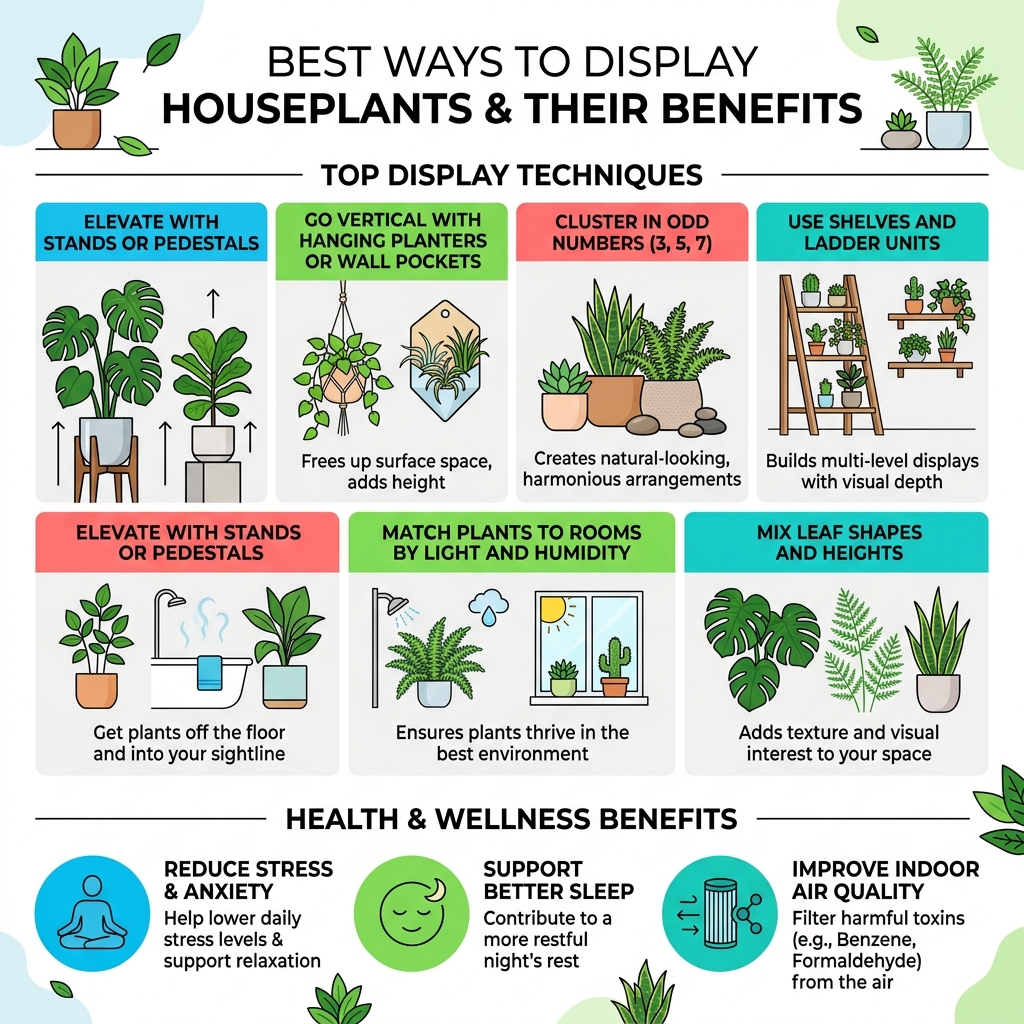
Quick answer — the best ways to display houseplants:
- Elevate with stands or pedestals — gets plants off the floor and into your sightline
- Go vertical with hanging planters or wall pockets — frees up surface space
- Cluster in odd numbers (3, 5, 7) — creates natural-looking arrangements
- Use shelves and ladder units — builds multi-level displays with visual depth
- Match plants to rooms by light and humidity — bathrooms for ferns, sunny windows for succulents
- Mix leaf shapes and heights — bold leaves next to delicate fronds adds texture and interest
Plants aren’t just decoration. Research shows that homes with houseplants can help lower daily stress levels, support better sleep, and filter harmful toxins from the air. Plants like the Spider Plant and Peace Lily are especially effective at improving indoor air quality.
Yet most people underuse their space — and overuse their windowsills.
Whether you have a 200-square-foot studio or a sprawling living room, there’s a smarter way to show off your greenery. This guide covers creative, practical ideas for every room and every budget.
Elevate Your Greenery with Stands and Pedestals
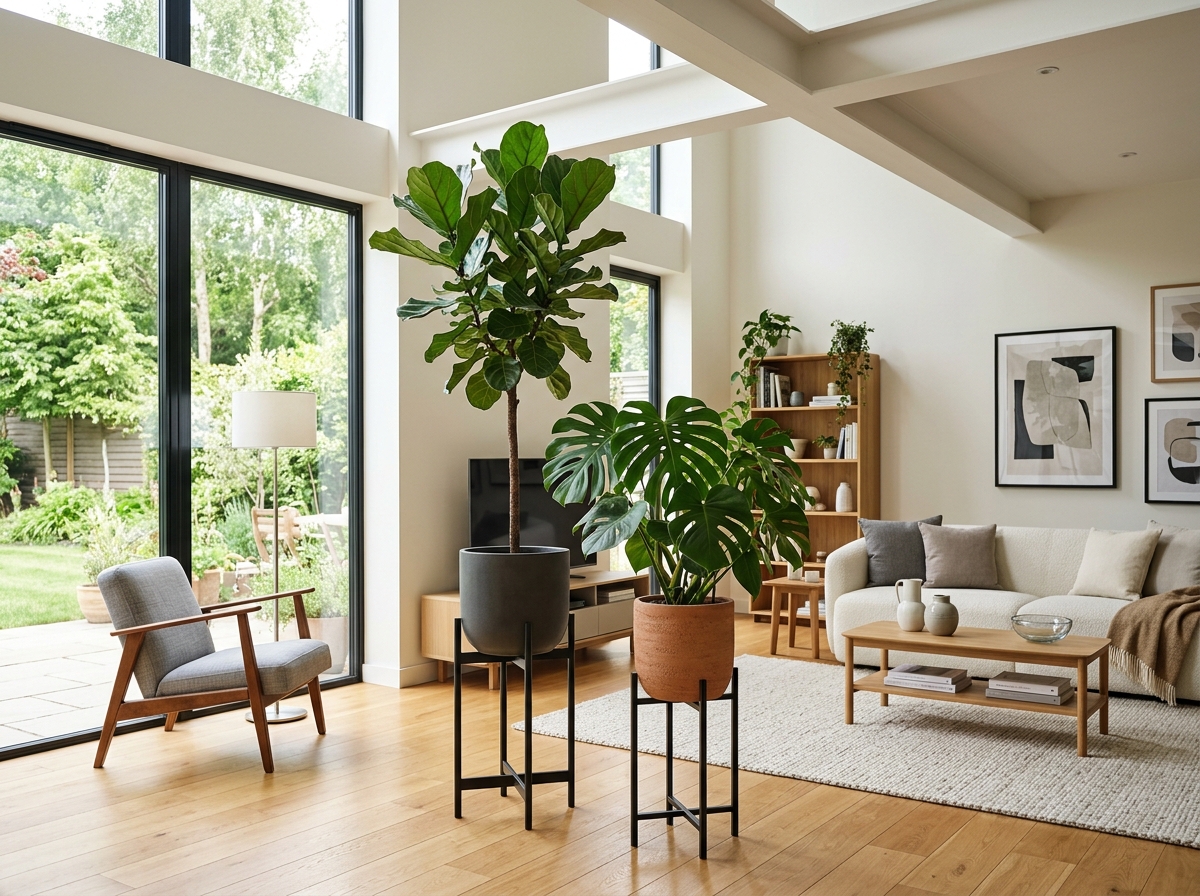
If all your plants are sitting on the floor, you’re missing out on half the fun. One of the most impactful design secrets is to get your greenery up and into your line of sight. Using pedestals and architectural plant stands creates immediate visual drama and makes a room feel much more intentional.
When we elevate a plant, we turn it into a living sculpture. A Fiddle Leaf Fig or a large Monstera suddenly takes on a new persona when perched on a sleek pedestal. It draws the eye upward, making your ceilings feel higher and your space more expansive. For those looking to go beyond the basics, checking out more info about unique display ideas can help you find a style that fits your personal aesthetic.
For a more natural look, tiered bamboo stands are excellent. They allow you to stagger multiple plants at varying heights, creating a mini “mountain” of green. If your home leans toward a mid-century modern aesthetic, look for “bullet” planters or wooden tripod stands that offer clean lines and a retro feel. According to experts at the University of Vermont, using a plant stand for indoor gardening isn’t just about looks—it also helps with air circulation and keeps your plants away from cold floor drafts during winter.
Creating Visual Rhythm with Repetition
There is a certain peace that comes from symmetry. If you have a long hallway or a large window, try repeating the same plant in matching containers. This creates a “visual rhythm” that feels sophisticated and orderly. Small-scale topiaries are perfect for this; lining up three or four on a console table creates a classic, high-end look.
Using Furniture as Structural Plant Support
Your existing furniture is often the best way to display houseplants without spending a dime on new fixtures. A sturdy side table can host a statement Dracaena, while a low console can be the perfect stage for a collection of succulents.
Ladder shelves are particularly trendy right now because they utilize vertical space while offering multiple “steps” for different plant sizes. To master this look, you can find more info about plant shelf styling to learn how to mix trailing vines with upright stalks for a balanced arrangement.
Maximize Small Spaces with Vertical and Hanging Displays
Living in a small apartment shouldn’t limit your jungle dreams. When floor space is at a premium, we look to the walls and the ceiling. Vertical gardening is a game-changer for urban dwellers. Wall-mounted pockets and modular planters allow you to create a “living wall” that acts as organic wallpaper.
Hanging planters are another classic choice. Macrame hangers add a touch of bohemian charm, while sleek metal hoops fit a more modern vibe. If you’re worried about drilling holes in the ceiling, consider a copper pipe mounted across a window or even a sturdy tension rod. For those in tight quarters, more info about small space styling offers brilliant workarounds for making a big impact in a tiny footprint.
The Best Way to Display Houseplants in Small Apartments
Creativity is your best friend when space is tight. We’ve seen amazing “hacks” like using IKEA bed slats mounted horizontally on a wall to hang small pots. Floating shelves are also a great way to keep surfaces clear while surrounding yourself with greenery.
Don’t forget the corners! A dull corner can be completely transformed by a tall plant or a cascading ivy. By exploring more info about indoor plant display ideas, you can find inspiration for those awkward nooks that usually go to waste.
Utilizing Unconventional Vertical Surfaces
Think outside the box—or the pot. Picture rails, which are common in older homes, are “gold dust” for plant lovers; they are perfect for hanging lightweight vines. Window valances can also be repurposed as narrow shelves for small succulents. If you have a magnetic surface or a pegboard in your office, use magnetic pots or hooks to bring some life to your workspace.
The Best Way to Display Houseplants Using Design Principles
Styling plants is an art form, but it follows some very simple rules. The most important one? The “Rule of Three.” In the design world, items arranged in odd numbers—specifically three—tend to look more natural and appealing to the human eye.
When clustering, aim for a mix of heights and textures. Pair a tall, structural Snake Plant with a medium-sized Calathea and a small, trailing Pothos. This creates a “vignette” that feels like a curated collection rather than a random pile of pots. For more deep dives into these concepts, How to Display Houseplants: 101 of Our Favorite Plant-Display Ideas | Apartment Therapy is a fantastic resource for visual inspiration.
Choosing the right container is just as important as the plant itself. You can find more info about selecting pots and planters to ensure your pots complement your decor rather than clashing with it.
Mixing Leaf Shapes and Textures
To add depth to your display, play with contrast. The broad, waxy leaves of a Fiddle Leaf Fig look stunning when placed near the delicate, lacy fronds of a Maidenhair Fern. This interplay of “bold” and “soft” creates visual interest that keeps the eye moving. If you want to refine your “green thumb” aesthetic, more info about decorating with indoor plants provides excellent tips on color theory and foliage patterns.
The Best Way to Display Houseplants for Better Air Quality
While we love plants for their looks, their health benefits are a huge bonus. To maximize air purification, we recommend strategic clustering. By grouping several air-purifying plants together, you create a “natural filtration focal point.”
The Spider Plant and Peace Lily are world-class at removing toxins like formaldehyde and benzene. Placing these in areas where you spend the most time—like your bedroom or home office—is the smartest move. Understanding more info about the art of plant placement can help you decide exactly where these hardworking plants will do the most good.
Room-by-Room Styling for a Cohesive Home
Every room in your house has a different “personality” and environmental condition. The best way to display houseplants is to match the plant to the room’s vibe and light levels.
- Living Room: This is usually your stage for “statement” plants. Use a large Monstera or a tall Dracaena to fill an empty corner or act as a natural room divider. You can find more info about styling houseplants in your living room to help you create a focal point that wows your guests.
- Bathroom: High humidity and lower light make this the perfect home for ferns, orchids, and Air Plants. Hanging a few plants from the shower rod can give you that “tropical spa” feeling every morning.
- Bedroom: Focus on serenity. Snake Plants and Aloe Vera are great because they release oxygen at night, potentially helping you sleep better. Keep the styling minimal and calming.
- Kitchen: Herbs are the obvious choice here, but trailing plants like Devil’s Ivy also look great draped over the tops of cabinets where they can stay out of the way of food prep.
Creating a Dedicated Plant Corner
If you really want an immersive experience, dedicate one corner of a room entirely to greenery. Start with an “anchor plant”—something tall and bushy—and then layer in medium and small plants at different heights using stands and stools. This creates a “green nook” that feels like a private sanctuary. For a step-by-step guide, more info about creating a green nook is a must-read.
Integrating Plants with Existing Decor
Plants shouldn’t feel like an afterthought; they should blend with what you already own. We love placing a small plant on a stack of books or nesting a trailing vine among framed photos. You can even match your wall art to your plants—botanical prints paired with real leaves create a cohesive, “collector” look. For high-impact ideas, see more info about big impact styling.
Essential Care Tips for Your Plant Arrangements
A beautiful display is only beautiful if the plants are thriving. The biggest mistake people make is choosing a spot based on “looks” while ignoring the plant’s actual needs. Light is the most critical factor.
| Window Orientation | Light Level | Best Plants |
|---|---|---|
| South-Facing | Bright, Direct | Succulents, Cacti, Bird of Paradise |
| West-Facing | Hot, Afternoon Sun | Crotons, Geraniums, Rubber Trees |
| East-Facing | Gentle, Morning Light | Ferns, Calatheas, Hoya |
| North-Facing | Low, Indirect | ZZ Plant, Snake Plant, Pothos |
Avoiding Common Styling Mistakes
- Overcrowding: While clustering is great, plants need “breathing room.” Leave a few inches between pots to ensure good airflow, which prevents pests and mold.
- Ignoring Drainage: Never sacrifice health for style. If your decorative pot doesn’t have a hole, keep the plant in its plastic nursery liner and take it to the sink to water. You can learn more about this in our guide on the best containers for indoor plants.
- Moving Too Often: Plants take weeks or even months to acclimate to a new spot. Once you find a place where they are happy, try to leave them there!
Budget-Friendly and DIY Display Options
You don’t need a designer budget to have a stunning indoor garden. We love repurposing glass jars for propagation stations—watching roots grow in water is a display in itself! For a rustic, industrial look, you can use cinder blocks and plain lumber to build a custom shelving unit. If you’re feeling crafty, more info about creative houseplant display ideas has plenty of DIY projects to get you started.
Frequently Asked Questions about Plant Displays
How do I choose the right pot for my display?
The best way to display houseplants involves balancing aesthetics with function. Terracotta is great for plants that like to dry out (like succulents) because it’s breathable. Ceramic is better for moisture-lovers. Always ensure there is a drainage hole, or use a “cachepot” system where the plant stays in a plastic pot inside the decorative one.
Can I display plants in rooms with no windows?
Yes, but you’ll need help. Most plants will eventually die in total darkness. You can use full-spectrum grow lights (many now come in stylish designs that look like regular lamps). Alternatively, you can rotate low-light plants like the ZZ plant between the dark room and a sunnier spot every few days.
How do I keep my plant clusters from attracting pests?
Airflow is key! Don’t let leaves touch each other if possible. Regularly wipe down leaves with a damp cloth to remove dust and check for “hitchhikers” like spider mites. If you bring a new plant home, quarantine it away from your main display for two weeks to make sure it’s healthy.
Conclusion
At Futuro Ciencia, we believe that every home has the potential to be a tranquil oasis. By moving beyond the windowsill and embracing stands, hanging displays, and smart design principles, you can transform your living space into a vibrant, air-purifying sanctuary.
Whether you are just starting with a single Spider Plant or managing a 300-plant urban jungle, the goal is the same: to create a flow between your indoor and outdoor worlds that brings you joy and peace. Ready to level up your plant game? Start your indoor garden journey today and let us help you keep your green friends thriving!
