
The Best Low Light Plants for Your Windowless Office
The Best Low-Light Plants for a Windowless Office (Quick Answer)
The best indoor plants low light environments can support include these top picks:
| Plant | Why It Works | Care Level |
|---|---|---|
| Snake Plant | Survives on 8-10 hrs indirect light, nearly indestructible | Very Easy |
| ZZ Plant | Stores water in rhizomes, thrives on neglect | Very Easy |
| Pothos | Fast-growing, tolerates dim corners well | Easy |
| Aglaonema Maria | Photosynthesizes under office fluorescent lighting | Easy |
| Cast Iron Plant | Lives up to its name — almost impossible to kill | Very Easy |
| Peace Lily | Tolerates low light and occasionally flowers | Easy |
| Parlor Palm | Elegant, pet-safe, and office-friendly | Easy |
| Philodendron | Trails beautifully from shelves in dark corners | Easy |
Most office spaces don’t get much natural light. North-facing windows, deep interior rooms, and cubicle setups can leave your plants struggling — or dead within weeks.
The good news? Some plants genuinely evolved for this. They grew up under dense tropical rainforest canopies, where almost no sunlight reaches the ground. Your dim office corner feels like home to them.
But there’s a catch that trips up a lot of plant owners: “low light” doesn’t mean “no light.” Plants still need some light to photosynthesize. The difference is that the right species can do it efficiently even under weak fluorescent bulbs — as low as 100–200 lux, which is typical office lighting.
Many articles recommend plants that merely tolerate low light — they’ll survive for a while, then slowly decline. The plants in this guide actually thrive in those conditions.
Whether you’re a busy professional who forgets to water, or someone who’s already killed a few “easy” plants, this roundup will help you find the right match for your space.
Defining Low Light: Can Plants Survive Without Windows?
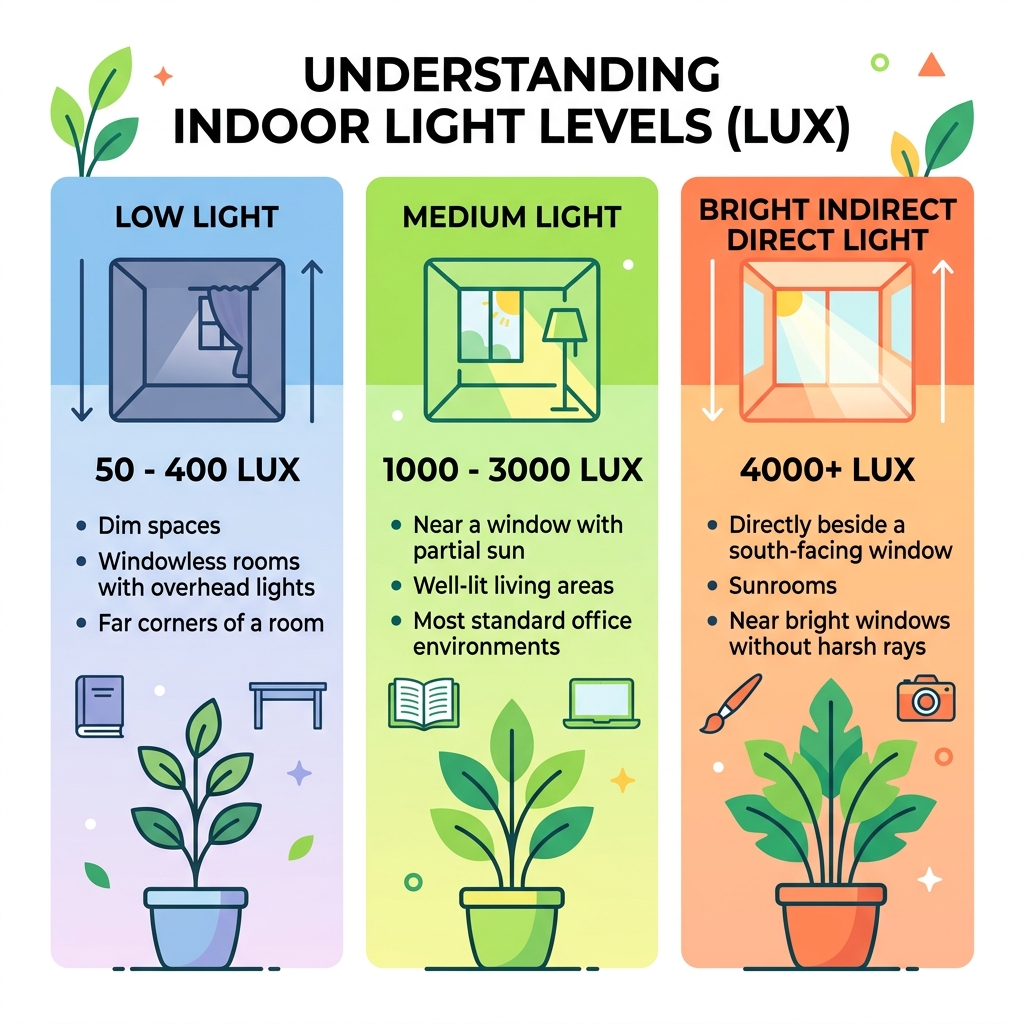
When we talk about the best indoor plants low light conditions can support, we first have to define what “low light” actually looks like in a real-world office. In technical terms, we are looking at a range of 50 to 400 lux. To give you a baseline, a deep shade or a very dark corner is about 50–75 lux, while typical office fluorescent lighting sits comfortably between 100–200 lux.
Can a plant survive in a room with absolutely no windows? The short answer is: not forever, unless you provide a substitute. All plants require light for photosynthesis—the process of turning light into energy. Without it, the plant is essentially starving. However, many of the stars on our list can survive quite happily under standard office lights if they are left on for 8–12 hours a day.
If your office is truly a “cozy cave,” we recommend supplementing with artificial lighting. Full-spectrum LED grow lights or even high-output fluorescent bulbs can make a world of difference. A simple 10W full-spectrum bulb on a 12-hour timer can turn a windowless basement into a thriving nursery. For more technical details on matching species to your specific light levels, check out our guide on indoor-plant-light-requirements.
Interestingly, Scientific research on Aglaonema light tolerance shows that certain cultivars, like the Aglaonema Maria, are incredibly efficient. They can photosynthesize at levels that would cause other plants to wither, making them the ultimate “denizens of the dark.”

The Best Indoor Plants Low Light Environments Actually Love
The secret to success is choosing plants that thrive in dimness, not just those that refuse to die. Many of the best indoor plants low light enthusiasts recommend are actually “understory” plants. In their native habitats, they live on the rainforest floor, shielded by massive trees. They have adapted to have larger leaves or higher chlorophyll density to catch every stray photon.
Beyond just looking good, these plants are functional. According to the famous NASA Clean Air Study, many low-light varieties are powerhouses at removing toxins like benzene and formaldehyde from the air. This makes them perfect for offices where air circulation might be less than ideal. You can find more specific recommendations for smaller spaces in our article on low-light-indoor-plants-for-apartments.
| Feature | Snake Plant | ZZ Plant | Pothos | Aglaonema Maria |
|---|---|---|---|---|
| Growth Rate | Slow | Slow | Fast | Moderate |
| Max Height | 2–5 feet | 2–4 feet | 20+ feet (vines) | 2–3 feet |
| Air Purifying | Yes | Yes | Yes | Yes |
| Drought Tolerant | High | Extreme | Moderate | Moderate |
For a deeper dive into which varieties are currently trending for smaller living or working quarters, see low-light-indoor-plants-for-apartments-2.
Top 10 Best Indoor Plants Low Light Varieties for Beginners
- Snake Plant (Dracaena trifasciata): Formerly known as Sansevieria, this plant is almost indestructible. It features stiff, sword-like leaves and can live for 25 years or more. It’s a slow grower, but it handles neglect like a pro. For a complete deep dive, see this Snake Plant: Care & Growing Guide.
- ZZ Plant (Zamioculcas zamiifolia): No, it’s not a “snoozer.” It has waxy, deep green leaves that look almost plastic. Its secret weapon? Bulbous rhizomes under the soil that store water for weeks.
- Pothos (Devil’s Ivy): This vining beauty is famous for its heart-shaped leaves. While it prefers bright indirect light, it is legendary for growing in dark corners. Variegated versions might turn solid green in very low light to maximize photosynthesis.
- Aglaonema Maria (Chinese Evergreen): A true champion of the office. It can survive on as little as 50–75 lux and produces stunning silver-patterned foliage.
- Cast Iron Plant (Aspidistra elatior): Popular in Victorian parlors because it could survive the dim, smoky conditions of the era. It is truly the “iron man” of the plant world.
- Peace Lily (Spathiphyllum): One of the few low-light plants that will actually flower indoors. It’s also a great communicator—it wilts dramatically when it’s thirsty, then perks right back up after a drink.
- Parlor Palm (Chamaedorea elegans): If you want a tropical vibe without the sun, this is your plant. It stays relatively small and handles the lower light of a north-facing window perfectly.
- Philodendron: Similar to Pothos, but with softer, heart-shaped leaves. The Heartleaf Philodendron is a classic for bookshelves.
- Mother Fern: Unlike some finicky ferns, this one is a bit more resilient to lower light, though it does love humidity.
- Chinese Evergreen (General Varieties): Beyond ‘Maria,’ many Aglaonema cultivars offer splashes of pink or red, though the darker green varieties generally do better in the lowest light.
Pet-Safe Best Indoor Plants Low Light Options
If you have a furry “intern” visiting your office, safety is a priority. Many popular plants, like the Snake Plant and Pothos, are mildly toxic if ingested. According to Pothos (Devil’s Ivy) Care and Toxicity reports, these plants contain calcium oxalate crystals which can cause mouth irritation.
For a 100% pet-friendly office, consider these best indoor plants low light choices:
- Spider Plant: These are fun, easy to grow, and produce “babies” (plantlets) that dangle from the mother plant.
- Calathea (Prayer Plant): Known for leaves that fold up at night. They love humidity and dim light.
- Bird’s Nest Fern: Features wavy, bright green fronds and is completely non-toxic to cats and dogs.
- Nerve Plant (Fittonia): Great for terrariums or small desks, these have beautiful veined leaves and stay compact.
Essential Care Guide for Low-Light Houseplants
The biggest mistake people make with the best indoor plants low light varieties is treating them like sun-loving plants. Because these plants aren’t getting blasted by the sun, they don’t use water as quickly. Their metabolism is slower.
Watering Schedules: In a low-light office, you might only need to water every 14–21 days. In the winter, this could extend even further. Always use the “knuckle test”: stick your finger an inch or two into the soil. If it feels damp, walk away. Overwatering is the #1 killer of low-light plants, often leading to the dreaded “sewage smell” of root rot. For a tailored approach, see our indoor-plant-care-for-low-light resource.
Soil and Pots: We recommend a well-draining potting mix. For plants like the ZZ or Snake Plant, a cactus or succulent mix is ideal. Terracotta pots are fantastic because they are porous and help the soil dry out faster, preventing moisture from sitting around the roots.
Temperature and Humidity: Most low-light tropicals prefer temperatures between 65–80°F. Never let them drop below a 60°F threshold, as they are sensitive to cold drafts from air conditioners. While many tolerate humidity as low as 30%, they will look much happier at 50–70%. A small desk humidifier can work wonders.
Fertilization: Less light equals less growth, which means less need for food. Only fertilize during the active growing months (spring and summer) and use a half-strength liquid fertilizer. If you see no new growth, skip the fertilizer entirely. Learn more about thriving in dim conditions at indoor-plants-that-thrive-in-low-light.
Propagation and Maintenance Tips
Maintaining your best indoor plants low light collection is easier than you think.
- Leaf Dusting: This is critical! Dust on leaves can block up to 30% of the light a plant receives. Use a damp microfiber cloth once a week to wipe the leaves clean. This keeps the plant healthy and looking “magazine-worthy.”
- Rotating: Plants will naturally lean toward whatever light source is available. Give your pot a quarter-turn every two weeks to ensure even, upright growth.
- Propagation: Pothos and Philodendrons are incredibly easy to multiply. Simply take a stem cutting that includes at least one “node” (the bump where a leaf meets the stem) and place it in water. You’ll see roots in a few weeks!
- Pruning: If a plant becomes “leggy” (long stems with few leaves), don’t be afraid to snip it back. This encourages the plant to grow bushier. For commercial-level insights on keeping plants healthy, you might find this Research on Pothos disease control helpful.
Troubleshooting and Styling Your Low-Light Oasis
Even the best indoor plants low light veterans face issues.
- Yellowing Leaves: This is usually a sign of overwatering. Check the roots; if they are mushy and dark, you have root rot.
- Brown Tips: This often points to low humidity or sensitive reactions to tap water. Try using filtered water or misting your plants more often.
- Fungus Gnats: These annoying little flies love damp soil. Bottom-watering (placing the pot in a tray of water for 20 minutes) can reduce gnats by 80% because the top layer of soil stays dry.
If you ever notice a strange odor from your pots, consult this Research on root rot odors to identify the problem before it spreads.
Styling Tips: Don’t just stick a plant in a corner!
- Vertical Styling: Use moss poles for climbing plants like the Swiss Cheese Vine or Pothos to add height.
- Hanging Baskets: Free up desk space by hanging plants from the ceiling or high shelves.
- Groupings: Grouping plants together not only looks better but also creates a small “microclimate” that naturally boosts humidity.
Frequently Asked Questions about Best Indoor Plants Low Light
How often should you water plants in low light?
Because evaporation rates are lower in dim rooms, you should water much less frequently than you would for a plant in a sunny window. Use the knuckle test—if the top 2 inches of soil are dry, it’s time. For most low-light plants, this happens every 2 to 3 weeks. During winter dormancy, you might only water once a month.
Can indoor plants survive in rooms with no windows?
They can survive for a while, but they won’t thrive or grow. To keep them healthy long-term in a windowless room, you need an artificial light source. A 10W full-spectrum LED grow bulb kept on for 12 hours a day is usually enough to mimic the sunlight they need to produce energy.
What are the most common mistakes with low-light plants?
The biggest mistake is overwatering. Because the plant isn’t growing fast, it doesn’t “drink” much. Other common errors include over-fertilizing (which can burn the roots) and ignoring dust on the leaves. Also, never move a low-light plant directly into harsh, hot sunlight—it will scorch the leaves in minutes!
Conclusion
At Futuro Ciencia, we believe that every space—no matter how dark or windowless—has the potential to become a tranquil oasis. By choosing the best indoor plants low light environments can support, you aren’t just decorating; you’re purifying your air and brightening your mental workspace.
Whether you start with a nearly unkillable Snake Plant or a trailing Pothos, the key to beginner success is observation and patience. Your dark corner doesn’t have to be empty. With the right care and a little bit of green, you can transform your office into a lush, productive sanctuary.
Ready to start your indoor jungle? Transform your space with expert indoor plant care and let us help you grow with confidence!
