
The Sophisticated Guide to Black Olive Tree Care
What You Need to Know About Black Olive Tree Indoor Care
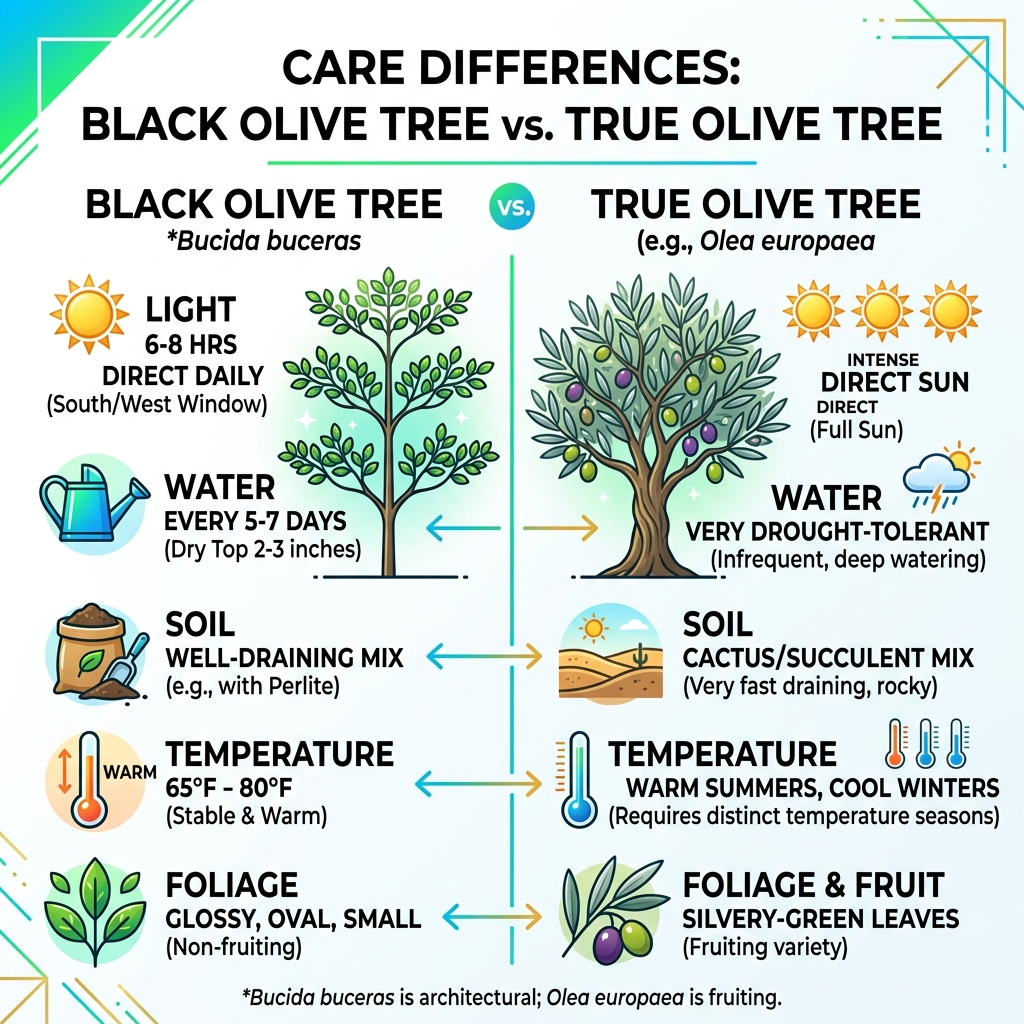
Black olive tree indoor care centers on five core needs: bright direct light, weekly watering, well-draining soil, stable warm temperatures, and a consistent location. Here’s a quick-reference summary:
- Light: 6-8 hours of direct sun daily; south or west-facing window
- Water: Every 5-7 days; let the top 2-3 inches of soil dry out first
- Soil: Well-draining mix with perlite or coarse sand
- Temperature: 65°F to 80°F; keep away from drafts and vents
- Humidity: 40-60%; normal room humidity is usually fine
- Fertilizer: Balanced liquid fertilizer every 4-6 weeks in spring and summer
- Repotting: Every 1-2 years in spring
The Bucida buceras — commonly called the Black Olive Tree or “Shady Lady” — is not actually a true olive tree at all. It doesn’t produce olives. What it does produce is something harder to find in most houseplants: a genuinely architectural presence.
Its tiered branching, small glossy leaves, and clean sculptural form have made it one of the most sought-after indoor trees in interior design circles, often mentioned as the natural successor to the fiddle leaf fig.
But here’s the catch — it has opinions. Move it too often and it drops leaves. Give it too little light and it sulks. Get the conditions right, though, and it rewards you with steady, elegant growth that can reach up to 15 feet indoors.
This guide walks you through everything you need to keep yours thriving — from light and water to pests, pruning, and seasonal shifts.
Mastering Light for Black Olive Tree Indoor Care
When we talk about black olive tree indoor care, light is the non-negotiable foundation. In its native tropical habitats of the Caribbean and Central and South America, the Bucida buceras basks in unrelenting sun. To replicate this indoors, we must prioritize brightness.
Ideally, your tree needs 6 to 8 hours of direct sunlight every single day. Without this, the tree begins to lose its signature density. The branches may become “leggy” as they stretch toward the nearest light source, and you’ll notice a significant increase in leaf drop. To maintain that lush, tiered canopy, the light needs to touch as much of the foliage as possible.
Optimal Placement for Black Olive Tree Indoor Care
The best seat in the house for a Shady Lady is right next to a South-facing window. This exposure provides the most consistent, intense light throughout the day. A West-facing placement is a strong second choice, offering hot afternoon sun that these tropical beauties adore.
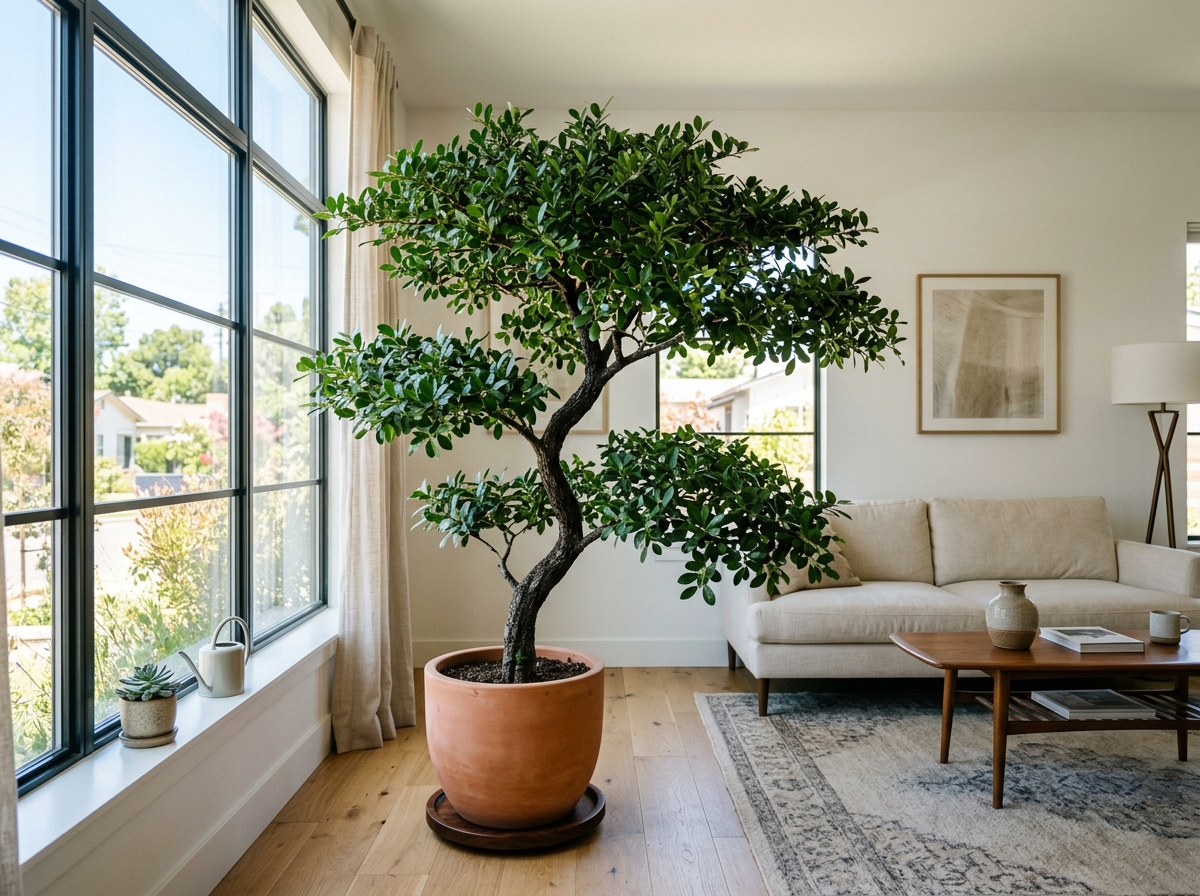
However, light levels change with the seasons. During the shorter days of fall and winter, even a south-facing window might not provide enough “fuel” for your tree. This is where technology becomes our best friend. We highly recommend supplementing with full-spectrum LED grow lights during the darker months to prevent winter thinning. You can learn more about these setups in our guide on indoor-plant-light-requirements.
Another pro tip for indoor-plant-placement-tips is to rotate the pot 90 degrees every week. Because the tree grows toward the light, regular rotation ensures that all sides of the canopy stay full and even, preventing a “one-sided” look. While these are indoor plants, checking the USDA Plant Hardiness Zones helps explain why they require such consistent warmth. Just be careful not to move the entire pot to a different room; these trees value stability above all else.
Watering and Soil: The Foundation of Health
Watering the Black Olive Tree is less about a calendar and more about a conversation between you and the soil. We advocate for a reactive watering approach. This means instead of saying “it’s Tuesday, time to water,” you should check the moisture levels first.
During the active growth phases of spring and summer, your tree will be quite thirsty. It absorbs water rapidly as it pushes out new growth. In the dormant winter months, its metabolism slows down, and you’ll need to scale back.
| Season | Watering Frequency | Soil Check |
|---|---|---|
| Spring/Summer | Every 5-7 days | Dry 1-2 inches down |
| Fall/Winter | Every 10-14 days | Dry 3 inches down |
When you do water, use the deep saturation technique. Pour water slowly and evenly over the soil surface until it begins to trickle out of the drainage holes at the bottom. This ensures the entire root ball is hydrated. Never let the tree sit in a saucer of standing water, as this is a fast track to root rot. For more details on timing, check our watering-schedule-for-indoor-plants.
Potting Requirements and Drainage
The secret to a healthy Black Olive Tree is “breathable” roots. If the soil is too heavy or stays soggy, the roots will suffocate. We recommend a high-quality best-soil-for-indoor-plants—specifically a sandy, fast-draining mix.
A great DIY blend includes:
- 2 parts high-quality potting soil
- 1 part perlite
- 1 part coarse sand or bark chips
This mixture provides the necessary aeration while allowing excess moisture to escape quickly. When selecting-indoor-plant-pots-and-planters, always choose a vessel with large drainage holes. If you suspect your tree has been sitting in wet soil for too long and you notice a foul smell or mushy stems, consult our guide on recognizing-and-remending-root-rot-in-indoor-plants.
Maintenance: Pruning, Fertilizing, and Repotting
Maintaining the “architectural rhythm” of a Black Olive Tree requires a bit of light barbering. Because these trees grow steadily, they can eventually outgrow their space or lose their defined shape.
Pruning should ideally happen in the spring. We recommend node-based pruning: always make your cuts about 1/4 inch above a leaf node (the spot where a leaf joins the stem) at a 45-degree angle. This encourages the tree to branch out from that point, helping you define its tiered silhouette. Avoid heavy pruning in the winter when the tree is resting.
For food, these trees are moderate feeders. Use a balanced liquid fertilizer (look for an NPK ratio like 10-10-10 or 20-20-20) every 4 to 6 weeks during the spring and summer. Some growers prefer a slightly higher nitrogen level to support the lush green foliage, but a balanced mix is generally safer for indoor environments. Always dilute your fertilizer to half-strength to avoid “burning” the sensitive roots. You can find more specific advice in our pruning-tips-for-indoor-plants.
Repotting is typically necessary every 1 to 2 years. You’ll know it’s time when you see roots circling the surface of the soil or poking out of the drainage holes. The best time to repot is early spring. Choose a new pot that is only about 2 inches wider than the current one—giving a tree too much “room to grow” can actually lead to overwatering issues. Follow our step-by-step guide on how-to-repot-indoor-plants for a stress-free transition.
Temperature and Humidity Standards
Coming from tropical regions, the Shady Lady thrives in a “Goldilocks” temperature zone: 65°F to 80°F. They are remarkably sensitive to cold drafts. A blast of air from an air conditioner or a drafty window in January can cause the tree to drop its leaves overnight.
While they are more tolerant of dry indoor air than many tropical plants, they prefer humidity levels between 40% and 60%. If your home is particularly dry (common during winter heating), consider using a room humidifier or a pebble tray. We generally advise against misting the leaves, as it doesn’t provide long-term humidity and can sometimes encourage fungal issues. For more environmental control, check our humidity-tips-for-houseplants and indoor-plant-care-during-winter.
Frequently Asked Questions about Black Olive Tree Indoor Care
Is the Black Olive Tree pet-friendly?
Yes! According to the ASPCA Non-Toxic Plant Database and general botanical consensus, the Bucida buceras is considered non-toxic to dogs and cats. This makes it an excellent “statement tree” for households with curious furry friends. However, while it isn’t poisonous, the leaves can be a choking hazard, so it’s always best to discourage chewing.
Will it produce fruit indoors?
Despite the name, the Black Olive Tree grown indoors will not produce edible olives. In fact, it rarely flowers or produces its small, black seed pods (which look like tiny olives) when kept inside. It is grown purely for its stunning foliage and form.
How long will it live?
Indoors, a well-cared-for Black Olive Tree typically lives for 8 to 9 years. While this is shorter than their lifespan in the wild (where they can live for centuries), they provide nearly a decade of incredible beauty. To maximize their lifespan, consistency in care is key. Beginners can find more foundational help at indoor-plant-care-tips-for-beginners.
Troubleshooting Leaf Drop in Black Olive Tree Indoor Care
The most common panic-moment for new owners is sudden leaf drop. If you just brought your tree home and it starts shedding, don’t worry—this is usually acclimation stress. The tree is adjusting to the different light and humidity levels of your home. With consistent care, it should stabilize and start regrowing leaves within 6 to 12 weeks.
However, if your established tree starts dropping leaves, check the following:
- Yellowing leaves: This is often a sign of overwatering. Check the soil moisture; if it’s soggy, let it dry out completely before watering again. Read more at why-are-my-indoor-plant-leaves-turning-yellow.
- Crispy, brown edges: This usually indicates underwatering or extremely low humidity. Ensure you are watering deeply enough to reach the bottom roots. See our tips for fixing-brown-leaf-tips-on-indoor-plants.
- Sparse growth: This is almost always due to insufficient light. Move the tree closer to a window or add a grow light.
How do I manage pests like scale and mealybugs?
Like many indoor trees, the Black Olive can occasionally attract uninvited guests. Scale is the most common culprit—they look like small, hard, brown bumps on the stems. You might also see spider mites (tiny webs) or mealybugs (white, cottony spots).
- Isolate the plant immediately to protect your other greenery.
- Manual Removal: For scale or mealybugs, use a cotton swab dipped in rubbing alcohol to dab them off.
- Treatment: Apply neem oil or an insecticidal soap to the entire tree, ensuring you hit the undersides of the leaves.
- Prevention: Keep the leaves clean by wiping them with a damp cloth occasionally. Dust can attract pests and block sunlight.
For a deeper dive into pest management, refer to our guide on indoor-plant-pests-and-how-to-remove-them and keep our indoor-plant-maintenance-checklist handy.
Conclusion
At Futuro Ciencia, we believe that bringing a Black Olive Tree into your home is one of the best ways to transform a standard room into a tranquil oasis. Its architectural elegance and delicate, airy canopy provide a sense of calm and luxury that few other plants can match.
While black olive tree indoor care requires a bit more attention than a snake plant or a pothos, the reward is a living piece of art that grows with you. By providing consistent light, mindful watering, and a stable environment, you can enjoy the “Shady Lady” for many years to come.
Ready to start your journey with more sophisticated greenery? Explore our other indoor-plant-care-tips-for-beginners to continue growing your indoor jungle.
