
Stop the Rot with These Fiddle Leaf Fig Pots
Why Your Fiddle Leaf Fig Is Probably Drowning Right Now
The best drainage pot for fiddle leaf fig plants combines multiple large drainage holes (at least 3, each ½ inch or wider), a breathable material like terracotta or unglazed ceramic, and a saucer to catch runoff — all sized just 1–2 inches wider than your plant’s root ball.
Quick answer — what to look for:
| Feature | Recommendation |
|---|---|
| Drainage holes | At least 3, each ≥ ½ inch diameter |
| Material | Terracotta, unglazed ceramic, or fiberglass |
| Pot size | 1–2 inches wider than the root ball |
| Depth | Wider than deep (matches shallow root system) |
| Extras | Saucer, pot feet or risers, no gravel layer |
Fiddle leaf figs (Ficus lyrata) are stunning. They’re also notoriously unforgiving.
One of the most common reasons these plants fail indoors has nothing to do with light or watering schedules. It comes down to the pot itself.
When water can’t escape freely, soil stays soggy. Soggy soil cuts off oxygen to the roots. And without oxygen, roots begin to rot — often before you notice anything is wrong above the soil.
The pot is the first line of defense against root rot. Yet most people choose pots based on looks alone, without checking whether they actually drain properly.
The good news? Getting this right isn’t complicated. Once you know what to look for, picking the right pot becomes one of the easiest wins in your plant care routine.
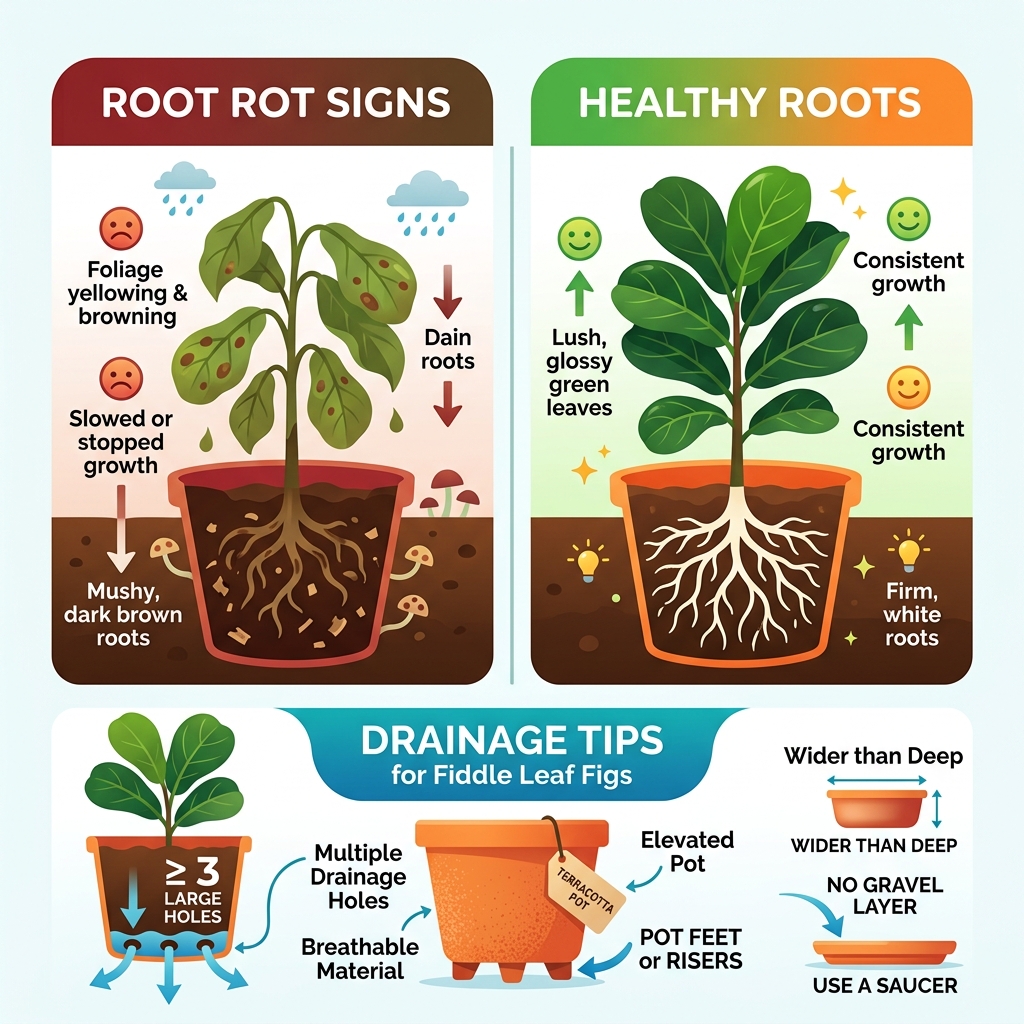
Why Proper Drainage is Non-Negotiable for Ficus Lyrata
When we talk about drainage, we aren’t just talking about water leaking out of a hole. We are talking about the survival of the plant’s respiratory system. Fiddle leaf figs are native to African rainforests where they grow in soil that is constantly draining. In our homes, we often trap them in “bathtubs” of stagnant water.
The primary enemy is root rot. When soil remains saturated for too long, it becomes anaerobic — meaning it lacks oxygen. This lack of oxygen causes the roots to suffocate and die. Once the roots die, they begin to decay, attracting fungi and bacteria that spread throughout the root system. According to experts, nearly 78% of fiddle leaf fig problems stem from improper pot selection rather than lighting or watering issues.
Research from the University of Florida IFAS Extension, specifically in their Cultural Guidelines for Commercial Ficus, highlights that these plants need a precise balance of moisture and oxygen. If the soil cannot breathe, the plant cannot regulate its hydration rhythm. You might see brown spots on the leaves or notice leaves dropping, which are often the final cries for help from a drowning root system. To prevent this, recognizing and remedying root rot early is essential, but choosing the right pot from the start is even better.
Key Features of the best drainage pot for fiddle leaf fig
Selecting the best drainage pot for fiddle leaf fig requires looking beyond the glaze and the price tag. We need to look at the “active drainage” system of the container. A single, tiny pinhole at the bottom of a large pot isn’t drainage; it’s a clog waiting to happen.
For a healthy fig, we recommend:
- Hole Quantity: At least three drainage holes are ideal for pots over 10 inches. This ensures that even if one hole gets blocked by a root or a stray piece of bark, the others remain functional.
- Hole Size: Each hole should be at least 1/2 inch in diameter. Smaller holes often surface-tension trap water, keeping the bottom inch of soil perpetually wet.
- Bottom Elevation: The pot should ideally have “feet” or be slightly elevated off the saucer. This allows air to circulate under the pot and ensures water actually exits the container rather than the pot sitting in a pool of its own runoff.
- Saucer Integration: A deep saucer is necessary to catch excess water, but it must be emptied within 15 minutes of watering to prevent “wicking” the water back into the soil.
For more detailed advice, you can check our guide on selecting indoor plant pots.
Why Material Matters for the best drainage pot for fiddle leaf fig
The material of your pot acts as the “skin” of the root zone. Some materials breathe, while others trap moisture like a plastic bag.
- Terracotta: This is the gold standard for those of us who might be a bit heavy-handed with the watering can. Terracotta is porous, meaning it allows moisture to evaporate through the walls of the pot. This can help the soil dry out 25–40% faster than non-porous materials.
- Ceramic: Glazed ceramic is beautiful and heavy, providing excellent stability for tall trees. However, because the glaze seals the clay, it isn’t breathable. If you choose ceramic, ensure it has extra-large drainage holes.
- Fiberglass and Resin: These are fantastic for large, 6-foot-plus trees. They are lightweight, making it easier for us to move the plant to the sink for a thorough “flush” watering.
- Plastic: While not the most aesthetic choice on its own, plastic is the king of functionality when used as a liner.
Understanding the Ficus lyrata botanical profile helps us realize that because these plants are “top-heavy” with large leaves, the weight of the material also plays a role in preventing your living room centerpiece from toppling over.
The Functional Pot vs. Decorative Cachepot Strategy
One of our favorite tricks at Futuro Ciencia is the “Staging Method” or “Double Potting.” You don’t have to sacrifice style for drainage.
The strategy involves keeping your fiddle leaf fig in a plain, functional plastic nursery pot with abundant drainage holes. You then place this plastic pot inside a decorative “cachepot” (a pot with no holes).
This setup offers several benefits:
- Easy Watering: You can take the plastic pot to the shower, drench it, let it drain completely, and then pop it back into the pretty outer pot.
- Airflow Gap: If the outer pot is at least 2 inches wider than the inner pot, it creates a pocket of air that helps the roots breathe.
- No Floor Damage: Since the outer pot has no holes, you don’t have to worry about water ruining your hardwood floors.
We’ve found this to be one of the best containers for indoor plants because it allows for 100% drainage without the mess.
Top Recommended Drainage Pots for Fiddle Leaf Figs
Finding the right home for your fig doesn’t have to be a scavenger hunt. Based on our research and testing, here are the top types of pots that provide the best drainage pot for fiddle leaf fig experience.
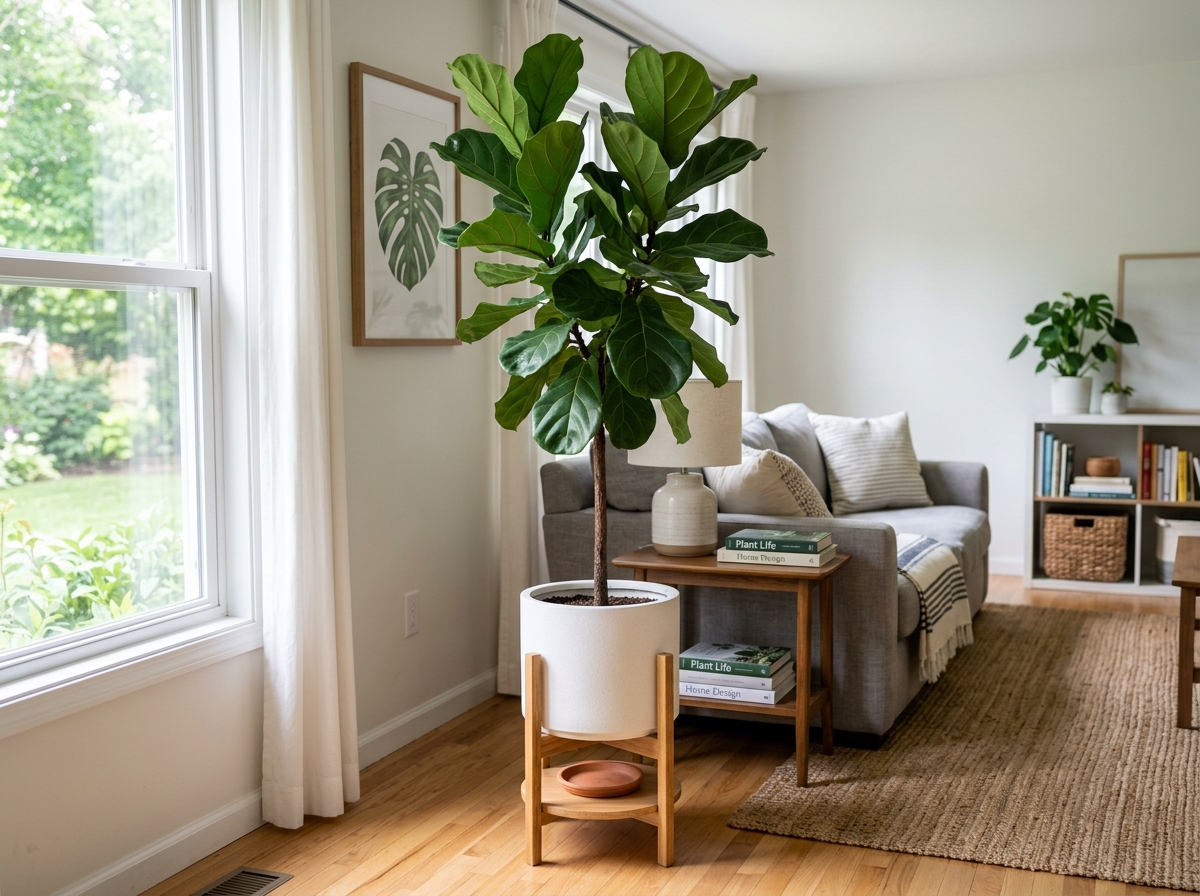
- White Ceramic with Wood Stand: These are incredibly popular for a reason. The wood stand elevates the pot, allowing for better air circulation, while the ceramic provides the weight needed for stability. Just ensure the one you buy has a pre-drilled hole!
- Fiberglass Cylinders: Modern and sleek, these are the choice for professional offices. They are durable and often come with built-in drainage systems.
- Woven Seagrass Baskets: These are technically cachepots. You must use a plastic liner or a saucer inside the basket to prevent the natural fibers from rotting. They give a soft, organic look that complements the bold leaves of the fig.
- Aluminum Planters: Surprisingly effective for modern decors. They are lightweight and often come in sets, allowing you to upsize as the plant grows.
Comparison of Pot Materials
| Material | Breathability | Weight | Best For |
|---|---|---|---|
| Terracotta | High | Medium | Overwaterers |
| Glazed Ceramic | None | High | Large, top-heavy trees |
| Fiberglass | None | Low | Large trees / Easy moving |
| Plastic Liner | None | Very Low | Double-potting strategy |
| Concrete | Low | Very High | Permanent outdoor/patio |
Sizing and Stability for Long-Term Growth
A common mistake we see is “upsizing” too quickly. If you put a small plant in a massive pot, the excess soil stays wet for weeks because there aren’t enough roots to drink the water. This is a fast track to root rot.
Follow the Two-Inch Rule: When repotting, only choose a pot that is 2 inches wider in diameter than the current one. This provides enough room for growth without overwhelming the plant with excess moisture.
You’ll know it’s time to size up when:
- Roots are circling the inside of the pot.
- Water runs straight through the pot without being absorbed.
- The plant needs watering every 2 days.
- Roots are visibly poking out of the drainage holes.
For a step-by-step on the process, see our guide on how to repot indoor plants.
Sizing the best drainage pot for fiddle leaf fig for Large Trees
As your fiddle leaf fig grows into a 6-foot or 10-foot tree, stability becomes just as important as drainage. A top-heavy fig in a lightweight plastic pot is a recipe for a tipped-over disaster.
For large trees, we recommend:
- Heavier Materials: Use ceramic or concrete to provide a solid base.
- Visual Proportions: Follow the “Rule of Thirds.” Ideally, the pot should be about 1/3 the height of the plant. This looks balanced and provides a sufficient “anchor.”
- 15-Gallon Containers: For very large specimens, moving to a 15-gallon nursery liner inside a large decorative basket is a great way to manage solutions for overcrowded roots while keeping the plant manageable.
- Plant Caddies: If your pot is heavy, put it on a caddy with wheels. This allows you to rotate the plant easily (essential for even growth) and move it for cleaning.
Creating the Perfect Drainage Setup in Any Container
Even the best drainage pot for fiddle leaf fig can’t do all the work if the soil is like heavy clay. Drainage is a partnership between the pot and the substrate.
We recommend a mix of:
- 2/3 Peat-based potting soil (or coco coir)
- 1/3 Perlite or orchid bark
This mixture creates “macro-pores” in the soil — tiny air pockets that allow water to move through quickly and oxygen to reach the roots. To keep your soil from washing out of those large drainage holes, try placing a single coffee filter at the bottom of the pot before adding soil. It lets the water through but keeps the dirt inside.
Using best soil for indoor plants ensures that your drainage system works at peak efficiency.
Debunking the Gravel Myth
We’ve all heard it: “Put a layer of gravel or rocks at the bottom of the pot to help it drain.”
Stop! This is actually a myth that can kill your plant.
Scientific research from the University of California, Davis, explains a concept called the “Perched Water Table.” In simple terms, water does not move easily from fine-textured soil into coarse-textured gravel. Instead, the water pools at the bottom of the soil layer, right where the roots are. By adding gravel, you are actually moving that “pool” of water closer to the roots, increasing the risk of rot.
As shown in the research on drainage myths from UC Davis, the best way to ensure drainage is to have continuous soil all the way to the drainage hole.
Common Drainage Mistakes to Avoid
Even with the right intentions, a few common errors can sabotage your fig’s health. We want to help you avoid these common indoor plant care mistakes.
- Self-Watering Pots: While great for ferns, self-watering pots are often dangerous for fiddle leaf figs. These systems keep the bottom of the soil constantly moist, which prevents the “dry-down” cycle that figs need to stay healthy.
- Leaving Water in the Saucer: If your pot sits in a saucer full of water for hours, the soil will suck that water back up, keeping the roots submerged. Always empty the saucer!
- Oversized Pots: As mentioned, “jumping” pot sizes (e.g., going from an 8-inch pot to a 14-inch pot) creates a massive “wet zone” that the plant’s roots can’t reach, leading to sour, anaerobic soil.
- Blocked Holes: Over time, roots can grow into and completely plug drainage holes. Check the bottom of your pot every few months to ensure the “exit” is still clear.
Frequently Asked Questions about Fiddle Leaf Fig Pots
How do I test if my current pot has adequate drainage?
The simplest test is the “Water Flow Test.” When you water your plant, the water should begin to exit the bottom holes within 30–60 seconds. If it takes minutes for water to appear, or if the water pools on top of the soil for a long time, your drainage is inadequate. This could be due to compacted soil or holes that are too small.
Can I drill my own drainage holes in ceramic or concrete?
Yes! We often find the perfect pot only to realize it has no holes. If the pot is ceramic, concrete, or fiberglass, you can use a diamond-tipped masonry bit. Soak ceramic pots in water for 30 minutes first to prevent cracking, and use a slow drill speed with steady pressure. We recommend drilling at least three 1/2-inch holes for the best results.
How often should I repot my fiddle leaf fig into a larger drainage pot?
Generally, every 18 to 24 months. Fiddle leaf figs actually prefer being slightly root-bound, so don’t rush it. If the plant is still putting out healthy new leaves and the soil isn’t drying out instantly, it’s likely happy where it is. We usually suggest repotting in late spring or early summer when the plant is in its active growth phase.
Conclusion
At Futuro Ciencia, we believe that every home can be a tranquil oasis. The fiddle leaf fig is a masterpiece of nature, but it requires a foundation of proper care to thrive. By selecting the best drainage pot for fiddle leaf fig health — one that prioritizes oxygen and water exit over pure aesthetics — you are setting your plant up for years of lush, green growth.
The pot isn’t just a container; it’s a piece of the plant’s physiology. When you get the drainage right, the rest of the care schedule falls into place. If you’re ready to take the next step in your plant journey, explore our other expert indoor plant care guides to keep your green friends flourishing.
